
Choosing between a 0.5mm and 0.7mm Deli mechanical pencil comes down to balancing line precision with structural durability. If your daily tasks involve writing in tight margins, solving complex mathematical formulas, or drawing fine details, the 0.5mm lead provides the thin, crisp lines you need. Conversely, if you tend to write with heavy hand pressure, take rapid notes during lectures, or prefer a bolder line that glides smoothly across the page, the 0.7mm lead offers the structural strength required to prevent frequent breakages.
Physical and Functional Differences Between 0.5mm and 0.7mm Leads
Understanding the physical dimensions of your writing tools is the first step in making an informed choice. A difference of 0.2 millimeters might seem negligible, but it fundamentally alters how the pencil interacts with paper fibers. The 0.5mm lead concentrates the force of your hand onto a much smaller surface area, resulting in a higher pressure per square millimeter. This allows for incredibly fine lines, making it ideal for compact writing or detailed sketching where lines must not bleed into one another.
However, this concentrated pressure also makes the 0.5mm lead inherently more fragile. When you apply lateral force while writing, a thinner lead has less structural support to resist snapping. The 0.7mm lead, with its thicker cross-section, distributes the writing pressure over a wider area. This added thickness provides a substantial boost in tensile strength, allowing the lead to withstand heavy-handed writing and rougher paper textures without breaking.
Products mentioned in this guide
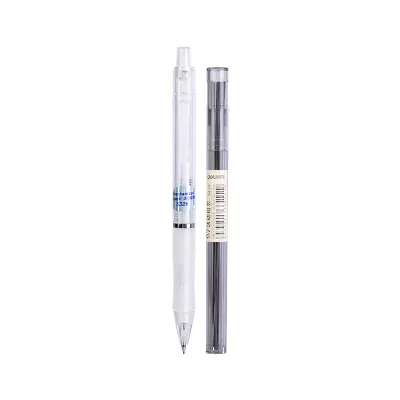
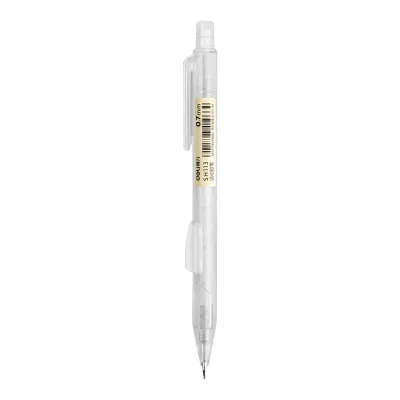
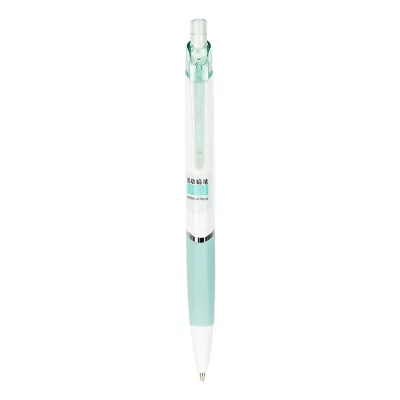
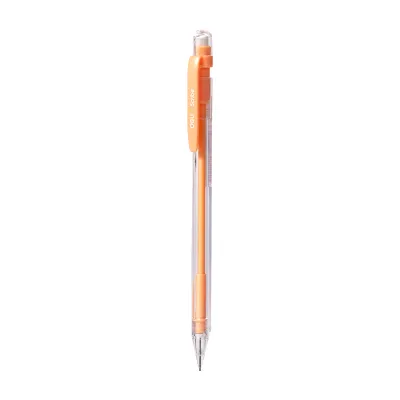
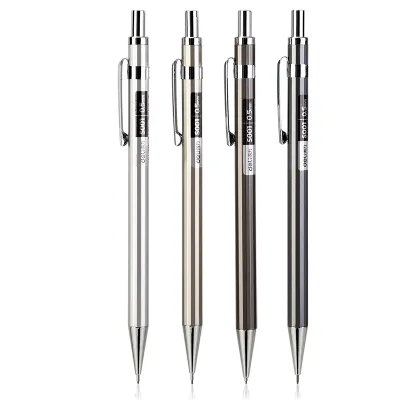
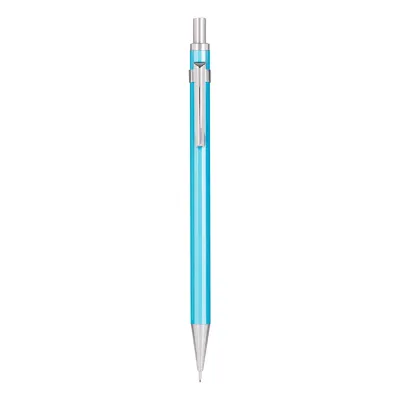
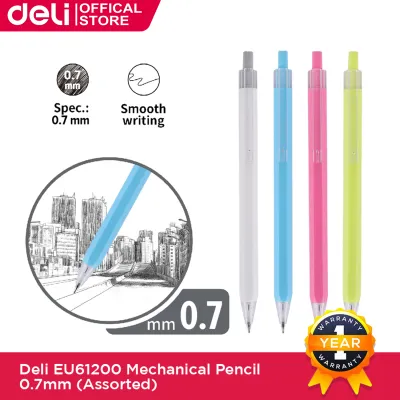
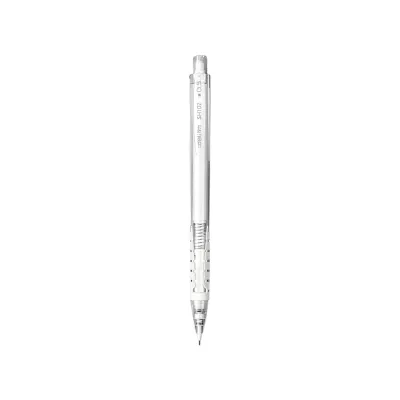
Prices are valid at publication and may change. Please refer to the product page for the latest price.
In the Philippines, local availability and cost are practical factors to consider when choosing between these two sizes. Both 0.5mm and 0.7mm refills are widely distributed in local office supply stores and online marketplaces. A typical tube of replacement leads, often containing 12 to 20 pieces, generally ranges from ₱15 to ₱50 depending on the specific lead grade and pack size. While prices are comparable, you may find that 0.5mm refills are slightly more common in smaller neighborhood convenience stores, whereas 0.7mm refills might require a visit to a dedicated stationery shop or an online platform.
How to Match Lead Size to Your Writing Style and Pressure
Your natural handwriting size is one of the most reliable indicators of which lead size will suit you. If you write with small, dense characters—such as fitting multiple lines of text within a single grid of a graphing notebook—a 0.5mm lead is almost essential. A thicker 0.7mm line in this scenario can cause letters like “e,” “a,” and “o” to fill in, turning your notes into illegible smudges.

For those with larger, more cursive, or loose handwriting styles, the 0.7mm lead is often more comfortable. The bolder line matches the scale of larger letters, providing a satisfying visual weight on the page. It also fills the space more naturally, preventing your handwriting from looking faint or spindly.
Writing pressure is another critical variable. If you have a heavy-handed writing style, you will likely find yourself constantly clicking the push-button of a 0.5mm pencil to feed more lead after frequent snaps. This constant interruption can disrupt your train of thought. A 0.7mm lead accommodates a firm grip and heavy downward force, allowing you to write continuously without fear of sudden breakage.
Writing speed also plays a role in lead wear and friction. Fast, sweeping strokes—typical of rapid brainstorming sessions or shorthand note-taking—create rapid friction against the paper. Thinner leads wear down unevenly under high-speed friction, creating sharp edges that can catch on the paper fibers and cause tearing or snapping. The broader surface of a 0.7mm lead wears down more gradually and evenly, maintaining a smooth glide even during high-speed writing sessions.
Best Use Cases for 0.5mm and 0.7mm Lead Sizes
The 0.5mm lead excels in environments that demand absolute precision. Technical drawing, architectural drafting, and engineering sketches rely heavily on clean, distinct lines that do not overlap or blur. In academic settings, solving complex algebraic equations or writing chemical structures requires clear subscripts and superscripts that only a fine-tipped pencil can deliver. Annotating textbooks or writing in the narrow margins of planners also benefits greatly from the precision of a 0.5mm point.
On the other hand, the 0.7mm lead is the workhorse for general-purpose writing. It is highly suited for rapid note-taking during university lectures, journaling, drafting creative outlines, and filling out standard forms. The thicker line is highly legible and stands out clearly on various paper types, from cheap newsprint to high-quality notebook paper.
When preparing for standardized exams or optical mark recognition (OMR) sheets in the Philippines, verifying the specific pencil requirements is crucial. Many official examinations require a specific shade, such as a No. 2 woodcase pencil, to ensure the optical scanner can read the shaded bubbles. If mechanical pencils are permitted, a 0.7mm lead in a darker grade like 2B is often preferred over 0.5mm. The wider tip of the 0.7mm lead allows you to shade the bubbles much faster and with fewer strokes, while reducing the risk of tearing the thin exam paper under stress.
Final Selection: Verifying Pencil Features and Lead Compatibility
Beyond the lead size itself, the physical design of the Deli mechanical pencil body significantly influences your overall writing experience. In tropical climates like the Philippines, high humidity and hand sweat can make smooth plastic barrels slippery during long writing sessions. Look for models featuring textured rubber grips or ergonomic triangular barrels to maintain a secure hold. The weight distribution of the pencil—whether it has a brass clutch mechanism that shifts the center of gravity forward or a lightweight all-plastic body—will also affect hand fatigue.
The hardness grade of the lead is another factor that interacts directly with your chosen diameter. Lead grades range from hard and light (such as H or 2H) to soft and dark (such as B, 2B, or 4B), with HB serving as the standard medium. A 0.5mm lead in a softer grade like 2B will write darker and smoother, but it will wear down much faster and be more prone to smudging. Conversely, a 0.7mm lead in an HB grade offers a balanced combination of durability, legibility, and smudge resistance, making it highly versatile for daily office work.
Because the smoothness and erasability of the pencil marks depend heavily on the combination of lead hardness and paper texture, it is highly recommended to perform a quick trial on a scrap piece of your preferred notebook paper to verify that the lead does not smudge or leave deep, unerasable indentations. Before finalizing your purchase, always verify the packaging labels carefully. Ensure that the mechanical pencil body and the replacement lead refills match exactly in diameter; a 0.5mm lead will simply slip through a 0.7mm clutch mechanism without feeding, while a 0.7mm lead will not fit into a 0.5mm sleeve. Check if the pencil package includes starter refills or spare erasers under the push-button cap, as these additions provide excellent initial value and save you from immediate secondary purchases.
Frequently Asked Questions (FAQ)
Can I use third-party lead refills in a Deli mechanical pencil?
Yes, mechanical pencil lead diameters are standardized globally across stationery brands. A 0.5mm or 0.7mm lead refill from any reputable manufacturer will fit perfectly into a corresponding Deli mechanical pencil. When choosing third-party refills, pay close attention to the lead hardness grade and smudge resistance to ensure they match your writing preferences. Additionally, verify that the length of the replacement leads does not exceed the internal reservoir capacity of your pencil, as excessively long leads can cause jams in the feeding mechanism.
Why does my 0.5mm lead keep breaking even when I write lightly?
Frequent lead breakage under light pressure usually points to an issue with the pencil’s internal mechanism or the lead quality. Inspect the metal sleeve and the internal clutch mechanism at the tip of the pencil for any accumulated lead debris, dust, or misalignment that might be putting uneven lateral stress on the lead. The issue could also stem from using a lead grade that is too soft or brittle for the texture of your paper; rough, highly textured paper creates more friction and resistance, which can snap fine leads. Finally, ensure you are not overfilling the internal reservoir, as loading too many spare leads at once can cause them to tangle and feed incorrectly, leading to premature breakage.

Community discussion
Share your experience or ask a question. Comments are reviewed before publication.