
When selecting the right medium for your sketches, school posters, or fine art, choosing a high-quality deli color pencil set often comes down to the core binder material. The choice between wax-based and oil-based cores determines how smoothly your colors blend, how vibrant your drawings appear, and how well your artwork resists the tropical humidity of the Philippines. While both types serve valuable roles on an artist’s desk, they behave differently under hand pressure, on varied paper textures, and during complex layering techniques.
Understanding these physical differences helps you avoid common frustrations like core breakage, muddy colors, or a hazy white film ruining your finished pieces. By matching the pencil’s binder type to your specific drawing style and paper choice, you can achieve professional-looking results whether you are working on a simple school project or a detailed commission.
Quick Answer: Which Deli Colored Pencil Type is Right for You?
The ideal choice between these two pencil types is not absolute; it depends entirely on your specific project requirements, budget, and skill level. Neither binder is universally superior, as each excels in different artistic applications and environments.
Products mentioned in this guide
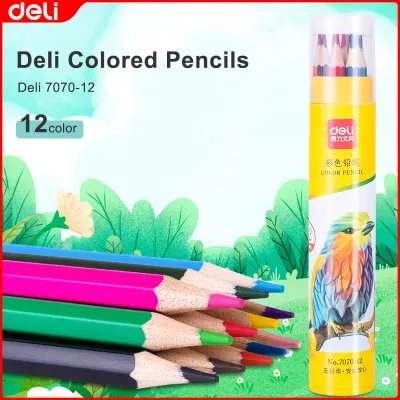
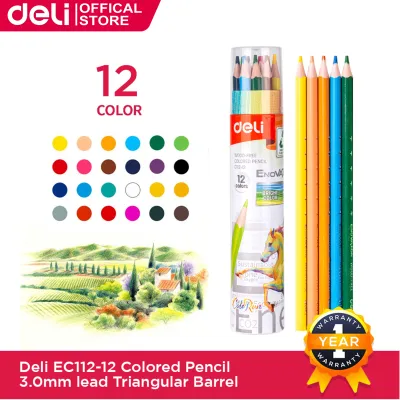
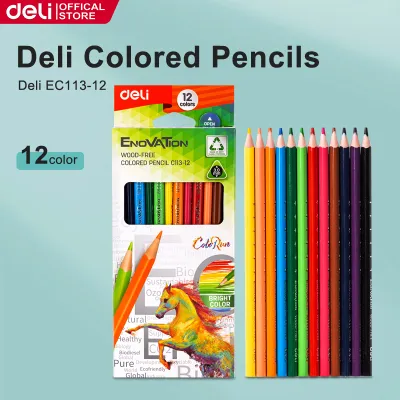
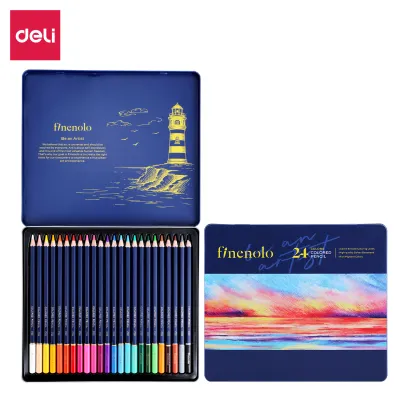
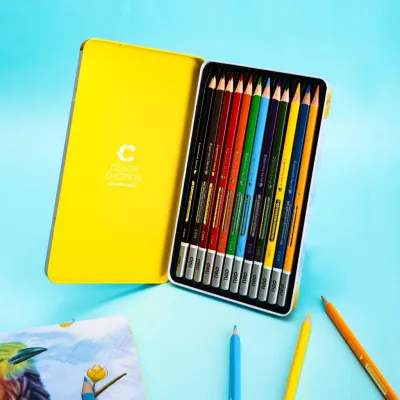
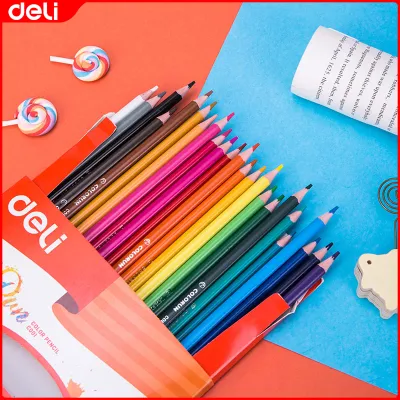
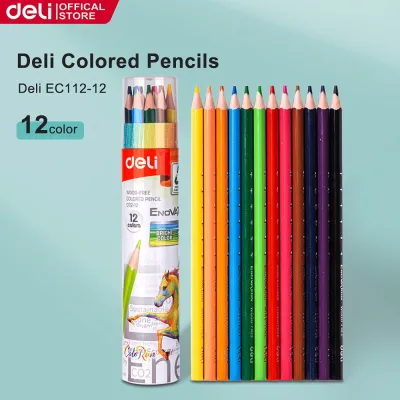
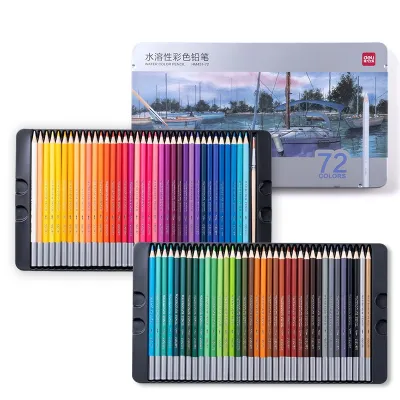
Prices are valid at publication and may change. Please refer to the product page for the latest price.
If you are a student working on quick school projects, a beginner learning the basics of color mixing, or an enthusiast who prefers a soft, creamy application that fills the paper quickly, wax-based pencils are highly suitable. They offer rapid initial blending and high opacity with minimal effort. The soft cores allow you to cover large areas of the page quickly, making them excellent for casual coloring and illustrative sketching.
Conversely, if you are an advanced artist or student working on detailed illustrations, complex gradients, or multi-layered shading, oil-based pencils are the superior option. They feature harder cores that hold a sharp point longer, allow for dozens of light layers without creating a waxy buildup, and deliver a clean, vibrant color payoff. Before purchasing, always verify the specific binder type by checking the packaging details or official store listings, as Deli offers multiple product lines tailored to different skill levels and techniques.
Core Differences: Understanding Wax and Oil Binders
To understand why these two pencil types perform so differently, it is essential to look at what holds the colored core together. Every colored pencil core consists of pigment, filler, and a binder that glues these ingredients into a solid stick. The binder’s chemical composition dictates how the pencil behaves when it meets the paper surface.

In wax-based pencils, the binder is primarily paraffin or another type of wax. This wax acts as a lubricant, allowing the pencil to glide effortlessly across the page. The binder-to-pigment ratio is formulated to release a generous amount of material with very light friction. This results in a soft, buttery feel that many beginners find highly satisfying, as it requires very little physical effort to produce a solid line of color.
In oil-based pencils, the binder is typically a vegetable oil, drying oil, or a synthetic oil compound, often supplemented with a small amount of wax to maintain structural integrity. The oil binder creates a much harder core. When you draw, the friction required to deposit pigment is slightly higher, but the resulting layer is incredibly thin, stable, and highly adhesive to the paper fibers. This hardness prevents the core from wearing down rapidly during use.
Attempting to identify the core type by looking at the unsharpened end or the painted wood casing is highly unreliable. The exterior paint and wood treatment of a deli color pencil are designed for aesthetics and comfort, not core identification. Because visual inspection is unreliable, you must look for explicit manufacturer descriptions, material specifications, or specific product series names on the packaging to verify whether a particular Deli set uses a wax or oil formulation.
In the warm, humid climate of the Philippines, understanding these binders is even more critical. High relative humidity can cause paper fibers to swell, altering how binders adhere to the surface. Wax can sometimes feel slightly tacky in high heat, whereas oil binders remain highly stable and dry, making them a preferred choice for long-term preservation in tropical environments.
Blending and Layering Performance
Wax-Based Blending
Wax-based cores excel at rapid, seamless blending. Because the wax is soft and highly malleable under the warmth of friction, you can easily smudge and merge adjacent colors directly on the page. The pigment particles slide over one another, allowing you to create smooth gradients with very few strokes. This makes them excellent for coloring large areas quickly, such as backgrounds in school posters or coloring book pages.
However, this soft texture comes with a distinct physical limitation: the paper’s “tooth” (the microscopic texture of the paper surface) fills up very quickly. Once the paper tooth is completely packed with wax, it becomes slick and saturated. Any additional pencil strokes will simply slide off the surface without leaving any new color, limiting your ability to make corrections or add depth.
Furthermore, heavy application of wax-based pencils can lead to a phenomenon known as “wax bloom.” Over time—often within a few days to a week—the wax binder slowly migrates to the surface of the artwork, creating a hazy, white, semi-opaque film that dulls the original colors. This is especially common in warm, humid tropical climates, where the heat accelerates the migration of wax molecules.
Oil-Based Layering
Oil-based pencils take a completely different approach to color mixing. Instead of smudging together in a thick, creamy layer, they are designed for glazing and layering. Because the oil binder creates a harder core, it deposits a incredibly thin, translucent layer of pigment with each pass.
This allows you to build up ten, fifteen, or even more layers of different colors on top of one another. The paper tooth is not filled quickly, meaning you can continuously adjust the hue, value, and saturation of your drawing without the surface becoming slick or rejecting new pigment. Because oil does not migrate to the surface like paraffin does, oil-based drawings are completely immune to wax bloom, ensuring your artwork retains its deep, rich appearance over time.
Verification Step
Because paper interaction is highly subjective and depends heavily on the specific brand of sketchpad you use, you should always perform a simple blending test. Take a scrap piece of your intended paper stock and apply three to four heavy layers of your chosen pencil. Observe how quickly the paper becomes shiny and slick, and check if you can still apply a contrasting color on top. This hands-on verification will tell you exactly how the binder behaves on your specific paper under local humidity conditions.
Color Payoff and Vibrancy
Color payoff refers to how much vibrant pigment is deposited onto the paper with a single stroke. While it is tempting to assume that one binder type is naturally more vibrant than the other, the reality is more nuanced and depends heavily on the manufacturing grade of the specific product line.
With oil-based pencils, the high binding strength of the oil allows manufacturers to pack a very high concentration of pigment into the core without it crumbling. As a result, you can often achieve highly saturated, vibrant lines with very little physical pressure. The colors appear crisp, clean, and highly defined, which is ideal for fine lines, intricate patterns, and high-contrast illustrations.
Wax-based pencils, on the other hand, offer excellent opacity. Because the wax deposits a thicker layer of material on the paper, it can easily cover up underlying lines or paper colors. However, achieving maximum saturation with lower-grade wax pencils often requires more physical pressure or multiple passes. If you press too hard, you run the risk of flattening the paper texture prematurely.
It is vital to understand that color payoff is not solely a function of the binder. The quality, purity, and concentration of the chemical pigments used by Deli in their different product lines play a massive role. A professional-grade wax pencil can easily outperform a student-grade oil pencil in terms of vibrancy, and vice versa.
To verify the actual performance before committing to a large project, do not rely solely on the color printed on the pencil’s barrel. Create a physical color swatch sheet on your target paper. Test both light, feather-like strokes and heavy, burnished strokes to see how the color behaves under different levels of hand pressure. Additionally, checking verified user reviews from local artists who share photo or video swatches can provide excellent insight into how a specific Deli set performs in real-world scenarios.
Durability, Break Resistance, and Sharpening
The physical resilience of a pencil core directly impacts your drawing flow, frustration levels, and the overall lifespan of your art supplies. Frequent breakage leads to wasted pigment and quickly shortens the life of your pencil set.
Oil-based cores are inherently more durable. The oil binder binds the pigment particles tightly together, creating a tough, resilient structure. These pencils can withstand significant hand pressure without snapping at the tip. They are also much more resilient to accidental drops; if an oil-based pencil falls off your desk onto a tiled floor, the internal core is highly likely to remain intact. This hardness allows you to sharpen the pencil to an needle-sharp point, which is essential for rendering fine details like hair, fur, or precise mechanical lines.
Wax-based cores are much softer and more fragile. If you apply excessive pressure, the tip can easily crumble or snap. Furthermore, if a wax-based pencil is dropped, the soft internal core can shatter into multiple small segments inside the wooden casing. When you attempt to sharpen it, the broken segments will simply fall out, leading to wasted material and rapid shortening of the pencil.
To maintain soft-core wax pencils and minimize breakage, follow these practical sharpening steps:
- Use a high-quality manual sharpener: Avoid electric sharpeners that apply high torque, which can easily snap soft cores. A sharp, manual single-hole metal sharpener is ideal.
- Rotate the pencil, not the sharpener: Hold the sharpener completely still in one hand and gently rotate the pencil with the other. This minimizes lateral stress on the delicate core.
- Keep blades sharp: Dull blades chew through the wood and pull on the core rather than cutting it cleanly. Replace your sharpener or its blades regularly.
- Clean the blade: Wax buildup can dull the blade's cutting edge. Use a toothpick or a small brush to clean out any packed wax from the sharpener's blade after every few pencils.
Decision Framework: Choosing the Right Deli Color Pencil
To help you select the ideal deli color pencil set for your desk, use the following structured decision framework based on your artistic goals, working style, and environmental conditions.
Choose Wax-Based If:
- You are a beginner or student: You need an affordable, forgiving medium for school poster contests, basic art classes, or casual coloring books.
- You prefer a creamy, buttery feel: You enjoy the sensation of the pencil gliding effortlessly across the paper with minimal friction.
- You need quick, large-area coverage: You want to fill up the white space of the paper rapidly without spending hours building up micro-layers.
- You want to minimize hand fatigue: The soft core requires less physical pressure to deposit visible color, making long coloring sessions more comfortable.
Choose Oil-Based If:
- You specialize in detailed illustrations: You need a pencil that can hold a needle-sharp point for intricate details, fine lines, and texture work.
- You rely on multi-layered shading: You want to build complex, rich gradients by glazing multiple colors over one another without filling the paper tooth.
- You want to avoid wax bloom: You are creating artwork that you intend to display, frame, or sell, and you want to ensure it remains free of a hazy white film over time.
- You require high durability: You want a break-resistant core that survives accidental drops and heavy-handed drawing styles.
Verify First If:
- You are unsure of your paper stock: Rough, heavy-tooth paper will wear down oil-based pencils extremely quickly, requiring frequent sharpening. Extremely smooth, hot-press paper or coated board may not have enough texture to grip wax-based pigments, causing them to slide around without depositing rich color. Always test your pencils on a small corner of your paper before starting your final piece.
- You work in highly humid environments: High humidity can make wax layers feel slightly tacky and accelerate wax bloom. If you live in a coastal or highly humid region of the Philippines and do not have an air-conditioned workspace, oil-based pencils will offer a much more consistent and reliable drawing experience.
Frequently Asked Questions (FAQ)
Can I mix wax-based and oil-based colored pencils in the same drawing?
Yes, you can use both types in a single piece of artwork, but the order of application is critical for a successful result. Generally, it is best to use oil-based pencils first to establish your detailed lines, complex shading, and base layers of color. Because oil-based pencils deposit thin, non-slick layers, they leave plenty of paper texture exposed. Once your base layers are complete, you can apply wax-based pencils on top for final highlights, creamy blending, or a burnished finish. Applying oil-based pencils over a heavy, slick layer of wax is highly difficult, as the harder oil core will simply slide off the surface without adhering.
How do I fix wax bloom on my colored pencil artwork?
If a hazy, white film appears over your wax-based pencil drawing, you can easily remove it without damaging the underlying artwork. Take a clean, dry, lint-free microfiber cloth or a soft cotton ball and gently wipe the surface of the paper using very light, circular motions. Avoid pressing hard, as this can smudge the pigment or flatten the paper texture. To prevent the wax bloom from returning, apply a light coat of a workable fixative spray designed specifically for colored pencil art. Always test the spray on a scrap piece of paper first to ensure it does not alter your colors or cause the paper to warp.
Are Deli colored pencils lightfast?
Lightfastness refers to a pigment’s resistance to fading when exposed to light over time, and this quality depends on the specific chemical pigments used in the pencil, not the binder type. Deli offers various product lines ranging from student-grade to artist-grade sets. Student-grade pencils are designed for general schoolwork and casual use, meaning they may fade over time if exposed to direct sunlight. Artist-grade sets typically use higher-quality, fade-resistant pigments. If you plan to display your finished artwork in a bright room, check the specific Deli product packaging or official manufacturer specifications for lightfastness ratings before starting your project.

Community discussion
Share your experience or ask a question. Comments are reviewed before publication.