
Quick Answer: Which Derwent Colored Pencil Line Fits Your Style?
Choosing the right colored pencil line from Derwent requires matching your drawing technique, pressure habits, and paper selection to the physical properties of the pencil core. Derwent offers three distinct lines that cater to different artistic approaches: Coloursoft, Artists’, and Studio. Each line uses a wax-based binder but varies significantly in hardness, core diameter, and barrel shape, which directly influences how the pigment behaves on your drawing surface.
Derwent Coloursoft is formulated for vibrant, rapid color laydown and smooth, buttery blending, making it highly suitable for expressive work, broad landscapes, and soft portrait transitions. In contrast, Derwent Artists’ features a much firmer core designed for traditional layering, fine details, and precise control, allowing you to build depth gradually without quickly saturating the paper’s texture. Derwent Studio utilizes the exact same firm core formulation as the Artists’ line but houses it in a thinner core and a hexagonal barrel, providing maximum control for technical illustrations, detailed graphic work, and everyday practice.
Your optimal choice is highly conditional. If you prefer a light touch and seamless color transitions, the soft formulation of Coloursoft will suit your style. If your work relies on intricate detail, sharp lines, and heavy layering, the Artists’ or Studio lines are more appropriate. Additionally, environmental factors like the high humidity typical of tropical climates in the Philippines can soften paper fibers and slightly alter wax behavior, making the choice of core hardness and paper compatibility a critical first step in your creative process.
Products mentioned in this guide
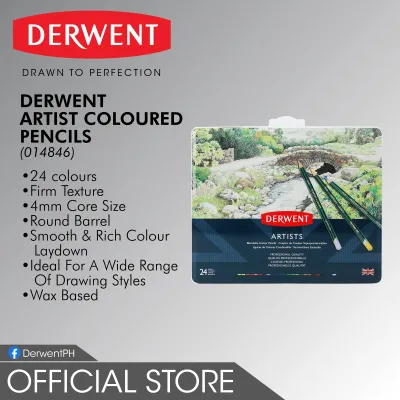
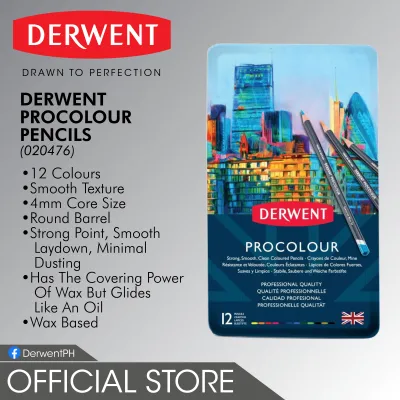
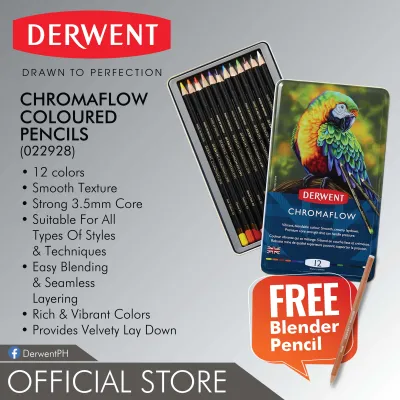
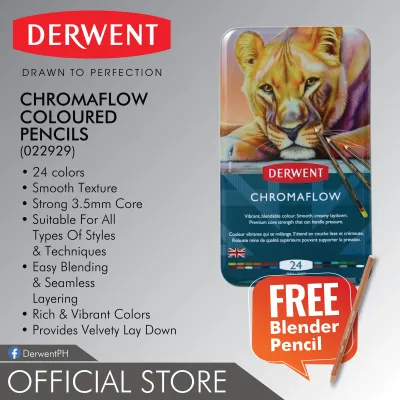
Prices are valid at publication and may change. Please refer to the product page for the latest price.
Lead Composition, Hardness, and Break Resistance
The performance of any colored pencil is determined by its core composition, specifically the ratio of pigment, wax binder, and fillers. While all three of these Derwent lines are wax-based, their physical hardness and break resistance differ. Understanding these differences helps you select a pencil that matches your hand pressure and prevents the frustration of frequent core breakage during intensive drawing sessions.

Derwent Coloursoft features a generous 4.0mm core that is exceptionally soft. The high ratio of wax binder to filler allows the pigment to glide effortlessly onto the paper with minimal friction. However, this buttery consistency means the core blunts rapidly under pressure. If you have a heavy hand, you may find yourself sharpening Coloursoft pencils frequently to maintain a usable point. The soft core is also more susceptible to internal fracturing if the pencil is dropped, meaning gentle handling and careful storage are necessary to preserve the integrity of the lead.
Derwent Artists’ pencils also feature a robust 4.0mm core, but the formulation is significantly firmer. This line contains a higher proportion of hard binders and fillers, which gives the lead excellent structural integrity. The core resists crumbling and holds a sharp point for extended periods, even under moderate to heavy pressure. This makes the Artists’ line highly break-resistant and reliable for long drawing sessions where consistent line width is required. The durable wood casing—typically crafted from high-quality incense cedar—further protects the core and ensures clean, even sharpening.
Derwent Studio pencils share the same firm core formulation as the Artists’ line, but with a crucial physical difference: the core diameter is reduced to 3.4mm. This thinner core, combined with the structural support of a hexagonal wood casing, provides the highest level of break resistance among the three lines. The narrow core is highly resistant to lateral pressure, allowing you to apply firm, precise strokes without worrying about the tip snapping. When working in humid environments, where paper can absorb moisture and require slightly more pressure to mark, the durability of the Artists’ and Studio cores offers a distinct mechanical advantage over the softer Coloursoft.
Color Payoff, Blending, and Layering Capabilities
The way a colored pencil interacts with paper determines the depth, vibrancy, and texture of your final artwork. The hardness of the core directly dictates how the pigment fills the microscopic valleys of your paper, known as the paper tooth. Selecting the right line depends on whether you prefer to build color through rapid, opaque coverage or slow, translucent layering.
With its high pigment concentration and soft binder, Derwent Coloursoft delivers immediate, intense color payoff with very light pressure. It excels at filling the paper tooth quickly, making it easy to achieve solid, punchy backgrounds and rich, saturated color fields. The soft wax allows pigments to blend together physically on the paper surface, much like oil pastels, enabling seamless gradients and smooth color transitions. However, because it deposits a thick layer of wax quickly, the paper tooth can become saturated after only a few layers, limiting your ability to add fine details or highlights on top of established color.
Derwent Artists’ pencils offer a more translucent color payoff, encouraging a traditional layering technique. Because the core is firm, it deposits a thinner, more controlled layer of wax with each pass. This allows you to build complex, multi-toned glazes by layering different colors on top of one another without immediately clogging the paper’s texture. You can achieve highly detailed, realistic textures—such as animal fur or botanical veins—by slowly building up values. A key benefit of this firmer formulation is that it resists early wax bloom, the cloudy white residue that occurs when excess wax rises to the surface of heavily saturated areas.
Derwent Studio pencils, utilizing the same firm core as the Artists’ line, perform similarly in terms of layering and color payoff. The thinner 3.4mm core makes it even easier to apply precise, delicate glazes in tight spaces. While it may take longer to fill large areas of toothy paper with a Studio pencil compared to a Coloursoft, the level of control over value and detail is superior. When selecting paper, remember that hot-pressed (smooth) papers will highlight the precision of the Artists’ and Studio lines, while cold-pressed or medium-tooth papers (around 120 to 200 gsm) will maximize the blending and expressive qualities of Coloursoft.
Barrel Design, Ergonomics, and Sharpening Experience
The physical design of a pencil affects your physical comfort during long drawing sessions and dictates how easily you can maintain the pencil’s point. Derwent employs different barrel shapes and diameters across these three lines to serve different ergonomic preferences and functional needs.
Derwent Coloursoft and Artists’ pencils feature round barrels with a wide 8.0mm diameter. The round shape is highly favored by fine artists because it allows you to continuously rotate the pencil in your hand as you draw, helping to maintain a consistent point on one side of the lead. The wider 8.0mm diameter reduces hand fatigue by preventing your fingers from gripping the barrel too tightly, which is especially beneficial during long drawing sessions in warm, humid climates where hands can sweat and grip can slip.
Derwent Studio pencils feature a hexagonal barrel with a slightly narrower 7.2mm diameter. The flat facets of the hexagonal shape provide a highly secure, non-slip grip, giving you precise control over fine lines and technical details. This design is excellent for drafting, architectural sketching, and detailed illustration work where the pencil must not slip. An added practical benefit of the hexagonal barrel is that it prevents the pencils from rolling off slanted drawing tables or desks, protecting the fragile cores from impact damage caused by falls.
Sharpening these different lines requires different tools and techniques to prevent core breakage. Because the Coloursoft core is so soft, it should be sharpened using a high-quality, manual sharpener with a sharp, undamaged steel blade, or a dedicated helical desktop sharpener. Avoid cheap, dull pocket sharpeners, which can twist and fracture the soft wax core inside the wood casing. A blunt sharpening angle is recommended for Coloursoft to provide structural support to the soft tip. The firmer Artists’ and Studio lines are much more forgiving and can be sharpened to a long, acute point using standard professional sharpeners, though a clean, sharp blade is still essential to ensure the wood casing shaves away smoothly without splintering.
Side-by-Side Comparison Matrix
The following matrix summarizes the physical properties, performance characteristics, and practical design elements of the three Derwent colored pencil lines to help you quickly identify the best fit for your workflow.
| Feature / Dimension | Derwent Coloursoft | Derwent Artists' | Derwent Studio |
|---|---|---|---|
| Core Hardness | Very Soft | Firm | Firm |
| Core Diameter | 4.0 mm | 4.0 mm | 3.4 mm |
| Barrel Shape | Round (8.0 mm) | Round (8.0 mm) | Hexagonal (7.2 mm) |
| Color Payoff | Vibrant, Opaque, Immediate | Translucent, Buildable | Translucent, Highly Precise |
| Blending Style | Buttery, Physical Smudging | Gradual Layering, Glazing | Gradual Layering, Fine Glazing |
| Detail Capability | Moderate (Blunts Quickly) | High (Holds Sharp Point) | Excellent (Thin, Firm Point) |
| Best Artistic Use | Portraits, Landscapes, Bold Art | Botanicals, Wildlife, Fine Art | Technical Drawing, Fine Details |
Note: Before purchasing, verify the exact color counts, set configurations (ranging from small starter tins to large professional wooden boxes), and open-stock availability at your local specialty art supply retailer. Price bands for these professional-grade sets typically range from mid-tier investments (around ₱1,500 to ₱3,500 for starter sets) to premium collector sets (exceeding ₱8,000 for comprehensive wooden boxes).
Decision Framework: Matching the Pencil to Your Artistic Needs
To make your final decision, evaluate your specific artistic style, typical drawing speed, and the physical demands of your artwork. Use the following conditional scenarios to guide your purchase:
- Choose Derwent Coloursoft if you prioritize rich, immediate color saturation, enjoy painterly blending techniques, and work primarily on portraits, bold landscapes, or expressive illustrations. This line is ideal if you prefer a light hand and want to cover large areas of paper quickly with vibrant, velvety color.
- Choose Derwent Artists' if your style relies on intricate detail, botanical accuracy, or realistic wildlife illustration where you must build up dozens of thin, translucent layers. This line is perfect if you want a robust, round pencil that holds a sharp point under moderate pressure and allows for precise color control.
- Choose Derwent Studio if you specialize in technical illustrations, graphic design, or highly detailed line work where a non-slip grip is essential. The hexagonal barrel and thin, firm core make this line the best choice for artists who work on flat or slanted drafting tables and require maximum point durability for precise drafting.
If you are still undecided, verify paper compatibility first. The performance of wax-based pencils is highly dependent on the texture and weight of your paper. If you work in a high-humidity environment, paper can absorb moisture from the air, which makes soft cores like Coloursoft feel even softer and can cause paper fibers to pill under heavy pressure. Consider purchasing two or three individual open-stock pencils from each line to test on your preferred drawing paper before investing in a complete, large-scale set.

Community discussion
Share your experience or ask a question. Comments are reviewed before publication.