
Choosing the right file holder for documents depends entirely on how you interact with your paperwork daily and the environmental conditions of your workspace. If you need to transport active project files between your home and office, an expandable folder offers lightweight, multi-pocket portability. For documents that require frequent updates, rearranging, or hands-free reading—such as training manuals or school reviewers—a ring binder provides the most flexible, flat-laying solution. When dealing with high volumes of tax records, historical archives, or completed projects that you rarely need to access but must preserve, a sturdy file box is the most efficient choice. In tropical climates where high humidity and dust can quickly degrade paper, selecting the correct storage format is not just about organization; it is also about protecting your valuable records from moisture, warping, and pests.
Identify Your Document Storage Needs First
Before purchasing any filing supplies, take a close look at the physical characteristics of your paperwork and your daily workflow. Document volume is the first major factor to evaluate. A few dozen utility bills require a very different storage capacity than years of corporate tax filings. You must also measure the physical dimensions of your papers. In many local offices and schools, documents are printed on standard A4, short letter (8.5 x 11 inches), or long legal-size paper (8.5 x 13 inches). Choosing a holder that does not accommodate these specific dimensions will leave edges protruding, leading to bent corners and torn sheets.
Next, determine your access frequency. Active documents that you consult daily or weekly need to be easily reachable and simple to extract. Archival documents, on the other hand, can be packed away more securely because they are only retrieved during audits or annual reviews. Finally, evaluate your physical storage environment. Consider whether you have open bookshelves, deep filing cabinets, or limited desk space. If you commute regularly or move between different workstations, portability becomes a primary requirement, whereas stationary archiving allows you to prioritize stackability and maximum volume over ease of transport.
Products mentioned in this guide

Prices are valid at publication and may change. Please refer to the product page for the latest price.
Expandable Folders for Portability and Active Projects
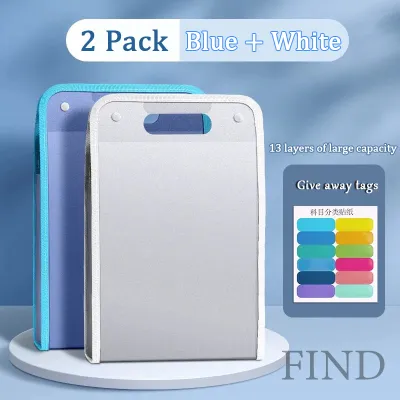
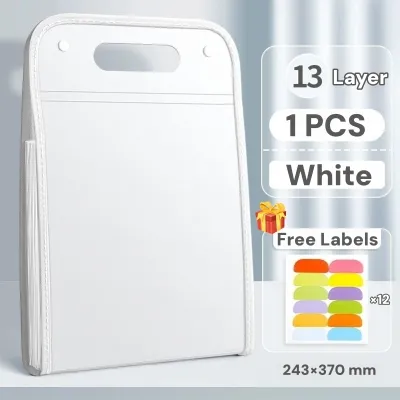
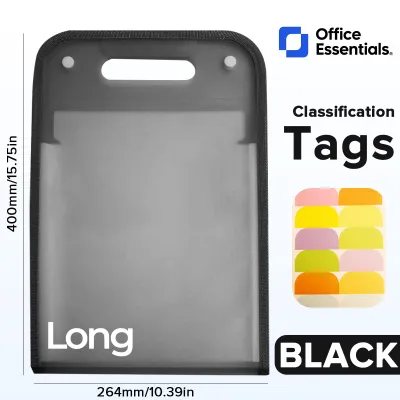
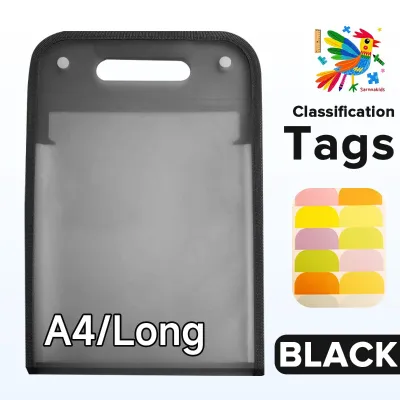
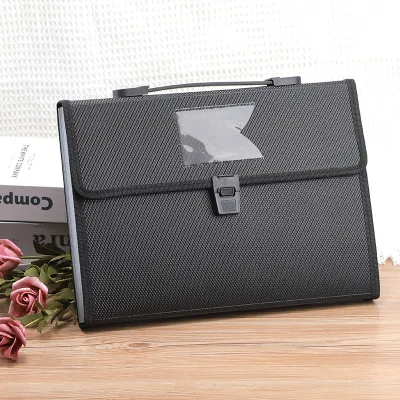
Expandable folders are designed for mobility and rapid, multi-stage sorting. They are highly effective for managing active projects where documents are constantly being added, categorized, or transported. If you need to keep client contracts, receipts, and project briefs separate but contained within a single carrier, an expandable folder provides the necessary division without the bulk of multiple individual folders. Because they do not require hole-punching, they preserve the original state of important certificates and official receipts.

When evaluating an expandable folder, check the number of internal pockets and the security of the closure mechanism. Pockets usually range from 5 to 24 sections, often complete with customizable tab inserts for quick indexing. Look for secure closures such as thick elastic bands, button-and-string ties, or plastic snap latches to prevent papers from slipping out during transit. Material flexibility is also crucial; flexible polypropylene is highly recommended for its water-resistant properties, which shield papers from sudden tropical downpours or accidental spills. However, keep in mind that expandable folders are not designed for heavy, high-volume archiving, and overstuffing them can cause the outer seams to split or bend fragile pages along the edges.
Ring Binders for Frequent Reference and Updating
Ring binders are the standard choice for documents that must be read, updated, or rearranged on a regular basis. They are ideal for holding training manuals, study guides, and standard operating procedures because they allow the user to flip through pages easily and lay the document flat on a desk. The ability to insert tabbed dividers makes navigating complex, multi-chapter documents incredibly efficient. Furthermore, you can easily add or remove individual pages without disturbing the order of the rest of the file.
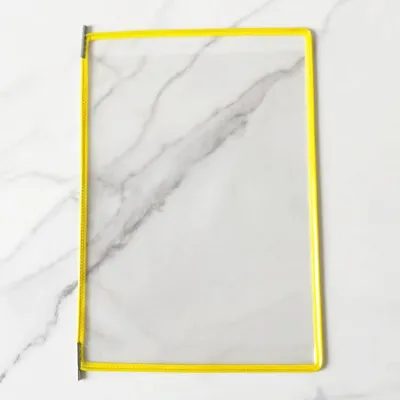
To ensure your ring binder performs reliably, verify the ring mechanism type and the spine width. D-ring binders are generally superior to round O-ring binders because they allow pages to lie flat against a straight edge, preventing the curling and tearing that often occurs near the spine of O-ring models. Check the spine width to ensure it matches your document volume; a binder that is too small will cause pages to catch on the rings, while an oversized binder takes up unnecessary shelf space. If you want to avoid hole-punching your documents, verify that the binder is wide enough to accommodate plastic sheet protectors without the edges of the sleeves hanging out past the cover. Keep in mind that binders can be bulky to transport, and cheap metal rings may eventually misalign, causing pages to snag when turned.
File Boxes for Long-Term Archiving and High Volume
When you need to store large batches of documents for extended periods, file boxes offer the most practical and space-efficient solution. They are designed to sit on shelves or stacked in storage rooms, keeping bulk paperwork organized and out of sight. File boxes are particularly useful for holding tax documents, completed project archives, or collections of hanging folders. By consolidating hundreds of pages into a single, structured container, you can free up valuable desk and shelf space for your daily tasks.
When choosing a file box, structural rigidity and environmental protection are your primary concerns. Heavy-duty plastic boxes with locking lids offer excellent protection against dust, humidity, and pests, making them ideal for long-term storage in areas without continuous climate control. If you opt for corrugated cardboard boxes, ensure they have reinforced handles and double-walled construction to prevent the bottom from sagging or collapsing when stacked. While file boxes excel at high-volume storage, they are not built for daily portability. Retrieving a single loose page from a deep box can be time-consuming unless you have organized the contents into labeled folders beforehand.
Decision Framework: Match the File Holder to Your Workflow
To select the right document holder, match your specific operational needs to the strengths of each format:
- Choose expandable folders if you are a student or professional who needs to carry active paperwork between locations, organize receipts, or sort multi-stage project documents without punching holes in them.
- Choose ring binders if you are compiling reference materials, study guides, or manuals that you need to flip through frequently, update with new pages, or display flat on a desk.
- Choose file boxes if you need to archive completed tax years, business records, or bulk files that must be kept for compliance or historical reference but are rarely accessed.
Before making a final decision, always verify if your documents have non-standard dimensions. For example, legal-size documents will not fit in standard A4 binders or folders and will require specialized, longer storage options. Additionally, consider the climate of your storage space; if you are storing papers in a humid room, prioritizing water-resistant plastic materials over standard cardboard or paperboard will prevent mold and structural degradation over time.
Verify Size, Capacity, and Material Compatibility Before Buying
To avoid buying a document holder that damages your paperwork, always cross-check physical specifications before purchasing. Start by comparing the exact dimensions of your paper with the internal measurements of the holder. The common use of both short letter and long legal paper means that standard international sizes like A4 may not always be a perfect match. A folder designed strictly for A4 will leave the bottom of a long legal document exposed or bent, while an oversized holder may allow smaller papers to slide around and crumple.
Next, pay close attention to the manufacturer’s stated sheet capacity. Overloading a ring binder can bend the metal rings out of alignment, while overstuffing an expandable folder will stretch the elastic bands and split the plastic seams. For file boxes, check the weight limit if you plan to stack them, as paper is surprisingly heavy when packed in bulk. Investing ₱150 to ₱600 on a durable, high-quality storage solution is far more cost-effective than replacing damaged documents later. Finally, if you are preserving sensitive, historical, or highly valuable documents, verify that the storage materials are acid-free and archival-safe. Standard plastics can emit harmful gases over time that cause ink to transfer or paper to yellow, whereas archival-safe polypropylene ensures your records remain pristine for years.
Frequently Asked Questions (FAQ)
Can I mix different document holders in the same filing system?
Yes, integrating different types of document holders is an excellent way to build a highly functional filing system. You can use a sturdy file box as your master archive for long-term storage, keeping older records safe and out of the way. Meanwhile, you can keep active, daily reference materials in ring binders on your desk, and use a lightweight expandable folder in your bag for documents you need to transport. To maintain order, use a consistent labeling and color-coding system across all formats so you can easily trace a document from your active folder back to its permanent home in the archival box.
How do I prevent paper from tearing in a ring binder?
To protect your pages from tearing in a ring binder, use plastic sheet protectors for frequently accessed documents, as they shield the paper entirely from friction. For documents that must be hole-punched directly, apply adhesive hole-punch reinforcements to the edges of the pages to strengthen the paper around the rings. Additionally, avoid overfilling the binder; always leave enough clearance so that pages can glide smoothly along the rings without catching. When turning pages, lift them gently from the center rather than pulling them from the outer corners to minimize stress on the punched holes.

Community discussion
Share your experience or ask a question. Comments are reviewed before publication.