
An expanded envelope is a specialized storage and mailing solution featuring pleated or gusseted sides that stretch to accommodate thick stacks of documents or small three-dimensional items. Unlike a standard flat envelope, which is designed for a few sheets of paper, an expanded envelope expands to hold several centimeters of material without tearing. You should upgrade to an expanded envelope when your documents exceed the natural capacity of a flat envelope, when you need to store bulky items like booklets, or when you want to organize files by category without using rigid boxes.
What Exactly Is an Expanded Envelope?
Understanding this stationery tool starts with its physical construction. The defining feature is the gusset—a pleated fold along the sides and bottom. These pleats fold flat for compact storage when empty. As you insert documents, they unfold to expand the depth, allowing the envelope to accommodate thick stacks of paper while keeping the front and back panels flat.
These envelopes are manufactured from durable materials designed to withstand physical stress. Heavy-duty kraft paper, often reinforced with synthetic fibers, is a common choice for office filing. For environments where moisture is a concern, poly-plastic (polypropylene) options provide excellent durability. Some heavy-duty versions feature reinforced board panels to prevent the envelope from bending easily.
Products mentioned in this guide
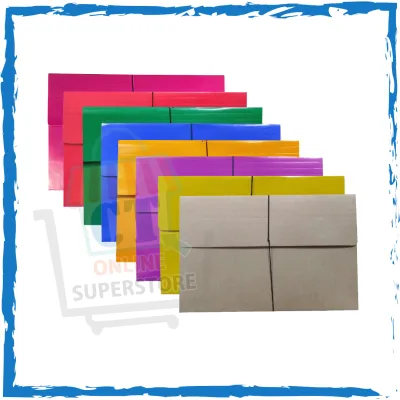
![Expanding Envelope w/ Garter - Long Size [Sold by 5pcs]](https://img.lazcdn.com/g/p/12bec5c6e3fde42be85d1e2521356f1c.jpg_400x400q80.jpg_.webp)
![Expanding Envelope With Garter Expandable Envelope With Garter Long (10 x 15 INCHES) Kraft Brown Blue Yellow Hot Pink Green Red Document Envelope File Envelope (10) Pcs Per Pack [Future Industries]](https://img.lazcdn.com/g/p/27209053bf22d510c0902ca972773846.jpg_400x400q80.jpg_.webp)
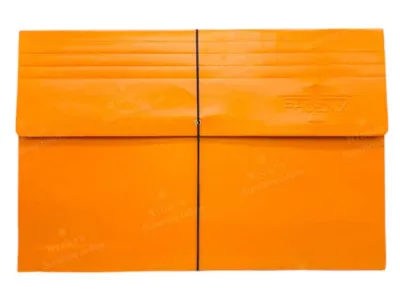
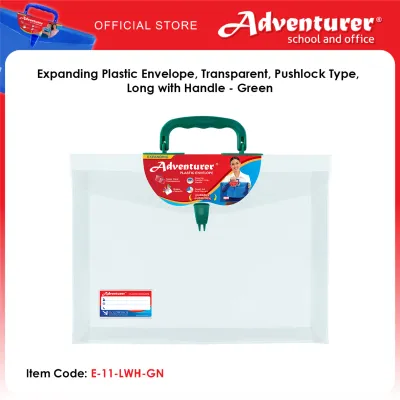
![[DKI ENTERPRISES] 5pcs Kraft Expanded Envelope LONG](https://img.lazcdn.com/g/p/014ed162e7adc797e288af2e43d397d4.jpg_400x400q80.jpg_.webp)
Prices are valid at publication and may change. Please refer to the product page for the latest price.
The closure mechanism also varies depending on the intended use. Button-and-string closures use two plastic or fiber buttons wrapped with a durable string, allowing you to open and close the envelope repeatedly without wearing out the fastener. Metal clasps offer a traditional, secure hold for internal office routing. For mailing, peel-and-seal adhesive strips provide a permanent, tamper-evident seal that secures the contents during transit.
Signs You Need to Switch from Regular to Expanded Envelopes
Using the wrong envelope for thick document stacks often leads to noticeable physical failures. If you force a stack of papers into a standard white envelope, the center will bulge awkwardly. This tension puts immense pressure on the glued seams, often causing them to split open before the package reaches its destination.

Another warning sign is the inability to seal the flap properly. When a flat envelope is stuffed beyond its capacity, the flap cannot reach its designated sealing area. Attempting to secure it with layers of packing tape is a temporary fix that looks unprofessional and risks exposing your documents if the tape peels away.
Specific document types naturally demand more space than a flat envelope can provide. If you regularly handle thick legal briefs, multi-page tax filings, school transcripts, or product catalogs, a standard envelope is simply inadequate. Similarly, if you need to store or transport small three-dimensional objects alongside your paperwork—such as USB drives, keys, fabric swatches, or bound booklets—an expanded envelope is necessary to prevent these items from puncturing the paper.
Frequent transit of documents also highlights the limitations of standard envelopes. If you constantly carry files between your home, office, or government agencies, standard paper envelopes will quickly crease, tear, and wear down. An expanded envelope acts as a protective pocket, keeping your documents organized and pristine inside your bag without the bulk of a rigid plastic binder or a cardboard box.
Key Advantages of Using Expanded Envelopes
The primary benefit of an expanded envelope is its high volume capacity combined with a flexible form factor. Unlike rigid storage boxes or thick ring binders, an expanded envelope only takes up as much space as its contents require. This flexibility allows you to store hundreds of pages in a compact, stackable format that fits neatly into standard filing drawers or desk organizers.
Protection is another major advantage. The reinforced edges and expandable gussets absorb the physical tension of a thick document stack, preventing the corners of your papers from bending or fraying. This protection is especially valuable when handling important, non-replaceable documents like land titles, business permits, or academic certificates.
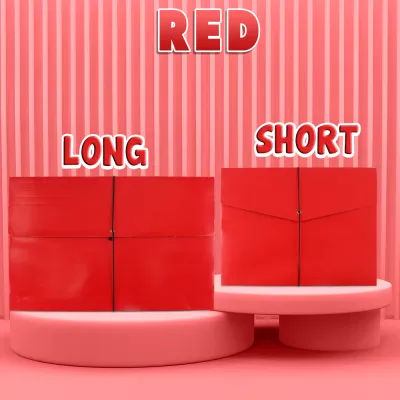
These envelopes also serve as excellent tools for visual organization. For instance, using a distinct color like a red expanded envelope allows you to establish an intuitive filing system. You can designate red envelopes exclusively for urgent projects, pending tax documents, or active client files. This high-visibility color-coding ensures that critical documents are immediately recognizable on a crowded shelf, reducing the time spent searching through identical manila folders.
When a Regular Envelope or Alternative Is Still the Better Choice
While expanded envelopes are highly versatile, they are not always the most efficient choice. For mailing standard single-page letters, invoices, or thin brochures, a regular flat envelope remains the most practical option. Using an expanded envelope for a few sheets of paper is unnecessary and results in higher material costs.
Weight and postage inefficiencies are also important considerations. Because expanded envelopes are constructed from heavier materials like thick kraft paper or plastic, they weigh more than standard envelopes. When sending mail, this extra weight can increase your postage fees. If your documents are thin enough to fit comfortably in a standard envelope, stick to the lighter option to keep mailing costs low.
For items that require absolute rigidity, an expanded envelope is not a suitable substitute. Fragile items like glass, delicate electronic components, or easily creased photographs require the structural protection of a rigid cardboard mailer or a shipping box. The flexible sides of an expanded envelope cannot prevent bending or crushing if a heavy object is placed on top of it during transit.
Additionally, unevenly packed expanded envelopes can cause issues with automated postal sorting machines. If the envelope is packed with lumpy, three-dimensional objects or is overly thick on one side, it may get caught in sorting equipment. This can lead to torn envelopes or delayed deliveries, meaning you may need to pay for manual processing or alternative shipping methods.
How to Choose the Right Expanded Envelope for Your Needs
Selecting the right expanded envelope starts with measuring your document stack. Use a ruler to measure the total thickness of the papers you plan to store. Choose an envelope with a gusset width—typically ranging from 2.5 centimeters to 5 centimeters—that matches or slightly exceeds this thickness. This ensures your documents fit comfortably without putting unnecessary strain on the seams.
You must also verify that the envelope dimensions match your paper standard. In many offices, documents are printed on either A4 or Legal-sized paper. Ensure you select an envelope labeled specifically for these dimensions so the edges of your papers do not get crumpled when folding the flap.
Material selection should be guided by your local environment and storage goals. In humid tropical climates, paper envelopes can absorb moisture from the air, potentially leading to mold or paper degradation over time. If you are storing documents in a non-air-conditioned space, water-resistant plastic envelopes are highly effective at keeping moisture out. However, if you are writing directly on the envelope, keep in mind that ink drying speed and bleed resistance depend heavily on the material. For paper envelopes, test a small corner with your preferred pen to ensure the ink does not smudge or bleed through.
Finally, match the closure mechanism to how often you need to access the files. For archives that you rarely open, a secure peel-and-seal adhesive strip is ideal. For active files that you consult daily, a button-and-string or zipper closure provides convenient, long-term reuse.
Frequently Asked Questions (FAQ)
Can I send an expanded envelope through standard mail?
Yes, you can send an expanded envelope through standard mail, but it is usually classified as a package or a flat rather than a standard letter. This classification depends on the total thickness and weight of the envelope. You will likely need to pay additional postage, so it is best to verify the current rates and thickness limits with your local post office or courier service before mailing.
Are plastic expanded envelopes better than paper ones?
Neither material is universally better, as the ideal choice depends on your specific environment and usage. Plastic expanded envelopes offer excellent water resistance, tear resistance, and durability, making them highly suitable for carrying documents outdoors or storing them in humid conditions. Paper expanded envelopes are more breathable, easier to write on directly with standard pens, and are generally preferred for dry, long-term archival storage in filing cabinets.

Community discussion
Share your experience or ask a question. Comments are reviewed before publication.