
Choosing the right file organizer is not about finding a single, universally superior product; instead, it requires balancing your document volume, daily portability needs, and available desk space. A student commuting daily with loose handouts needs a vastly different setup than an office worker archiving annual financial statements or a home administrator sorting incoming utility bills. By understanding how these tools handle paper, you can build a system that keeps your documents pristine and accessible.
In humid tropical climates like the Philippines, paper management comes with unique challenges, as moisture in the air can cause loose sheets to curl or stick. Selecting an organizer that matches your daily routine ensures your important papers remain flat, dry, and easy to find when you need them most.
Expanding File Folders: Portability and Active Document Management
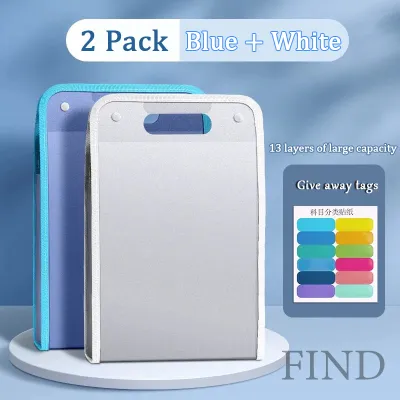
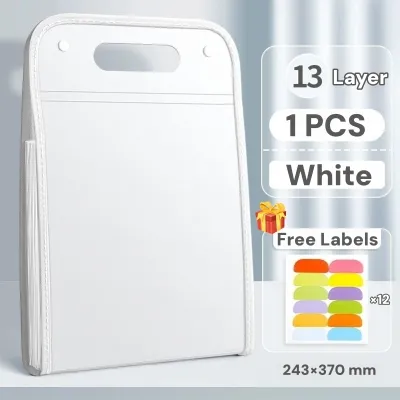
Expanding file folders, often referred to as accordion folders, are designed specifically for active document management on the move. Their physical structure features flexible, gusseted sides that expand as you add more papers, paired with multiple built-in tabbed pockets. This design allows you to categorize documents without the need for pre-sorting or punching holes, making it incredibly easy to drop in loose sheets on the fly. Most models feature a protective top flap secured by an elastic band, a button, or a plastic latch to keep the contents enclosed during transit.
Products mentioned in this guide
Prices are valid at publication and may change. Please refer to the product page for the latest price.
This portable design makes expanding folders highly suitable for students carrying daily handouts across campus, or professionals moving between meeting rooms and remote workspaces. They are also excellent for organizing loose, small-format papers like receipts, monthly utility bills, and invoices that you want to keep grouped by category but do not want to damage with a hole punch. Because they collapse when empty, they take up very little space in a backpack or messenger bag.
However, expanding folders have distinct physical limitations that you must verify before purchasing. Because they rely on loose storage, papers can easily slide out of their designated pockets or get crumpled if the folder is overfilled or turned upside down. Additionally, while the plastic or heavy cardstock exterior offers basic protection against light splashes, it does not provide the rigid, crush-proof defense of a heavy-duty binder. If stuffed into a crowded bag, the edges of your documents can still suffer wear and tear.
Ring Binders: High Capacity and Secure Archiving
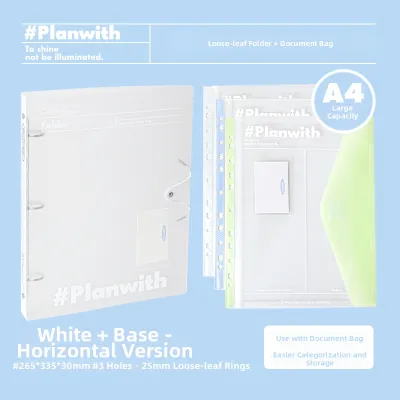
When your primary goal is secure, long-term archiving and high-capacity storage, ring binders are the industry standard. The core mechanism relies on metal or plastic rings—typically in O-ring or D-ring configurations—mounted to a rigid spine. D-ring binders are particularly efficient because they allow pages to lie flat on one side, maximizing the usable spine width and preventing page curling near the rings. Binders come in various spine widths, allowing you to store hundreds of sheets securely in a single unit.

This rigid structure makes ring binders ideal for archiving project records, storing multi-page course syllabi, or keeping reference manuals that you need to consult frequently. Because the pages are physically locked onto the rings, you can flip through a massive volume of paper like a book without worrying about sheets slipping out of order. Many binders also feature clear plastic overlays on the spine and front cover, allowing you to insert custom labels for easy identification when stored vertically on a shelf.
Despite their security, ring binders require a preparation step that can slow down your workflow: every document must be punched with a standard two-hole or three-hole punch, or placed inside a plastic sheet protector. This makes them less convenient for quick, spontaneous filing. Furthermore, binders are inherently bulky and heavy, meaning they take up significant physical space on a desk or in a bag, making them less practical for daily commuting.
Desktop File Sorters: Quick Access and Workspace Organization
For documents that require immediate, daily attention, desktop file sorters offer a stationary solution that prioritizes visibility and quick retrieval. These organizers typically feature tiered horizontal trays, vertical slots, or open-front wire pockets designed to sit permanently on your desk. Unlike folders or binders, which hide your documents away, a desktop sorter keeps your active paperwork fully visible and within arm’s reach.
The primary function of a desktop sorter is to act as a staging area for your daily workflow. It is the perfect spot for sorting incoming mail, organizing active project phases, or holding reference sheets that you need to grab with one hand while on a call. By assigning a specific tray or slot to “To Do,” “Pending,” and “To File,” you can prevent loose papers from piling up in disorganized stacks across your desk surface.
The trade-off for this instant accessibility is a complete lack of portability and protection. Desktop sorters are designed to remain stationary, meaning they cannot help you transport documents outside of your workspace. Because they feature an open design, any papers stored in them are fully exposed to dust, ambient humidity, and accidental spills. They also claim a permanent piece of your desk real estate, which can make a small workspace feel cramped if you choose a model with a large footprint.
Comparing Key Decision Dimensions
To help you decide which organizer fits your specific needs, it is helpful to compare their physical traits and operational requirements side by side. The table below outlines how each option performs across the key dimensions of capacity, portability, desk footprint, preparation, and workflow stage.
| Dimension | Expanding File Folder | Ring Binder | Desktop File Sorter |
|---|---|---|---|
| Primary Workflow Stage | Active transport & sorting | Long-term archiving | Daily staging & quick access |
| Document Capacity | Moderate (typically 150–500 sheets) | High (up to 1,000+ sheets depending on spine) | Low to Moderate (limited by slot width) |
| Portability | High (lightweight, secure closure) | Low (bulky, rigid structure) | None (designed for stationary desk use) |
| Desk Footprint | Low (can be stored flat or in a drawer) | Moderate (stored vertically on shelves) | High (occupies permanent desk surface) |
| Preparation Required | None (drop loose papers directly in) | High (requires hole punching or sheet protectors) | None (slide papers directly into slots) |
| Document Protection | Moderate (covers papers, but edges can bend) | High (rigid covers protect against crushing) | Low (open to dust, spills, and humidity) |
When shopping, always check the manufacturer’s specific product listings for exact sheet capacities, material thickness, and ring diameters. A binder’s capacity is determined by its ring size rather than its spine width, and expanding folders vary widely in their gusset durability depending on whether they are made of paperoid or heavy-duty polypropylene.
Conditional Selection Guide: Which File Organizer Fits Your Workflow?
Choosing the right tool comes down to identifying your daily pain points and matching them to the strengths of each organizer. Use the following decision framework to guide your purchase:
- Choose an Expanding File Folder if: You commute daily between home, school, or different office spaces and need to keep multiple categories of loose, unpunched papers organized in a single, lightweight container.
- Choose a Ring Binder if: You need to archive large volumes of documents that must remain in a strict, chronological order, and you do not mind taking the extra step to punch holes or use plastic sheet protectors.
- Choose a Desktop File Sorter if: Your main struggle is desk clutter, and you need immediate, visual access to active files and incoming mail without opening a drawer or unlatching a folder.
Before finalizing your purchase, make sure to verify a few physical constraints. First, measure your desk or shelf space to ensure a desktop sorter or a row of large binders will fit without blocking your monitor or workspace. Second, verify paper size compatibility. Standard Letter size paper and A4 paper have slightly different dimensions; using an A4 folder for Letter documents is usually fine, but trying to squeeze A4 sheets into a folder designed strictly for Letter-size paper can cause the edges of your documents to bend or get caught in the zipper or latch.
For most users, the most efficient setup is a hybrid system. You might use a desktop sorter to manage your daily incoming tasks, an expanding folder to carry active project files to meetings, and a series of ring binders on a shelf to archive completed work at the end of the month.
Frequently Asked Questions (FAQ)
Can I use an expanding file folder inside a ring binder?
No, standard expanding file folders are physically incompatible with ring binders. They are too thick, wide, and heavy when filled, and they lack the pre-punched holes required to fit onto binder rings. If you need to store loose items or small notes inside a ring binder, use dedicated binder pockets, plastic envelope inserts, or heavy-duty sheet protectors designed specifically with punched margins.
How do I prevent papers from falling out of an expanding file folder?
To keep your documents secure, avoid overfilling the folder beyond its maximum gusset capacity, as this prevents the top flap from closing properly. Always secure the built-in closure mechanism—whether it is an elastic band, a snap button, or a plastic clasp—before moving the folder. When packing your bag, store the folder vertically or flat against the back panel to minimize shifting during your commute.
What is the standard paper size I should check before buying?
In the Philippines, both Letter size (8.5 x 11 inches) and A4 size (8.27 x 11.69 inches) are widely used in schools and offices. Before buying any organizer, check the manufacturer’s specified internal dimensions. A4 paper is taller than Letter paper, so placing A4 sheets in an organizer designed strictly for Letter size can cause the top edges of your papers to overhang, bend, or get damaged by closures and zippers.

Community discussion
Share your experience or ask a question. Comments are reviewed before publication.