
Choosing the right paper organizer folder for school directly impacts your academic efficiency and daily stress levels. For students managing multiple subjects, the choice between an expanding file and a ring binder depends on whether you prioritize quick drop-in storage or structured, customizable archiving. Both systems offer distinct advantages for keeping handouts and lecture notes organized, but they require very different daily habits to remain effective.
An expanding file operates on a drop-in pocket mechanism, allowing you to slide loose sheets of paper into pre-divided sections without any preparation. This design is built for speed, making it incredibly easy to file away a syllabus, a graded quiz, or a multi-page handout in a matter of seconds. Because there is no need to modify the paper before storing it, an expanding file acts as a low-friction collection tool that keeps your desk clear and your papers grouped by subject with minimal effort.
In contrast, a ring binder relies on a hole-punch and ring mechanism that requires you to punch holes in every sheet before it can be secured. While this mechanism takes more time, it offers excellent security and customization. Once a page is locked onto the rings, it cannot slip out or get mixed up with other documents, even if the binder is dropped. This structural difference makes the ring binder a disciplined archiving tool, whereas the expanding file is a flexible, high-speed sorting system.
Products mentioned in this guide
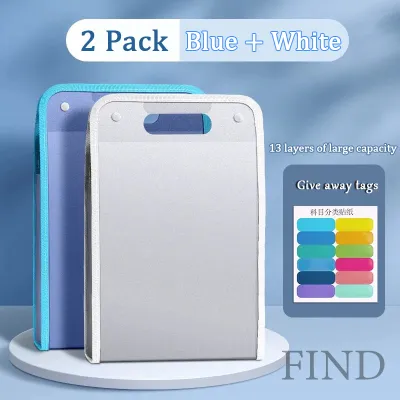
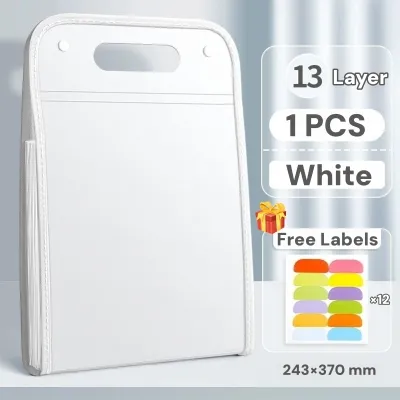
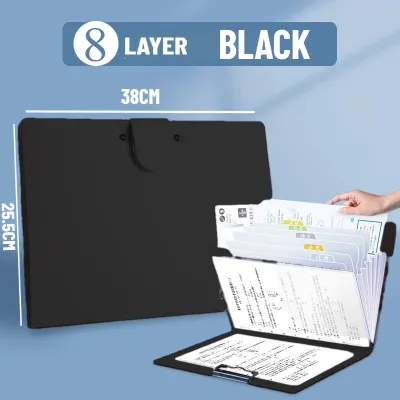
Prices are valid at publication and may change. Please refer to the product page for the latest price.
The time required to file loose sheets during fast-paced class transitions is a critical factor. In a typical school day, you often have only a few minutes to pack up and move to the next classroom. Sliding a handout into an expanding file pocket takes a single motion, allowing you to transition quickly. Using a ring binder, however, requires you to either carry a portable hole puncher or wait until you get home to file your papers, which often leads to loose sheets being stuffed haphazardly into backpacks where they easily get crumpled.
Managing Multiple Subjects: Capacity and Sorting
When it comes to sorting documents for five, six, or more subjects, expanding files offer built-in convenience through pre-labeled alphabetical, numerical, or blank tab dividers. These dividers are permanently attached to the interior walls of the file, ensuring that your subject boundaries never shift or collapse. You can assign a specific pocket to each subject, allowing you to view your entire semester’s curriculum at a glance simply by pulling back the front cover.
Ring binders, on the other hand, offer complete freedom in how you customize your sorting system. By using insertable divider tabs, you can create sections of varying sizes, add color-coded indexes, and even insert zippered pouches for pens. This flexibility allows you to adapt the binder’s internal structure as the school year progresses, adding new sections for projects or removing completed units to save space, which is something a fixed-pocket expanding file cannot accommodate.
Physical expansion limits are a crucial consideration, and students should always check manufacturer specifications for maximum page capacity before purchasing. An expanding file is designed with flexible gussets that stretch outward as you add more paper, but these gussets have a hard physical limit. Overstuffing an expanding file puts immense pressure on the bottom and side seams, which can lead to tearing or prevent the outer flap from latching securely.
Ring binders are also subject to strict capacity limits based on the ring diameter. Overfilling a binder prevents pages from turning smoothly, causing the paper to catch on the rings and tear at the punched holes. In humid tropical climates, paper naturally absorbs moisture from the air and becomes softer, making hole-punched sheets in a binder particularly vulnerable to tearing during daily use.
Portability and Desk Space for Students
The physical footprint of your paper organizer folder determines how easily you can commute to school and navigate crowded classrooms. Ring binders feature a rigid, boxy profile that maintains its shape regardless of how many pages are inside. This rigidity protects your papers from bending, but it also means the binder occupies a constant, bulky volume in your backpack, leaving less room for water bottles, umbrellas, and textbooks.

Expanding files offer a much more flexible, envelope-like form factor that compresses when empty and only expands as you add papers. This adaptability makes them significantly easier to slide into standard backpacks, especially during daily commutes on crowded public utility vehicles where space is limited. The soft, rounded edges of a plastic expanding file also prevent it from digging into your back through the fabric of your bag.
Classroom desk space is another practical battleground. In lecture halls with small individual tablet armchairs or shared tables, a large ring binder can be awkward to use. Opening a binder requires a wide clearance space, as both covers must lay flat for you to flip through pages comfortably. An expanding file has a much smaller desktop footprint, as you can stand it upright on the floor or keep it partially open on your lap to retrieve what you need.
Weight is a final portability factor that accumulates over a long school day. Fully loaded with a semester’s worth of multi-subject papers, a heavy-duty ring binder with metal rings can feel like a brick in your bag. Expanding files are generally constructed from lightweight polypropylene or paperboard, making them a much lighter option for students who walk long distances or stand for extended periods during their daily commute.
Durability and Maintenance of Paper Organizers
To ensure your paper organizer folder lasts an entire academic year, it is important to understand the common failure points of each design. For ring binders, the most frequent issues involve the ring mechanism itself. Over time, the rings can become misaligned, bent, or jammed, leaving a small gap that catches paper or allows sheets to slip out. Additionally, in high-humidity environments, metal rings are prone to rusting if they are not kept dry.
Expanding files suffer from different wear patterns, primarily centered around the gusset seams and the closure. The flexible accordion sides are constantly folding and unfolding, which can cause the plastic or paper to crease, crack, and eventually split open. The elastic bands, plastic buckles, or hook-and-loop fasteners used to keep the outer flap closed can also stretch out, lose their grip, or snap under the tension of an overstuffed file.
When shopping for an organizer, you can verify water resistance and tear resistance by carefully reading product labels and examining the materials. Polypropylene and other heavy-duty plastics are highly recommended because they are waterproof, protecting your notes from spilled drinks or sudden tropical downpours. Paperboard or cardboard organizers are lightweight and eco-friendly, but they offer zero protection against moisture and will quickly degrade if they get wet.
Basic maintenance can significantly extend the lifespan of your organizer. For binders, periodically check that the rings align perfectly and wipe them down with a dry cloth to prevent rust. For expanding files, avoid stretching the seams to their absolute limit, and clear out old handouts at the end of every grading period to reduce tension on the gussets and closure straps.
How to Choose the Right Paper Organizer Folder
Selecting the right paper organizer folder comes down to analyzing your study habits, curriculum, and daily environment. If your subjects involve a high volume of printed handouts and you prefer a fast, low-maintenance filing routine, an expanding file is a highly practical option. It eliminates the need to carry a hole puncher and allows you to keep all your subjects neatly separated in a single, lightweight package that fits easily into a packed backpack.
Conversely, you should choose a ring binder if your coursework requires you to constantly integrate personal lined paper notes with printed handouts, or if you prefer to rearrange your study materials chronologically. The binder is ideal for students who value a highly structured, book-like presentation of their notes and do not mind taking the extra time to punch holes and file pages carefully. It is also an ideal choice for long-term archiving of reference materials that you need to access across multiple semesters.
For many students, a hybrid approach offers an excellent balance of speed and organization. You can use a slim, lightweight expanding file as your daily working folder to collect handouts and notes during classes. Then, once or twice a week, you can transfer those documents to larger, heavy-duty ring binders kept at home. This system keeps your backpack light during the day while ensuring your academic records are securely archived for exam preparation at the end of the term.
Frequently Asked Questions (FAQ)
Can I use both an expanding file and a ring binder for the same subject?
Yes, combining both tools creates a highly efficient hybrid workflow. You can carry a lightweight expanding file to school every day to quickly collect handouts, homework assignments, and lecture notes for all your subjects. At the end of each week, transfer these papers to a dedicated ring binder kept at home, where you can hole-punch and organize them chronologically alongside your study guides for long-term exam preparation.
How do I prevent papers from tearing in a ring binder?
To protect your documents from tearing, avoid filling the binder rings beyond the manufacturer’s recommended capacity, as overstuffing causes pages to catch and rip. You can also use self-adhesive hole reinforcement rings, which cost around ₱20 to ₱50 per pack, to strengthen the punched areas of frequently referenced sheets like your syllabus. Alternatively, placing important documents inside plastic sheet protectors keeps them completely safe from tears and moisture without requiring any hole punching.
How do plastic and paper expanding files compare for daily school use?
Plastic expanding files, typically made of polypropylene, are highly durable, wipeable, and water-resistant, making them excellent for protecting your papers from humid weather and accidental spills. Paper or cardboard expanding files are lighter and more environmentally friendly, but they lack water resistance and can easily tear at the seams when exposed to moisture. When choosing, check the product label for reinforced cloth gussets and sturdy elastic closures, which indicate a longer-lasting design.

Community discussion
Share your experience or ask a question. Comments are reviewed before publication.