
Equipping a young artist for school art classes involves finding a balance between creative freedom, classroom practicality, and durability. For girls aged 7 to 12, art classes transition from simple coloring activities to more structured projects that explore shading, color theory, and mixed media. Having a dedicated, well-organized art set ensures they have the right tools on hand without cluttering their school bags or losing loose supplies under classroom desks.
Choosing the right art set requires looking beyond bright packaging and high piece counts. In the Philippines, school art programs often demand specific mediums that can withstand tropical humidity and frequent transport. By focusing on curriculum alignment, material quality, and ease of use, you can select an art set that supports your child’s developing skills while keeping classroom cleanup quick and stress-free.
Understanding School Art Curriculum Needs for Ages 7-12
Before purchasing any pre-packaged art set, the most reliable step is to review the official school supply list provided by the teacher. School art curricula vary significantly between grade levels, and buying a set with unlisted items often leads to unused supplies taking up valuable space in a student’s locker or backpack. If a list is not yet available, reaching out directly to the art teacher can clarify whether they prefer specific brands, medium types, or if there are strict classroom bans on certain items like permanent markers or liquid glitter.
Products mentioned in this guide
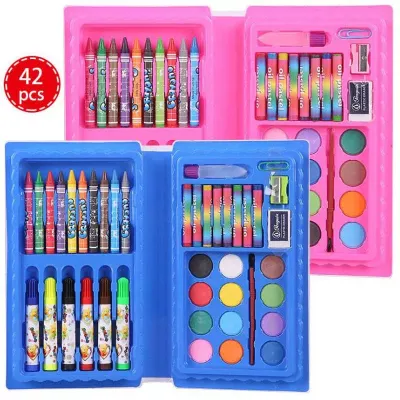
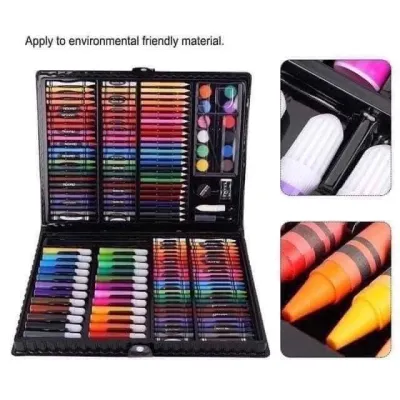
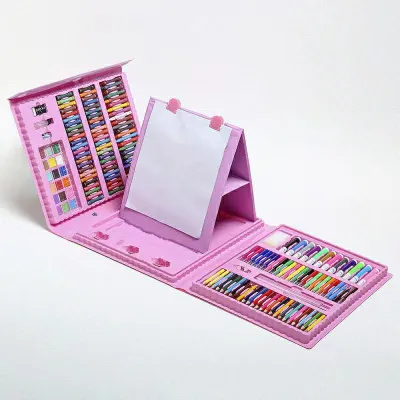
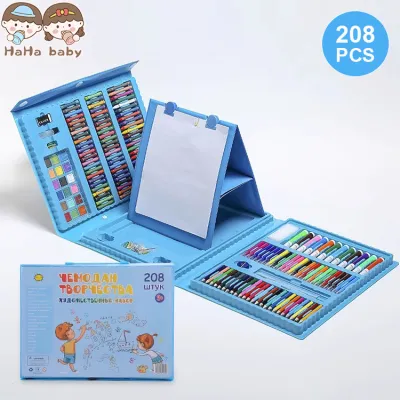
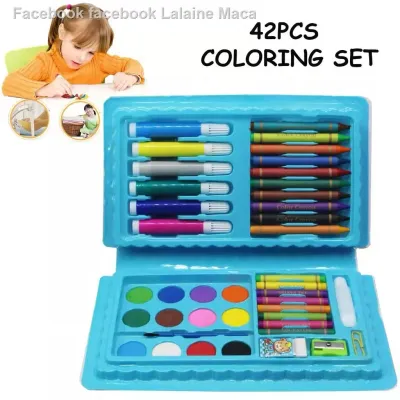
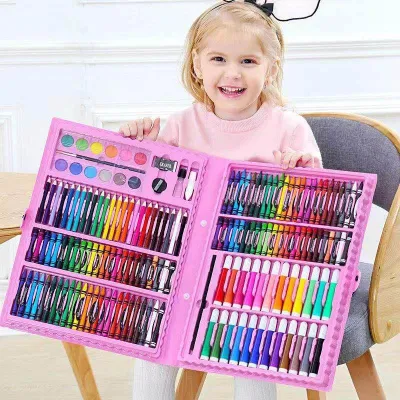
Prices are valid at publication and may change. Please refer to the product page for the latest price.
For students in the younger bracket of this range, typically ages 7 to 9, the curriculum focuses heavily on foundational motor skills and basic color recognition. Art projects at this stage usually require simple, highly controllable mediums such as wax crayons, thick colored pencils, and washable markers. These tools allow younger children to practice grip and pressure control without the mess and long drying times associated with liquid paints.
As students enter the 10 to 12 age range, their art classes become more technical and demanding. Curricula for older elementary and middle school students often introduce advanced concepts like perspective drawing, color mixing, and basic color washes. Consequently, their supply needs shift toward water-based paints, fine-tip drawing pens, and soft-core colored pencils that allow for smooth blending and layering. Understanding this developmental shift ensures you do not buy a set that is either too simplistic or frustratingly complex for your child’s current grade level.
Key Components to Look for in a Comprehensive Art Set
When evaluating the contents of a comprehensive art set, pay close attention to the specific types of drawing and painting mediums included. Colored pencils are a staple of school art classes, but their performance depends heavily on the core material. Look for pencils with break-resistant, medium-soft wax cores that glide smoothly across standard drawing paper without requiring excessive downward pressure. Harder lead pencils are excellent for fine detail work but can tear thin school paper and are difficult for younger hands to blend effectively.

Markers and pens in a school art set should offer versatile tip shapes to accommodate different project requirements. Dual-tip markers featuring a broad chisel tip on one end and a fine bullet tip on the other are highly practical, allowing students to fill large background areas quickly while still being able to outline detailed sections. Ensure the ink type is water-based rather than alcohol-based; water-based inks dry at a moderate speed that minimizes bleed-through on standard 70 gsm to 80 gsm school pad paper, whereas alcohol markers will quickly saturate and ruin the reverse side of the page.
Paint selection is another critical factor, especially when transitioning to wet mediums. Watercolors are the standard choice for school classrooms because they are highly portable, dry rapidly under normal room temperatures, and clean up easily with plain water. Acrylic paints, while offering vibrant opacity, are permanent once dry and can easily ruin school uniforms and classroom furniture. If the curriculum specifically calls for acrylics, verify that the set includes small, sealable tubes and a mixing palette to prevent the paint from drying out during a single class period.
Do not overlook the quality of the included accessories, as these often determine the overall utility of the set. A good art kit should feature synthetic nylon brushes, which retain their shape and springiness much better than cheap natural hair brushes that tend to shed bristles onto wet artwork. If a sketchbook is included in the set, check the binding and paper weight; a spiral-bound sketchbook with paper rated at 100 gsm or higher is ideal, as it allows pages to lay flat on a school desk and resists buckling when wet mediums are applied.
To ensure the materials perform well in the classroom, it is highly recommended to conduct a quick trial at home before the school year begins. Have your child draw a small color swatch on a spare sheet of their actual school paper to observe the smoothness of the pencils, the drying speed of the markers, and whether the ink bleeds through the page. This simple test helps prevent unexpected frustration during timed classroom assignments.
Evaluating Portability, Storage, and Organization
An art set is only useful if it actually makes it to school intact and can be stored neatly inside a crowded classroom. Hard-shell cases, often made of plastic, wood, or light aluminum, offer excellent protection for fragile items like pastel crayons and graphite pencils. However, wooden and metal cases can add significant weight to a child’s backpack and may warp or degrade if exposed to high tropical humidity or accidental water bottle leaks. Sturdy, impact-resistant plastic cases are generally more practical for daily school transport.
Zippered fabric pouches and folding nylon wraps present a lightweight, flexible alternative to rigid cases. These soft cases can easily compress to fit into the tight spaces of a school bag alongside textbooks and lunchboxes. When choosing a fabric case, look for water-resistant exterior materials like polyester or nylon, which protect the art supplies from rain during the wet season and can be wiped clean with a damp cloth if a marker cap accidentally comes off inside.
Regardless of the outer material, the internal organization of the case is paramount. Look for sets that feature dedicated molded compartments, elastic loops, or secure zippered pockets for every individual tool. When items have a specific, snug home, students can quickly scan their set at the end of a class period to ensure no pencils or brushes are left behind on the classroom floor. Secure closures, such as heavy-duty zippers or snap-lock latches, are essential to prevent the case from accidentally bursting open inside a backpack.
Safety, Non-Toxic Certifications, and Washability
Safety is the most critical consideration when selecting art supplies for children, particularly for those who will be using these materials independently in a school environment. Always look for clear, verifiable non-toxic certifications on the packaging, such as the AP (Approved Product) seal or equivalent regional safety standards. These labels guarantee that the materials have been toxicologically evaluated and contain no materials in sufficient quantities to be toxic or injurious to humans, even with prolonged skin contact.
Because school art classes involve close, hands-on contact with various mediums, washability is a major practical concern for parents. Water-based, washable markers and paints are highly recommended to prevent permanent staining on school uniforms, which are often white or light-colored. Washable formulas are designed to dissolve easily in warm water and standard laundry detergent, allowing you to clean stained clothing without resorting to harsh chemical stain removers that can damage fabric fibers.
Adhesives and solvents included in art sets require extra scrutiny. For children in the 7 to 12 age range, stick to solvent-free, water-based glue sticks or liquid school glues that do not emit strong fumes. Avoid sets that include utility knives or sharp metal cutters; if scissors are part of the kit, ensure they feature rounded safety tips and comfortable, ergonomic plastic handles designed for smaller hands. Additionally, check that all small components, such as pencil sharpeners and eraser caps, are securely sized to prevent accidental swallowing, especially if younger siblings have access to the art bag at home.
Pre-Packaged Art Sets vs. Building a Custom School Kit
When preparing for the school year, parents often face the choice between buying a ready-made, pre-packaged art set or assembling a custom kit from scratch. Pre-packaged sets offer unmatched convenience, providing a wide variety of mediums in a single, coordinated carrying case. This is often the most time-saving option and can feel like an exciting, cohesive gift for a young artist. However, many pre-packaged sets contain low-quality “filler” items—such as brittle plastic rulers, dull sharpeners, or chalky watercolors—to inflate the piece count while keeping the price low.
Building a custom kit allows you to select high-quality, reliable items that precisely match the school’s required supply list. This approach eliminates the waste of paying for mediums your child’s teacher may not allow in class, such as oil pastels or permanent markers. To build a custom kit, purchase a durable, multi-compartment pencil case or a zippered utility pouch, and fill it with individual, student-grade items from trusted stationery brands. This method ensures that every single tool in the kit is functional, durable, and suited to your child’s specific preferences.
Managing your budget in ₱ is another important factor in this decision. While a pre-packaged art set might seem more cost-effective upfront, ranging anywhere from ₱300 to ₱1,500, a custom-built kit often proves more economical over the course of the school year. When an item in a pre-packaged set runs out or breaks, finding a matching replacement that fits into the case’s specific molded slot can be difficult. With a custom kit, you can easily replenish high-consumption items like glue sticks, white paint tubes, or sketch paper mid-year without having to replace the entire storage case.
Frequently Asked Questions (FAQ)
How many pieces should a good art set have for a 7-12 year old?
A good art set for school use does not need a massive piece count; sets with 24 to 50 high-quality, essential items are generally much better than sets claiming 100 or more pieces. Large, multi-tiered sets often rely on cheap filler items, duplicate colors of low-quality crayons, and bulky packaging that is difficult to carry to school. Focus instead on finding a compact set that contains a solid selection of core mediums: 12 to 18 break-resistant colored pencils, a basic 8 to 12 color watercolor pan, a few high-quality brushes, and a reliable set of washable markers.
Are professional-grade art supplies necessary for school art classes?
Professional-grade art supplies are not necessary for standard school art classes and are often counterproductive for children aged 7 to 12. Professional materials are formulated with highly concentrated pigments and specialized binders that require advanced techniques to handle properly, and they are significantly more expensive. Student-grade or academic-grade art supplies are specifically designed for classroom use, offering a great balance of vibrant color, durability, ease of cleanup, and affordability. They allow students to experiment freely without the pressure of wasting costly materials.
What is the best way to label art supplies for school?
To prevent lost or mixed-up supplies in a busy classroom, label every individual item in the art set. Use thin, waterproof adhesive name labels wrapped securely around the barrel of each colored pencil and marker, just below the cap line. For paint tubes and watercolor pans, write your child’s initials directly on the plastic casing using a fine-tip permanent marker. Finally, place a large, clear name tag on the outside of the main carrying case so teachers and classmates can easily identify the owner if the set is left behind in the art room.

Community discussion
Share your experience or ask a question. Comments are reviewed before publication.