
Finding the right Jinhao fountain pen for daily writing requires balancing your physical writing habits with the specific characteristics of the pen’s design. Because Jinhao offers a vast array of models ranging from slim, lightweight metal pens to heavy, oversized acrylic options, there is no single model that suits every writer. Instead, the ideal choice depends on how you intend to use the pen, the paper you write on, and your willingness to perform basic maintenance. By evaluating these factors, you can select a reliable daily workhorse that fits your hand comfortably and performs consistently.
Setting Your Criteria for a Daily Writer
To find a pen that fits your daily routine, start by analyzing your typical writing sessions. If your day consists of quick, intermittent tasks—such as jotting down phone numbers or signing documents—you require a pen that can be deployed instantly. A pen with a secure snap cap is highly efficient for these scenarios, as it allows you to uncap and recap the pen quickly. Conversely, if your daily writing involves long, uninterrupted sessions like journaling or extensive note-taking, ergonomics become your primary concern. For these longer sessions, a threaded cap is often preferred because it typically provides a more secure seal to prevent the nib from drying out during pauses, and the overall balance of the pen becomes critical to preventing hand fatigue.
The physical balance of a fountain pen is heavily influenced by its weight and whether you prefer to write with the cap posted on the back of the barrel. Posting the cap can alter the pen’s center of gravity. If a pen is constructed from heavy materials like brass, posting the cap may make it back-heavy, forcing your hand to grip the section tighter to maintain control, which quickly leads to cramping. Lightweight materials, such as acrylic, resin, or thin aluminum, are much more forgiving when posted, allowing for a comfortable, balanced hold. If you have larger hands, you might find that writing unposted with a standard-sized pen feels cramped, making a larger barrel or a posted lightweight pen more suitable. Conversely, those with smaller hands often prefer slimmer, unposted models that offer maximum maneuverability.
Products mentioned in this guide
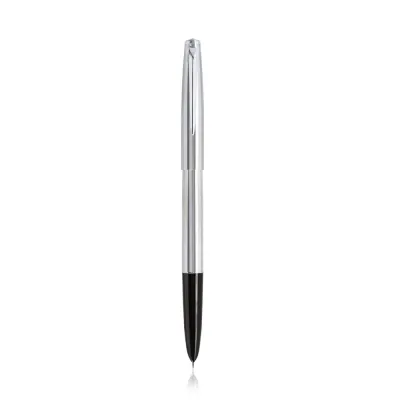
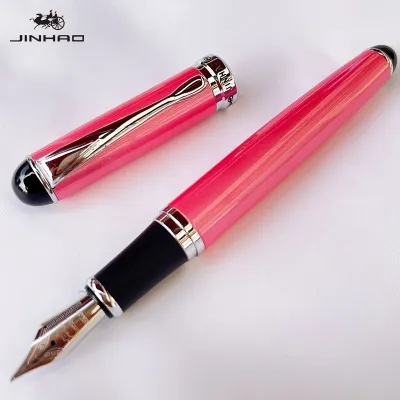
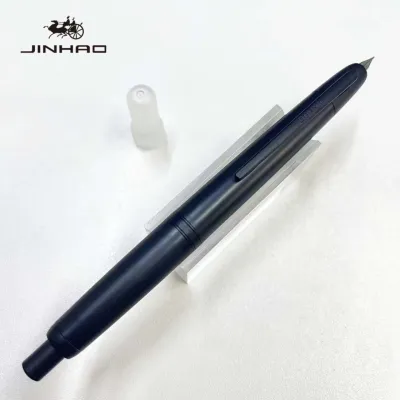
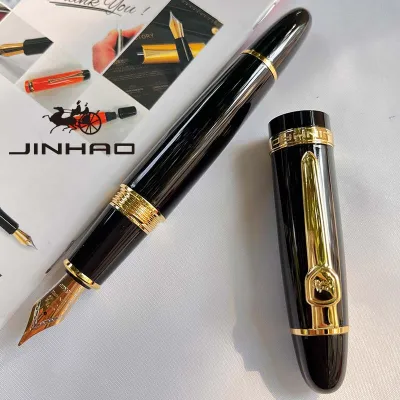
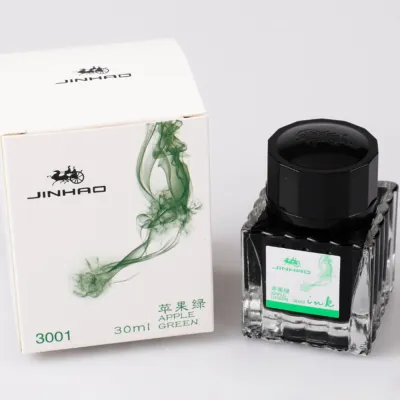
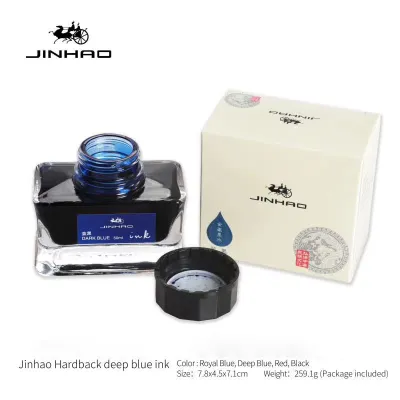
Prices are valid at publication and may change. Please refer to the product page for the latest price.
Your choice of nib width is another critical factor that must align with your daily writing surface. In many everyday environments, you do not have control over the quality of the paper provided. Standard office copy paper and cheap notebook paper are notoriously unfriendly to fountain pens, often causing ink to feather and bleed through to the other side of the page. If you frequently write on these challenging surfaces, an extra-fine or fine nib is the most practical choice. These finer tips restrict the flow of ink, resulting in thinner lines that dry quickly and are less likely to saturate the paper fibers. If you primarily write on high-quality, fountain-pen-friendly paper, a medium or broad nib can provide a smooth, gliding sensation and showcase the unique shading of your ink.
Finally, consider how the filling mechanism fits into your lifestyle and maintenance habits. The standard cartridge and converter system is highly popular for daily writers due to its simplicity and ease of maintenance. It allows you to use convenient pre-filled ink cartridges when traveling or quickly refill from a bottle using the converter. However, converters typically hold a relatively small volume of ink, usually between 0.5 to 0.9 milliliters. If you write pages of text daily, you may find yourself refilling the pen every few days. For high-volume writers, high-capacity filling systems like piston fillers or vacuum fillers are highly advantageous, often holding two to three times the volume of a standard converter. The trade-off is that these integrated systems are more complex to clean and flush, requiring more time and care when changing ink colors.
Matching Jinhao Models to Everyday Writing Needs
Jinhao offers a diverse portfolio of writing instruments that can be broadly categorized into three design philosophies: compact/pocket-friendly, standard balanced, and oversized/high-capacity. Understanding these general categories allows you to narrow down your choices based on your physical preferences and daily writing environments, rather than searching aimlessly through dozens of individual model numbers.

Compact and pocket-friendly models are engineered for maximum portability. These pens feature shorter barrels and lightweight constructions, making them easy to slip into a shirt pocket, a small pencil case, or the loop of a personal planner. Because of their reduced length, many of these models are designed to be written with the cap posted to achieve a comfortable working length in the hand. They typically utilize standard international short cartridges or small converters, making them highly convenient for travel or commuting. While they are excellent for quick notes on the go, their smaller grip sections may feel cramped during extended writing sessions for those with larger hands.
Standard balanced models represent the traditional core of daily writing instruments. These pens are designed to offer a comfortable middle ground in both length and weight, making them highly versatile for a wide range of users. They are typically constructed from durable resins, acrylics, or lacquered metals, providing a satisfying heft without causing fatigue. Most standard models feature a medium-sized grip section that accommodates various holding styles. They almost universally employ standard international converters, giving you access to an endless variety of bottled inks. Whether you are taking notes in a meeting, drafting a letter, or working through daily study guides, a standard balanced pen offers a reliable, comfortable experience.
Oversized and high-capacity models cater to writers who prefer a substantial, commanding instrument or who write in high volumes. These pens feature thicker barrels, wider grip sections, and often larger nibs that provide a distinct visual presence and a highly stable writing platform. The increased physical size allows for larger internal ink reservoirs, with some models utilizing advanced piston or vacuum filling mechanisms instead of standard converters. These high-capacity systems are ideal for long, uninterrupted writing sessions where running out of ink mid-thought would be a major inconvenience. However, the added weight and girth of these models mean they are generally less suited for quick, on-the-go notes and may feel cumbersome to those with smaller hands.
| Category | Typical Weight Profile | Common Filling Systems | Ideal Daily Use Case | Key Verification Check |
|---|---|---|---|---|
| Compact / Pocket-Friendly | Lightweight to Medium | Cartridge / Converter | Quick notes, travel, on-the-go writing | Check cap security and posting balance |
| Standard Balanced | Medium (Resin or Metal) | Standard International Converter | Daily journaling, office work, study notes | Verify grip section diameter and cap type |
| Oversized / High-Capacity | Heavy (Thick Acrylic/Metal) | Piston, Vacuum, or Large Converter | Long writing sessions, high-volume drafting | Confirm ink capacity and hand size compatibility |
When exploring these categories, it is important to remember that the fountain pen market is highly dynamic. Manufacturers frequently update their designs, introduce new colorways, and offer different nib configurations to meet changing consumer demands. Therefore, you should always verify the specific model availability, exact nib options, and current specifications on the retailer’s product listing before making your final purchase. This ensures that the pen you receive matches your expectations regarding weight, filling mechanism, and writing performance.
Navigating Ink and Filling System Compatibility
Selecting the right ink is just as important as choosing the pen itself when it comes to establishing a reliable daily writing routine. The interaction between the ink, the pen’s feed, and the paper determines how smoothly the pen writes and how often you will need to perform maintenance. For a daily workhorse pen, compatibility and reliability should always take precedence over aesthetic novelty.
First, verify the exact filling system requirements of your chosen Jinhao model. While the vast majority of standard-sized Jinhao pens are designed to accept standard international cartridges and converters, there are exceptions. Some oversized or specialized models may feature proprietary connections or integrated filling mechanisms like pistons or vacuum seals that cannot accommodate standard cartridges. Before purchasing ink supplies, carefully read the product specifications to ensure you buy the correct format. If your pen includes a converter, you have the freedom to choose from a vast world of bottled inks, which is often more economical and environmentally friendly in the long run.
For daily writing, especially in professional or academic settings, select inks that are well-lubricated and easy to clean. Well-lubricated inks help the nib glide smoothly across the paper, reducing friction and making the writing experience feel more effortless. Standard dye-based inks from established stationery brands are highly recommended for daily use. These inks are formulated to dissolve easily in water, meaning they are incredibly simple to flush out of the pen during routine maintenance. They are also less prone to drying up and clogging the feed if the pen is left unused for a few days.
In contrast, you should generally avoid heavily saturated, highly pigmented, iron gall, or shimmer inks for your primary daily writer. Shimmer inks contain tiny glitter particles that can easily settle in the narrow channels of the pen’s feed, leading to restricted ink flow, skipping, or complete clogging. Pigmented and iron gall inks offer excellent water resistance, which is highly desirable for permanent records, but they require meticulous maintenance. If these inks dry inside the pen, they can be extremely difficult to clean and may cause permanent flow issues. If you must use water-resistant or permanent inks due to professional requirements, commit to flushing your pen thoroughly every one to two weeks to prevent buildup.
Additionally, consider your local climate when managing your ink and pen setup. In warm, humid tropical environments like the Philippines, ink inside a pen can evaporate more quickly if the cap does not provide an airtight seal. This evaporation concentrates the ink, making it write darker and potentially causing hard starts, where the pen fails to write immediately when placed on paper. To mitigate this, store your pens horizontally when not in use, keep them away from direct sunlight or heat sources, and ensure the cap is always securely clicked or screwed into place immediately after you finish writing.
Inspecting and Tuning Your Pen Upon Arrival
Fountain pens in the budget-friendly category offer exceptional value, but they can occasionally exhibit minor variations in quality control. Taking a few systematic steps to inspect, clean, and prepare your new Jinhao pen before you fill it with ink can save you from frustration and ensure a smooth, reliable writing experience from the very first stroke.
Begin with a close physical inspection of the pen. Before adding any ink, examine the nib under a magnifying glass or a jeweler’s loupe if you have one. Look directly down the tip of the nib to check the alignment of the two metal tines. The tines should be perfectly parallel and aligned at the tipping material. If one tine is slightly higher than the other, the pen will feel scratchy when moved in certain directions and may skip. If you notice a minor misalignment, you can often gently press the high tine down with your fingernail to bring it back into alignment. However, only attempt these minor, reversible adjustments if you feel comfortable doing so, as applying excessive force can permanently bend or damage the nib.
Next, perform an initial flush of the pen. During the manufacturing and assembly process, microscopic traces of industrial oils, lubricants, or polishing compounds can remain on the nib and inside the plastic feed. These residues are hydrophobic, meaning they repel water-based fountain pen inks. If you fill a new pen without flushing it first, these oils can disrupt the capillary action of the feed, leading to inconsistent ink flow, dry writing, or skipping. To prevent this, prepare a simple cleaning solution by mixing room-temperature water with a single drop of mild dish soap. Use the pen’s converter to draw this soapy water up through the nib and feed, and then expel it. Repeat this process several times, then flush the pen thoroughly with clean, plain water to remove any soap residue. Let the nib dry on a paper towel before filling it with ink.
While minor adjustments and flushing are normal parts of the fountain pen hobby, it is crucial to recognize when a pen has a structural defect that cannot be easily fixed. If your inspection reveals a cracked plastic feed, a misaligned cap that fails to click or screw shut securely, stripped threads on the section or barrel, or a leaking converter, do not attempt to repair it with glue or permanent modifications. These are manufacturing defects that compromise the integrity of the pen. In such cases, stop and contact the online retailer or marketplace seller immediately. Most reputable sellers on ecommerce platforms offer straightforward return or replacement policies for defective items, provided the pen has not been modified or damaged by the user.
Frequently Asked Questions (FAQ)
Do Jinhao fountain pens need to be broken in?
A common misconception is that steel fountain pen nibs require a break-in period to become smooth. In reality, the tipping material on a steel nib is incredibly hard and will not wear down or conform to your writing style through normal use on paper. However, a new pen may feel slightly smoother over time as you naturally adjust your hand position to find the pen’s optimal writing angle, or as minor micro-burrs on the tipping material are gently polished away through regular contact with paper.
If your new pen feels slightly scratchy and you have verified that the tines are perfectly aligned, you can safely speed up the smoothing process using gentle, reversible methods. Writing a series of figure-eights or infinity symbols on a piece of smooth, brown paper grocery bag can act as an extremely mild abrasive, polishing away minor rough spots on the tipping material. Always perform this exercise with the pen inked, as the ink acts as a lubricant. Strictly avoid using harsh abrasives, sandpaper, or attempting unauthorized nib grinding with files, as these aggressive methods can easily strip the tipping material entirely, ruining the nib permanently.
Can I use Jinhao pens with standard international ink cartridges?
Yes, the vast majority of standard-sized Jinhao fountain pens are designed to be compatible with standard international short and long ink cartridges. This compatibility is highly advantageous for daily writers, students, and professionals who travel frequently, as standard international cartridges are widely available from various stationery brands worldwide. Additionally, most Jinhao models include a removable twist-action converter in the box, allowing you to transition seamlessly between convenient cartridges and bottled inks.
However, it is essential to check the specific product details of your chosen model before purchasing cartridges. Some Jinhao models—particularly oversized designs, pocket pens with extremely short barrels, or specialized models featuring integrated piston or vacuum filling mechanisms—do not support standard cartridges. Pocket pens may only accommodate standard short cartridges due to barrel length limitations, while integrated filling systems must be filled directly from an ink bottle. Verifying these details on the retailer’s listing ensures you select the correct ink format for your specific pen.

Community discussion
Share your experience or ask a question. Comments are reviewed before publication.