
When selecting a carpenter pencil set, the choice between flat and round shapes ultimately depends on your specific woodworking tasks rather than one shape being universally superior. Flat pencils excel in rough construction environments by preventing roll-aways and offering variable line widths, while round pencils provide the consistent, fine lines necessary for detailed cabinetry and precision joinery. Understanding how each shape interacts with different wood surfaces and marking tools will help you match the right pencil to your project requirements.
In tropical environments where high humidity and heat can affect both the moisture content of wood and the grip of your hands, choosing the right marking tool becomes even more critical. Damp wood fibers can cause soft graphite to smear, while sweaty hands can make certain pencil shapes difficult to control. By evaluating the structural and practical differences of each pencil type, you can ensure your layout marks remain highly visible and accurate from the first cut to the final assembly.
Understanding the Structural Differences Between Flat and Round Pencils
To understand how these tools perform on the jobsite, it is essential to look at their core geometry. A traditional flat carpenter pencil features a rectangular or elliptical wooden casing housing a wide, flat graphite core. This flat lead is significantly wider than it is thick, creating a rectangular cross-section that resists snapping under heavy downward pressure. The flat design is not just an aesthetic choice; it is a structural solution to the high-stress demands of marking rough building materials.
Products mentioned in this guide
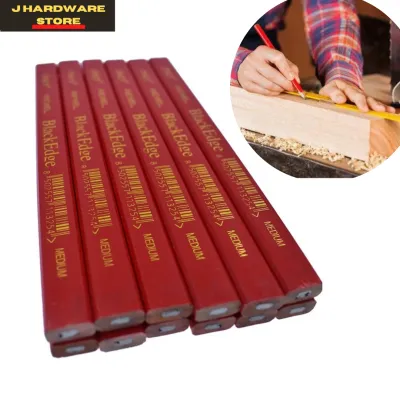
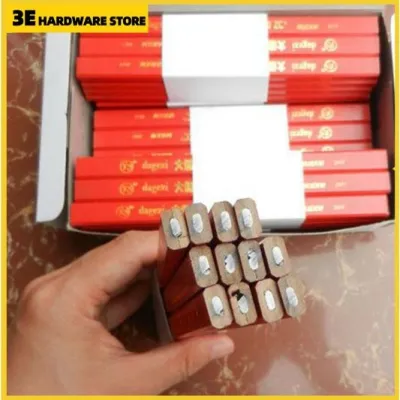
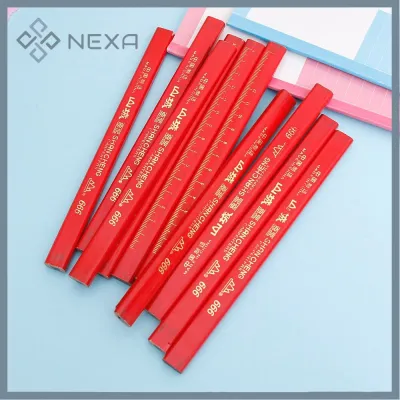
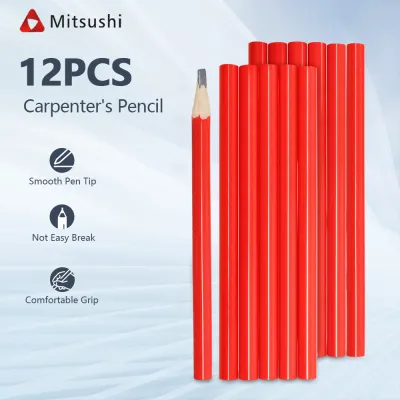
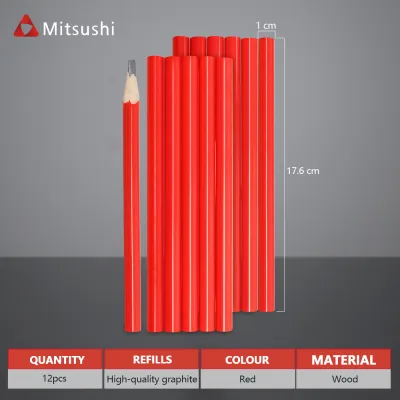
Prices are valid at publication and may change. Please refer to the product page for the latest price.
In contrast, a round carpenter pencil closely resembles a standard writing pencil but is typically built with a thicker, more robust cylindrical lead core. The round wooden casing surrounds a round graphite rod, which provides uniform support from all angles. This symmetrical construction ensures that the pencil feels familiar in the hand, mimicking the ergonomics of everyday writing instruments while offering enhanced durability compared to standard office stationery.
These structural differences directly dictate how you must sharpen each tool. Round pencils can often be sharpened using standard heavy-duty pencil sharpeners or specialized rotary tools designed for thicker diameters. Flat pencils, however, cannot rotate inside a standard circular sharpener. Sharpening a flat pencil traditionally requires a utility knife or a chisel to carefully shave away the wooden collar and expose the flat lead. When using a utility knife, always carve away from your body and keep your fingers behind the cutting edge to prevent accidental slips. Alternatively, you can use specialized flat-pencil sharpeners that utilize a linear shaving motion, though many experienced builders still prefer the customization of a hand-carved edge.
Marking Accuracy and Line Control on Different Wood Surfaces
The shape of the graphite core directly influences the thickness and consistency of the lines you can draw. With a flat carpenter pencil, you have the unique ability to adjust your line width on the fly simply by rotating the tool. Drawing with the broad side of the rectangular lead produces a thick, dark line that is highly visible from a distance, making it ideal for marking rough cut lines on framing lumber. Conversely, rotating the pencil to utilize the sharp, narrow edge of the flat lead allows you to draw a remarkably thin, precise line for more detailed layout work.

Round pencils offer a different kind of control by delivering a consistent, uniform line width that remains stable regardless of how you rotate the pencil in your hand. This predictability is highly valued in detailed joinery and cabinetry, where even a fraction of a millimeter can throw off an entire assembly. Because the round lead wears down evenly around its circumference, you do not have to worry about the line suddenly thickening as you change your hand angle during a long mark.
Surface interaction also plays a major role in how these shapes perform. On rough, unfinished lumber—such as local coco lumber or rough-sawn tanguile commonly used in construction—the wide surface area of a flat pencil lead holds up exceptionally well against the abrasive wood fibers. The flat lead resists sinking into deep grain valleys, maintaining its point integrity longer. On smooth, milled wood like marine plywood or planed hardwoods, the round pencil shines. Its fine, consistent point glides smoothly across the planed surface without catching, allowing for highly detailed measurements and intricate layout lines that are easy to follow with a hand saw or router.
Jobsite Practicality: Grip, Durability, and Roll-Away Risks
Beyond the quality of the mark, a pencil must survive the daily rigors of the jobsite. One of the most significant practical advantages of the flat carpenter pencil is its resistance to rolling. When working on sloped roofs, scaffolding, or uneven workbenches, a round pencil can easily roll away, falling into hard-to-reach crevices or breaking its internal lead upon hitting a concrete floor. The flat sides of a rectangular pencil ensure it stays exactly where you place it, saving time and reducing frustration during busy workdays.
Grip comfort is another critical factor, particularly during long hours of layout work in hot, humid conditions. Sweaty hands can cause round pencils to slip or rotate unintentionally, leading to inconsistent marks. The flat profile provides a wider surface area for your thumb and fingers to press against, offering a secure grip that reduces hand fatigue when wearing heavy work gloves or working in damp environments. However, some users find the blocky shape of flat pencils less natural to hold for extended periods compared to the familiar, ergonomic feel of a round casing.
Durability in a crowded tool pouch is where both designs must prove their worth. The flat pencil’s wide wooden casing provides excellent lateral support, protecting the inner graphite core from snapping when jostled against heavy metal tools like hammers and chisels. Round pencils, while slightly more vulnerable to lateral snapping if stepped on, often feature dense wood casings that offer comparable protection. To verify the durability of your pencil, inspect the wood casing for splits or cracks before placing it in your pouch, as moisture absorption in humid climates can weaken the wood over time.
How to Choose the Right Carpenter Pencil Set for Your Projects
Selecting the ideal option from a carpenter pencil set requires matching the tool’s strengths to your specific project demands. If your daily work involves rough framing, roofing, concrete formwork, or outdoor construction where speed and high visibility are paramount, the flat carpenter pencil is generally the more practical choice. Its ability to survive rough handling, resist rolling off elevated structures, and produce bold, easily visible marks on coarse materials makes it indispensable for heavy-duty tasks.
For those focusing on fine cabinetry, detailed furniture making, indoor trim installation, or precision joinery, the round carpenter pencil is highly recommended. The consistent line width and familiar writing grip allow for the meticulous accuracy required when fitting tight joints or marking delicate veneers. It is also the preferred choice if you frequently use mechanical layout gauges or marking jigs that require a round body to slide smoothly along a guide rail.
Before making your final selection, verify your existing gear compatibility. Check if your tool belt loops, pocket organizers, or preferred sharpening tools are designed to accommodate flat or round profiles. Some tool pouches have narrow, circular slots that will not accept a wide flat pencil, while others feature wide, flat pockets where a round pencil might slip out too easily.
Ultimately, many professional woodworkers and builders find that the most versatile approach is to keep a mixed carpenter pencil set in their workshop. This allows you to deploy a flat pencil for the initial rough layout and material breakdown, and then switch to a round pencil for the final, precise joinery marks. By matching the pencil shape to the specific stage of your project, you can achieve both the speed required for rough construction and the accuracy needed for fine craftsmanship.
Frequently Asked Questions (FAQ)
Can I use a standard sharpener for flat carpenter pencils?
Standard cylindrical pencil sharpeners are designed for round or hexagonal profiles and cannot accommodate the wide, rectangular shape of a flat carpenter pencil. Attempting to force a flat pencil into a standard sharpener can damage the sharpener’s blades and splinter the pencil’s wooden casing. To sharpen a flat pencil safely, use a sharp utility knife to shave away the wood and expose the lead, or invest in a specialized flat-pencil sharpener designed with a wider, rectangular opening.
Do round carpenter pencils use standard graphite leads?
While they share a similar shape, round carpenter pencils are distinct from standard office pencils. They typically feature much thicker and harder graphite leads, often rated at medium or hard grades, to withstand the abrasive surfaces of wood, plaster, and masonry. If you are using a mechanical round carpenter pencil, ensure you purchase compatible heavy-duty replacement leads rather than standard office pencil refills, which are too thin and fragile for jobsite use.
How do I prevent my carpenter pencil from breaking in my tool pouch?
To protect your pencils from breaking, store them in dedicated pencil loops or a rigid protective sleeve within your tool pouch rather than letting them float freely among heavy hand tools. Avoid applying excessive lateral pressure when marking rough surfaces, as this can fracture the lead inside the wooden casing. Additionally, in highly humid environments, store your pencils in a dry container when not in use to prevent the wooden casing from absorbing moisture, which can soften the wood and lead to premature breakage.

Community discussion
Share your experience or ask a question. Comments are reviewed before publication.