
Buying a 100-piece box of Flex Stick ballpens is generally more cost-effective on a per-unit basis, but the true financial value depends on your actual consumption rate, storage conditions, and the current retail pricing landscape. For high-volume users like schools, offices, or event organizers, bulk purchasing minimizes the cost per pen. However, for occasional writers, the upfront cost and the risk of ink drying out in tropical climates can quickly erase any nominal savings.
To determine whether a bulk box is the right investment for your writing needs, you must evaluate both the mathematical savings and the practical trade-offs of storing large quantities of stationery. This guide breaks down the exact formulas, storage considerations, and market factors to help you make an informed decision.
Understanding the True Cost Per Piece
Calculating the cost-effectiveness of a 100-piece box requires a simple mathematical comparison, but you must ensure you are comparing identical products. To find the unit price of any pack, divide the total price of the package by the number of pens inside. For example, if a bulk box costs $P_{bulk}$, your cost per piece is $P_{bulk} / 100$. Compare this directly to the cost per piece of a single pen or a smaller multi-pack (such as a 3-pack or a 12-pack) using the same formula.
Products mentioned in this guide
![[PER BOX] FlexStick Smooth Ink Ballpen | Black Blue Red](https://img.lazcdn.com/g/p/bb6c49fba8b5a798702fde2136909dd3.jpg_400x400q80.jpg_.webp)
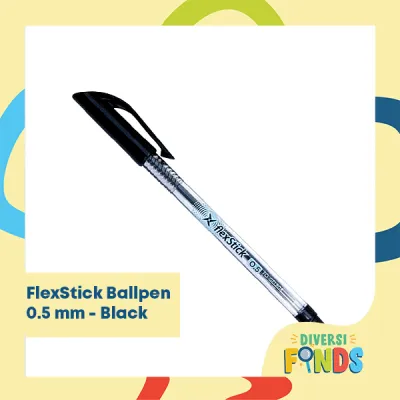
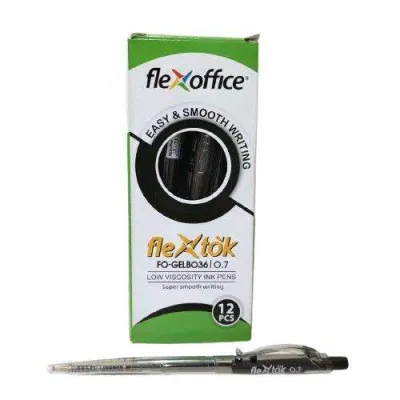
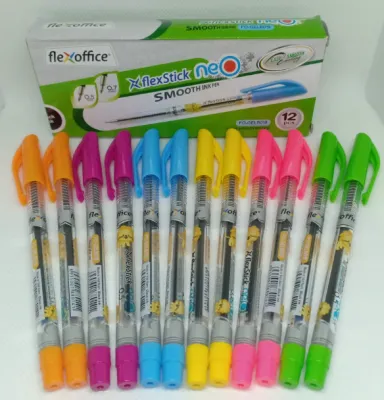
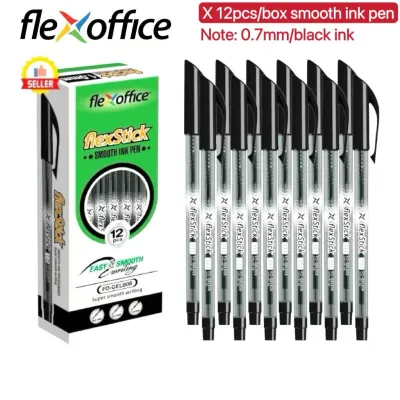
Prices are valid at publication and may change. Please refer to the product page for the latest price.
When performing this calculation, it is critical to match the exact Stock Keeping Unit (SKU) specifications. Flex Stick ballpens are available in various tip sizes, such as 0.5mm and 0.7mm, and different ink colors, including black, blue, and red. A bulk box of 0.5mm black pens must only be compared to smaller packs of the exact same tip size and ink color. Specialty inks or finer tips sometimes carry a premium price, which can skew your calculations if you accidentally compare mismatched models.
Additionally, keep an eye out for hidden unit variations in retail packaging. Retailers frequently offer promotional bundles, such as “buy 10, get 2 free” packs or seasonal back-to-school discounts. These promotional items can significantly lower the cost per piece of smaller packs, sometimes making them competitive with or even cheaper than a standard 100-piece wholesale box. Always calculate the unit price based on the actual number of pens you receive, including any bonus items.
Bulk vs. Retail: Hidden Costs and Trade-Offs
While a lower cost per piece is highly appealing, bulk buying introduces hidden risks that do not apply to single-pen purchases. The primary risk is ink shelf life. Ballpoint pens utilize an oil-based ink formulation designed to flow smoothly under friction. However, over extended periods, this ink can dry out, clog, or separate. In tropical environments characterized by high ambient temperatures and fluctuating humidity, these degradation processes can accelerate, potentially rendering a portion of your 100-piece box unusable before you ever write with them.

To protect your investment and maintain writing quality, you must store your bulk stationery correctly. Keep the box in a cool, dry place away from direct sunlight and localized heat sources, such as computer towers or sunny windowsills. Storing the pens horizontally is generally recommended for dual-tip or standard ballpoints, as it prevents the ink from settling entirely at the back of the barrel or pooling excessively at the writing tip, which can cause leakage or initial skipping.
There is also the factor of upfront cash flow versus long-term savings. Purchasing a 100-piece box requires a larger immediate outlay of pesos (₱) compared to buying a cheap single pen when the need arises. If those pens sit in a drawer for two years, your capital is tied up in stagnant inventory. You must weigh the immediate convenience of having a massive supply against the utility of keeping those funds liquid for other immediate expenses.
How to Evaluate Current Market Prices
Stationery prices fluctuate based on supply chain dynamics, seasonal demand, and retailer promotions. To find the most accurate pricing, check official brand stores, authorized office supply distributors, and reputable sellers on major e-commerce platforms. Avoid relying on outdated price lists, as manufacturing and distribution costs change over time.
When shopping online, always calculate the “landed cost” of your purchase. A low listing price for a 100-piece box can be deceptive if it is accompanied by high shipping fees. Conversely, smaller packs might qualify for free shipping thresholds or platform-wide vouchers that lower their total cost. To find the true cost per piece online, use this formula:
$$\text{Landed Cost Per Piece} = \frac{\text{Item Price} + \text{Shipping Fee} – \text{Discounts and Vouchers}}{\text{Total Quantity of Pens}}$$
Finally, prioritize seller authenticity and product freshness. Counterfeit stationery is common on online marketplaces, often featuring inferior ink that leaks or skips. Look for verified seller badges, read customer reviews, and check for recent feedback. If possible, ask the seller for the manufacturing date of the bulk box; older stock that has sat in a warm warehouse for years is much more likely to suffer from dried ink.
Decision Matrix: When to Buy the 100-Piece Box
To decide if the 100-piece box is truly the best option for you, assess your personal or organizational consumption rate. High-usage environments are the ideal match for bulk purchases. In busy offices, classrooms, call centers, or community registration booths, pens are consumed rapidly, borrowed constantly, or frequently misplaced. In these scenarios, a 100-piece box maximizes value, ensures a steady supply, and eliminates the administrative hassle of constant reordering.
Conversely, low-usage or purely personal scenarios rarely justify a 100-piece purchase. If you only use a ballpen to sign occasional delivery receipts or write brief daily journal entries, a single pen can last several months. A box of 100 pens could easily represent a multi-decade supply, virtually guaranteeing that the majority of the pens will dry out and go to waste long before you can use them. For personal use, purchasing a high-quality 3-pack or 12-pack is almost always the more economical and less wasteful choice.
If you want the financial benefits of bulk pricing without the storage risks, consider alternative purchasing strategies. Group buying is an excellent way to leverage wholesale rates. You can split the cost and the contents of a 100-piece box with classmates, office colleagues, or family members. This cooperative approach allows everyone to enjoy the lowest possible cost per piece while ensuring that the pens are distributed and used well within their optimal shelf life.
Frequently Asked Questions (FAQ)
Do Flex Stick ballpens expire or dry out in the box?
Yes, like all ballpoint pens, Flex Stick pens can dry out over time. Under ideal storage conditions, standard ballpoint ink typically has a shelf life of two to three years. In warm, humid tropical climates, this timeline can shorten if the pens are exposed to excessive heat. Signs of dried ink include scratchy writing, faint lines, or a complete lack of ink flow despite a full visible reservoir. To maximize shelf life, keep the box sealed in a cool, dark drawer and store the pens horizontally to maintain consistent ink distribution.
Can I return a 100-piece box if some pens are defective?
Return policies depend entirely on the retailer and the platform where you made the purchase. Most major e-commerce platforms and physical stationery stores offer a standard return window (typically ranging from 7 to 30 days) for defective items. When your bulk box arrives, it is wise to perform a quick trial by testing a random sample of five to ten pens on standard copy paper to check for smoothness, ink flow, and drying speed. If you encounter multiple defective units, document the issue immediately with photos or videos and contact the seller within their official return window to request a replacement or refund.

Community discussion
Share your experience or ask a question. Comments are reviewed before publication.