
Choosing the right canvas for your memories is a deeply personal part of the journaling process. When you print your own layouts, ephemera, or photos, the choice between glossy and matte photo sticker paper shapes not only how your spreads look but also how they feel and endure over time. Neither finish is universally superior; instead, the ideal choice depends on your desired visual aesthetic—whether you prefer high-contrast, modern photographic prints or soft, vintage, writable layouts—and the specific printer you use.
Your creative environment also plays a practical role in this decision. In warm, tropical climates where high humidity is a daily reality, ink drying times and paper preservation become significant factors. Understanding how these finishes interact with different ink types, printer mechanics, and writing instruments will help you avoid ruined prints and sticky paper jams, ensuring your journal remains a clean, beautiful record for years to come.
Aesthetic and Tactile Differences on the Page
The visual and physical characteristics of your sticker paper alter the entire mood of a journal spread. How light reflects off the page, how colors present themselves, and how the paper feels under your fingertips all contribute to the sensory experience of scrapbooking and memory keeping.
Products mentioned in this guide
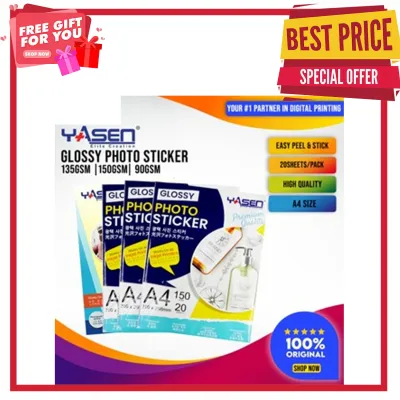
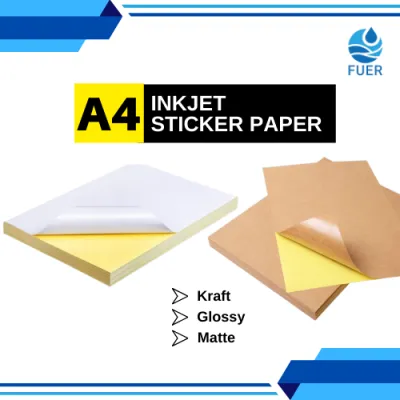
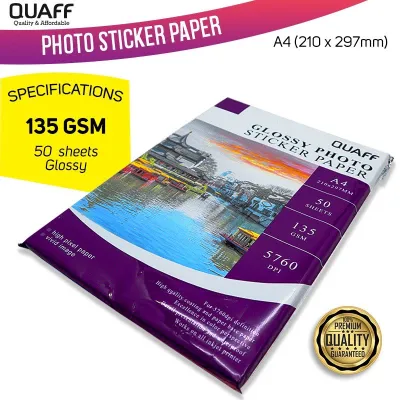
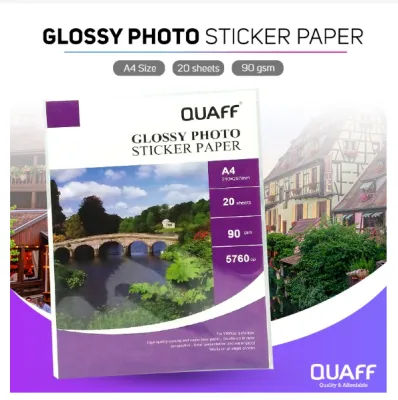
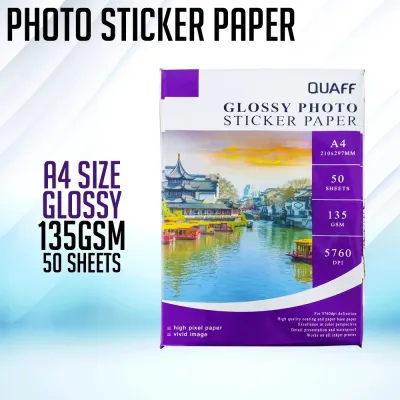
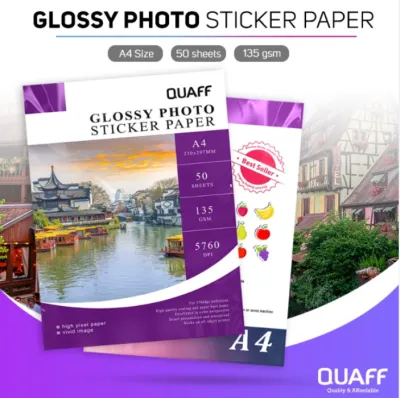
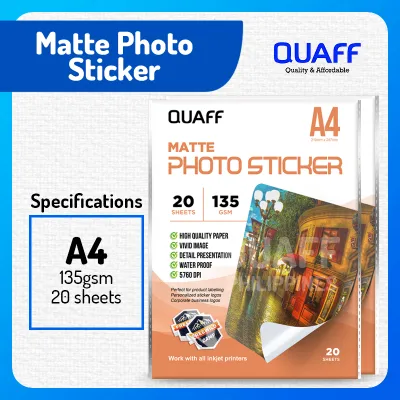
Prices are valid at publication and may change. Please refer to the product page for the latest price.
Glossy Finish: High Shine and Vibrant Photos
Glossy photo sticker paper is distinguished by its highly reflective, polished topcoat. This specialized coating is designed to keep liquid ink close to the surface, preventing it from sinking deep into the paper fibers. Because the ink remains concentrated on the top layer, colors appear exceptionally saturated, blacks look deep and intense, and the overall contrast is remarkably sharp. If your journaling style relies on realistic photography, vivid travel landscapes, or bright, modern digital art, a glossy finish provides that professional, high-end photo-lab appearance.
However, this brilliant shine comes with distinct physical trade-offs. The smooth, slick surface of glossy paper is highly susceptible to collecting natural skin oils, meaning fingerprints and smudges can easily mar your prints during cutting and pasting. Additionally, the reflective surface can create significant glare under direct desk lamps or bright sunlight. If you frequently write text directly onto your stickers or enjoy reading your journal under overhead lighting, this intense glare can make your layouts difficult to view from certain angles.
Matte Finish: Soft Glare and Writable Textures
Matte photo sticker paper features a non-reflective, diffused surface that scatters light rather than reflecting it. This lack of glare gives your printed images a softer, more organic, and vintage appearance. For journalers who favor a rustic, classic, or mixed-media aesthetic—such as junk journaling, botanical themes, or watercolor-style illustrations—matte paper blends seamlessly into the background of standard journal pages without looking overly plastic or artificial.
The primary tactile advantage of matte paper is its slightly textured, toothy surface. Because it lacks a restrictive plastic barrier, this porous coating allows you to write, sketch, or stamp directly onto the sticker using standard gel pens, fine liners, brush pens, or rubber stamps. You can easily integrate your handwriting with your printed designs without worrying about the ink pooling or smearing.
The trade-off for this versatility is color intensity. Because the matte surface absorbs ink deeper into its fibers, colors can appear slightly less saturated, and deep blacks may look more like dark charcoal or slate gray. While this softer contrast is often a deliberate, highly desired choice for vintage layouts, it may disappoint those looking for ultra-crisp, high-fidelity photographic reproductions.
Printer Compatibility and Ink Drying in Humid Climates
Beyond aesthetics, the technical compatibility between your printer and your chosen sticker paper is crucial. High relative humidity can severely impact how ink behaves on different coatings, making it essential to match your paper to your specific printing hardware.

Inkjet Printers: Managing Drying Time and Smudges
Inkjet printers work by spraying tiny droplets of liquid ink onto the paper. How those droplets dry depends entirely on the sticker paper’s coating. Glossy sticker papers generally fall into two categories: cast-coated and microporous. Microporous coatings contain microscopic inorganic particles that absorb ink quickly, while cast-coated papers rely on a swellable layer that expands to trap the ink. In humid environments, the moisture in the air slows down the evaporation of the liquid carrier in inkjet inks. On glossy surfaces, this can result in ink that remains damp to the touch for hours, leading to immediate smudging if you handle the sheet too quickly.
In contrast, matte sticker paper features an open, porous structure that naturally draws liquid ink away from the surface almost instantly. This rapid absorption significantly reduces the risk of smudging, even in humid weather. However, this absorption can sometimes lead to a phenomenon known as dot gain, where the ink droplets spread slightly outward as they sink into the fibers. This can cause very fine details or tiny text to lose a bit of their sharpness. To ensure successful prints, always verify that the paper packaging explicitly states “Inkjet Compatible,” print a small test strip first to observe the drying behavior, and allow your printed sheets to cure in a dry, well-ventilated space before cutting them.
Laser Printers: Toner Adhesion and Heat Limits
Laser printers operate on an entirely different mechanism than inkjets, using static electricity to dust dry toner powder onto the page, which is then fused to the surface using high-heat rollers. Because fuser temperatures can exceed 150°C, using the wrong type of sticker paper can lead to disastrous results, including melted adhesives that can ruin your printer’s internal components.
Glossy sticker papers designed for laser printers use heat-resistant synthetic coatings that allow the plastic toner to bond securely without bubbling or peeling. If you attempt to run inkjet-specific glossy paper through a laser printer, the toner may fail to adhere properly, resulting in a flaky, powdery mess that easily scrapes off with a fingernail. Matte laser-compatible sticker paper is generally much more forgiving, as the toner easily fuses into the textured surface fibers. Before printing, always check your printer’s manual to verify its maximum supported paper weight (measured in GSM) and adjust your print settings to “Heavy Paper” or “Labels” to ensure the fuser applies the correct amount of heat and speed, preventing costly paper jams.
Durability, Adhesion, and Archival Quality
A journal is often meant to be a lasting keepsake, which makes the durability of your stickers a primary consideration. The longevity of your printed designs depends on water resistance, UV protection, and the chemistry of the adhesive backing.
- Water and Smudge Resistance: A common misconception is that glossy paper is naturally waterproof while matte is not. In reality, water resistance is determined by the specific chemical composition of the coating and the ink type used, not the level of shine. Some matte papers are made from synthetic vinyl or polyester, making them highly waterproof, while some paper-based glossy sheets will bleed the moment they contact moisture. Always inspect the product packaging for explicit "waterproof" or "water-resistant" claims rather than assuming durability based on the finish.
- UV and Fading: Over time, exposure to sunlight and ambient UV rays will fade printed images. While some glossy coatings provide a mild physical barrier against light exposure, true archival longevity requires using acid-free and lignin-free sticker papers. Acidic papers will yellow, become brittle, and can even transfer a brown halo onto the surrounding pages of your journal over several years. Look for "acid-free" or "archival-safe" certifications on the label to protect your layouts.
- Adhesive Types: Consider how permanent you want your stickers to be. Permanent adhesives bond aggressively to journal pages and are ideal for long-term spreads, but they offer no room for error during placement. Removable or repositionable adhesives allow you to peel and adjust your stickers without tearing your journal pages, making them excellent for daily planners and temporary layouts. Always check the backing liner specifications to ensure the adhesive matches your working style.
Side-by-Side Comparison: Glossy vs. Matte
To help you quickly evaluate the practical differences between these two popular finishes, this comparison table highlights how they perform across key journaling and printing dimensions:
| Feature | Glossy Finish | Matte Finish |
|---|---|---|
| Color Vibrancy | High saturation, deep blacks, and sharp contrast | Softer colors, charcoal-toned blacks, muted contrast |
| Surface Glare | High reflectivity; prone to glare under desk lamps | Non-reflective, diffused surface; zero glare |
| Writability (Pen/Marker) | Limited; requires specialized permanent markers | Excellent; accepts gel pens, fine liners, and stamps |
| Inkjet Drying Speed | Slower; highly sensitive to tropical humidity | Fast; ink absorbs quickly into the porous surface |
| Best Journaling Use Case | Photographic prints, travel memories, vivid digital art | Vintage layouts, daily planner stickers, writable labels |
The Final Decision Framework for Journalers
To make your final purchase, evaluate your specific creative goals, tools, and environment against this practical decision matrix:
Choose Glossy if:
- Your journal spreads rely heavily on realistic photography, high-contrast portraits, or vivid, colorful digital artwork.
- You want a polished, professional photo-album look that makes your printed images stand out on the page.
- You do not need to write, draw, or stamp directly over the printed sticker surface.
- You have a dry printing environment or are willing to wait for wet ink to fully cure.
Choose Matte if:
- You prefer a vintage, soft, or illustration-based aesthetic that blends naturally with paper pages.
- You want to write notes, add calligraphy, or apply rubber stamps directly onto your stickers using standard gel pens or fine liners.
- You want to avoid distracting glare when viewing your journal under direct desk lamps or sunlight.
- You struggle with ink smudging due to high humidity and need fast-drying prints.
Verify First if:
- You are unsure of your printer's maximum paper weight capacity; check your user manual to avoid feeding issues.
- You require guaranteed waterproof or UV-resistant properties; look for these specific claims on the product packaging rather than relying solely on the finish type.
Before purchasing bulk packs of sticker paper, which can range in price from a few hundred Pesos (₱) to larger investments for premium brands, it is highly recommended to buy a small sample pack or a few individual sheets. Testing a single sheet with your specific home printer and favorite journaling pens will save you time, money, and creative frustration, helping you find the perfect match for your journaling style.
Frequently Asked Questions (FAQ)
Can I write on glossy photo sticker paper with standard pens?
Standard ballpoint pens, gel pens, and water-based fine liners will generally smear, bead up, or fail to dry on glossy photo sticker paper. Because the glossy coating is designed to be non-porous to keep ink vibrant, it cannot absorb the slow-drying liquid inks used in everyday writing instruments.
If you must write on a glossy sticker, you will need to use oil-based permanent markers, fine-tip paint pens, or specialized alcohol-based markers. However, keep in mind that these heavy solvents can alter the aesthetic of your print and may bleed through the sticker backing and stain your journal pages. Always perform a quick scratch-and-smudge test on a scrap piece of printed glossy paper before writing on your final layout.
Do I need to laminate matte sticker paper to make it waterproof?
Because matte sticker paper is highly porous, it naturally absorbs moisture, making standard paper-based matte stickers highly susceptible to water damage, ink bleeding, and smearing from highlighters or damp fingers. Unless the packaging explicitly states that the paper is made from a waterproof synthetic material (such as matte vinyl), it will require a protective layer to withstand moisture.
To make paper-based matte stickers waterproof for daily journal use, you can apply a cold-laminate sheet or a clear self-adhesive vinyl overlay on top of your printed sheet before cutting out your designs. Alternatively, a light coat of a clear, brush-on, or spray-on waterproof sealant can protect your stickers from accidental spills, sweat, and highlighter smudging, keeping your hard work pristine over time.

Community discussion
Share your experience or ask a question. Comments are reviewed before publication.