
When buying pad paper for a Grade 1 student, look for three key specifications: a specialized primary ruling with a dotted midline and wide spacing (typically 15mm to 17mm), a manageable sheet size like standard short format, and a sturdy paper weight of at least 70 to 80 GSM. These specifications directly support a child’s developing fine motor skills and spatial awareness. Choosing the right paper reduces frustration and helps young learners build confidence as they master letter shapes.
Quick Guide to Grade 1 Pad Paper Specifications
Selecting school supplies for a first grader requires looking past colorful covers to examine the technical details of the paper. At this developmental stage, children are transitioning from drawing shapes to forming structured letters, which demands specific physical guides on the page.
- Line Spacing: Look for primary ruling with a spacing of 15mm to 17mm, ideally featuring a dotted midline or a blue-red-blue color scheme to guide letter height.
- Sheet Size: Opt for standard short format (8.5 x 11 inches) to fit comfortably on small school desks and inside standard backpacks.
- Paper Weight: Aim for a minimum of 70 GSM (grams per square meter) to prevent tearing during heavy-handed pencil work and frequent erasing.
- Binding: Choose top-bound pads with clean perforation to allow easy page removal without ripping the student's work.
Line Spacing and Ruling: Supporting Early Handwriting
First graders are still refining their hand-eye coordination and finger muscle strength. Standard ruled paper designed for older students or adults does not provide the visual boundaries necessary for young learners to understand letter proportions, such as the difference between uppercase and lowercase heights.
Products mentioned in this guide
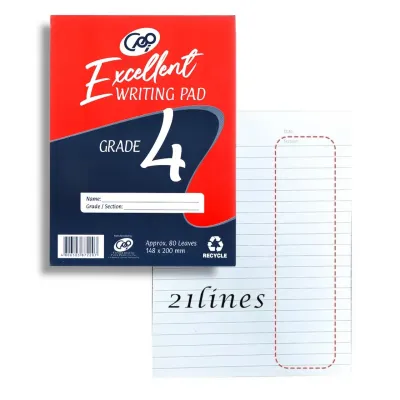
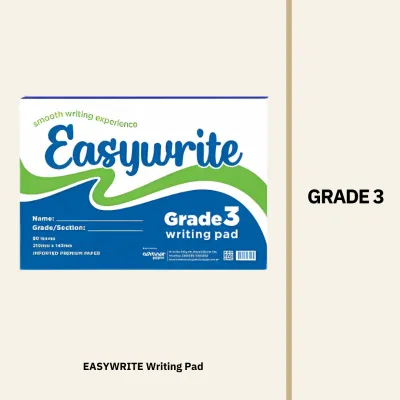
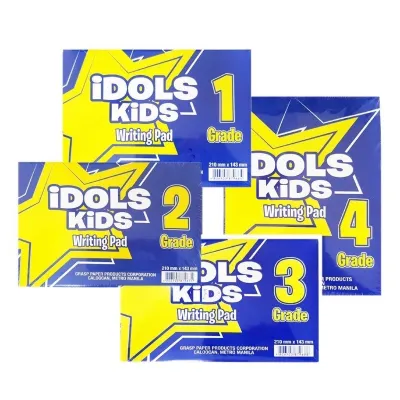
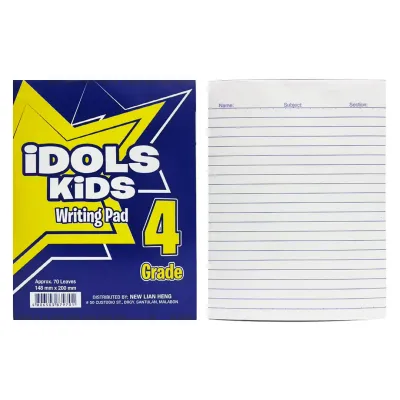
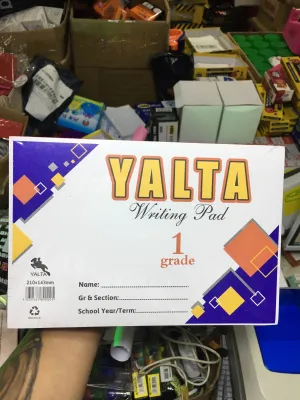
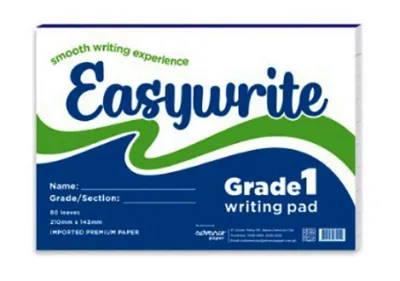
Prices are valid at publication and may change. Please refer to the product page for the latest price.

Primary pad paper features a distinct three-line structure, often referred to as blue-red-blue ruling. The top and bottom solid lines establish the maximum height of capital letters and the lowest reach of descenders, like the tail of a “g” or “y”. The middle line, which is frequently dotted or dashed, guides the height of lowercase letters such as “a”, “c”, and “e”.
Wider spacing—typically ranging from 15mm to 17mm—gives small hands the physical room they need to write. When line spacing is too narrow, children often feel frustrated because their natural writing size is compressed, leading to cramped, illegible letters and hand fatigue.
Before purchasing a large pack of pads, verify the specific handwriting curriculum used by your child’s school. Some educational institutions require a specific color sequence for the lines, while others prefer a simple wide-ruled format without a dotted midline. Checking the teacher’s syllabus ensures the paper matches the exact visual cues taught in the classroom.
Sheet Size and Format: Fitting Desks and School Bags
The physical dimensions of the pad paper play a practical role in a first grader’s daily school routine. In many classrooms, desk space is limited, and young students must manage multiple items like pencil cases, water bottles, and textbooks simultaneously.
The standard short format, measuring 8.5 by 11 inches, is the most common and practical size for early elementary grades. This size fits neatly into standard plastic envelopes, folders, and school bags without requiring folding, which often leads to crumpled edges and torn homework. Avoid long or legal-sized pads unless specifically requested, as their extra length can easily hang off the edge of small desks, making them prone to accidental bending or falling.
Oversized paper also presents a physical challenge for a child’s limited arm reach. A first grader writing at the top of an excessively long sheet may have to stretch uncomfortable distances, disrupting their posture and pencil grip.
Always cross-reference your purchases with the school’s official supply list. Many schools in the Philippines specify “Grade 1 Pad Paper” as a distinct category, which manufacturers package in standardized dimensions tailored to local educational guidelines.
Paper Weight and Surface: Preventing Smudges and Bleed-Through
Young writers tend to apply significant downward pressure when gripping a pencil, a habit that easily tears thin, low-quality paper. Additionally, the frequent mistakes inherent in learning to write mean that a single page will undergo multiple rounds of heavy erasing.
In humid tropical climates, thin paper absorbs moisture quickly, making it even more prone to tearing under pencil pressure. Opting for a sturdy 70 to 80 GSM helps the paper maintain its structural integrity. Thicker paper prevents the graphite or ink from pressing through to the reverse side, ensuring that both sides of the sheet remain usable and legible.
The surface texture, or tooth, of the paper is equally important. Extremely glossy paper causes pencils to slip, making control difficult for a child still mastering letter shapes. Conversely, paper that is too rough can snag pencil tips and trap graphite particles, making clean erasing nearly impossible.
When evaluating paper quality, perform a quick tactile check. Feel the sheet between your fingers; it should feel smooth but not slippery, with a noticeable density. Hold the paper up to a light source to check its opacity—if you can easily see your hand through the sheet, it is likely too thin to handle heavy erasing or ink without bleeding.
Binding and Perforation: Making Tearing Easy for Little Hands
How the sheets are held together affects both the usability of the pad and the neatness of the work submitted to the teacher. First graders often struggle to tear pages out of a pad cleanly, which can result in jagged edges or completely ruined assignments.
Look for pads that feature high-quality top binding with micro-perforations. A micro-perforated line allows a parent or teacher—or even the child, with practice—to detach a sheet with a gentle, straight pull, leaving a clean edge. Pads that rely solely on glue without perforation often fall apart prematurely in a backpack or tear unevenly when a page is removed.
The orientation of the binding also impacts comfort. Top-bound pads are generally more comfortable for early writers because the binding stays completely out of the way of the child’s hand. Side-bound pads can create a physical barrier, particularly for left-handed children who must rest their wrists against the spiral or glued spine while writing.
Finally, check the stiffness of the backing board. A thick, rigid cardboard backing provides a stable writing surface, allowing the child to complete assignments comfortably even when working on their lap, on the floor, or on uneven surfaces during group activities.
Frequently Asked Questions (FAQ)
Can I use standard college-ruled paper if wide-ruled is unavailable?
Using standard college-ruled paper for a first grader is not recommended. The narrow 7.1mm spacing of college-ruled paper is designed for mature fine motor control and will quickly frustrate a beginner. If wide-ruled or primary pad paper is temporarily unavailable, a better alternative is to use plain, unruled paper. You can place a sheet of paper with bold, hand-drawn primary lines underneath it as a guide, or use a ruler to draw custom, widely spaced lines on blank sheets. This keeps the writing space large enough to support natural development.
Does the color of the pad paper affect a child's reading and writing?
Yes, the color and brightness of the paper can influence visual comfort and focus. High-glare, bright white paper can reflect harsh classroom fluorescent lighting, leading to eye strain and fatigue during long writing sessions. Many educators recommend off-white, cream, or slightly tinted paper because it offers a softer contrast that is easier on developing eyes. For children with specific visual tracking sensitivities, paper with a soft yellow or green tint can help them distinguish the lines more clearly and reduce letter-blurring sensations.

Community discussion
Share your experience or ask a question. Comments are reviewed before publication.