
Quick Answer: Which Pencil is Better for Drawing?
To choose the right tool, look at your drawing style and specific techniques. Traditional wood-cased graphite pencils and mechanical pencils are complementary instruments designed for different artistic tasks in pencil drawing.
Traditional wood-cased pencils excel at expressive sketching, broad shading, and organic line work. The exposed graphite core allows you to change your hand angle to transition from a sharp line to a wide, soft smudge, making them ideal for portraiture, landscape drawing, and figure sketching.
In contrast, mechanical pencils are built for precision, detail, and consistency. Because the lead does not wear down to a blunt point, you can maintain a constant line width indefinitely without stopping to sharpen. This makes them superior for technical drawing, architectural drafting, manga, and intricate texture work.
Products mentioned in this guide
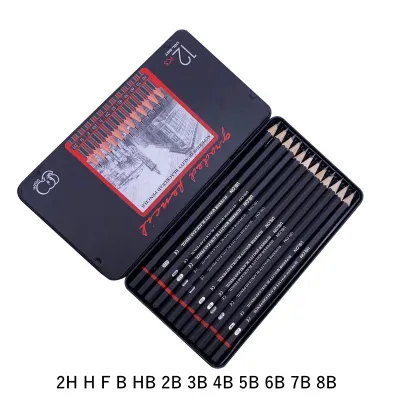
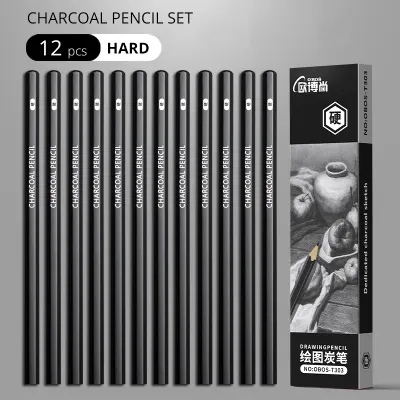
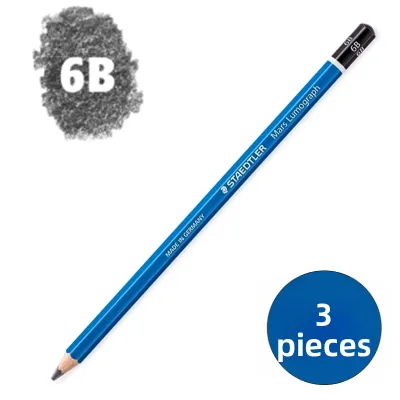
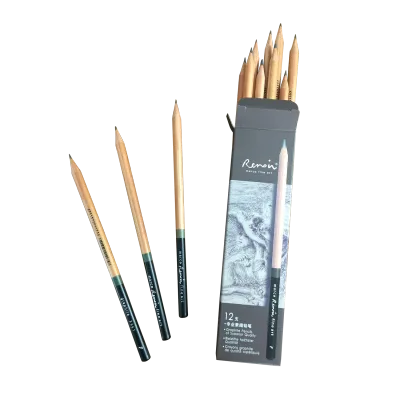
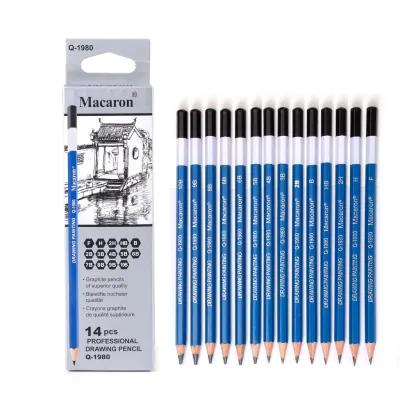
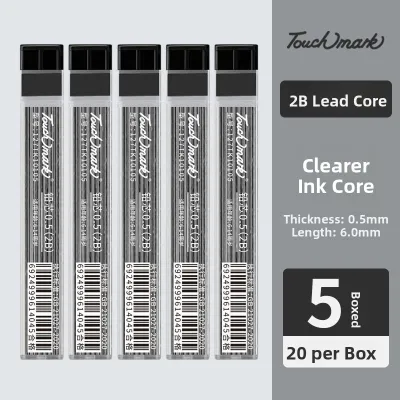
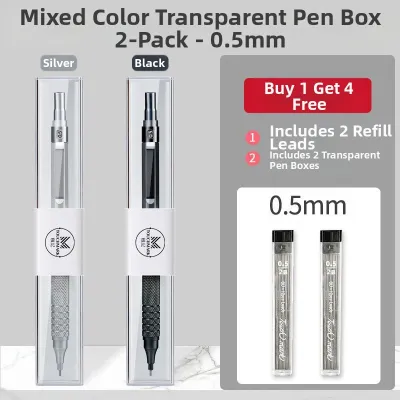
Prices are valid at publication and may change. Please refer to the product page for the latest price.
Ultimately, the choice depends on whether you prioritize the tactile, expressive freedom of wood-cased graphite or the clean, uninterrupted precision of a mechanical clutch system. Many artists find that using both in tandem provides the ultimate balance of speed, control, and detail.
Understanding the Basics: Graphite vs Mechanical Pencils
To understand why these tools perform so differently, it helps to examine their physical anatomy. While both instruments deposit carbon onto paper, their construction dictates how they handle pressure, wear, and artistic techniques.

A traditional wood-cased pencil consists of a solid core of graphite mixed with clay, permanently encased in a wooden sheath, typically incense cedar. The ratio of graphite to clay determines the hardness of the core, classified using the standard H/B scale. Harder pencils (H series) contain more clay, producing lighter, crisper lines, while softer pencils (B series) contain more graphite, yielding darker, smudgier tones.
A mechanical pencil features a plastic or metal body housing an internal mechanism that advances a thin lead refill. When you click the cap, a spring-loaded clutch grip opens, pushing a small increment of lead through a metal guide pipe.
A common misconception is that pencil “lead” contains toxic lead; in reality, both tools use non-toxic graphite and clay. However, because mechanical pencil leads are incredibly thin (0.3mm to 0.9mm), they are often formulated with synthetic polymers to give them extra tensile strength, which can make them feel slightly different on paper compared to traditional clay-bound graphite. Refills are graded on the same H/B scale, allowing you to achieve rich, dark values while enjoying a fine, consistent tip.
Key Comparison Dimensions for Pencil Drawing
Selecting the right drawing tool requires evaluating how each pencil performs under real-world studio conditions. An artist must consider how the lead interacts with paper fibers, how the tool handles hand pressure, and how its physical weight affects comfort during long sketching sessions.
The following sections break down these key performance metrics, comparing wood-cased graphite and mechanical pencils across four essential dimensions: line quality, precision, ergonomics, and long-term maintenance.
Line Quality, Shading, and Blending
The physical design of a wood-cased pencil provides an unmatched range of line weights and shading capabilities. By carving away the wooden casing, you can expose a long section of the graphite core.
This exposed core allows you to utilize the side of the lead for broad, sweeping strokes. By lowering the angle of your wrist, you can cover large areas of the paper with smooth, even tones, making it easy to render soft skies, skin textures, and background shadows. You can also easily blend these strokes using a paper stump or your fingers to create seamless transitions.
Mechanical pencils are limited when it comes to broad shading. Because the lead is extremely thin and supported by a rigid metal sleeve, you can only draw with the very tip. Attempting to shade using the side of a mechanical pencil lead will result in immediate breakage and can cause the metal guide pipe to scratch or tear the paper.
Furthermore, paper texture interacts differently with each tool. In tropical climates like the Philippines, high relative humidity can cause paper fibers to absorb moisture and swell slightly, making the paper softer. Soft wood-cased graphite glides effortlessly over damp paper, depositing rich carbon without damage, whereas a sharp 0.3mm or 0.5mm mechanical pencil tip can easily slice through humidified paper fibers if you apply too much pressure.
Precision, Detail, and Consistency
When rendering fine lines, intricate details, and consistent patterns, the mechanical pencil is the clear winner. The primary challenge of drawing with a wood-cased pencil is that the tip begins to dull the moment it touches the paper, requiring constant rotation or sharpening to maintain a fine line.
A mechanical pencil completely eliminates this issue. Because the lead diameter is fixed (typically 0.3mm for ultra-fine work, 0.5mm for standard detail, and 0.7mm or 0.9mm for bolder lines), the line width remains perfectly uniform. This level of consistency is invaluable for drawing hair, eyelashes, fabric textures, cross-hatched shadows, and clean architectural guidelines.
This consistency also keeps you in a creative “flow state.” You do not have to pause your drawing to sharpen your pencil, clean up wood shavings, or adjust your hand position. You simply click the cap to advance more lead and continue drawing.
For artists working on detailed illustrations, manga, or technical drafts, this uninterrupted workflow saves time and ensures that every line matches the next. While a wood-cased pencil can be sharpened to a needle-like point, that point will only last for a few strokes before widening, making it difficult to maintain uniform detail across a large piece.
Ergonomics, Weight, and Grip
The physical feel of a pencil in your hand has a massive impact on your drawing endurance and comfort. Traditional wood-cased pencils offer a lightweight, organic experience that many artists find comforting.
Because they are made of natural wood, they are exceptionally light and perfectly balanced. However, as you use and sharpen a wood-cased pencil, its length decreases, which shifts its center of gravity forward. Some artists enjoy the lightweight agility of a short pencil stub, while others find it uncomfortable and must use a pencil extender to restore proper balance.
Mechanical pencils offer a fixed length and a stable center of gravity, but their weight and balance vary widely depending on the materials used. Entry-level plastic models are very light but can feel top-heavy, while professional-grade drafting pencils feature metal barrels that provide a reassuring, solid weight. Many drafting pencils are front-weighted, which naturally coaxes the hand into a precise, controlled grip.
Grip comfort is another critical factor, particularly in warm, humid environments. In the Philippines, sweaty hands can make smooth plastic or polished metal barrels slippery, forcing you to squeeze harder and causing hand fatigue. To combat this, many mechanical pencils feature knurled metal grips or textured rubber sleeves that provide excellent traction. Wood-cased pencils, with their natural painted or raw wood finishes, naturally absorb minor hand moisture, offering a reliable, non-slip grip without adding unnecessary bulk.
Maintenance, Durability, and Cost
The practical upkeep and long-term costs of your drawing tools are important considerations for students, hobbyists, and professional artists alike. Both pencil types require different levels of maintenance and financial investment.
Wood-cased pencils are purely consumable. Every time you sharpen a pencil, you shave away a portion of the tool itself. To keep them in peak condition, you must invest in a high-quality manual or electric sharpener, and you must constantly manage the mess of wood shavings and graphite dust.
Mechanical pencils are durable, reusable tools. A high-quality metal mechanical pencil can last for years with proper care. Your only ongoing expenses are lead refills and replacement erasers. However, mechanical pencils are more fragile in terms of their internal mechanisms; dropping a mechanical pencil can bend the delicate metal guide pipe or shatter the lead inside the chamber, rendering the tool useless.
In terms of cost, wood-cased drawing pencils are highly affordable upfront, typically ranging from ₱15 to ₱80 per pencil in local art supply shops. A professional-grade drafting mechanical pencil is a larger initial investment, usually costing between ₱150 and ₱1,000+. However, because you only need to purchase the body once, the long-term cost is dictated entirely by the price of lead refills, which are highly economical and often come in packs of 12 to 40 leads.
Decision Framework: Which Pencil Fits Your Drawing Style?
To help you choose the best tool for your studio, we have outlined a practical decision framework based on specific drawing styles, artistic goals, and working conditions.
Choose Graphite Pencils If:
- Your style is expressive and gestural: The organic feel and variable line weights of a wood-cased pencil are unmatched for life drawing and quick sketching.
- You do heavy shading and blending: You need the broad coverage that only the side of an exposed wood-cased core can provide for smooth gradients and soft transitions.
- You prefer a lightweight, simple tool: Traditional wood-cased pencils require no mechanical maintenance, have no moving parts, and are exceptionally light.
- You enjoy the tactile ritual of drawing: The act of sharpening a pencil and working with natural materials is an essential part of many artists' creative process.
Choose Mechanical Pencils If:
- You focus on high-detail and technical work: The unwavering precision of a mechanical pencil is indispensable for architectural drafts, perspective grids, or clean manga line art.
- You want an uninterrupted workflow: The click-to-advance mechanism keeps you in your creative zone without the need to stop and sharpen.
- You travel or draw on the go: A mechanical pencil is highly convenient for sketching in cafes or during commutes since it requires no sharpener and leaves no mess.
- You want a consistent physical feel: A mechanical pencil provides a level of physical consistency in weight, balance, and length that wood-cased pencils cannot match.
Neither May Fit If:
- You need permanent, waterproof dark lines: Graphite can be erased and is prone to smudging; use archival fineliners or technical drawing pens for ink-and-wash techniques.
- You want a digital undo function: If you want to easily undo mistakes without leaving physical ghosting or wearing down paper, consider transitioning to a digital drawing tablet.
- You are drawing on non-porous surfaces: Graphite requires a textured, porous surface to cling to; use specialized multi-surface markers or wax-based pencils on plastic, glass, or glossy paper.
Verify First If:
- You are using highly specialized paper: Heavy-toothed papers (like watercolor paper) quickly grind down and snap thin mechanical leads, while ultra-smooth surfaces (like Bristol board) can cause hard graphite to slip and produce an unpleasant metallic shine. Always run a small test on a scrap piece of paper first.
Building Your Pencil Drawing Kit: Can You Use Both?
The debate between graphite and mechanical pencils presents a false dichotomy. In practice, most professional illustrators, concept artists, and hobbyists build a hybrid drawing kit that leverages the unique strengths of both tools.
By combining both instruments, you can streamline your workflow and elevate the quality of your artwork. For example, you can use the broad, expressive qualities of wood-cased pencils to lay down the initial composition and block in major values, and then switch to a mechanical pencil to carve out sharp details and clean up edges.
A highly effective, budget-friendly starter kit for artists in the Philippines might include:
- Three Wood-Cased Pencils: A 2H or H pencil for light, easily erasable guidelines; a 2B pencil for general sketching; and a 4B or 6B pencil for deep, rich shadows.
- One Mechanical Pencil: A 0.5mm mechanical pencil loaded with 2B lead for fine details like eyes, hair, and sharp outlines.
- Essential Accessories: A high-quality dust-free eraser (which minimizes mess in humid conditions), a kneaded eraser for lifting highlights, and a dual-hole metal sharpener.
When building your hybrid kit, match your lead grades and monitor how they interact on paper. For instance, drawing details with a hard HB mechanical pencil on top of a soft 4B wood-cased layer can scratch away the graphite and create an unsightly metallic glare. Always layer softer leads over harder leads, and use a light touch to prevent polishing the paper fibers.
In the humid climate of the Philippines, graphite drawings are particularly susceptible to smudging. To protect your finished work, consider using a workable fixative spray, or place a clean sheet of paper under your drawing hand to prevent skin oils from smudging your work as you draw.
Frequently Asked Questions (FAQ)
Do mechanical pencils break easier than graphite pencils?
Yes, the thin lead refills used in mechanical pencils (especially 0.3mm and 0.5mm) are inherently more fragile than the thick, solid core of a traditional wood-cased pencil. Because a wood-cased pencil surrounds the graphite core with a protective layer of cedar, it can withstand significantly more downward pressure without snapping.
To prevent breakage, only extend the lead by one or two clicks (about 1mm to 2mm) beyond the metal guide sleeve. If you tend to press heavily when you draw, consider using a thicker lead diameter, such as 0.7mm or 0.9mm, or switch to a softer lead grade like 2B, which glides across the paper with less resistance and requires less pressure to produce a dark line.
Can I use mechanical pencil lead in a regular graphite pencil?
No, mechanical pencil leads and traditional wood-cased pencil leads are not interchangeable. Wood-cased pencils feature a thick, solid graphite core (usually between 2.0mm and 3.0mm in diameter) that is permanently glued into the wooden casing during the manufacturing process.
Mechanical pencil refills are extremely thin, fragile strands of polymer-bonded graphite designed specifically to slide through a mechanical clutch mechanism. Attempting to force a thin mechanical lead refill into a wood-cased pencil is physically impossible and will result in the immediate shattering of the lead. If you prefer the thick feel of a wood-cased pencil but want the convenience of a mechanical advancing mechanism, you can look into lead holders or clutch pencils, which use thick 2.0mm leads.
Which pencil is better for beginners learning to draw?
For beginners who are just starting to learn the fundamentals of drawing, traditional wood-cased graphite pencils are highly recommended over mechanical pencils. Standard wood-cased pencils (such as an HB and a 2B) are highly forgiving, affordable, and serve as excellent teaching tools.
By drawing with a wood-cased pencil, beginners are forced to learn pressure control—discovering how pressing harder or softer alters the darkness and thickness of a line. They also learn how to use different parts of the pencil, such as using the flat side of the exposed lead for broad shading and the tip for details. This physical connection to the medium builds essential hand-eye coordination and muscle memory before introducing the rigid line consistency of mechanical pencils.

Community discussion
Share your experience or ask a question. Comments are reviewed before publication.