
Choosing between a graphite and a charcoal drawing material set sketch depends on your artistic goals, drawing speed, and tolerance for mess. Graphite provides exceptional control, clean erasability, and a smooth glide, making it an excellent choice for detailed, structured, or technical illustrations. Charcoal offers a deeply tactile, expressive experience with rich, light-absorbing blacks highly suited for dramatic shading and rapid gestural work.
In tropical environments like the Philippines, high humidity can affect how these mediums interact with paper. Excess moisture softens paper fibers, causing charcoal dust to cling unevenly or making graphite lines smudge under a warm hand. Understanding the physical characteristics of each medium allows you to select a set that matches your creative workflow and environmental conditions.
Core Differences in Control and Line Precision
Graphite pencils are categorized by a standardized hardness scale ranging from H (hard) to B (soft). Harder graphite pencils contain more clay binder, allowing them to hold a sharp point for fine cross-hatching and precise architectural outlines. As you move toward the softer B grades, the pencil deposits more graphite onto the page, yielding darker lines while gradually sacrificing point retention.
Products mentioned in this guide
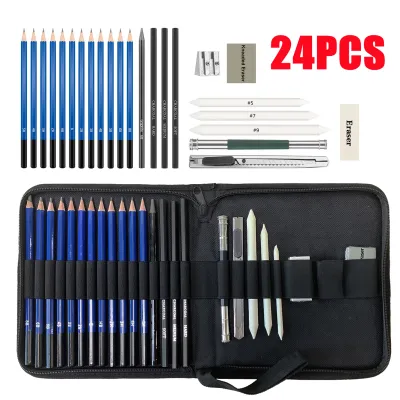
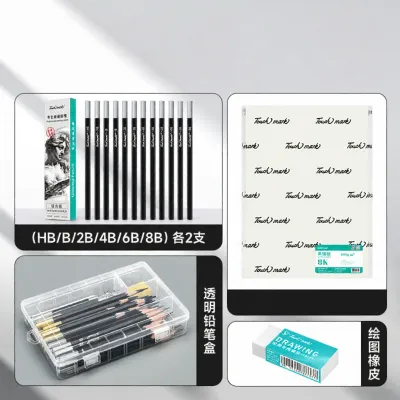
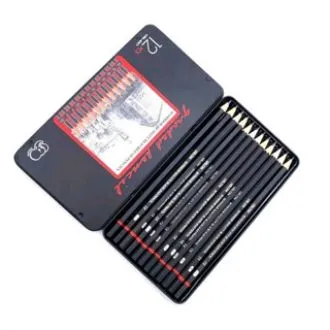
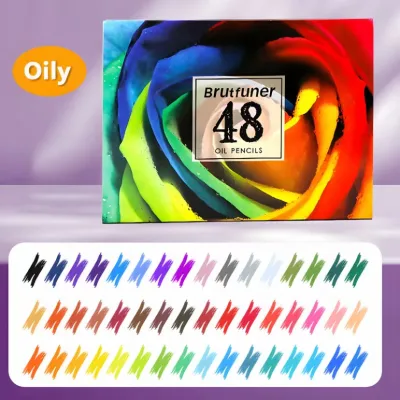
Prices are valid at publication and may change. Please refer to the product page for the latest price.
Charcoal operates on a different structural spectrum, primarily split between vine and compressed forms. Vine charcoal is made by burning willow or grapevines in an airtight kiln, resulting in a highly brittle, lightweight stick. It produces a soft, dusty line that is easy to manipulate but lacks structural strength, making it prone to snapping under moderate pressure. Compressed charcoal is formulated by mixing charcoal powder with a gum or clay binder, creating a much harder, denser core that delivers consistent, dark lines but remains more fragile than graphite.
To evaluate these differences, perform a simple pressure test on a scrap piece of paper. Draw parallel lines using a medium graphite pencil (such as a 2B) and a medium charcoal pencil, gradually increasing your hand pressure. You will observe that the graphite pencil maintains a clean, sharp edge even under heavy pressure, whereas the charcoal pencil begins to deposit loose, powdery particles that spread beyond the intended line width.
Texture, Feel, and Blending Capabilities
The physical sensation of drawing differs dramatically between these two mediums. Graphite offers a smooth, almost metallic glide across the paper surface, providing a highly controlled and predictable feedback loop. However, this smoothness comes with a limitation known as graphite sheen. When you apply heavy layers of soft graphite to achieve dark values, the flat crystalline structure of the mineral reflects light, creating a shiny, silver glare that can distort the depth of your shadows under direct lighting.

Charcoal provides a highly tactile, scratchy feedback that connects you directly to the texture of the paper. Because charcoal particles are irregular and porous, they absorb light rather than reflecting it, allowing you to achieve deep, velvety blacks. The trade-off is the production of loose dust, which can easily migrate across your drawing surface or stain your hands, especially when working in humid conditions where moisture can cause the loose powder to stick to your skin.
Blending techniques also highlight the distinct physical properties of each material. Graphite requires firm, deliberate pressure with a paper blending stump or tortillon to burnish the metallic particles into the paper pores, creating smooth gradations. Charcoal is incredibly responsive to lighter blending tools; a soft brush, a chamois cloth, or even a light touch of a finger can sweep the loose powder across large areas of the page instantly, making it highly efficient for covering broad backgrounds.
Paper Compatibility and Erasing Behavior
The success of your sketching workflow depends heavily on matching your drawing material set sketch to the correct paper texture, or “tooth.” Smooth papers, such as bristol board or hot-press sketchbooks, are ideal for graphite because they allow the pencil tip to glide effortlessly without catching on surface fibers. If you attempt to use charcoal on a very smooth paper, the lack of texture means there are no microscopic valleys to trap the loose carbon particles, causing the drawing to slide off or smudge almost immediately.
Textured papers, such as cold-press watercolor paper, heavy cartridge paper, or dedicated charcoal paper, are essential for holding charcoal pigments in place. The rough surface acts like a miniature grater, shaving off the charcoal stick and locking the dust within its fibers. While graphite can also be used on textured paper, the surface bumps will break up your fine lines, making it difficult to achieve smooth, continuous detail work.
Erasing behavior is another critical factor when choosing your medium. Graphite can be erased cleanly with a standard vinyl or plastic eraser, leaving virtually no trace if you avoid pressing too hard into the paper fibers. Charcoal is much more volatile and difficult to correct completely. While a kneaded eraser is excellent for lifting highlights from vine charcoal, compressed charcoal penetrates deeply into the paper pores, often leaving a dark ghost mark or smudging across the page when you attempt to erase it.
Because charcoal remains loose on the paper surface, finished drawings require a protective coating to prevent accidental smudging. Applying a workable fixative spray allows you to lock down your current layers so you can continue drawing on top without disturbing the underlying work. In humid tropical climates, it is crucial to apply fixative in light, even coats outdoors, as high humidity can sometimes trap moisture under the spray, resulting in a cloudy or hazy finish on your artwork.
Evaluating Sketching Set Contents and Quality
When shopping for a drawing material set sketch, carefully inspect the variety of grades included to ensure it matches your creative needs. Whether you are investing in a basic ₱200 starter set or a comprehensive ₱1,500 professional kit, a well-rounded graphite set should offer a balanced progression of hardness, typically ranging from a hard 2H for light layouts to a soft 6B or 8B for deep shadows. For charcoal sets, look for a selection that includes soft, medium, and hard charcoal pencils, alongside a few raw vine charcoal sticks and compressed blocks to give you a full range of mark-making options.
The quality of the accessories included in a set can significantly impact your drawing experience. A high-quality set should feature a durable kneaded eraser, which can be molded into custom shapes to lift precise highlights or clean up tight spaces. Additionally, look for paper blending stumps of varying diameters and a reliable sharpener. Charcoal pencils require a sharpener with a sharp, high-quality blade to prevent the brittle charcoal cores from shattering during the sharpening process.
Packaging plays a vital role in protecting your investment, especially for fragile materials like charcoal. Look for sets housed in sturdy metal tins or zippered fabric cases with individual elastic slots for each pencil. These protective enclosures prevent the pencils from rolling around and banging against each other, which can cause internal fractures in the delicate graphite leads or brittle charcoal cores before you even use them.
Decision Framework: Which Set Fits Your Technique?
To choose the right sketching set for your creative workflow, consider your artistic habits, preferred drawing environment, and the specific techniques you want to master.
Choose a graphite set if you:
- Prioritize intricate details, clean lines, and precise technical or architectural sketching.
- Prefer working in portable sketchbooks without the need for protective fixative sprays.
- Enjoy a clean, low-mess drawing process that can be easily erased and corrected.
- Work primarily on smooth, light-to-medium weight paper surfaces.
Choose a charcoal set if you:
- Prefer bold, expressive, and gestural strokes with high-contrast lighting.
- Want to achieve deep, matte, light-absorbing blacks that eliminate reflective glare.
- Enjoy a highly tactile blending process using brushes, stumps, or your fingers.
- Work on large-format, textured papers and do not mind managing loose dust.
Before making your final purchase, verify the compatibility of your existing paper collection. If you are planning to work in a humid environment, ensure you have a dry, airtight storage container or a protective portfolio to keep your finished sketches and raw materials safe from moisture absorption.
Frequently Asked Questions (FAQ)
Can I use graphite and charcoal together in the same sketch?
While you can combine both mediums in a single artwork, they do not blend easily due to their differing physical properties. Graphite contains clay binders and leaves a slick, waxy residue on the paper, which prevents powdery charcoal from adhering properly on top. If you attempt to apply charcoal over heavy graphite, the charcoal will simply slide off or smudge unevenly.
If you want to mix both materials, it is best to apply your charcoal first to establish the deep, matte shadows. Once the charcoal is in place, you can apply a light coat of workable fixative to seal the surface before adding fine graphite details on top. Alternatively, keep the two mediums in separate areas of your drawing to avoid adhesion issues.
How do I prevent charcoal sketches from smudging in a sketchbook?
To protect your charcoal drawings from smudging inside a sketchbook, place a sheet of glassine paper or acid-free tracing paper between the pages. This smooth barrier minimizes friction and prevents the charcoal powder from transferring to the facing page when the sketchbook is closed.
Additionally, choosing a sketchbook with a sturdy, hardbound binding helps prevent the pages from shifting or sliding against one another during transport. Applying a light, even coat of workable or final fixative spray to your completed drawing will also lock the loose charcoal particles to the paper fibers, significantly reducing the risk of smudging.

Community discussion
Share your experience or ask a question. Comments are reviewed before publication.