
Protecting vital records, certificates, and legal agreements from physical damage and environmental hazards requires a deliberate storage strategy. In a tropical climate characterized by high humidity, sudden downpours, and seasonal flooding, standard paper folders often fall short of safeguarding paper assets. Investing in a dedicated hard case for documents provides a structural shield that preserves the physical integrity of your most important papers over time. By choosing a case with the appropriate material composition, closure mechanism, and internal layout, you can prevent irreversible damage such as tearing, creasing, mold growth, and ink degradation.
Identifying Your Document Protection Requirements
Before selecting a hard document case, you must evaluate the specific physical characteristics of the papers you intend to store. In the Philippines, standard document sizes vary significantly across different administrative and professional sectors. While international business correspondence typically utilizes A4 paper, local government offices, schools, and legal entities frequently employ Letter size or the traditional Philippine Legal size, which measures 8.5 by 13 inches. It is critical to note that Philippine Legal paper is shorter than the standard US Legal size of 14 inches, yet it remains longer than standard A4 or Letter sheets. Choosing a case that is too small will inevitably result in folded edges or crumpled corners, which can invalidate official certificates or damage historical family records.
The volume and thickness of your document collection also dictate the structural depth required from a protective case. Storing a single, high-value document like a birth certificate, land title, or diploma requires a different physical solution than organizing a multi-page corporate contract or a thick stack of medical records. Flat, slim cases are ideal for individual sheets because they prevent shifting and sliding, which can cause surface abrasion. Conversely, thick files or bound documents require deep-box cases or expandable filing systems that can accommodate the overall bulk without putting excessive pressure on the binding or the locking mechanisms of the case.
Products mentioned in this guide
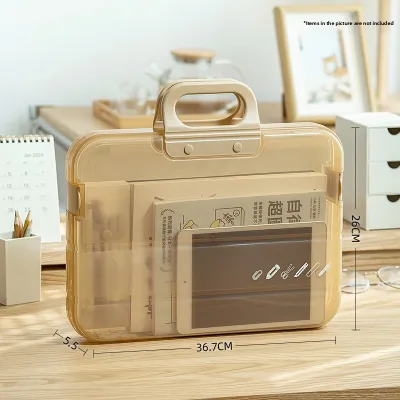
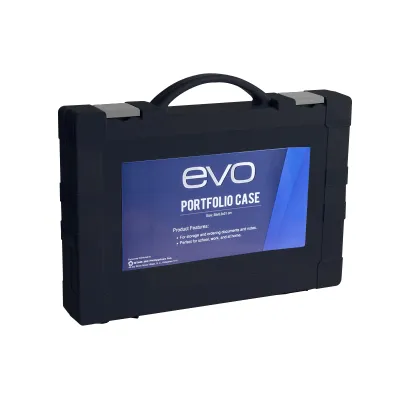
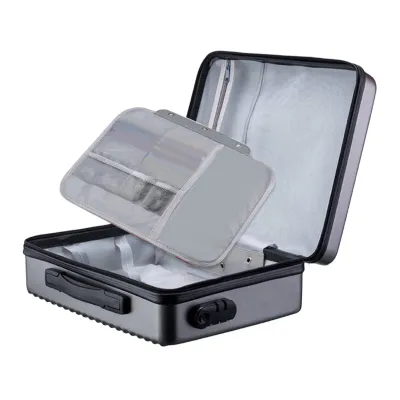
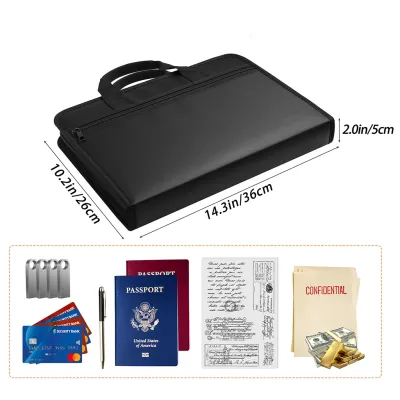
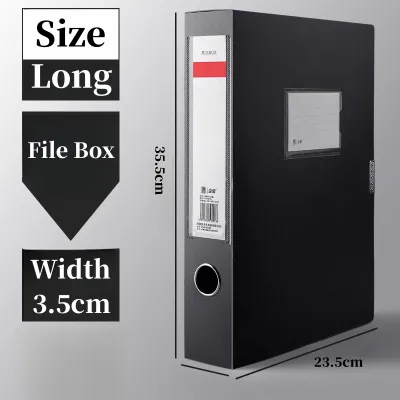
Prices are valid at publication and may change. Please refer to the product page for the latest price.
Environmental risks unique to your storage location must also guide your decision-making process. High relative humidity accelerates the growth of mold and mildew, which can quickly ruin paper fibers and cause pages to stick together. Dust accumulation can scratch delicate printed surfaces, while pests such as silverfish and termites pose a constant threat to cellulose-based materials. Furthermore, if you frequently transport documents between offices, home, or government agencies, your case must withstand physical impacts, accidental drops, and exposure to sudden rain showers. Identifying these primary risks allows you to prioritize specific protective features, such as airtight seals or impact-resistant outer shells, over purely aesthetic designs.
Essential Features of a Reliable Hard Document Case
The protective capability of a hard document case depends heavily on its primary construction materials. Polypropylene is widely used for everyday document storage due to its lightweight nature, flexibility, and moisture resistance. While polypropylene cases protect against minor splashes, they may bend under heavy loads. For maximum structural rigidity, cases constructed from ABS plastic or aluminum provide superior impact resistance. ABS plastic is highly durable and does not deform easily under pressure, making it an excellent choice for heavy-duty storage boxes, while aluminum offers a premium, professional appearance along with exceptional resistance to crushing and puncture hazards.

The closure and locking mechanisms of a case determine both its physical security and its ease of access. Simple snap buttons or sliding plastic latches are highly convenient for daily office use, allowing quick retrieval of frequently accessed files. However, these basic closures may pop open if the case is dropped or overfilled. For sensitive documents containing personal identifiable information or confidential business strategies, cases equipped with integrated combination locks or key-operated locks provide an essential layer of security against unauthorized access. When evaluating locks, ensure that the latching hardware is constructed from corrosion-resistant materials, such as stainless steel or treated brass, to prevent rusting in humid environments.
Water and dust resistance are critical specifications that require careful verification rather than relying on vague marketing terms. Many standard plastic cases are advertised as water-resistant, meaning they repel light splashes or brief rain. True water and dust protection requires a continuous rubber or silicone gasket lining the inner rim of the lid. When latched shut, this gasket compresses to form an airtight seal that blocks moisture, dust, and mold spores. If you live in an area prone to severe weather or flooding, look for cases that explicitly state their ingress protection capabilities, ensuring they feature a reliable seal that can withstand temporary water exposure.
Matching Case Designs to Specific Document Types
Different categories of important papers require tailored storage environments to ensure their long-term preservation. Certificates, diplomas, and academic awards are highly vulnerable to surface damage, creasing, and corner bending. For these single-sheet documents, flat, rigid portfolios or hard-shell presentation cases with integrated corner protectors are recommended. The interior should feature smooth, non-abrasive linings that do not cling to printed ink or embossed seals. Storing these documents flat prevents the paper fibers from warping over time, ensuring that the certificates remain in pristine condition for framing or official presentation.
Contracts, legal files, and multi-page corporate documents require a case design that emphasizes organization and capacity. Expandable hard cases or attaché-style document boxes equipped with internal dividers, index tabs, and secure clasps are ideal for these applications. These designs allow you to categorize different sections of a legal file or separate multiple contracts while keeping them securely bound within a single, rigid exterior. The internal dividers should be sturdy enough to support the weight of thick paper stacks, preventing the documents from sagging or curling at the bottom of the case.
For frequently accessed office records and documents that require daily mobility, lightweight hard-shell folders or slim document boxes are the most practical choice. These cases prioritize quick retrieval and portability, featuring easy-open mechanisms such as magnetic closures or single-touch latches. While they may not offer the extreme impact or water resistance of heavy-duty utility cases, they provide sufficient protection against daily wear and tear, coffee spills, and minor drops during transit. Choosing a slim profile ensures that the case fits easily into standard backpacks, briefcases, or office desk drawers without occupying excessive space.
Verifying Product Specifications and Safety Claims
When shopping for a hard case for documents, it is essential to look beyond attractive designs and carefully analyze the technical specifications provided by the manufacturer. If a product claims to be waterproof or dustproof, check for official Ingress Protection (IP) ratings on the packaging or product description. An IP rating consists of two numbers: the first indicates protection against solid particles like dust (0 to 6), and the second indicates protection against liquids (0 to 9). For instance, an IP65-rated case offers complete dust protection and withstands low-pressure water jets, providing peace of mind during sudden tropical downpours.
Another common pitfall is failing to distinguish between external and internal dimensions. Manufacturers often highlight the external dimensions of a case to emphasize its compact design, but the internal usable space may be significantly smaller due to thick protective walls, padded linings, or recessed handle compartments. Always measure your largest documents—especially Philippine Legal size papers—and compare them directly to the listed internal dimensions of the case. Ensure there is at least a few millimeters of clearance on all sides to allow you to insert and remove the documents easily without scraping or bending their edges against the inner walls.
The chemical composition of the interior materials is just as important as the toughness of the outer shell. Standard plastics and adhesives can release volatile organic compounds (VOCs) or acidic byproducts over time. This off-gassing process can react with paper fibers and printing inks, causing documents to yellow, become brittle, or stick to interior surfaces. To prevent this chemical degradation, verify that the interior linings, sleeves, and dividers are explicitly labeled as acid-free, PVC-free, or archival-quality. These materials are chemically inert and will not degrade or react with your valuable documents, even during decades of continuous storage.
Budget considerations are also an important factor when selecting a document case in the Philippines. Prices can range from budget-friendly plastic cases costing around ₱150 to ₱500, up to premium, heavy-duty lockboxes and specialized protective cases that can exceed ₱2,000 to ₱5,000. While it may be tempting to opt for the least expensive option, it is wise to weigh the cost of the case against the value and difficulty of replacing the documents inside. For easily replaceable office printouts, a basic ₱200 polypropylene case is entirely adequate. However, for irreplaceable family heirlooms, land titles, or original legal contracts, investing in a high-quality, gasket-sealed case with secure locking mechanisms is a highly cost-effective decision in the long run.
Proper Storage and Maintenance for Document Cases
Owning a high-quality hard document case is only the first step; maintaining the case and storing it in the correct environment is equally vital for long-term preservation. Even the most durable case can fail if it is subjected to extreme conditions. Store your document cases in a cool, dry, and dark location, such as an interior closet, a dedicated filing cabinet, or a secure shelf. Avoid storing cases in direct sunlight, near heat-absorbing external walls, or in areas prone to high humidity fluctuations, such as unventilated storage rooms. To combat the natural humidity of the tropical climate, place a few rechargeable silica gel packets inside the case to absorb any ambient moisture that may enter when the case is opened.
Establishing a routine inspection schedule is essential to ensure that your protective cases continue to function as intended. Every six months, take a few minutes to examine the physical condition of your cases. Check the hinges, latches, and locking mechanisms to ensure they operate smoothly and do not show signs of rust, cracking, or mechanical wear. If your case features a rubber or silicone gasket seal, inspect it closely for signs of drying, cracking, or flattening, as a compromised seal will allow moisture and dust to seep inside. Replacing worn seals or applying a light coat of silicone lubricant can extend the lifespan of the case and maintain its protective capabilities.
Proper cleaning of both the exterior and interior of the case prevents the buildup of dust, mold spores, and chemical residues. For the exterior shell, wipe it down periodically with a soft, slightly damp microfiber cloth to remove dust and dirt, then dry it completely with a clean towel. Avoid using harsh chemical solvents or abrasive cleaners, which can degrade plastic surfaces or corrode metal components. For the interior, gently vacuum or wipe the compartments with a dry, lint-free cloth. Ensure that the interior is completely dry before returning your documents to the case, as trapping even a small amount of moisture inside an airtight container can create an environment ripe for mold growth.
Frequently Asked Questions (FAQ)
Can a standard hard plastic case protect documents from fire?
No, a standard hard plastic case made of polypropylene or ABS plastic cannot protect documents from fire. These materials have relatively low melting points and will quickly deform, melt, or catch fire when exposed to high temperatures, destroying the documents inside. To protect vital papers from fire hazards, you must look for specialized fireproof document safes or cases that carry certified fire-resistance ratings, such as UL (Underwriters Laboratories) certifications. These specialized cases utilize thick, insulated walls containing moisture-releasing materials that keep the internal temperature below the charring point of paper during a fire.
How do I prevent important papers from sticking to the case interior?
To prevent important papers from sticking to the interior of a hard case, avoid using cases made with cheap PVC (polyvinyl chloride) materials, which contain plasticizers that migrate over time and cause inks to lift and paper to stick. Instead, ensure the case interior is made of acid-free, PVC-free, or archival-safe materials. For added protection, place your documents inside individual archival-quality polypropylene sheet protectors or acid-free paper folders before storing them in the hard case. Additionally, placing silica gel packets inside the case helps control humidity, which is a primary catalyst for paper sticking to plastic surfaces.

Community discussion
Share your experience or ask a question. Comments are reviewed before publication.