
Choosing the right Harry Potter notebook is more than just picking your favorite Hogwarts house crest or a beautiful illustration of the Golden Snitch. The physical format of your notebook—whether it is a sturdy hardcover, a flexible softcover, or a highly functional spiral-bound journal—directly dictates how comfortably you can write, how well the pages survive a humid commute, and how long your magical notes will last. To find your ideal match, you must balance your writing environment, your carrying habits, and how you plan to use the pages.
In the tropical climate of the Philippines, where high humidity can soften paper and daily commutes in crowded bags can easily bend unprotected corners, the structural design of your stationery is just as important as its aesthetic appeal. A notebook that sits permanently on a study desk requires a very different binding than one tossed into a backpack before a rainy-day transit. By evaluating the physical trade-offs of each binding style, you can select a magical companion that remains both beautiful and functional from the first page to the last.
When to Choose a Hardcover Harry Potter Notebook
A hardcover Harry Potter notebook is an excellent choice if you view your writing as a long-term keepsake or a personal grimoire. The rigid front and back covers act as a protective shield, ensuring that the pages inside remain pristine even when packed tightly into a bag during a hectic commute. If you frequently write on your lap, outdoors, or in spaces without a flat desk, the stiff cover provides a built-in writing surface that does not bend under pressure. This format is highly favored for detailed journaling, creative writing, and archival purposes, preserving your thoughts like a treasured volume from the Hogwarts library.
Products mentioned in this guide
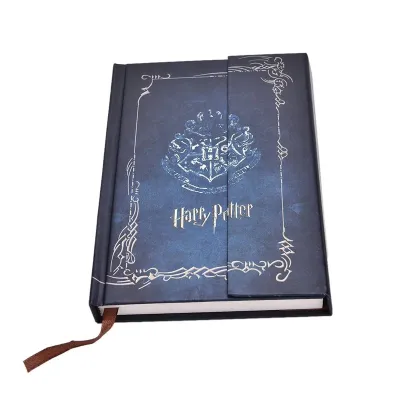
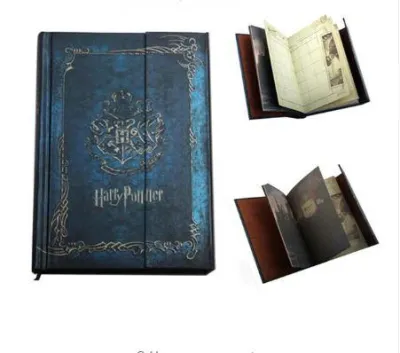
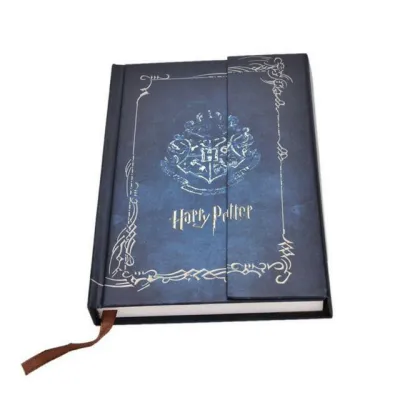
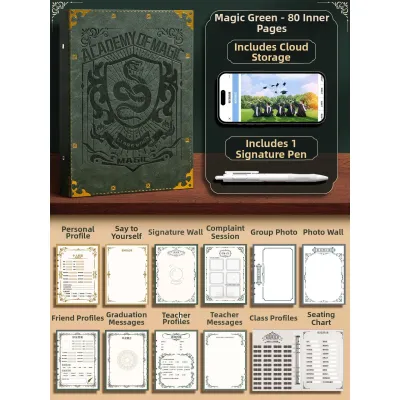
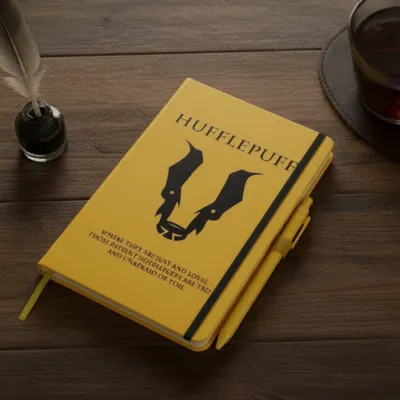

Prices are valid at publication and may change. Please refer to the product page for the latest price.
However, these protective benefits come with distinct physical trade-offs. Hardcover journals are naturally heavier and bulkier than their counterparts, which might make you hesitate to carry them everywhere. Additionally, the bound spine is often stiff when new, meaning the book may resist laying completely flat on your desk without some initial breaking-in or manual pressure.
Before purchasing a hardcover edition, it is wise to perform a few quick checks. Examine the hinge flexibility where the cover meets the spine; a well-constructed hinge allows the book to open wider without straining the binding. You should also feel the cover material to verify if it has a scratch-resistant matte finish or a protective laminate coating. This ensures that the beautiful foil-stamped house crests or magical illustrations do not easily rub off or get marred by keys and pens in your bag.
When to Choose a Softcover Harry Potter Notebook
If your daily routine demands lightweight portability and effortless handling, a softcover Harry Potter notebook is an excellent companion. These notebooks are designed to bend and flex, making them incredibly easy to slip into a slim tote bag, a backpack sleeve, or even a large pocket. They add minimal weight to your daily carry, which is a major advantage if you are already carrying a laptop, textbooks, or heavy gear through a warm afternoon commute. The flexible cover gives the notebook a casual, approachable feel that is highly suited for quick daily logging, habit tracking, or spontaneous brainstorming on the go.

The primary trade-off of a softcover format is its vulnerability to wear and tear. Without a rigid exterior, the corners of the cover and the inner pages can easily curl, crease, or fray over time, especially if the notebook is tossed loosely into a cluttered bag. The pages also receive less impact protection, meaning a heavy object pressed against the notebook could leave permanent indentations.
To ensure your softcover notebook survives daily use, inspect the thickness and quality of the cover material before buying. Look for cardstock or flexible polyurethane covers that feel substantial rather than flimsy. You should also gently test the binding to see if it allows the notebook to fold back comfortably; a high-quality thread-bound or glued spine should flex without cracking or losing pages, maintaining its structural integrity even with frequent handling.
When to Choose a Spiral-Bound Harry Potter Notebook
For those who prioritize writing comfort and dynamic page management, a spiral-bound Harry Potter notebook is highly practical. The defining feature of this style is its ability to lay completely flat on any surface, requiring zero effort to keep the pages open. Even better, you can fold the cover and finished pages all the way back on themselves, effectively halving the notebook’s footprint. This makes spiral-bound options incredibly useful for cramped spaces, such as small lecture hall desks, coffee shop tables, or when taking quick notes while standing.
Despite their convenience, spiral-bound notebooks have a few notable drawbacks. The exposed metal or plastic coils can easily snag on loose threads, lace, or mesh pockets inside your bag, potentially damaging your clothes or the bag itself. Furthermore, because the pages are held in place by individual punched holes along the spine, they are more susceptible to tearing out accidentally if you turn the pages too quickly or pull on them roughly.
When evaluating a spiral-bound option, pay close attention to the coil construction. Metal coils are generally more durable than plastic ones, but you must check that the wire ends are neatly tucked inward to prevent scratching your hands or snagging fabrics. Verify the loop diameter as well; a slightly larger loop ensures pages turn smoothly without binding or catching. Finally, check if the pages feature micro-perforations near the spine, which allow you to tear out sheets cleanly when you need to share notes or discard a page.
Side-by-Side Comparison of Notebook Formats
To help you quickly determine which format aligns with your daily habits, it is helpful to compare their core characteristics side by side. Each style excels in different environments, and understanding these strengths will prevent post-purchase regret.
| Feature | Hardcover | Softcover | Spiral-Bound |
|---|---|---|---|
| Lay-Flat Ability | Moderate (requires breaking in) | Moderate (depends on binding) | Excellent (folds 360 degrees) |
| Bag Protection | High (rigid exterior) | Low (corners can bend) | Moderate (coils can snag) |
| Weight & Bulk | Heavy and rigid | Very light and flexible | Moderate and compact |
| Best Use Case | Archival journaling & desk use | On-the-go logging & travel | Active note-taking & sketching |
Use this simple decision framework to guide your choice:
- Choose Hardcover if you want a durable keepsake that will sit on your desk or travel safely inside a protective bag compartment, preserving your writing for years.
- Choose Softcover if you prioritize a lightweight, flexible notebook that will not weigh you down during long transits and can adapt to tight storage spaces.
- Choose Spiral-Bound if you need a highly functional tool for rapid writing, sketching, or working in tight spaces where folding the book in half is a necessity.
Keep in mind that while the cover style dictates the notebook’s physical handling, other critical factors like paper weight, texture, and ruling styles must be verified on the individual product label, as these specifications vary widely across different manufacturers and licensed editions.
What to Verify Before Checking Out
Once you have settled on the ideal cover and binding style, there are a few essential stationery specifications you must verify to ensure the notebook performs beautifully in daily use. The magic of a notebook can quickly fade if the paper quality or layout does not match your writing tools.
First, check the paper compatibility by looking at the paper weight, typically measured in grams per square meter (GSM). In the humid climate of the Philippines, paper can absorb ambient moisture, making it more prone to ink feathering and bleed-through. If you prefer writing with gel pens, rollerballs, or fountain pens, look for a paper weight of at least 80 GSM, though 100 GSM or higher is ideal for preventing ink from ghosting onto the reverse side of the page.
Second, confirm the exact dimensions and page ruling to match your specific habits. Standard sizes like A5 are highly popular for balancing writing space with portability, while larger B5 or A4 sizes are better suited for extensive academic note-taking. Additionally, decide whether your writing style benefits most from traditional lined pages, a clean dot grid for bullet journaling, or blank pages for unrestricted sketching and drawing.
Finally, look for official authenticity markers if you want to ensure you are purchasing genuine, licensed merchandise. Authorized Harry Potter stationery typically features official copyright markings, trademark logos, or holographic stickers on the packaging or back cover. Verifying these details ensures you are supporting authorized creators and receiving a product manufactured to meet established quality standards.

Community discussion
Share your experience or ask a question. Comments are reviewed before publication.