
The ideal number of pockets in a long expanding file folder depends entirely on your document volume, sorting logic, and the physical dimensions of your files. While it is tempting to buy a folder with the maximum number of sections, more pockets are not always better. An overly compartmentalized folder can restrict the space available per slot, making it difficult to insert or retrieve thick stacks of paper. To build an efficient filing system, you must evaluate your specific document types, match them to a practical pocket configuration, and verify that the folder’s physical dimensions and material properties can withstand daily use.
Assess Your Document Volume and Types
Before selecting a folder, consider the specific sizes and weights of the papers you intend to organize. In the Philippines, standard office and school documents frequently use “long bond paper,” which measures 8.5 by 13 inches (often referred to as Folio size). This is distinct from the international US Legal standard, which measures 8.5 by 14 inches. Storing these longer sheets requires a dedicated long expanding file folder to prevent the top edges of your documents from bending, curling, or getting caught in the folder’s closure mechanism. Because long documents contain more physical material, they are naturally heavier than standard Letter or A4 sheets, placing greater structural demand on the folder’s bottom seams.
Next, categorize your overall document volume into light, moderate, or heavy categories. Light volume typically consists of essential personal records, a few active contracts, or birth certificates that require safe storage but minimal sorting. Moderate volume includes monthly utility bills, active school projects, or tax documents for a single fiscal year. Heavy volume involves multi-year archives, extensive corporate client portfolios, or legal case files that accumulate daily.
Products mentioned in this guide
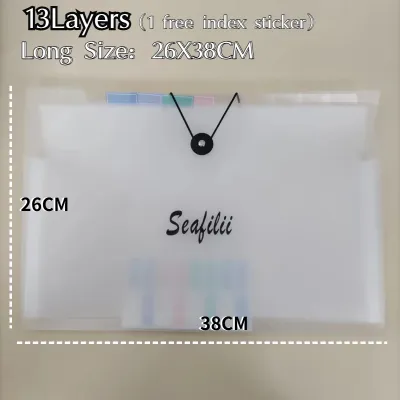
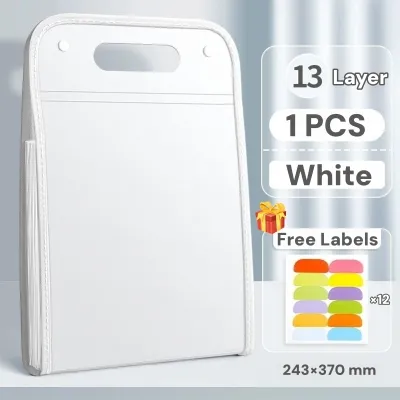
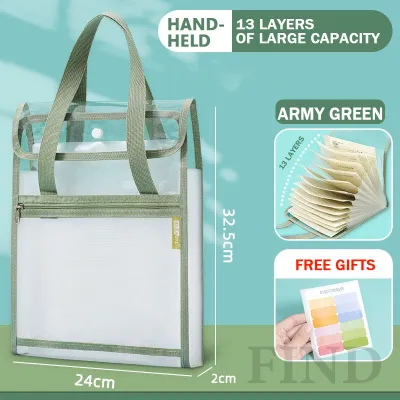
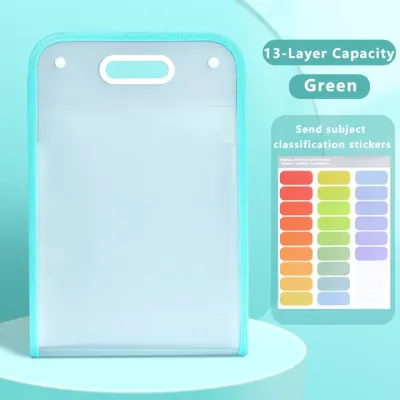
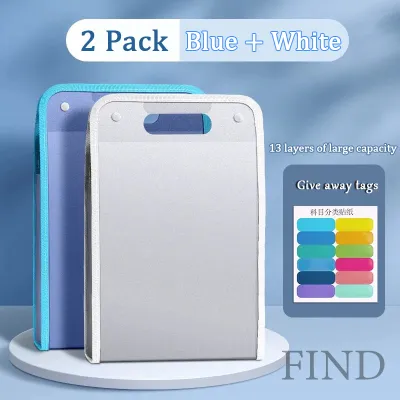
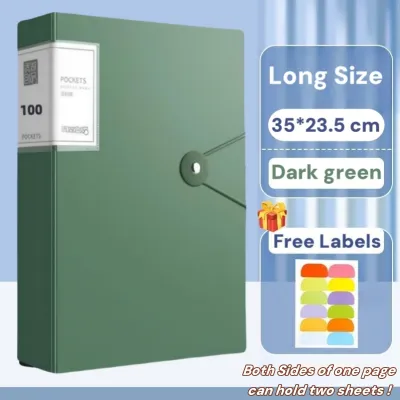
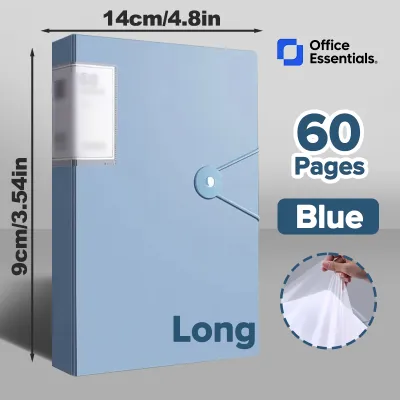
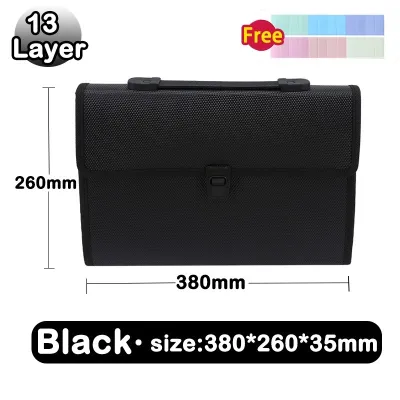
Prices are valid at publication and may change. Please refer to the product page for the latest price.
Your primary sorting logic should dictate your pocket count. If you organize files chronologically, you will need a system that aligns with specific time intervals, such as months or quarters. If you sort by project or client, your pocket count should match the number of active files you manage simultaneously. Choosing a folder with too many pockets for a simple sorting system results in wasted space and unnecessary bulk, while choosing too few leads to overstuffed, disorganized sections.
Matching Pocket Counts to Organization Needs
- 5 to 7 pockets: This configuration is highly suitable for simple, broad categorization or short-term project tracking. If you manage a workflow with distinct phases—such as "To Do," "In Progress," "Pending Review," and "Completed"—a 5-pocket folder keeps these stages physically separate without adding unnecessary bulk. Because there are fewer internal dividers, each individual pocket can expand much wider. This allows you to store thick stacks of long bond paper in a single section without straining the seams or tearing the dividers. It is an excellent choice for students managing a few school subjects or professionals handling a limited number of active projects.
- 12 to 13 pockets: This is the standard configuration for chronological sorting. With 12 pockets, you can assign one slot to each month of the year, making it highly efficient for organizing monthly electricity bills, internet statements, or sales invoices. A 13-pocket version provides an extra slot, which is incredibly useful for storing an annual summary, tax documents, or miscellaneous receipts. This setup balances a relatively high number of divisions with a reasonable amount of physical space per pocket, making it a versatile choice for home offices and small businesses.
- 24 or more pockets: Designed for high-density filing, folders with 24 or more pockets are ideal for complex alphabetical indexing (A to Z), daily tracking (such as 1 to 31 for days of the month), or managing a large roster of clients. However, you must verify the folder's total expansion capacity before choosing this option. A folder with 24 pockets requires a very wide gusset to expand fully. If the overall expansion limit of the spine is narrow, having 24 pockets simply partitions the limited space into paper-thin slots, making it difficult to store more than a few sheets of paper in each section.
Verifying Dimensions and Expansion Capacity
To ensure your long expanding file folder is fully functional, you must verify its exact internal dimensions against your documents. Standard long bond paper measures 8.5 by 13 inches, while US Legal paper measures 8.5 by 14 inches. The folder’s internal pocket width should ideally measure at least 14.5 inches, and the height should be at least 9.5 inches. This extra clearance ensures that papers slide in smoothly without their edges folding, creasing, or rubbing against the closure mechanism.

In tropical climates with high humidity, paper can absorb moisture from the air, causing it to become limp and sag. When limp paper is forced into a tight folder, it easily crumples. Therefore, choosing a folder made of rigid, water-resistant polypropylene rather than standard paperboard is highly beneficial. Polypropylene protects your documents from ambient moisture and spills, while providing the structural rigidity needed to keep limp papers upright.
Additionally, evaluate the gusset expansion width and the closure mechanism. The gusset is the flexible, accordion-like material on the sides of the folder. High-quality folders often feature reinforced gussets lined with durable tape or plastic webbing to prevent tearing along the fold lines. The closure mechanism—whether it is an elastic cord, a snap button, or a zipper—must be strong enough to handle the folder’s maximum thickness. Elastic cords offer flexibility but can degrade over time in warm climates, while zippers provide excellent dust protection but can jam if the folder is overstuffed.
Common Mistakes When Choosing Pocket Counts
A frequent mistake is choosing a folder with too many pockets for a relatively small volume of documents. When you place only one or two sheets of paper into a deep, wide pocket, the papers tend to slide around, slip under the internal dividers, or crumple at the bottom. This defeats the purpose of organization, as documents become difficult to locate and retrieve.
Another error is assuming that any folder labeled “long” or “legal” will automatically fit your specific documents without checking the actual measurements. Some imported folders labeled as “legal” are designed for international standards that may not perfectly match the local 13-inch long bond paper, leading to tight fits or exposed edges.
Lastly, users often overload multi-pocket folders beyond their structural limits. Packing hundreds of heavy, long-format sheets into a fully expanded folder concentrates immense weight on the handle and the bottom seams. Without proper support, the plastic or paperboard material can tear, or the handle can snap off entirely during transport.
Frequently Asked Questions (FAQ)
Can I store standard A4 or Letter documents in a long expanding file folder?
Yes, standard A4 and Letter documents will physically fit inside a long expanding file folder. However, because these sheets are shorter than long bond paper, they may slide down to the bottom of the deep pockets. This makes their tabs or top edges hard to see, forcing you to reach deep into the folder to retrieve them. To prevent this, you can place smaller documents inside labeled plastic sleeves or folders before inserting them, or reserve your long expanding folder strictly for oversized documents to keep your filing system neat and accessible.
How do I know if my expanding folder is overfilled?
You can easily identify an overfilled expanding folder through several observable physical signs. First, check the closure mechanism; if the elastic cord is extremely taut, the snap button requires heavy pressure to close, or the zipper teeth are splaying apart, the folder is holding too much. Second, look at the gusset folds on the sides. If they are bulging outward or showing white stress marks and small tears along the creases, the material is under excessive tension. Finally, if you struggle to slide a single sheet of paper into a pocket without it crumpling, it is time to redistribute your documents into a second folder or archive older files.

Community discussion
Share your experience or ask a question. Comments are reviewed before publication.