
Gifting a Masonic pen in the Philippines requires balancing fraternal tradition with practical writing utility. A thoughtful gift must not only feature accurate, respectful symbols but also withstand the local tropical climate, where high humidity can affect paper fibers and ink drying times. Whether celebrating a brother’s raising to the sublime degree of Master Mason, honoring a newly installed Worshipful Master, or presenting a token of appreciation to a lodge secretary, the choice between a classic fountain pen and a smooth rollerball pen depends on the recipient’s daily writing habits, preferred paper types, and personal style. By focusing on material durability, symbol accuracy, and ink performance, you can select a meaningful keepsake that serves as a reliable daily tool and a lasting symbol of brotherly love.
Identifying Appropriate Masonic Symbols and Themes
Masonic regalia and symbols carry deep allegorical meanings, making accuracy paramount when selecting or customizing a pen. The most universally recognized emblem is the Square and Compasses, often featuring the letter “G” in the center. This symbol is highly appropriate for any member of the craft, representing morality, virtue, and the geometry of the universe. Another meaningful and elegant motif is the Acacia sprig, which symbolizes immortality and remembrance, making it a subtle yet profound choice for a commemorative gift.
When choosing a pen, it is crucial to distinguish between general Masonic symbols and those reserved for specific ranks or offices. For instance, a Past Master’s jewel features a quadrant beneath the compasses, which is only appropriate for a brother who has completed his term as Worshipful Master of a lodge. Similarly, specific insignias exist for Grand Lodge officers, district officers, and appendant bodies such as the Scottish Rite or York Rite. Gifting a pen with a specialized emblem to a brother who has not attained that specific rank or joined that body can lead to awkwardness or breach fraternal etiquette.
Products mentioned in this guide
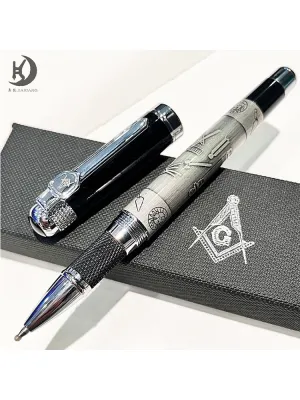

Prices are valid at publication and may change. Please refer to the product page for the latest price.
To ensure the gift is well-received, stick to clean, classic designs. Avoid overly cluttered patterns that combine multiple unrelated symbols, which can detract from the pen’s elegance. If you are commissioning a custom engraving, verify the orientation of the symbols. For example, the points of the compasses have specific configurations relative to the square depending on the degree, though the standard Master Mason configuration (both points above the square) is the most common and widely accepted for general items. Always consult with experienced lodge officers or a trusted Masonic supplier if you are unsure about the appropriateness of a specific design.
Choosing Between Fountain and Rollerball Mechanisms
The choice between a fountain pen and a rollerball pen should align with how the recipient intends to use the instrument. Fountain pens are highly prized for formal lodge correspondence, signing official visitor books, and completing certificate registries. They offer a deliberate, expressive writing experience that appeals to collectors and those who appreciate traditional craftsmanship. The liquid ink of a fountain pen adapts to the writer’s hand pressure over time, creating a unique line variation that makes signing documents a ceremonial act. However, fountain pens require regular maintenance, including flushing the feed and refilling the ink reservoir, which may not appeal to everyone.

In contrast, rollerball pens provide the smooth, liquid-ink feel of a fountain pen with the convenience of a standard ballpoint. They are excellent for everyday note-taking, quick signatures during busy lodge meetings, and general office work. Rollerballs use water-based or gel-based inks that flow effortlessly with minimal pressure, reducing hand fatigue during long writing sessions. Because they use self-contained refills, they require virtually no maintenance and are ready to write instantly, making them highly practical for active lodge secretaries or busy professionals.
Physical ergonomics also play a significant role in the writing experience. During extended meetings or administrative sessions, a pen’s weight, balance, and grip section determine comfort. Heavy brass or metal pens offer a substantial, premium feel that is excellent for short signing ceremonies, but they can tire the hand during long-form writing. Lightweight acrylic or resin pens are often better balanced for prolonged use. The grip section should be comfortable to hold, avoiding sharp metal threads or overly slick surfaces that can slip in warm, humid conditions.
Verifying Nib, Ink, and Material Specifications
To ensure the pen is fully functional in the Philippines, you must evaluate how its technical specifications interact with local writing conditions. The tropical climate brings high relative humidity, which naturally softens paper fibers. This makes paper more absorbent, increasing the likelihood of ink feathering (spreading out on the page) and bleed-through (soaking through to the back of the sheet).
Because smoothness, bleed resistance, drying speed, and water resistance depend entirely on the exact combination of ink formula and paper material, it is highly recommended to perform a simple trial before committing to official lodge documents. To verify compatibility, write a few test lines on an inconspicuous area or a scrap piece of the actual paper stock used by the lodge. Observe how quickly the ink sets to avoid smudging during rapid writing, and check the reverse side of the page to ensure the ink does not bleed through or feather excessively.
For fountain pens, selecting the right nib size is critical. Fine (F) or Extra Fine (EF) nibs restrict ink flow to a narrower line, which dries faster and minimizes bleed-through on standard copy paper or lodge ledger books. Medium (M) or Broad (B) nibs lay down more wet ink, which can feather excessively unless used on premium, high-density paper. For rollerball pens, a fine tip size (such as 0.5mm or 0.7mm) is generally preferred over broader tips to maintain clean, legible lines on everyday documents.
Ink selection is equally important. Water-resistant or permanent inks are highly recommended for official lodge records to prevent smudging or fading over time. When gifting a fountain pen, look for a model that includes a removable converter, which allows the recipient to use bottled ink of their choice, alongside standard international cartridges. For rollerball pens, verify that the pen accepts standard, widely available refill formats (such as the Euro-style rollerball refill). This ensures the recipient can easily purchase replacements from local stationery shops without needing to order specialized parts from abroad.
The pen’s body material affects both its aesthetic appeal and its durability. High-quality resin and acrylic offer vibrant colors, deep luster, and excellent resistance to scratches, while remaining lightweight. Solid brass or stainless steel bodies provide a reassuring heft and exceptional durability, though they may require occasional polishing to maintain their shine in humid environments. Ensure that any gold or silver plating is of high quality to prevent premature tarnishing or wearing off from regular handling.
Sourcing and Evaluating Custom or Themed Pens
Finding a high-quality Masonic pen in the Philippines involves navigating specialized fraternal suppliers, local custom engravers, and reputable online marketplaces. When evaluating potential sources, prioritize suppliers who specialize in Masonic regalia or premium stationery, as they are more likely to understand the correct proportions and details of fraternal symbols.
Prices for themed pens can vary, typically starting from around ₱1,500 for a well-made, laser-engraved brass rollerball to higher amounts for custom-crafted fountain pens made from premium resins or exotic materials. When comparing options, look closely at the engraving method. Laser engraving on metal pens provides a clean, precise, and permanent mark, while deep mechanical engraving or acid etching offers a classic, tactile feel. Avoid cheap printed designs that can easily scratch or wear off with daily use.
Before finalizing a purchase, especially for a customized or engraved pen, request a digital proof or mockup from the seller. This allows you to verify the spelling of the recipient’s name, their lodge number, and the correct orientation of any symbols. Carefully review the seller’s return policy regarding customized items; most reputable engravers will replace an item if there is a manufacturing defect or an error on their part, but they will not accept returns for customer-submitted spelling mistakes. Additionally, check the estimated production and shipping times to ensure the gift arrives well ahead of the scheduled presentation date.
Navigating Gifting Etiquette for Lodge Occasions
Presenting a Masonic pen is a gesture of respect and brotherhood, and the context of the gift should reflect this significance. Ideal occasions for such a gift include the annual installation of lodge officers, celebrating a brother’s milestone anniversary in the craft, or marking his raising to the degree of Master Mason. It is also a traditional token of appreciation for an outgoing Worshipful Master or a dedicated lodge secretary who has spent countless hours writing minutes and managing correspondence.
The presentation of the pen should match the quality of the instrument itself. Avoid giving a loose pen; instead, opt for a dedicated presentation box lined with velvet, satin, or microfiber. A wooden, leatherette, or high-quality cardboard gift box protects the pen during transport and serves as an elegant storage case on the recipient’s desk. If the pen is a custom-made piece or features premium materials, including a small card detailing the artisan’s work or a certificate of authenticity adds a thoughtful touch.
When writing an accompanying message, keep the tone respectful, warm, and aligned with fraternal values. You might express gratitude for the brother’s service to the lodge, offer congratulations on his new station, or simply wish him well in his Masonic journey. A personalized note, perhaps referencing a shared experience or a specific Masonic tenet such as brotherly love, relief, and truth, elevates the pen from a simple writing tool to a cherished memento of fraternal bond.
Frequently Asked Questions (FAQ)
Can I gift a Masonic pen to someone who is not yet a member?
It is generally best to wait until an individual has been formally initiated or raised before gifting them items bearing Masonic symbols. Fraternal etiquette discourages non-members from displaying or using symbols like the Square and Compasses. If you wish to gift a premium pen to someone who is currently petitioning or undergoing their degrees, choose a classic, high-quality pen without any Masonic emblems. Once they are raised as a Master Mason, you can present a themed pen or have their new lodge details engraved on it as a celebratory milestone gift.
Are there specific colors or materials preferred for Masonic pens?
While there are no strict rules governing colors, traditional Masonic gifts often feature classic color schemes. Deep blue (representing the blue lodge), rich black, gold, and silver are highly popular and carry a formal, timeless aesthetic. Brass and dark wood finishes are also favored for their traditional, antique look. Ultimately, the choice should reflect the recipient’s personal style and professional environment; a sleek, modern black-and-silver pen may be perfect for a brother who works in a corporate setting, while a classic wood-and-brass fountain pen may suit a collector or a lodge officer who appreciates vintage aesthetics.

Community discussion
Share your experience or ask a question. Comments are reviewed before publication.