
Selecting the right pad paper case is more than a matter of aesthetic preference; it is a practical decision that directly impacts the lifespan of your documents and the efficiency of your daily workflow. In a tropical environment like the Philippines, where high humidity, sudden downpours, and daily commutes are standard, paper is constantly exposed to environmental stressors. Without adequate protection, loose sheets, pad paper, and critical documents can quickly absorb moisture, warp, crease, or tear. A well-designed pad paper case serves as a protective shield and an organizational system, ensuring your work remains pristine, dry, and easily accessible wherever you go.
To find the ideal case, you must look beyond basic folders and evaluate specific structural features. The right choice requires balancing material durability, precise sizing, internal compartmentalization, and secure closure mechanisms. By understanding how these features interact with your daily routine, you can select a utility-focused storage solution that fits seamlessly into your academic, professional, or personal life.
Essential Material and Build Quality
The outer material of a pad paper case determines its durability, weight, and ability to protect your documents from external elements. Common materials include heavy-duty plastic, canvas, faux leather, and reinforced cardboard, each offering distinct trade-offs. Heavy-duty plastic, such as polypropylene, is highly water-resistant, lightweight, and flexible, making it an excellent choice for students and daily commuters who need reliable protection against rain and spills. However, thin plastic can look less professional and may crack over time if subjected to extreme temperature fluctuations or heavy impacts.
Products mentioned in this guide
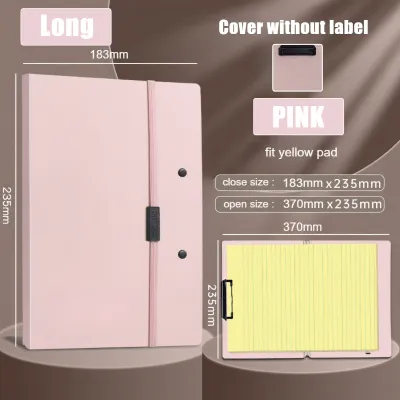
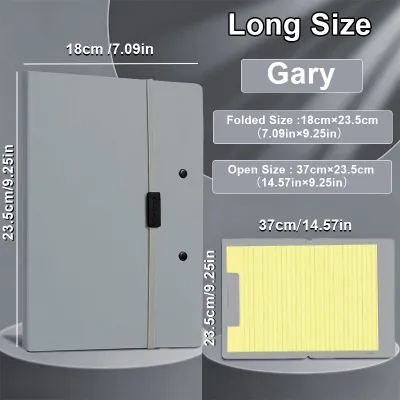
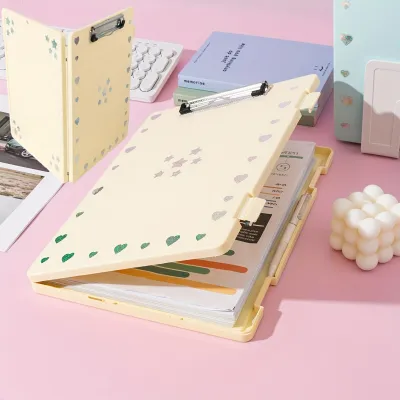
Prices are valid at publication and may change. Please refer to the product page for the latest price.
Canvas offers a tactile, durable alternative that resists tearing and punctures. While canvas is naturally breathable, it is porous and can absorb moisture unless it features a water-resistant inner lining or a specialized exterior coating. Faux leather, or polyurethane (PU) leather, provides a highly professional, sleek appearance suitable for corporate environments. It is heavier than plastic and canvas, and in highly humid climates, low-quality faux leather can peel or degrade over time if not kept in a well-ventilated area. Reinforced cardboard is an eco-friendly, rigid option that keeps papers perfectly flat, but it offers virtually no water resistance and will warp permanently if exposed to moisture.
When evaluating a case in person or reviewing specifications online, perform visual and tactile checks on the construction quality. Look for edge reinforcement, such as stitched fabric borders or thick, heat-welded seams on plastic models, which prevent the edges from splitting under pressure. Inspect the stitching along zippers and handles; high-quality cases utilize dense, even stitches and double-stitching at high-stress points to prevent fraying. If water resistance is a priority, look for materials that cause water to bead on the surface rather than soak through, and check that the seams are sealed tightly.
Your commuting frequency and exposure to varying weather conditions should dictate the material thickness and type you choose. If you walk or take public transit frequently during the rainy season, a thick, rigid polypropylene or water-repellent canvas case is essential. For office-bound professionals who primarily move between air-conditioned spaces, a refined PU leather portfolio provides the necessary protection while maintaining an elegant corporate aesthetic.
Size, Capacity, and Paper Compatibility
Paper dimensions vary significantly, and choosing a case that does not match your standard paper size will result in crumpled corners and damaged documents. In the Philippines, the most common paper sizes are A4 (210 x 297 mm), Letter (8.5 x 11 inches), and Legal or “long bond paper” (8.5 x 13 inches). Before purchasing a pad paper case, verify its exact internal dimensions rather than relying solely on generic labels like “standard size.” A case designed strictly for A4 paper will be too short for long bond paper, forcing you to fold or bend the sheets to fit them inside.

Beyond flat dimensions, consider the spine width and expansion capabilities of the case. If you only need to carry a single pad of paper and a few loose sheets, a slim, non-expanding envelope style is highly portable and fits easily into thin bags. However, if your document volume fluctuates, look for cases with expandable gussets or flexible elastic boundaries. Accordion-style gussets allow the case to expand outward as you add more papers, maintaining a compact profile when empty while accommodating hundreds of sheets when fully loaded. Ensure the gusset material is made of durable fabric or reinforced plastic, as paper-based gussets tear easily under the weight of heavy documents.
Internal structural support is another critical factor in preventing paper damage. When a soft, flexible case is packed into a crowded backpack, the pressure from other items can cause the entire case—and the papers inside—to bend and curl. To prevent this, look for cases that feature rigid backings or stiff internal dividers. A solid back panel acts as a portable writing surface and ensures that your pad paper remains perfectly flat, even when the case is carried inside a soft-sided bag.
Internal Organization and Compartments
The internal layout of a pad paper case dictates how efficiently you can categorize and retrieve your documents. Multi-tier accordion-style dividers are ideal for complex filing workflows, allowing you to separate documents by subject, project, urgency, or client. These multi-pocket designs keep different papers isolated, preventing them from mixing or sliding around. Conversely, single-tier flat designs feature one or two large pockets, which are better suited for carrying a single writing pad, a tablet, and a minimal selection of loose notes.
To maximize the utility of multi-compartment cases, look for built-in organizational aids. Color-coded index tabs and transparent pockets allow for rapid visual identification, enabling you to locate specific documents without flipping through every page. Built-in label slots on the tabs or the exterior of the case let you write custom category names, which is particularly useful for long-term archiving or managing multiple school courses.
Auxiliary storage features add versatility to a pad paper case, transforming it into a self-contained mobile workstation. Look for cases that include dedicated pen loops, business card slots, and small zippered mesh pockets. These extra compartments are perfect for storing essential stationery accessories like sticky notes, paper clips, correction tape, USB flash drives, or even a slim calculator. Having these items secured in their own pockets prevents them from scratching your paper or getting lost at the bottom of the main compartment.
Closure Mechanisms and Security
A secure closure mechanism is vital to prevent your documents from spilling out during transit and to protect your privacy. Common closure types include snap buttons, Velcro, zippers, elastic bands, and clasp locks, each offering a different balance of convenience, security, and durability. Snap buttons are quick and easy to operate, making them ideal for frequent access, but they can pop open unexpectedly if the case is overfilled or subjected to pressure inside a bag.
Velcro, or hook-and-loop fasteners, provides a strong, adjustable hold that accommodates varying document thicknesses. However, Velcro makes a loud noise when opened, which can be disruptive in quiet classrooms or offices, and the hooks tend to collect lint, hair, and dust over time, reducing their gripping strength. Zippers offer the highest level of security, sealing the case entirely on three sides to prevent even the smallest items from falling out. When choosing a zippered case, opt for durable nylon zippers, which are less prone to rusting or binding in humid environments compared to cheap metal alternatives.
Elastic bands are lightweight and flexible, stretching over the cover to keep the case closed. While convenient, elastic bands can lose their tension over time, especially when exposed to heat and humidity, eventually requiring replacement. Clasp locks, often found on premium portfolios, provide a secure, mechanical lock that gives a professional appearance, though they add weight and can break if dropped on a hard surface. When selecting a closure, consider your environment; if you commute on crowded public transport, a full-zipper closure or a secure clasp lock is highly recommended to prevent accidental openings.
Inspect the potential wear points of the closure hardware before making a decision. For snap buttons, ensure the backing material is reinforced so the button does not tear through the plastic or fabric after repeated use. For zippered cases, check that the zipper track is stitched securely to the body and that the pull tab is sturdy enough to withstand daily tugging.
Portability and Ergonomic Design
If you plan to carry your pad paper case daily, its portability and ergonomic features will heavily influence your comfort. Look for cases that feature comfortable carrying options, such as reinforced top handles or detachable shoulder straps. A retractable handle is particularly convenient, as it slides flat against the case when not in use, allowing you to slide the case easily into a larger bag. If the case has a shoulder strap, ensure it is adjustable and features a padded section to distribute weight evenly across your shoulder.
Weight distribution is a key consideration, especially when the case is fully loaded with paper, which can become surprisingly heavy. Balance the empty weight of the case against its protective features. A heavily armored, thick plastic or leather case provides excellent protection but may add unnecessary strain to your daily commute. Conversely, an ultra-lightweight sleeve might be easy to carry but fail to protect your papers from bending. Aim for a middle ground: a case that utilizes lightweight yet rigid materials, such as high-density polypropylene, to provide structural integrity without adding bulk.
Finally, match the exterior aesthetic and form factor of the case to your primary environment. A sleek, low-profile design in neutral colors like black, navy, or grey fits seamlessly into professional corporate settings and fits neatly inside briefcases or slim laptop bags. For students, vibrant colors or semi-transparent designs offer a personalized touch while allowing you to see the contents of the case at a glance, making it easier to confirm you have the right materials before heading to class.
Building Your Shortlist: Matching Features to Your Needs
To choose the perfect pad paper case, you must align its features with your specific daily routine. Different lifestyles demand different structural priorities, and understanding these needs will help you avoid overspending on unnecessary features or settling for an inadequate solution.
- Student Daily Classes: Students require high durability, multi-subject organization, and lightweight portability. Look for a multi-pocket polypropylene accordion case with a secure zipper or elastic band closure. It should easily fit A4 or Letter-sized pad paper, feature color-coded tabs for different subjects, and be slim enough to slide into a standard backpack.
- Professional Commuting: Professionals need a sleek, weather-resistant, and highly protective case to keep contracts, reports, and meeting notes pristine. A PU leather or water-repellent canvas portfolio with a rigid backing, a secure zipper or clasp closure, and dedicated slots for business cards and pens is ideal. It must accommodate standard Letter or A4 documents without bending.
- Home Archive Storage: For organizing tax documents, medical records, or appliance manuals at home, portability is secondary to capacity and indexing. A high-capacity, free-standing accordion file with 12 to 24 pockets, clear label slots, and an expandable bottom is the best choice. Since it will sit on a shelf or in a cabinet, a simple snap or elastic closure is sufficient.
When planning your budget, consider which features justify a higher ₱ price tag. Investing in high-quality materials like reinforced polypropylene, durable nylon zippers, and stitched edge bindings will save you money in the long run, as cheap plastic envelopes with heat-sealed seams tend to split within a few months of daily use. You can save money by opting for simpler closure mechanisms, like elastic bands, if you do not require the absolute security of a zipper, or by choosing single-pocket designs if you do not need complex categorization.
Before making your final purchase, use this quick verification checklist to ensure the case meets all your requirements:
- Dimensions: Does the internal measurement accommodate your largest paper size (e.g., 8.5 x 13 inches for long bond paper) without folding?
- Rigidity: Does the case have enough structural stiffness to prevent papers from bending inside your bag?
- Closure: Is the closure secure enough for your commute, and are the attachment points reinforced?
- Capacity: Does the spine or gusset expand sufficiently to hold your average daily volume of paper?
- Compartments: Does the internal layout match your filing system (e.g., multi-pocket for sorting, single-pocket for simple carrying)?
Frequently Asked Questions (FAQ)
Can a pad paper case replace a traditional ring binder?
A pad paper case and a traditional ring binder serve different organizational purposes. A ring binder requires you to hole-punch your documents, allowing you to flip through pages like a book, which is highly effective for studying sequential notes or manuals. However, a pad paper case offers non-destructive, flat storage, allowing you to slide loose sheets, unpunched documents, and entire writing pads inside without damaging them. This makes a pad paper case faster to load, more compact to carry, and gentler on pristine documents that cannot be punched.
How do I prevent papers from bending inside the case?
To keep your papers perfectly flat, always choose a pad paper case that features a rigid backing board or stiff internal dividers. If your case is flexible, you can insert a heavy plastic clipboard or a thick piece of cardboard inside to act as an artificial spine. Additionally, avoid overfilling the case beyond its natural gusset expansion limit, as overstuffing forces the outer cover to bow, which pinches and creases the paper edges. Finally, store the case vertically in a structured bag or flat on a desk, rather than squeezing it into a tightly packed backpack where it can be compressed and warped by other heavy items.

Community discussion
Share your experience or ask a question. Comments are reviewed before publication.