
Selecting a princess coloring book for a child’s school art class requires looking beyond the vibrant cover art. In a structured classroom environment, a coloring book is not just a leisure activity; it functions as an instructional canvas. The right book must withstand the physical demands of various art media, fit within the limited physical space of a school desk, and align with the specific time constraints of a school lesson. Parents and educators must evaluate several physical and structural characteristics to ensure the chosen book enhances the learning experience rather than causing frustration.
Classroom art lessons present unique challenges that do not exist during quiet coloring time at home. Students must work within strict time limits, often ranging from forty to sixty minutes, while sharing supplies and navigating crowded workspaces. A book that resists coloring media, tears easily under pressure, or constantly springs shut can disrupt a child’s focus and progress. By understanding the technical aspects of paper quality, binding, and design complexity, you can select a princess-themed coloring book that serves as a reliable and engaging educational tool.
Core Standards for Classroom-Ready Coloring Books
Evaluating a coloring book for school use requires shifting focus from commercial popularity to verifiable physical traits. While a book featuring licensed characters might immediately appeal to a child, its construction may not be suited for the classroom. High-quality art instruction relies on materials that behave predictably. When children use substandard paper or awkward formats, they spend more time managing their materials than learning fundamental art concepts like color theory, spatial awareness, and fine motor control.
Products mentioned in this guide
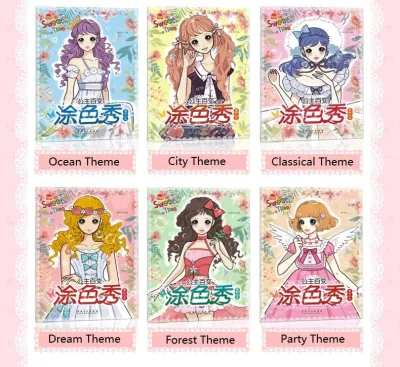
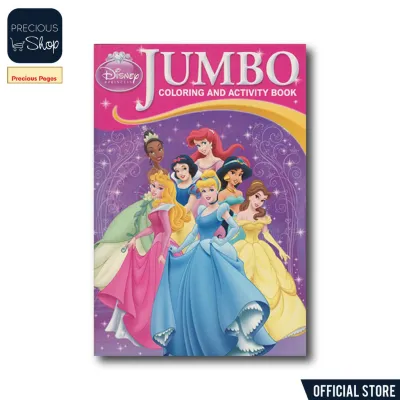
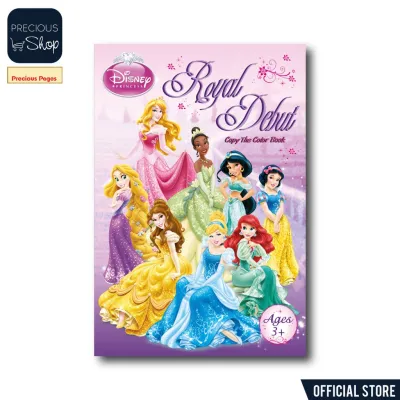
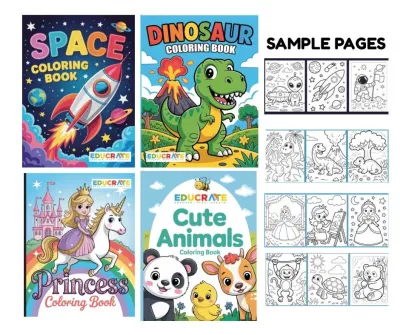

Prices are valid at publication and may change. Please refer to the product page for the latest price.
Classroom environments introduce specific physical constraints that dictate what makes a coloring book practical. School desks, particularly the compact wooden or plastic armchairs common in many classrooms, offer very limited flat surface area. Furthermore, tropical climates with high relative humidity can soften paper fibers, making cheap, thin sheets highly susceptible to warping and tearing. In these conditions, a coloring book must possess structural integrity to survive daily transport in a packed school backpack and repeated handling during lessons.
To identify a classroom-ready option, focus on three non-negotiable evaluation pillars: paper weight, binding flexibility, and design clarity. The paper must be thick enough to prevent media from bleeding through to the reverse side. The binding must allow the book to lie flat on a desk without requiring heavy objects to hold it open. Finally, the illustrations must feature clean, well-defined lines that match the student’s developmental level, allowing them to complete their work within the designated class period.
Matching Paper Quality to Classroom Art Media
The choice of coloring tools in a school art class directly dictates the required paper specifications. Teachers frequently utilize markers, colored pencils, or wax crayons, and each medium interacts differently with paper fibers. Using the wrong paper can lead to bleeding, tearing, or poor color payoff, which can discourage young artists. Understanding these interactions allows you to match the book’s paper quality to the specific tools listed on the school’s supply list.

Markers are a popular choice for vibrant illustrations, but they present the greatest challenge for standard coloring book paper. Water-based school markers saturate paper fibers with moisture, while alcohol-based markers penetrate deeply into the sheet. To prevent ink from bleeding through to the next page, look for books featuring heavyweight paper, ideally rated at 100 GSM (grams per square meter) or higher. If the manufacturer does not list the GSM, look for descriptions specifying “thick,” “heavyweight,” or “single-sided” pages, which allow students to use markers without ruining subsequent designs.
Colored pencils require a completely different paper texture, known as “tooth.” If the paper is too smooth or glossy, the wax or oil binder in colored pencils cannot grip the surface, resulting in faint, uneven colors. Paper with a slight texture holds the pigment layers effectively, allowing students to practice basic shading and color blending. This texture also provides structural strength, ensuring the paper does not tear or puncture when a child applies heavy pressure to achieve deeper color saturation.
Wax crayons perform best on paper that balances smoothness with moderate absorption. If the paper is excessively rough, crayons will glide unevenly, leaving behind heavy wax flakes and white gaps in the drawing. Conversely, highly coated or glossy paper resists wax transfer entirely. To verify media compatibility before purchasing, check the product labels for terms like “acid-free” or “suitable for mixed media.” Acid-free paper resists yellowing and degradation over time, ensuring that classroom projects preserved in student portfolios remain bright and intact.
Aligning Design Complexity with Age and Lesson Goals
An effective school art project relies on illustrations that match the student’s developmental stage. If a design is too complex, the child may become overwhelmed and fail to finish the assignment within the class period. If it is too simple, older students may finish too quickly and miss out on opportunities to develop advanced techniques. Aligning the illustration style with the child’s grade level ensures the coloring book serves its educational purpose.
For early childhood classrooms, including preschool and kindergarten, simplicity is essential. Children in this age group are developing basic grip strength and hand-eye coordination. Princess designs for these early learners should feature large, uncomplicated shapes with thick, bold outlines of at least two to three millimeters. These heavy borders provide a clear visual guide, helping young children practice staying within the lines while using thick jumbo crayons or markers.
As students transition into early elementary grades, specifically grades one through three, their fine motor skills become more refined. Coloring books for this level should introduce moderate details, such as patterns on princess gowns, simple castle backgrounds, and distinct facial features. These designs are highly suitable for colored pencils, allowing teachers to introduce basic art concepts like warm and cool color schemes, primary and secondary colors, and simple color blending within defined spaces.
Older elementary students in grade four and above benefit from intricate patterns and detailed background elements. Complex illustrations featuring detailed landscapes, elaborate royal courts, and repeating geometric patterns on clothing challenge older students to plan their color palettes carefully. These detailed books are excellent for teaching advanced techniques, such as light source positioning, gradient shading, and mixed-media applications where colored pencils and fine-liner markers are used together.
To confirm the complexity of a coloring book before purchasing, take advantage of interior preview images. Many online marketplaces and publisher websites offer a “look inside” feature or display sample pages. Examine these previews to ensure the line art is clean and free of excessive gray shading, which can interfere with the student’s own color choices and make the final artwork look muddy.
Evaluating Binding and Physical Practicality
The physical construction of a coloring book significantly impacts its usability on a crowded school desk. A book that is difficult to keep open or too bulky to store can cause unnecessary distractions during a timed lesson. Evaluating the binding method and overall dimensions helps ensure the book remains a practical addition to a student’s art kit.
Coloring books generally utilize one of three binding methods: perfect bound, saddle-stitched, or spiral-bound. Perfect-bound books feature pages glued to a square spine; while common, they tend to spring shut automatically, forcing students to use one hand or a heavy object to hold the book flat while coloring. Saddle-stitched books are bound with staples along the fold, allowing them to lie relatively flat with minimal effort. Spiral-bound books offer the greatest physical practicality, as they can be folded completely backward, reducing the book’s footprint by half and saving valuable desk space.
Perforated pages are another highly valuable feature for classroom settings. When pages are perforated, students can easily tear out their completed artwork without ripping the edges or damaging the book’s spine. This allows teachers to collect individual assignments easily for grading, display the finished princess designs on classroom bulletin boards, or send them home in a flat folder. If a book lacks perforations, removing a page cleanly requires scissors, which adds an extra step and safety consideration to the lesson.
| Binding Type | Desk Space Efficiency | Flat-Laying Ability | Durability in Backpacks |
|---|---|---|---|
| Spiral-Bound | High (can fold 360 degrees) | Excellent (lays completely flat) | Moderate (coils can bend or snag) |
| Saddle-Stitched | Moderate (must remain fully open) | Good (lays flat with light creasing) | High (flexible and lightweight) |
| Perfect-Bound | Low (must remain fully open) | Poor (requires pressure to stay open) | High (sturdy spine protects pages) |
Beyond binding, consider the overall dimensions and cover durability of the book. Standard letter size (8.5 x 11 inches) or A4 size is ideal for school use, as these dimensions fit perfectly into standard student backpacks and classroom storage cubbies. Avoid oversized or giant coloring books, which will overhang small school desks and are easily bent or damaged. The cover should consist of sturdy cardstock to protect the inner pages from moisture, crumpled corners, and the general wear and tear of daily school commutes.
Building Your Shortlist: Pre-Purchase Checks
When shopping for princess coloring books on e-commerce platforms or in local stationery stores, a systematic approach prevents disappointing purchases. It is easy to be swayed by an appealing cover illustration, but verifying the technical specifications ensures the book is truly functional for school art classes. Use the following steps to filter your options and build a reliable shortlist.
First, read the product specifications carefully rather than relying solely on the cover design. Look for explicit details regarding paper weight, page count, and dimensions. A high-quality listing will state whether the paper is suitable for markers or if the pages are printed on one side only. Single-sided printing is highly desirable for school use, as it ensures that even if minor marker bleed-through occurs, it will not ruin a second illustration on the back of the page.
Next, analyze user reviews specifically for feedback on paper performance and physical durability. Search the review section for keywords such as “bleed,” “thin,” “markers,” “tear,” or “binding.” Other parents and teachers frequently share honest feedback about whether the paper behaves like cheap newsprint or if the binding falls apart after a few uses. Pay close attention to reviews that mention the actual quality of the illustrations, as some budget books may contain pixelated or poorly printed line art.
Finally, verify the exact dimensions of the book to avoid purchasing pocket-sized or travel editions by mistake. These smaller books, often measuring around 5 x 7 inches, are difficult for young children to color comfortably and do not provide enough space for structured classroom art projects. By cross-referencing the physical dimensions, paper specifications, and user feedback, you can confidently select a princess coloring book that supports your child’s artistic development in the classroom.
Frequently Asked Questions (FAQ)
Managing Marker Bleed-Through on Thin Pages
If a student must use markers on a coloring book with thin, lightweight pages, placing a protective barrier behind the active page is an effective classroom workaround. A sheet of heavy cardstock, a plastic writing board, or even a few sheets of scrap construction paper placed directly beneath the page being colored will absorb any excess ink. This simple step prevents the marker pigment from bleeding through and ruining the subsequent illustrations in the book.
While this barrier method is highly effective, it does introduce minor logistical challenges during a fast-paced school art lesson. Younger students may forget to reposition the protective sheet when they move to a different section of the page, or the barrier may slide out of place on a slanted desk. Additionally, managing extra loose sheets of paper adds to the cleanup time at the end of the class period. For these reasons, investing in books with naturally thick, single-sided pages remains the most reliable solution for marker-heavy lessons.
Spiral vs. Traditional Binding for School Desks
Spiral binding offers a distinct space-saving advantage in crowded classroom environments. Because a spiral-bound book can fold completely back on itself, it occupies only half the desk space of a traditionally bound book that must remain fully open. This compact footprint leaves more room on the student’s desk for shared art supplies, water cups, and pencil cases, reducing the likelihood of accidental spills and cluttered workspaces during the lesson.
However, spiral binding does have trade-offs regarding long-term durability. The plastic or metal coils can snag on the mesh pockets of school backpacks, bend under the weight of heavy textbooks, or gradually unravel if handled roughly by young children. Traditional saddle-stitched or perfect-bound books, while taking up more desk space, feature flat spines that slide smoothly into backpacks and storage slots without catching on other school supplies. When choosing between these styles, consider whether desk space or backpack durability is the higher priority for your child’s daily routine.

Community discussion
Share your experience or ask a question. Comments are reviewed before publication.