
Choosing the right silicone pen grip requires matching the outer diameter to your hand size, selecting a shape that supports your natural finger placement, and choosing a firmness that cushions your grip without sacrificing control. In tropical climates where high humidity and heat can make hands sweaty, a well-chosen silicone grip also prevents slipping and reduces the need to squeeze the pen tightly. By addressing these factors, you can transform a standard ballpoint or gel pen into an ergonomic writing tool that prevents cramping during long writing sessions.
Identify Your Grip Style and Hand Fatigue Triggers
Before purchasing a silicone pen grip, observe how you naturally hold your writing instrument. Most writers use the dynamic tripod grip, where the pen is held between the thumb and index finger while resting on the middle finger. Others employ the lateral tripod or a quadropod grip, which uses four fingers for support. Each style distributes pressure differently across your fingers, and identifying your specific pattern helps you locate where physical strain accumulates.
Hand fatigue often manifests as distinct physical signals during extended writing sessions. You might experience a dull ache in the thenar eminence, which is the fleshy muscle at the base of your thumb, or develop a hard callus on the side of your middle finger. Some writers feel stiffness radiating up into the wrist or forearm. These symptoms indicate that you are pinching the pen too tightly, a habit often developed to keep thin, slippery plastic barrels from sliding out of alignment.
Products mentioned in this guide
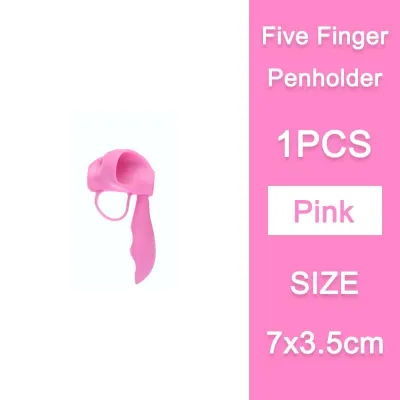
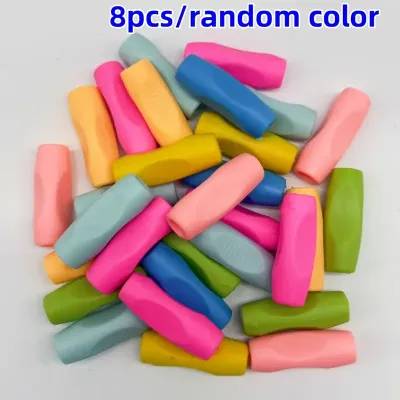
![[COD] SAjeNH SPORT Silicone Pencil Grips Children Writing Pencil Pen Holder Five Fingers Fixed Handwriting Posture Correction Assisted Grip](https://img.lazcdn.com/g/p/ce883ed461e54356def3905b3267e6e3.jpg_400x400q80.jpg_.webp)
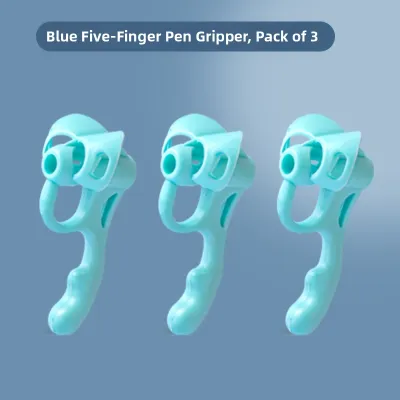
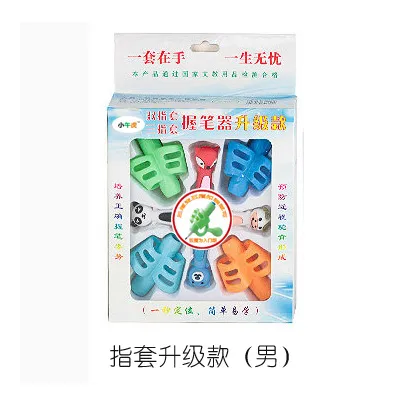
![[🇵🇭 Stock&COD] 4Pcs/Set Pencil Handle Grips Soft Silica Pencil Holder Writing Training Correction Tool For Kids](https://img.lazcdn.com/g/p/c0b6ebbd8293f5e982b7c5a021fc6d9e.jpg_400x400q80.jpg_.webp)
Prices are valid at publication and may change. Please refer to the product page for the latest price.
It is important to distinguish between issues a silicone grip can solve and those requiring a different remedy. A silicone grip is highly effective at cushioning hard surfaces and widening thin pen barrels to reduce pinch force. However, if your hand fatigue stems from using an excessively heavy metal pen, writing at an awkward wrist angle, or pressing down too hard on the paper, a grip accessory should be paired with posture adjustments and a lighter pen body for complete relief.
Select the Right Thickness and Diameter for Your Hand
To find a grip that fits securely, you must first measure the barrel of your favorite pen. Use a standard ruler to find the diameter of the section where you normally place your fingers, which typically ranges from 7mm to 10mm. When browsing online marketplaces, look for silicone grips with an inner diameter that matches or is slightly smaller than your pen’s measurement to ensure a snug, non-slip fit that will not slide around while you write.

The outer thickness of the grip directly influences how much muscle force you must exert to hold the pen. If you are a heavy presser who naturally squeezes the pen tightly, a thicker grip with an outer diameter of 12mm to 15mm is ideal because it spreads the squeezing force over a larger surface area. If you have smaller hands or prefer a light, precise writing touch, a thinner grip of 10mm to 11mm provides adequate cushioning without making the pen feel bulky.
Be mindful of the trade-offs associated with extreme sizes. An excessively thick grip forces your fingers into an overextended, wide position, which can strain the small muscles of your hand and lead to rapid fatigue. On the other hand, a grip that is too thin offers almost no cushioning, failing to resolve the tight pinching action that causes cramping in the first place.
Choose the Best Ergonomic Shape and Contour
Silicone pen grips generally fall into two design categories: cylindrical and contoured. Cylindrical grips maintain a uniform, round shape along their entire length, offering consistent cushioning regardless of how you rotate the pen. Contoured grips feature molded indentations, triangular profiles, or bulbous midsections designed to guide your fingers into a specific, ergonomically optimized position.
Matching the shape of the grip to your finger placement can dramatically improve your writing comfort. Triangular grips are excellent for reinforcing a proper tripod hold, as they provide flat surfaces for the thumb, index, and middle fingers to rest on without overlapping. Bulbous or pear-shaped grips provide a wider surface area near the tip, which prevents your fingers from sliding downward and reduces the downward pressure needed to keep the pen stable on the paper.
Despite their benefits, highly contoured grips have distinct limitations. If you frequently rotate your pen to keep a mechanical pencil lead sharp, or if you like to shift your hand position depending on whether you are writing or sketching, a molded grip can feel restrictive. For these dynamic writing styles, a simple cylindrical or gently ribbed grip is often more comfortable than a rigid, pre-shaped model.
Evaluate Surface Texture and Material Firmness
In warm, humid climates, the surface texture of your pen grip is crucial for maintaining control. Smooth silicone grips can become slippery when exposed to hand sweat, forcing you to grip the pen harder to keep it from sliding. To combat this, look for grips with a matte finish, ribbed patterns, or textured grooves that allow air to circulate and channel moisture away from your fingertips.
Material firmness, often referred to as density, determines how much the grip compresses under pressure. Soft, gel-like silicone offers maximum cushioning, making it highly comfortable for those with sensitive skin or joint pain, though it can sometimes feel slightly unstable during fast, cursive writing. Firmer, high-density silicone provides a more stable platform for precise, controlled strokes and tends to last much longer under heavy daily use.
Because silicone is exposed to skin oils, sweat, and environmental dust, it will eventually degrade over time. Perform regular maintenance checks to see if your grip has lost its elasticity, has become permanently sticky, or has developed small tears near the openings. When these signs of wear appear, the material can no longer provide proper support or hygiene, indicating it is time to replace the grip.
Install, Test, and Adjust Your Pen Grip Setup
Installing a tight silicone grip can be challenging, and forcing it onto a pen dry can tear the material or scratch the pen barrel. To make the process easy, apply a single drop of water or rubbing alcohol to the inside of the grip before sliding it onto the pen. The liquid acts as a temporary lubricant, allowing the grip to slide into place effortlessly, and will evaporate completely within a few minutes to leave a secure, non-slip fit.
Once the grip is installed and dry, conduct a short writing test to evaluate its placement. Write a few sentences on your usual paper, paying close attention to whether your fingers rest naturally on the cushioned area. The grip should be positioned high enough to keep your fingers from touching the bare pen tip, but low enough that you can still see the paper clearly as you write.
Pay attention to any stop conditions that indicate the grip is not a good match for your setup. If you experience new pain in your hand, or if the added weight of the grip shifts the pen’s balance too far backward, try adjusting its position or switching to a lighter model. Additionally, ensure the grip does not interfere with the pen cap’s ability to click securely onto either end of the pen, which could cause your ink to dry out.
Frequently Asked Questions (FAQ)
Can I use a silicone pen grip on mechanical pencils or markers?
Yes, you can use silicone grips on mechanical pencils and markers, provided you verify the barrel dimensions first. Many mechanical pencils have wider barrels or unique shapes near the tip that may require a highly stretchable grip. When installing a grip on a mechanical pencil, ensure it does not block the lead advancement button or sleeve. For markers, make sure the grip is positioned far enough back so it does not interfere with the cap’s sealing mechanism, which could cause the ink to dry out.
How do I clean a silicone pen grip that has become sticky?
To clean a silicone grip that has accumulated dust, lint, or skin oils, slide it off the pen and wash it thoroughly with mild dish soap and lukewarm water. Gently rub the surface with your fingers to remove any residue, rinse it clean, and let it air dry completely before reinstalling. If the grip remains sticky or feels gummy even after a thorough washing, the silicone has chemically degraded due to age, heat, or oil exposure, and it should be replaced with a new one.

Community discussion
Share your experience or ask a question. Comments are reviewed before publication.