
Finding the right sketch book with pencil set for art classes in the Philippines requires balancing paper weight, binding durability, and graphite grade variety. School syllabi often demand specific paper thicknesses to withstand heavy shading and a range of pencil grades from hard outlines to deep shadows. By evaluating these technical specifications alongside the practical demands of daily commuting and tropical humidity, students and parents can select a bundle that supports learning without premature wear or paper tearing.
Understanding School Art Supply Requirements
Before purchasing any art bundle, it is essential to review the school’s official supply list. Art teachers and school syllabi typically mandate specific dimensions, paper weights, and graphite grades to ensure all students can complete the curriculum’s exercises. A standard writing notebook is entirely inadequate for art class, as its thin pages will warp, smudge, and tear under the pressure of drawing pencils.
Syllabi generally distinguish between basic drawing requirements and mixed-media assignments. For introductory sketching and shading exercises, a standard dry-media sketchbook is sufficient. However, if the curriculum includes light watercolor washes, ink rendering, or poster paint, students will need a heavier mixed-media paper. Purchasing a bundle with paper that is too thin for the class assignments will lead to frustration and ruined projects.
Products mentioned in this guide
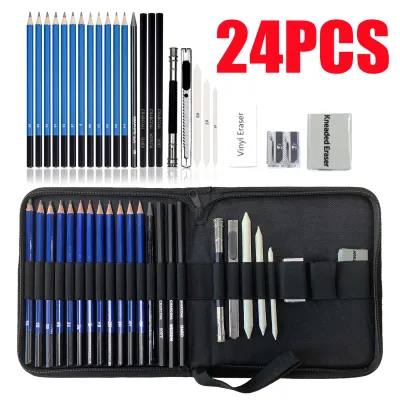
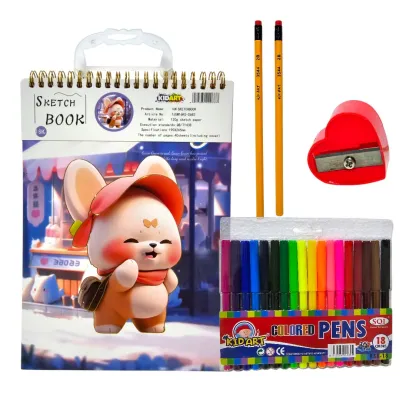
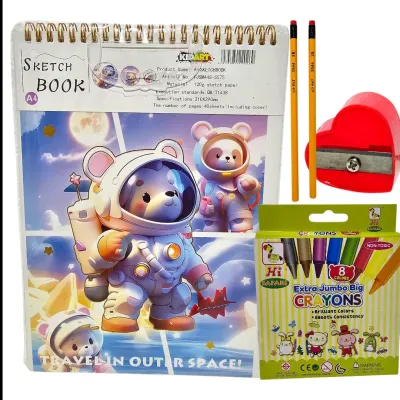
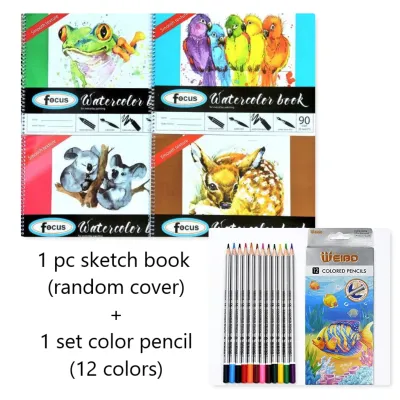
Prices are valid at publication and may change. Please refer to the product page for the latest price.
Binding is another critical specification often dictated by instructors. Spiral-bound sketchbooks are highly favored for classroom use because they lay completely flat on cramped school armchairs, allowing students to utilize the entire page surface. Conversely, some teachers prefer glue-bound pads or perforated pages, which allow students to cleanly tear out and submit individual plates for grading without leaving messy, ragged edges. Checking these details beforehand prevents buying a book that violates classroom rules.
Evaluating Sketchbook Paper and Binding
Selecting a durable sketchbook involves looking past attractive cover designs to inspect the structural integrity of the paper and the binding mechanism. In the Philippines, where high humidity can affect paper fibers and cause covers to warp, choosing the right materials is crucial for preserving student artwork throughout the school year.

Paper Weight and Surface Texture
Paper thickness is measured in GSM (grams per square meter), which is the most reliable indicator of how much wear a page can handle. For basic pencil sketching, a paper weight of 100 to 120 GSM is the absolute minimum required to prevent the pencil from embossing the next page. If the art class involves heavy shading, blending, or light ink work, look for a sketchbook with 150 to 200 GSM to ensure the paper can withstand repeated erasing without pilling or tearing.
The surface texture, or “tooth,” of the paper determines how well it grips graphite. Smooth paper (often referred to as hot-pressed) is excellent for fine detail and clean line work, but it struggles to hold multiple layers of dark graphite. A medium-tooth paper (similar to cold-pressed) provides enough texture to shave off and hold graphite particles, allowing for rich, dark shadows and smooth gradients. Students should observe the paper under direct light to verify it has a consistent, visible texture.
Paper color also plays a role in the final appearance of a drawing. Bright white paper offers high contrast, making it ideal for bold, graphic illustrations and high-contrast shading. Natural cream or off-white paper is gentler on the eyes under bright classroom fluorescent lights and provides a warmer, more traditional background for portraits, still-life drawings, and landscapes.
Binding Types and Standard Sizes
Comparing binding types helps students choose a format that fits their classroom environment and transport needs. Spiral binding is incredibly practical for limited desk spaces, as the book can be folded back on itself. Stitched bindings offer excellent durability and a classic look, but they do not allow for easy page removal. Glue-bound pads are perfect for clean sheet removal but require careful handling to prevent pages from detaching prematurely inside a backpack.
Standard size formats must match the school’s portfolio folder requirements. The most common sizes requested in Philippine schools are A4 and 9×12 inches (often referred to locally as drawing book size). Ensuring the sketchbook matches these dimensions is vital, as odd-sized pages may not fit into standard plastic envelopes or submission folders, risking damage to the artwork during transit.
Finally, consider the cover material. In a tropical climate, thin cardstock covers absorb moisture from the air and warp easily, leaving the inner pages unprotected. A thick, rigid chipboard or hardbound cover protects the sketchbook from bending, sweat, and the inevitable bumps of a daily commute on public transit. A sturdy cover also acts as a built-in drawing board when working outdoors or away from a desk.
Choosing Pencil Grades and Bundle Accessories
A complete sketch book with pencil set is only as useful as its graphite selection and the quality of its accompanying tools. Evaluating these components ensures the student has everything needed to execute a wide range of values and textures.
Graphite Hardness Range
Drawing pencils are graded on a scale from H (hardness) to B (blackness), with HB representing the middle ground. A standard art class bundle should include a balanced spectrum of these grades. Harder pencils, such as 2H or H, are ideal for light, precise technical outlines and initial guidelines. Softer pencils, such as 2B, 4B, and 6B, are essential for deep shading, rich shadows, and expressive linework.
Students should inspect the physical construction of the pencils in the bundle. Look closely at the tips to ensure the graphite core is perfectly centered within the wood casing. An off-center core makes the pencil incredibly difficult to sharpen evenly, causing the lead to snap repeatedly under slight pressure. High-quality wood casings, such as cedar, sharpen smoothly without splintering.
While pre-bundled sets offer a convenient starting point, they often focus on a standard mid-range selection of pencils. If a specialized art syllabus requires extreme grades, such as a very hard 4H or an ultra-soft 8B or 9B, students should expect to purchase these specialty pencils individually to supplement their starter kit. A good bundle provides the foundation, while individual purchases fill the highly specific gaps.
Erasers, Sharpeners, and Blending Tools
The accessories included in a bundle can significantly impact the drawing experience. A cheap plastic sharpener can ruin premium pencils by splintering the wood or snapping the graphite core. Look for bundles that include a sharpener with a high-quality steel blade, preferably housed in a sturdy metal body. The sharpener hole must match the pencil diameter perfectly to prevent wobbling during sharpening.
Standard pink school erasers are often too abrasive for art paper, smudging the graphite and tearing the delicate paper fibers. A soft vinyl or plastic eraser is much better for clean, non-abrasive lifting. Additionally, a kneaded eraser is an indispensable tool for art students; it can be molded into fine points to lift highlights out of dark shaded areas and leaves no messy eraser crumbs behind.
Blending stumps, also known as tortillons, are tightly rolled paper sticks used to blend graphite smoothly. When evaluating a bundle, check that the blending stumps are wound tightly and feel firm to the touch. Loose, soft stumps will unravel quickly, absorb too much graphite, and create muddy, uneven smudges rather than smooth, soft gradients.
Matching Specifications to Student Skill Levels
To avoid overspending or buying inadequate supplies, it is helpful to match the sketch book with pencil set to the student’s academic level and artistic maturity.
For elementary and junior high school students taking general art classes, a budget-friendly starter bundle is ideal. These sets typically cost under ₱500 and feature a 100 to 120 GSM sketchbook paired with a basic pencil selection (such as 2H, HB, 2B, and 4B), a standard plastic eraser, and a simple sharpener. This provides sufficient durability and a solid introduction to shading without a high upfront investment.
For senior high school students in the Arts and Design track, or college students pursuing fine arts, the requirements are much more demanding. These advanced students require a sketchbook with at least 150 to 200 GSM acid-free paper to prevent yellowing and degradation over time. Their pencil set should span a wider range, from 2H to 8B, and include specialized tools like kneaded erasers, dual-hole metal sharpeners, and multiple sizes of blending stumps. These comprehensive sets generally range from ₱500 to over ₱1,500.
As a student’s technique evolves, they will eventually outgrow pre-bundled sets. When a student begins to notice the limitations of their bundle—such as paper pilling under heavy blending, or the lack of specific dark graphite grades—it is time to transition to individually curated professional-grade components. This allows them to choose specific paper textures and premium graphite brands tailored to their developing style.
Verifying Authenticity and Retailer Reliability
With the rise of counterfeit art supplies, ensuring you receive genuine products is crucial for getting the paper and graphite quality you pay for. Counterfeit pencils often have brittle, off-center cores, while fake sketchbooks use low-grade paper that bleeds and tears easily.
To ensure authenticity, purchase from established physical bookstores, authorized stationery retailers, or official brand stores on major online marketplaces. Avoid generic, unbranded listings that offer suspiciously low prices for well-known brand names. If a deal seems too good to be true, it is highly likely a counterfeit product.
When shopping in person, inspect the packaging carefully. Authentic sets feature crisp, clear typography, correct manufacturer barcodes, and often holographic security seals. Counterfeits often have blurry printing, misspelled words, or a strong chemical smell from low-grade adhesives and treated wood. When shopping online, read customer reviews carefully, looking for specific feedback regarding paper quality, bleed-through, and pencil core snapping. Verify that the retailer offers a clear return or replacement policy for damaged goods.
Frequently Asked Questions (FAQ)
Is it better to buy a pre-bundled sketch book with pencil set or build one separately?
Pre-bundled sets are highly convenient and cost-effective for beginners, providing all necessary tools in one purchase. However, they may include lower-quality accessories. Building a set separately offers complete customization and higher quality but requires a larger initial investment and more research.
What paper weight prevents bleed-through when using ink pens over pencil sketches?
To prevent ink bleed-through and feathering, look for a paper weight of at least 150 GSM, preferably labeled as mixed-media or ink-friendly. Standard sketchbooks (around 100 GSM) are designed for dry media and will likely bleed. Always perform a small swatch test on the back page before starting a major project.

Community discussion
Share your experience or ask a question. Comments are reviewed before publication.