
Choosing the right Cinnamoroll washi tape and sticker sets depends entirely on your specific journaling style, paper type, and layout goals. Rather than relying on generic popularity, this guide helps you evaluate material specifications, pattern formats, and authenticity markers so you can select stationery that genuinely enhances your daily planning and creative spreads. Whether you are a seasoned planner enthusiast or a beginner looking to add a touch of Sanrio charm to your pages, understanding how these decorative elements interact with your journal’s paper is key to creating beautiful, long-lasting layouts.
Define Your Journaling Style to Guide Your Selection
Before purchasing any Cinnamoroll stationery, it is essential to clarify your journaling approach. Different styles require vastly different types and volumes of tapes and stickers. For instance, if you practice heavy collage journaling—often referred to as junk journaling or memory keeping—your spreads will benefit from wide background tapes, large die-cut stickers, and highly decorative elements that fill empty spaces. Conversely, if your style is minimalist or functional, you will want to look for narrow border tapes, small icon stickers, and functional trackers that keep your layouts clean and organized without distracting from your writing.
The physical characteristics of your journal also play a major role in your selection. Consider your notebook’s paper weight, which is measured in grams per square meter (GSM). Standard journals often feature paper ranging from 80 GSM to 120 GSM, while heavy-duty art journals may go up to 160 GSM. Layering thick stickers and heavy tapes on thin paper can cause the pages to warp, buckle, or create excessive bulk. This page bulk makes it difficult to write comfortably on subsequent pages. If you use a thin-paper journal, opt for lightweight paper stickers and standard, thin washi tapes. For thicker paper or spiral-bound journals, you have more freedom to use dimensional stickers and heavy PET tapes.
Products mentioned in this guide
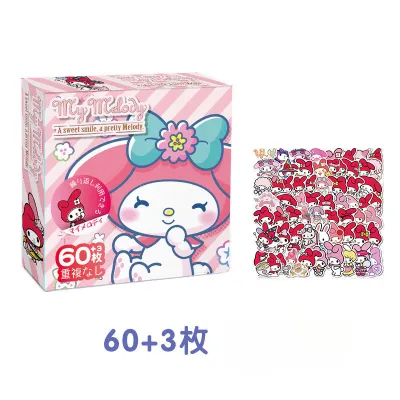
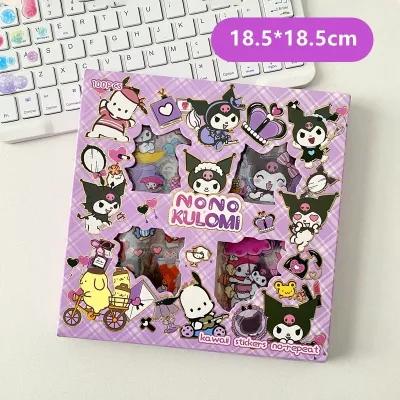
Prices are valid at publication and may change. Please refer to the product page for the latest price.
Finally, establishing a cohesive color palette or thematic focus will help you choose sets that work well together. Cinnamoroll designs typically feature a signature color scheme of sky blue, pastel pink, white, and soft cream. However, different collections introduce unique themes, such as cozy cafe aesthetics, starry night skies, afternoon tea parties, or seasonal floral patterns. By selecting sets that share a common theme or color palette, you can mix and match different rolls of tape and sticker sheets across your spreads while maintaining a harmonious, visually pleasing look throughout your journal.
Evaluate Washi Tape Dimensions and Materials
Washi tape is incredibly versatile, but its usefulness in your journal depends on its dimensions and material composition. When browsing Cinnamoroll tapes, pay close attention to the width, which is measured in millimeters. Narrow tapes, typically ranging from 5mm to 15mm, are excellent for functional tasks such as creating grid lines, separating daily entries, underlining headers, or framing small photos. On the other hand, wide tapes measuring 30mm to 50mm or more function as focal points. You can use these wider tapes to create dramatic borders, mask out large background sections, or even tear them by hand to add a textured, rustic edge to your collage layouts.

The material of the tape determines both its appearance and how you work with it. Standard paper washi tape is made from traditional Japanese shrubs, resulting in a matte, slightly textured finish. It is semi-transparent, easy to tear by hand, and highly writable, meaning you can easily jot down dates or notes over the tape using a ballpoint pen or pencil. In contrast, PET (polyethylene terephthalate) tape is a modern plastic-based alternative. PET tapes are highly transparent, water-resistant, and feature incredibly vibrant, glossy colors. However, they cannot be torn by hand and require scissors for a clean cut. Because of their glossy surface, standard gel pens and water-based inks will smudge on PET tape, so you must use permanent markers if you plan to write on them.
Another critical factor is the pattern repeat and adhesive behavior. The pattern repeat refers to how long the tape design runs before the illustrations start to duplicate. A longer repeat pattern offers more variety, which is ideal for continuous borders where you do not want to see the same Cinnamoroll pose repeating too quickly. Additionally, high-quality washi tape should feature a gentle, pressure-sensitive adhesive that allows you to reposition the tape without damaging your paper. Before applying a new tape to your main layout, always perform an observable trial: stick a small piece onto a scrap page or the back of your journal, leave it for a few minutes, and then gently peel it off to verify that it removes cleanly without tearing the delicate paper fibers.
Choose Sticker Formats That Fit Your Layouts
Stickers are the perfect way to add character to your journal, but choosing the wrong format can lead to frustration. The two primary sticker materials you will encounter are paper and PET or vinyl. Paper stickers have a matte, uncoated finish that blends seamlessly with the texture of your journal pages. They are ideal for writing over with gel pens, making them highly functional for adding notes or labels. PET and vinyl stickers, however, offer a glossy, durable, and water-resistant finish. While they look stunning and vibrant, their non-porous surface causes water-based inks to bead up and smudge. If you choose glossy vinyl stickers, ensure you have compatible permanent pens, or allow ample drying time before closing your journal.
The cut style of the stickers also affects how you use and store them. Die-cut stickers are cut individually to the exact shape of the design. They are easy to peel and perfect for tucking into journal pockets or using as large, standalone focal points. Kiss-cut sheets, on the other hand, feature multiple designs on a single backing sheet where only the top sticker layer is cut. These sheets are highly convenient for storage, as they keep dozens of small stickers organized in one flat place. Some sets may even come as uncut rolls or sheets, which require you to manually cut out each design using detail scissors or a craft knife—a process that offers high variety but requires extra time and effort.
When selecting a Cinnamoroll sticker set, look for a balance between functional and decorative designs. Functional stickers include elements like days of the week, habit trackers, blank speech bubbles, and checklist boxes that help you organize your schedule. Decorative stickers focus purely on Cinnamoroll’s cute character poses, such as flying, sleeping, or enjoying sweet treats. Finally, always verify that the physical dimensions of the stickers match your journal’s layout. If you use a compact journal with a tight 5mm dot grid, large 3-inch stickers will quickly overwhelm your pages. For smaller journals, look for mini sticker sheets with designs under 2cm, while larger journals can easily accommodate bolder, larger sticker formats.
Verify Authenticity to Protect Your Journal Pages
With the popularity of Sanrio characters, the market is flooded with unlicensed, counterfeit stationery. While these cheap alternatives may look tempting, they can cause long-term damage to your cherished journal pages. Authentic Cinnamoroll stationery always features official licensing marks. Look closely at the packaging for the official copyright notice, which typically reads “© Sanrio” or “© SANRIO” alongside the release year. Genuine products sold in the Philippines and other markets often include a holographic security label with a unique tracking number or the official Sanrio logo printed clearly on the back card or box.
The print and texture quality of authentic stationery is immediately noticeable upon close inspection. Genuine Cinnamoroll tapes and stickers feature crisp, high-resolution printing with perfectly aligned color registration. The lines are sharp, and the pastel colors are smooth and consistent. Counterfeit products, by contrast, are often made using low-quality scans of official artwork. This results in blurry, pixelated images, muddy colors, and misaligned outlines where the ink bleeds outside the character’s borders. Furthermore, counterfeit washi tape often has a cheap, overly glossy plastic feel rather than the soft, fibrous texture of real Japanese paper.
The most significant risk of counterfeit stationery lies in its adhesive safety. Unlicensed manufacturers often use harsh, industrial-grade acrylic glues that are not designed for paper crafts. Over time, these untested adhesives can cure and become permanent, making it impossible to reposition your stickers without ripping your journal pages. Even worse, these cheap glues can degrade over time, leaving behind a sticky, yellowing residue that bleeds through the paper and ruins the writing on the opposite side of the page. To protect your journal, always verify the set contents and packaging details. Counterfeit sets often advertise massive bundles using misleading, highly edited stock photos on online marketplaces, whereas genuine sets clearly list the exact number of rolls, sheets, and dimensions on their packaging.
Final Pre-Purchase Checks for Online Orders
Before you complete your checkout on any e-commerce platform, taking a few minutes to perform final checks will save you from disappointment. Always prioritize purchasing from authorized channels. Look for official brand stores, authorized stationery boutique retailers, or highly rated, verified sellers. When shopping on local e-commerce platforms, compare the price in ₱ against official retail rates to spot suspiciously cheap counterfeits, and read through customer reviews that include real photos of the physical products to verify that the items received match the advertised listings.
Never rely solely on promotional images when evaluating the size of washi tapes and stickers. Sellers often use close-up photography that makes a tiny roll of tape look like a massive, heavy-duty roll. Always scroll down to the product description and read the exact specifications. Look for the width in millimeters (e.g., 15mm) and the total length in meters (e.g., 5m). For sticker sheets, check the physical dimensions of the sheet to ensure they will fit comfortably inside your journal’s storage pockets or cover sleeves.
Additionally, consider how the seller packages and ships your items. In tropical climates like the Philippines, high humidity and extreme heat during transit can cause sticker sheets to curl and tape adhesives to soften or degrade. Choose sellers who package their stationery in rigid cardboard mailers, sturdy boxes, or bubble-wrapped envelopes to protect the items from bending, crushing, or moisture exposure. Finally, review the seller’s return and refund policies. Ensure they offer a clear process for resolving issues with damaged, missing, or incorrect items, which is especially important when purchasing multi-piece bundles or delicate stationery sets.
Frequently Asked Questions (FAQ)
Can I use Cinnamoroll washi tape on dark-colored journal paper?
Standard paper washi tape is semi-transparent, meaning the dark background of black or kraft paper will show through the tape, making Cinnamoroll’s pastel colors look dull or invisible. To use these designs on dark paper, opt for opaque PET tapes with a white ink backing, or use opaque paper sticker sheets. Alternatively, you can apply a base layer of white correction tape or a strip of plain white paper to the dark page before placing your semi-transparent washi tape on top.
How should I store my washi tape and sticker sets to maintain their quality?
To preserve the adhesive integrity and vibrant colors of your Cinnamoroll stationery, store your sets in a cool, dry place away from direct sunlight and heat sources. In humid, tropical climates like the Philippines, excess moisture can cause sticker backing sheets to curl and tape adhesives to become gooey or lose their stickiness. Keep your collection in airtight plastic storage bins or drawer organizers, and toss in a few silica gel packets to absorb excess moisture and prevent mold growth.

Community discussion
Share your experience or ask a question. Comments are reviewed before publication.