
Parents buying Spider-Man pencils for their children often face a trade-off between the exciting, action-packed designs kids love and the actual writing quality required for schoolwork. While a vibrant superhero print can instantly motivate a young learner to sit down at their study desk, a poorly constructed pencil that constantly breaks or causes hand fatigue will quickly lead to frustration. Finding the right balance involves looking past the colorful exterior to evaluate the physical construction, ergonomic features, and safety standards of the stationery.
By focusing on key structural elements such as lead hardness, barrel shape, wood quality, and weight distribution, you can ensure that your child’s favorite writing tool supports their developing motor skills. In tropical environments where humidity can affect wood stability and hand sweat can cause slipping, these considerations become even more critical. This guide provides a practical framework to help you select Spider-Man pencils that are both highly functional and durable enough to survive the daily rigors of a busy classroom or home study space.
Key Features for Writing Comfort
Writing comfort is the foundation of good handwriting habits, especially for young children whose hand muscles are still developing. When a pencil is uncomfortable to hold, kids tend to grip it too tightly, leading to rapid fatigue, finger cramping, and a general reluctance to complete writing tasks. For character-themed pencils, comfort can sometimes be compromised by flashy designs, making it essential to inspect the physical shape and texture of the barrel before purchasing.
Products mentioned in this guide
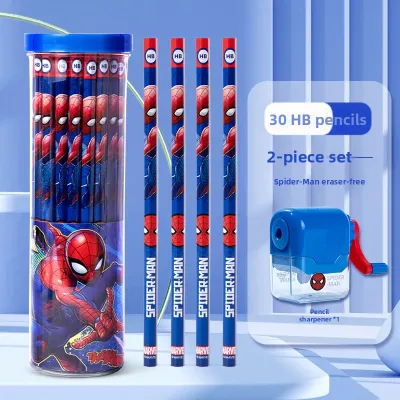
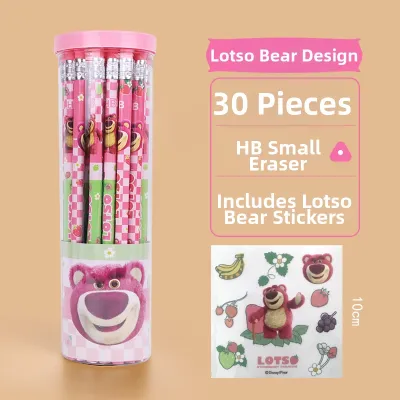
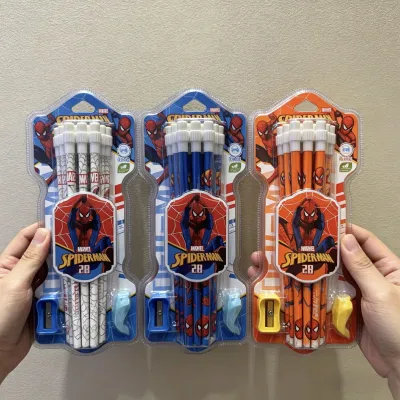
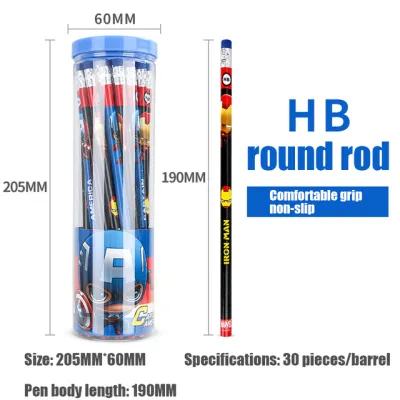
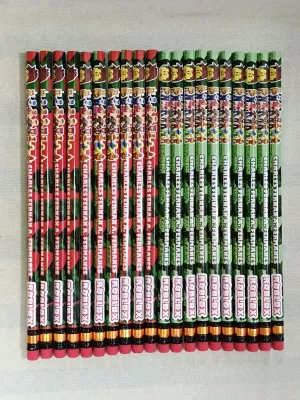
Prices are valid at publication and may change. Please refer to the product page for the latest price.
Grip Design and Barrel Shape
The shape of the pencil barrel plays a significant role in how naturally a child can maintain a proper tripod grip. Standard round barrels are common but can easily roll off desks and offer very little tactile feedback, often sliding through sweaty fingers during warm school days. Triangular barrels are highly recommended for early writers because their three flat sides naturally guide the thumb, index, and middle fingers into the correct positions, reducing the physical effort required to hold the pencil steady. Hexagonal barrels provide a traditional compromise, offering subtle ridges that prevent rolling and provide decent grip traction, though they may feel slightly sharp to very young hands during long writing sessions.
Beyond the raw shape, pay close attention to the surface finish of the Spider-Man graphics. Many licensed pencils feature a high-gloss plastic wrap or a thick lacquer coating to protect the artwork, which can become incredibly slick when hands get warm or humid. If the pencil has a smooth, glossy finish, consider pairing it with a removable silicone or foam grip accessory. These slide-on grips not only prevent slipping but also add a soft, cushioned layer that absorbs excess finger pressure, allowing your child to write comfortably for longer periods.
Lead Grade and Thickness
The core of the pencil determines how much physical pressure your child must apply to leave a legible mark on the paper. For most school activities, a standard No. 2 or HB lead is the default requirement, offering a balanced mix of darkness and structural strength. However, younger children who are still mastering their grip tension often benefit from softer lead grades, such as 2B, which produce a dark, clear line with minimal downward force. This prevents them from pressing too hard, which can strain their hands and tear the paper.
Lead diameter is another crucial factor to verify. Standard pencils typically feature a 2.0mm lead core, which is suitable for older children with refined motor control. For preschool and early elementary students, look for jumbo or “beginner” pencils that feature a much thicker lead core, often around 3.0mm to 4.0mm, housed within a wider wooden barrel. These thicker pencils are easier for small hands to grasp securely and the robust lead is highly resistant to snapping, allowing children to focus on letter formation rather than worrying about breaking the tip.
Weight and Balance
A well-balanced pencil should feel like a natural extension of your child’s hand, with the center of gravity resting comfortably near the web of the thumb. Character pencils often feature decorative elements, such as large 3D plastic toppers shaped like Spider-Man’s mask or action figures, which can severely disrupt this balance. While these toppers are visually appealing, they add significant weight to the very top of the pencil, pulling the tip upward and forcing the child to use extra hand strength to keep the point pressed against the paper.
To test the balance, observe how the pencil sits in your child’s hand during a brief writing trial. If the top of the pencil sways dramatically or causes the wrist to bend awkwardly, it is best to reserve those decorative topper pencils for special, short-term activities rather than daily homework. For regular schoolwork, opt for standard flat-topped pencils or those with simple, lightweight rubber erasers secured by a thin metal band, ensuring the tool remains light and easy to maneuver.
Evaluating Durability for Active Kids
Children can be incredibly tough on their school supplies, frequently dropping pencils on hard classroom floors, cramming them carelessly into pencil cases, or applying excessive pressure during moments of concentration. A fragile pencil will suffer from shattered internal leads, split wood casings, and lost erasers, resulting in constant trips to the sharpener and unnecessary waste. Evaluating the structural durability of a Spider-Man pencil ensures it can withstand daily wear and tear while remaining fully usable down to the stub.

Wood Quality and Casing
The type of wood used to encase the lead core directly impacts how easily the pencil sharpens and how well it protects the inner lead from impact damage. High-quality pencils are typically made from softwoods like cedar, which have a straight, consistent grain that shaves away smoothly in a standard sharpener without splintering. When sharpening a low-quality wood pencil, you may notice the wood tearing, leaving jagged edges that can scratch fingers, or the wood splitting unevenly down the side, exposing and weakening the lead.
To evaluate the wood quality before buying, look closely at the cut end of an unsharpened pencil. The wood grain should appear tight and uniform, and the lead core must be perfectly centered within the wooden circle. If the lead is off-center, one side of the wooden wall will be dangerously thin, causing the lead to break repeatedly during sharpening because it lacks adequate physical support. Additionally, high-quality manufacturers use a bonding process that glues the lead core securely to the wood along its entire length, which cushions the lead against internal shattering when the pencil is dropped.
Print and Finish Longevity
The vibrant Spider-Man graphics are undoubtedly the main attraction for your child, but they can quickly become an eyesore if the design begins to peel, scratch, or fade after a few days of use. Cheaply made novelty pencils often use a thin, heat-shrunk plastic film wrapped around the wooden barrel to display the character art. While this method produces bright, detailed images, the edges of the film can easily peel up at the sharpened end or near the eraser, leading to a messy, frayed pencil that kids are tempted to pick at and strip entirely.
A more durable alternative is a multi-layered painted finish, where the character graphics are printed directly onto the wood and sealed with a clear, protective topcoat. This method ensures the design wears away gradually and cleanly during sharpening, rather than peeling off in large, unsightly sheets. When inspecting a pencil, rub your fingernail gently over the graphic; a high-quality finish will feel smooth and integrated with the barrel, without any raised edges or air bubbles that indicate a loose plastic wrap.
Eraser and Ferrule Strength
The small metal band that holds the eraser to the top of the pencil is known as the ferrule, and it is a common failure point on budget stationery. Active kids tend to erase with a great deal of physical force, which can easily bend a weak ferrule or pull it completely off the wooden barrel. Once the ferrule is loose, the eraser becomes useless, and the exposed metal edges can pose a scratching hazard to young fingers.
When examining a Spider-Man pencil, check that the ferrule is securely crimped to the wood. Look for multiple deep, clean crimping lines around the metal band, indicating a tight mechanical connection. The eraser itself should feel firm yet flexible when pressed; cheap erasers are often dry, brittle, and prone to crumbling into small pieces upon first use, leaving dark smudges on the paper rather than cleanly removing pencil marks.
Safety and Age-Appropriate Checks
Stationery safety is a paramount concern for parents, particularly when dealing with character-themed merchandise that may prioritize visual appeal over strict material standards. Pencils are held in close contact with skin for hours, and younger children frequently chew on the ends or put them in their mouths during moments of distraction. Ensuring that your child’s Spider-Man pencils meet rigorous safety guidelines protects them from chemical exposure and physical injuries.
Non-Toxic Certifications
Never assume that because a product features a popular, globally recognized character like Spider-Man, it is automatically safe and non-toxic. Unregulated manufacturers often produce counterfeit or unauthorized merchandise that bypasses standard safety testing, potentially using paints or plastics containing harmful levels of heavy metals, phthalates, or lead. It is vital to inspect the product packaging for recognized safety certification marks before making a purchase.
Look for clear labels indicating compliance with international safety standards, such as the “AP Non-Toxic” seal from the Art and Creative Materials Institute (ACMI), or the European “CE” mark. In local retail environments, check for official national registration marks or import clearance stickers that verify the product has been cleared for consumer safety. These certifications guarantee that the materials, including the lead, wood, paint, and eraser, have been thoroughly tested and deemed safe for children’s daily use, even if they occasionally chew on the barrel.
Choking Hazards and Toppers
While 3D plastic toppers shaped like Spider-Man or his web-shooters add an exciting element of play to the pencil, they can represent a serious choking hazard for younger children. These toppers are often friction-fitted onto the end of the pencil and can be easily pulled off by a curious child or detached during a vigorous erasing session. If your child is under the age of six, or still has a habit of putting non-food items in their mouth, it is safest to avoid pencils with detachable decorative parts entirely.
If you do choose to purchase pencils with toppers for an older child, inspect the attachment mechanism carefully. Ensure the topper is made of a single, solid piece of non-toxic plastic or rubber rather than multiple small, glued-together components that could break apart. The topper should fit snugly enough that it requires deliberate adult effort to remove, preventing accidental detachment during normal school activities.
Splinter Risks and Sharpening Quality
The physical safety of the wood itself is another factor that parents should not overlook. Low-grade wood casings can splinter easily, especially when sharpened with a dull hand sharpener, leaving sharp, needle-like wood fragments protruding from the collar of the pencil. These splinters can easily pierce a child’s delicate skin during writing or when they are rummaging through their pencil case.
To minimize this risk, inspect the wood grain of the pencils and ensure they are made from high-quality, straight-grained wood that shaves away into smooth, continuous ribbons rather than crumbling into sharp shards. Teach your child how to sharpen their pencils safely, using a sharpener with a sharp, high-quality steel blade that cuts cleanly. If you notice a pencil consistently splintering or cracking down the side of the barrel during sharpening, discard it immediately to prevent painful finger splinters.
How to Verify Licensed Spider-Man Merchandise
The market is often flooded with cheap, unlicensed imitation stationery that mimics popular superhero designs. These counterfeit products are not only illegal, but they also routinely fail quality and safety checks, utilizing inferior wood, brittle leads, and toxic paints to keep production costs low. Learning how to identify genuine, officially licensed Marvel or Disney Spider-Man merchandise ensures you are paying for a product that meets established quality standards.
Holograms and Copyright Text
Official licensed merchandise always features clear, legible copyright information and licensing marks printed directly on the packaging or the product itself. Look for the official Marvel or Disney copyright text, typically formatted as “© MARVEL” or “© Disney,” printed in a clean, sharp font. Counterfeit products often omit this text entirely, misspell the brand names, or use blurry, low-resolution printing that is difficult to read.
Many licensed stationery items also feature a shiny, reflective holographic sticker on the packaging. This hologram is extremely difficult for counterfeiters to replicate accurately; when tilted under a light, it should display shifting colors, clear patterns, and official logos. If the packaging lacks any copyright text, or if the printing on the box appears faded, pixelated, or misaligned, it is highly likely a counterfeit product.
Packaging Quality and Barcodes
The physical quality of the packaging is a reliable indicator of the product’s authenticity. Genuine licensed pencils are typically sold in sturdy, well-constructed cardboard boxes or thick plastic blister packs that protect the contents during shipping and display. The graphics on the packaging should be crisp, vibrant, and free of spelling errors, with clear product descriptions and manufacturer contact details.
Additionally, check for a valid barcode and a product model number printed on the back of the pack. Authentic manufacturers use standardized barcodes that can be easily scanned by retail systems, whereas counterfeit packaging often features generic, poorly printed barcodes that may not match the actual product. If the pencils are sold loose in bulk bins without any packaging or brand markings, exercise caution, as these are frequently unverified, low-quality imports.
Seller Reputation and Retail Channels
Where you choose to shop plays a massive role in ensuring you receive genuine, safe stationery for your child. Purchasing from established, reputable department stores, major bookstore chains, or official brand stores on online marketplaces significantly reduces the risk of buying counterfeit goods. These retailers have strict supply chain controls and source their inventory directly from authorized distributors.
Be cautious when browsing unverified third-party sellers on open online marketplaces, especially those offering Spider-Man pencils at prices that seem too good to be true. While a pack of pencils costing only a few pesos may seem like a bargain, the savings are often offset by poor durability, constant lead breakage, and potential safety hazards. Investing a little more in authentic products from trusted sellers ensures a safer, more reliable writing experience for your child.
Building a Condition-Based Shortlist
Every child has unique writing habits, physical strength, and sensory preferences, meaning a pencil that works perfectly for one student might not be suitable for another. By analyzing your child’s specific writing style and physical tendencies, you can create a tailored shortlist of Spider-Man pencils that directly addresses their needs. This targeted approach ensures that the stationery you purchase supports their learning journey effectively.
| Child's Writing Profile | Key Pencil Features to Prioritize | Recommended Specifications |
|---|---|---|
| Heavy Pressers (frequently snaps lead) | Thicker lead core, reinforced wood bonding, standard hexagonal barrel | 2B or HB lead, 3.0mm+ core diameter, break-resistant bonding |
| Frequent Chewers (bites pencil ends) | Untreated natural wood ends, non-toxic painted finish, no plastic toppers | AP Non-Toxic certified, plain wood end (no metal ferrule/eraser) |
| Left-Handed Writers (prone to smudging) | Smudge-resistant lead, ergonomic triangular barrel, lightweight design | HB lead (harder/drier formulation), triangular shape, no heavy toppers |
Heavy Pressers
If your child tends to press down with extreme force when writing, they will quickly become frustrated by standard pencils that snap constantly. For these heavy-handed writers, prioritize pencils with thicker lead cores, such as jumbo-sized pencils, which offer much greater physical resistance to downward pressure. Look for packaging that explicitly mentions “break-resistant” or “fully bonded” lead, indicating that the lead core is glued securely to the wooden casing along its entire length to absorb impact. Selecting a slightly harder lead grade like HB, rather than a very soft 2B, can also help prevent frequent snapping, as harder leads maintain their point longer under heavy pressure.
Frequent Chewers
For children who have a habit of chewing on the ends of their pencils during class, safety and simplicity are the top priorities. Avoid any pencils that feature detachable plastic toppers, metal ferrules, or small rubber erasers, as these can easily be swallowed or cause dental damage. Instead, look for simple, plain-ended pencils where the wood is left exposed or sealed with a certified non-toxic, water-based paint. Always verify the presence of the “AP Non-Toxic” seal on the packaging, ensuring that even if your child does chew on the barrel, they are not exposing themselves to harmful chemical residues.
Left-Handed Writers
Left-handed children face unique challenges when learning to write, as their hand naturally follows the pen stroke, making them highly prone to smudging their own work. To accommodate left-handed writers, look for pencils with slightly harder, drier lead formulations, such as standard HB, which transfer less loose graphite powder to the paper and dry instantly, minimizing smudging. An ergonomic triangular barrel is also highly beneficial, as it helps left-handed children maintain a comfortable grip angle that allows them to see what they are writing without hooking their wrist awkwardly. Avoid heavy 3D toppers that can destabilize the pencil’s balance, making it harder for left-handed writers to control their strokes.
Frequently Asked Questions (FAQ)
Do Spider-Man pencils with toppers affect handwriting?
Yes, large or heavy 3D Spider-Man toppers can significantly affect a child’s handwriting by altering the pencil’s natural balance. These decorative elements add weight to the top of the pencil, creating a pendulum effect that pulls the tip away from the paper and forces the child to grip the barrel much tighter to maintain control. This extra physical effort leads to rapid hand fatigue, finger cramping, and shaky, inconsistent letter formation. For daily schoolwork and long writing sessions, it is best to use standard, lightweight pencils, reserving the fun topper pencils for short, creative play activities or drawing sessions.
How can I prevent the Spider-Man print from fading?
To preserve the vibrant Spider-Man graphics on your child’s pencils, store them in a hard-sided pencil case rather than a loose pouch, which prevents the barrels from rubbing against each other and scratching the paint. Avoid exposing the pencils to extreme heat or direct sunlight, such as leaving them inside a hot car, as this can cause the protective lacquer or plastic wrap to dry out, crack, and peel. When sharpening, use a high-quality manual sharpener with a sharp steel blade; dull blades tend to tear the wood and pull at the printed finish, causing it to chip and fray around the sharpened collar. Encourage your child to handle the pencils with dry hands, as excessive moisture and sweat can gradually break down the printed design over time.

Community discussion
Share your experience or ask a question. Comments are reviewed before publication.