
Decorating a powerbank is a fantastic way to personalize an otherwise utilitarian piece of tech, but keeping those designs intact is a unique challenge. Because powerbanks are constantly handled, slid into tight pockets, and subjected to internal heat during charging cycles, standard paper stickers quickly peel, fray, and leave behind a sticky mess. To ensure your decorations stay pristine, the absolute best choice is high-quality vinyl stickers—specifically those with a permanent acrylic adhesive backing.
In tropical climates like the Philippines, high humidity and ambient heat compound these challenges. When you carry your powerbank during a humid commute, moisture can seep under the edges of poorly adhered stickers. Furthermore, hand sweat contains natural oils and salts that act as mild solvents, gradually breaking down weak, rubber-based adhesives over time. Understanding how different sticker materials interact with your device’s surface is the key to creating a design that lasts.
Understanding Powerbank Surfaces and Adhesion Challenges
Before choosing your stickers, you must identify the material and finish of your powerbank casing. Most portable chargers are constructed from either anodized aluminum or plastic blends, such as Acrylonitrile Butadiene Styrene (ABS) and Polycarbonate (PC). These materials have vastly different surface energies, which directly affects how well an adhesive can “wet out” and bond to the surface.
Products mentioned in this guide
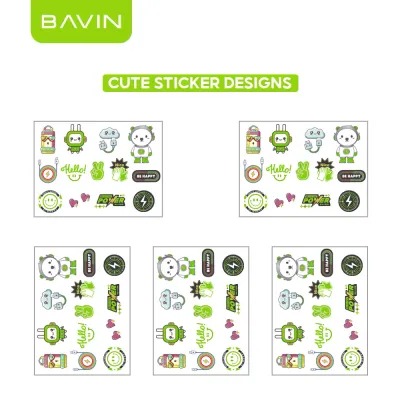
Prices are valid at publication and may change. Please refer to the product page for the latest price.
High surface energy (HSE) materials, like smooth aluminum and glossy plastics, allow adhesives to spread out and form a tight molecular bond. Conversely, low surface energy (LSE) materials, such as textured or matte-finished plastics, cause adhesives to bead up, resulting in poor contact and premature peeling. Additionally, the micro-textures designed to improve your grip on a powerbank create tiny air gaps beneath a sticker, reducing the effective bonding area.
Daily environmental factors further test sticker adhesion. Sliding your powerbank in and out of canvas tote bags, backpacks, or tight denim pockets creates constant shear stress along the sticker edges. When you combine this friction with the internal heat generated by lithium-ion battery cells during fast-charging cycles, low-quality adhesives quickly soften, slide, and fail.
Best Sticker Materials for Long-Lasting Adhesion
To withstand the rigors of daily use, a sticker must possess excellent water resistance, UV resistance, and physical flexibility. The adhesive backing is just as important as the face material. Pressure-sensitive adhesives (PSAs) are standard, but they are categorized into rubber-based and acrylic-based formulas. Rubber-based adhesives offer high initial stickiness but degrade rapidly under heat and UV exposure. Acrylic-based adhesives cure over time, forming a highly stable, heat-resistant bond that is ideal for electronic devices.

| Sticker Material | Durability | Flexibility | Surface Compatibility | Best Used For |
|---|---|---|---|---|
| Cast Vinyl | Outstanding | High (Conformable) | Glossy, Matte, Curved | Full wraps, curved edges |
| Calendared Vinyl | High | Moderate (Stiff) | Smooth, Flat Surfaces | Flat panels, large decals |
| Holographic Vinyl | High | Moderate | Smooth, Flat Surfaces | Eye-catching accent designs |
| Epoxy Dome | Excellent (Impact) | Low (Rigid) | Flat Surfaces Only | Central logos, heavy protection |
| Paper / Washi | Low | Low | Flat Surfaces Only | Temporary designs (requires seal) |
Vinyl and PVC Stickers
Vinyl (polyvinyl chloride or PVC) is the industry standard for outdoor and high-wear decals due to its inherent water resistance and flexibility. However, there is a critical distinction between calendared and cast vinyl. Calendared vinyl is manufactured by squeezing a plastic mass through heavy rollers, leaving internal tension in the material. Over time, calendared vinyl stickers “want” to shrink back to their original flat state, which often leads to edge lifting when applied over curved powerbank borders.
Cast vinyl, on the other hand, is poured as a liquid and baked, resulting in an incredibly thin, tension-free film. It has no “memory” of a flat shape, allowing it to conform perfectly to complex curves, recessed grooves, and textured surfaces without lifting. For a seamless, long-lasting fit on a contoured powerbank, cast vinyl is the superior choice.
To verify the water resistance of your chosen sticker before applying it to your expensive powerbank, perform a simple water-droplet test on a spare sticker from the same sheet. Place a single drop of water on the printed surface and let it sit for five minutes. If the ink bleeds, smears, or the paper backing begins to soften and warp, the material is not water-resistant and will quickly degrade from hand sweat and humidity unless sealed with a protective laminate.
Holographic, Epoxy, and Dimensional Stickers
Specialty finishes offer unique aesthetic appeal but come with distinct physical limitations. Holographic vinyl stickers utilize a thin, metallized layer sandwiched between the adhesive and a protective topcoat to create a striking rainbow effect. Because they are built on a vinyl base, they offer excellent water and oil resistance, making them highly durable for daily tech use.
Epoxy dome stickers feature a thick, clear polyurethane resin poured over a printed design, creating a raised, three-dimensional effect. This thick dome provides outstanding scratch and impact resistance, protecting your powerbank from drops. However, because the epoxy layer is rigid, these stickers cannot bend around curves. They are excellent for flat, central areas of a powerbank but will peel quickly if applied near a curved edge.
Paper, Washi, and Matte Stickers
Paper and traditional Japanese washi stickers are beloved for their soft, organic textures, but they are inherently porous. Uncoated paper fibers absorb moisture from humid air, sweat from your palms, and accidental spills. Once wet, the paper fibers swell and weaken, causing the sticker to tear or peel away from its adhesive backing.
While budget-friendly paper sticker sheets may cost under ₱50, investing in high-quality vinyl is far more cost-effective in the long run. Washi tape uses a low-tack, repositionable adhesive designed to be easily removed without damaging paper. This makes it entirely unsuitable for the high-friction environment of a powerbank. If you absolutely must use a paper or washi design, you must protect it. Applying a clear, self-adhesive vinyl laminate sheet over the top of the paper sticker seals the edges and shields the porous fibers from external moisture and friction.
Matching Stickers to Your Powerbank's Finish
To achieve a permanent bond, you must match the physical properties of your sticker to the specific finish of your powerbank.
Glossy Plastic and Anodized Aluminum: These surfaces are highly receptive to adhesives. Standard vinyl, holographic decals, and even thin metallic stickers will adhere beautifully. However, because aluminum acts as a heat sink to dissipate internal battery warmth, the adhesive will experience frequent temperature shifts. Ensure you use high-quality acrylic-backed stickers that won’t turn gooey when the metal warms up.
Matte and Textured Plastics: Many powerbanks feature a textured grid or a soft-touch matte finish to improve grip. These micro-textures create tiny air gaps beneath a standard sticker, reducing the contact area by up to 50%. To overcome this, look for stickers labeled “high-tack” or use highly flexible cast vinyl that can be pressed deep into the textured valleys.
Curved Edges and Contoured Corners: If your powerbank has rounded sides, any stiffness in the sticker will cause “tunneling” or edge lifting. Avoid thick stickers, epoxy domes, or heavy laminates on these areas. Instead, opt for thin, conformable cast vinyl decals, and apply gentle heat during installation to help the material stretch and mold to the curve.
Step-by-Step Application for Maximum Adhesion
Even the highest-quality vinyl sticker will peel if applied to a dirty surface. Follow this precise application process to ensure a long-lasting bond:
- Deep Clean the Surface: Wipe down the powerbank casing thoroughly with 70% isopropyl alcohol and a lint-free microfiber cloth. This step is critical to remove manufacturing oils, fingerprint grease, hand lotions, and dust. Avoid using household glass cleaners or multi-surface sprays, as they often leave behind a thin silicone residue that prevents adhesion. Never use acetone or nail polish remover, as these solvents can chemically melt ABS and polycarbonate plastics. Ensure you work in a well-ventilated area and keep all solvents away from open flames.
- Let It Dry Completely: Allow the alcohol to evaporate fully. Even a tiny amount of trapped moisture can ruin the adhesive's chemical bond.
- Plan and Position: Before peeling off the backing paper, place the sticker on the powerbank to check the alignment. Avoid touching the exposed adhesive with your bare fingers, as skin oils will instantly weaken the glue. Use tweezers or hold the sticker by its very edges.
- Apply with Firm Pressure: Start applying the sticker from one edge, slowly smoothing it down toward the other side. Use a rigid plastic card (such as an old membership card) wrapped in a soft microfiber cloth to squeegee out any trapped air bubbles. The cloth wrapping prevents the card from scratching the sticker's protective laminate. Apply firm, even pressure across the entire surface, especially along the edges, to activate the pressure-sensitive adhesive.
- Allow the Adhesive to Cure: This is the most overlooked step. Do not immediately throw your newly decorated powerbank into a tight bag or pocket. Acrylic adhesives require time to "wet out"—a process where the adhesive flows into the microscopic pores of the surface to create a mechanical bond. Let the powerbank sit undisturbed at room temperature for at least 24 to 48 hours to achieve maximum adhesion.
Maintenance, Heat Management, and Peeling Prevention
Once your stickers are applied and cured, proper maintenance will extend their lifespan significantly. When cleaning your powerbank, avoid submerging it or using harsh chemical solvents. Instead, gently wipe the decorated surface with a slightly damp microfiber cloth. If you need to sanitize the device, a quick wipe with a light concentration of isopropyl alcohol is safe for vinyl, but avoid rubbing the edges of the stickers vigorously, as this can lift the adhesive boundary.
Heat management is another critical factor for both sticker longevity and battery health. Powerbanks naturally generate heat during charging and discharging cycles, particularly if they support fast charging or wireless charging. Avoid covering ventilation grilles, thermal dissipation zones, or LED status lights with thick stickers. If a powerbank becomes excessively hot, low-quality adhesives may soften and slide, leading to sticky residue and peeling. Keep your decorated powerbank out of direct sunlight, such as on a car dashboard or a sunny cafe table, to prevent both battery degradation and sticker fading.
If you notice a sticker edge beginning to lift over time, do not try to glue it back down with household superglue or hot glue. These adhesives can chemically react with the plastic casing of your powerbank or create a permanent, messy bond that ruins the device’s aesthetics. Instead, use a sharp precision craft knife to carefully trim away the lifted edge. Trimming the loose portion prevents it from catching on your pocket or bag, stopping the peel from spreading to the rest of the design. Always cut away from your body and use a plastic backing sheet if possible to avoid scratching the powerbank’s casing or puncturing the internal battery.
Frequently Asked Questions (FAQ)
Can I use clear nail polish or liquid sealants to seal paper stickers on a powerbank?
Using liquid sealants like clear nail polish, mod podge, or liquid varnish on electronics is highly discouraged. These liquid products contain volatile solvents (such as ethyl acetate or acetone in nail polish) that can chemically attack and melt the plastic casing of your powerbank, leading to structural damage. Furthermore, liquid sealants are highly fluid during application and can easily seep into USB ports, charging inputs, power buttons, or the seams of the battery casing, risking short circuits or permanent device failure.
If you want to seal a paper or washi sticker, the safest and most effective method is to use a dry, clear self-adhesive laminating sheet. Simply cut a piece of clear vinyl laminate slightly larger than your paper sticker, apply it firmly over the top, and squeegee out the air. This creates a physical, waterproof barrier without introducing dangerous liquids to your electronic device.
Will removing stickers damage my powerbank's original finish?
In most cases, removing stickers will not damage your powerbank’s finish, provided you use the correct technique. Anodized aluminum and glossy plastic surfaces are highly resilient and can easily withstand sticker removal. However, matte or soft-touch rubberized coatings are more delicate; aggressive scraping or harsh chemicals can strip away these premium finishes, leaving shiny patches or sticky spots.
To remove a sticker safely, start by peeling up one corner with your fingernail or a soft plastic scraper (never use a metal blade, which will scratch both plastic and metal and risks puncturing the internal lithium-ion battery). If the adhesive is stubborn, apply gentle heat using a hairdryer on its lowest setting for 10 to 15 seconds to soften the glue. Once the sticker is off, clean any remaining sticky residue by rubbing it gently with a microfiber cloth dipped in 70% isopropyl alcohol. Avoid using acetone, paint thinners, or harsh industrial degreasers, as these will permanently dissolve plastic casings.

Community discussion
Share your experience or ask a question. Comments are reviewed before publication.