
Selecting suitable metallic twist ties for gift wrapping in the Philippines requires balancing aesthetic appeal with structural reliability. Whether you are preparing delicate wedding favors, securing heavy holiday gift baskets, or wrapping corporate giveaways, the right twist tie ensures your packaging remains intact while adding a touch of festive shimmer. In a tropical climate characterized by high humidity, choosing materials that resist moisture and maintain their shape is essential for a professional presentation. By evaluating the core wire material, the outer protective coating, and the overall dimensions, you can confidently select ties that elevate your gift presentation.
Key Features to Evaluate in Metallic Twist Ties
The structural integrity of a metallic twist tie depends heavily on its core wire material. Most standard twist ties utilize either an iron or an aluminum core. Iron wire cores offer strong shape memory and stiffness, making them highly suitable for securing heavier packages or thick plastic bags. However, iron is susceptible to rust if exposed to moisture, which is a critical consideration in the humid Philippine climate. Aluminum cores, while slightly softer and more pliable, offer strong resistance to corrosion, making them a practical alternative for long-term storage or gifts that might encounter damp environments.
The outer coating of the twist tie plays a dual role in protecting the inner wire and providing the desired aesthetic finish. The most common coating materials are Polyethylene Terephthalate (PET), Polyvinyl Chloride (PVC), and metallic-coated paper. PET coatings are highly favored for their brilliant, reflective sheen and strong resistance to tearing and fraying. PVC coatings tend to be slightly thicker and more matte, offering a softer grip that is gentle on delicate wrapping materials. Metallic paper coatings provide a classic, textured look but are highly vulnerable to moisture and can easily tear or unravel if twisted too tightly.
Products mentioned in this guide
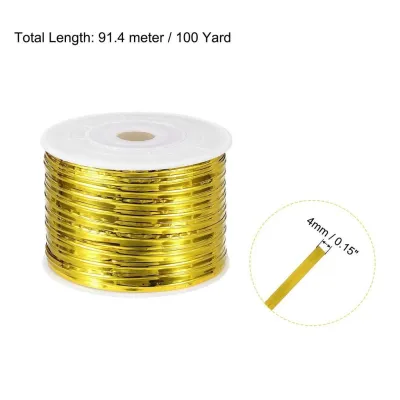
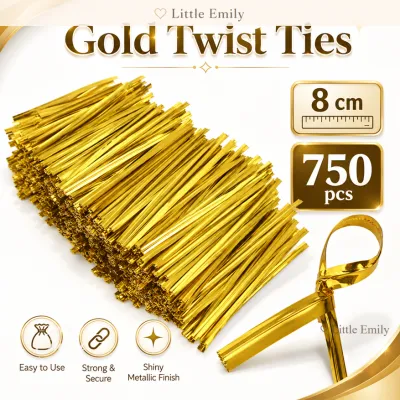
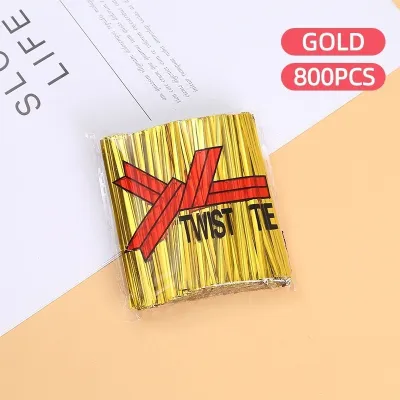
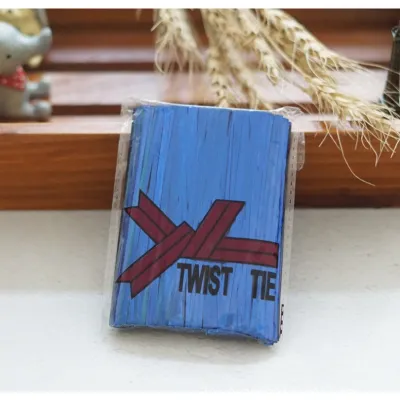
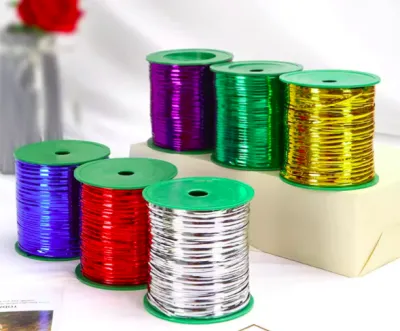
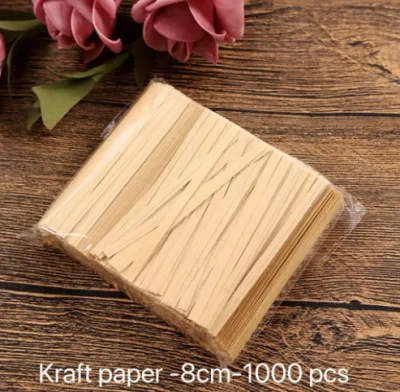
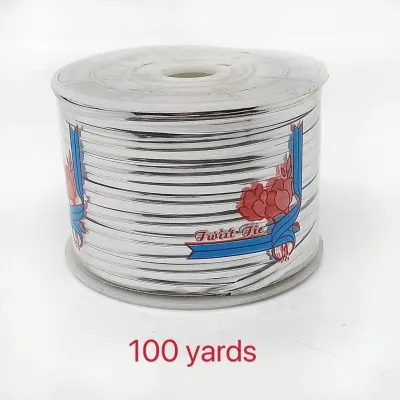
Prices are valid at publication and may change. Please refer to the product page for the latest price.
When selecting twist ties, it is also important to verify the quality of the bond between the core wire and the outer coating. Poorly manufactured ties often suffer from delamination, where the metallic film peels away from the metal wire during twisting. This not only ruins the visual appeal of your gift but also exposes sharp wire ends that can puncture packaging or scratch hands. To prevent this, look for ties that specify a laminated or co-extruded manufacturing process, which ensures the outer layer remains permanently bonded to the metal core even under tight twists.
Safety is another factor to consider, particularly if your gifts will be handled by children or if they involve close personal contact. Checking product labels for non-toxic, lead-free, or odor-free specifications is highly recommended. Some low-grade industrial twist ties may carry chemical residues or strong plastic odors that can transfer to your wrapping paper or hands. Opting for craft-grade or food-contact-compatible options ensures a clean, pleasant, and safe wrapping experience for both the creator and the recipient.
Choosing the Right Metallic Finish for Your Occasion
The visual impact of your gift presentation is greatly enhanced by matching the metallic finish of the twist tie to the overall theme of the occasion. Classic gold and silver remain the classic choices for traditional, corporate, and formal events. A bright gold twist tie paired with deep red or forest green wrapping paper instantly evokes a classic holiday feel, while silver offers a sleek, modern elegance that complements cool-toned packaging, such as blue, white, or slate gray. These traditional metallic finishes provide a timeless appeal that suits professional corporate giveaways and formal wedding favors alike.

For more contemporary, festive, or highly personalized themes, modern finishes like rose gold, bronze, and holographic options are increasingly popular. Rose gold offers a warm, romantic aesthetic that pairs beautifully with pastel wrapping papers, kraft paper, and floral designs, making it a favorite for bridal showers, birthdays, and Valentine’s Day gifts. Holographic and iridescent twist ties reflect a spectrum of colors depending on how the light hits them, adding a playful, whimsical element that is highly suitable for children’s parties, creative craft projects, and modern festive celebrations.
When planning your gift presentation, consider how ambient lighting and the contrast with your wrapping paper will influence the final visual effect. In brightly lit venues or outdoor daytime events, highly reflective PET coatings will catch the light and sparkle, drawing attention to the closure of the package. In contrast, under soft, warm indoor lighting, a matte or textured metallic paper tie might offer a more subtle, sophisticated glow. Ensuring there is sufficient contrast between the color of the wrapping paper and the metallic tie prevents the tie from getting lost visually, allowing it to serve as a distinct decorative accent.
Matching Wire Gauge and Length to Your Gift Size
Selecting the correct length of a metallic twist tie is essential for achieving a secure closure and a neat presentation. For small party favors, jewelry boxes, or individual treat bags, shorter ties ranging from 8 to 10 centimeters are typically sufficient. These shorter lengths allow you to secure the package with two or three tight twists without leaving excess wire dangling, which can look untidy. For medium-sized gift boxes, standard cellophane bags, or bundled items, a length of 12 to 15 centimeters provides the necessary clearance to wrap around the neck of the package and create a clean, visible twist.
For large gift hampers, heavy fruit baskets, or bulky packages, you will need longer ties, often exceeding 20 centimeters, or even continuous twist tie spools that allow you to cut custom lengths. These larger arrangements require more material to wrap around thick gathers of cellophane or heavy cardboard handles. Using a tie that is too short for a large package forces you to twist only the very tips of the wire, which significantly reduces the security of the closure and increases the risk of the package bursting open during transport.
The wire gauge, or thickness of the inner metal core, directly determines the holding power and flexibility of the twist tie. Wire gauge is typically measured in millimeters or standard gauge numbers, where a lower gauge number indicates a thicker wire. For lightweight, delicate packaging like organza bags or thin cellophane, a thin wire (around 0.4 mm to 0.45 mm) is ideal because it twists effortlessly and does not crush the delicate fabric or plastic. However, for heavy-duty applications, such as securing thick paper bags or heavy gift baskets, a thicker wire (0.5 mm to 0.6 mm or higher) is necessary to provide the structural strength required to hold the weight without snapping or slipping.
Understanding the trade-offs between different wire thicknesses helps you avoid common wrapping frustrations. While a thicker wire offers superior holding power, it requires more physical effort to twist and can be difficult to shape into neat, decorative curves. Conversely, a wire that is too thin will easily deform under tension, failing to hold a tight seal on heavier packages. Keeping a variety of gauges and lengths in your wrapping kit ensures you always have the correct structural support for every gift size.
How to Source Quality Twist Ties on E-Commerce Platforms
Sourcing high-quality metallic twist ties on local e-commerce platforms requires a careful and methodical approach to avoid low-grade industrial products. Start by thoroughly reading the product descriptions provided by online sellers. Look for listings that explicitly state the exact material specifications, including the core wire metal (such as iron or aluminum), the outer coating material (such as PET or PVC), the precise wire gauge, and the exact length of the ties. Listings that only provide vague descriptions like “metallic wire” or “gold ties” without specifying dimensions or materials should be approached with caution, as they often indicate lower-quality bulk items.
In the Philippines, bulk packs of 100 to 500 pieces are highly affordable, typically ranging from ₱50 to ₱200 depending on the length and coating quality. Buyer-uploaded photos and video reviews are invaluable tools for verifying the actual quality of the twist ties before making a purchase. Standard product stock photos are often digitally enhanced and may not accurately represent the true color, thickness, or reflectivity of the metallic finish. By examining photos uploaded by previous customers in the review section, you can assess whether the gold finish is a rich, warm tone or a cheap, greenish hue. You can also look for signs of manufacturing defects in these photos, such as exposed wire ends, uneven coating application, or visible creasing along the length of the ties.
Evaluating seller ratings and shop reviews is another critical step in ensuring a successful online purchase. Look for established stationery, packaging, or craft supply shops with high positive feedback ratings and a history of prompt shipping. Reading customer reviews specifically focusing on how the items were packaged for delivery is highly beneficial; twist ties that are shipped loose in thin plastic bags can easily become bent, tangled, or creased during transit, ruining their pristine appearance. Choosing sellers who package their ties in sturdy boxes or resealable zip bags ensures your supplies arrive in excellent, ready-to-use condition.
Techniques for Tying Gifts Without Tearing the Paper
Using metallic twist ties effectively requires a gentle touch to prevent damaging your wrapping paper or gift bags. When securing a gathered cellophane bag or a paper sack, avoid pulling the twist tie too tightly against the material in a sawing motion, as the sharp edges of the plastic coating can easily slice through delicate paper or thin plastic. Instead, gather the neck of the bag firmly with one hand first, then wrap the twist tie snugly around the gathered material and perform a smooth, controlled twist. Two or three complete rotations are generally sufficient to lock the tie in place; over-twisting can stress the metal core and cause it to snap.
For highly delicate, textured, or easily torn wrapping papers, consider using a protective barrier or decorative padding under the wire. Placing a small strip of clear adhesive tape over the area where the wire will rest can distribute the pressure and prevent the metal from cutting into the paper fibers. Alternatively, wrapping a thin piece of satin ribbon or organza fabric around the neck of the package before applying the metallic twist tie not only protects the paper but also adds an elegant, layered look to your gift presentation.
Metallic twist ties can also be shaped into simple decorative elements, such as bows, spirals, or loops, to enhance the visual appeal of your gift. To create a clean spiral, gently wrap the excess ends of the twist tie around a pencil or a thin wooden dowel, then slide the dowel out to leave a neatly formed metallic coil. If you wish to shape the tie into a decorative bow, ensure you use a highly pliable wire core that can handle sharp bends without cracking the outer metallic coating. Always tuck the sharp, cut ends of the wire inward or downward, away from where the recipient will grasp the package, to ensure a safe and pleasant unwrapping experience.
Frequently Asked Questions (FAQ)
Can metallic twist ties be reused for multiple gifts?
Yes, metallic twist ties can be reused, but their lifespan depends on the quality of the inner metal core and how tightly they were previously twisted. Every time a metal wire is bent and unbent, it undergoes a process called metal fatigue, which gradually weakens the internal structure of the wire. Over time, this repeated stress will cause the core wire to snap. Before reusing a twist tie, perform a quick visual and tactile check: run your fingers along the length to feel for sharp kinks, and inspect the outer coating for any cracks, peeling, or exposed metal. If the coating is intact and the wire still feels springy, it is safe to reuse.
Are metallic twist ties safe to use on food items or edible gifts?
Standard craft-grade metallic twist ties are generally not certified for direct contact with food items. If you are wrapping edible gifts, such as homemade cookies, pastries, or candies, it is crucial to check the product packaging or seller specifications for explicit food-safe or food-grade labels. These certified ties are manufactured under strict sanitary conditions using non-toxic, food-safe plastics and adhesives. If you cannot verify the food-safe status of your metallic twist ties, secure the food inside a primary, food-grade plastic bag first, and then use the metallic twist tie on the outer neck of the bag, ensuring the wire does not come into direct contact with the food itself.
How do I prevent the metallic coating from peeling off the wire?
To maintain the integrity and shine of the metallic coating, proper storage and handling are essential. Store your unused twist ties in a cool, dry place away from direct sunlight, high humidity, and extreme temperature fluctuations, which can degrade the adhesives holding the metallic film to the wire core. Keep them organized in a flat craft box or a resealable plastic bag to prevent them from tangling, as pulling tangled ties apart can cause friction that scrapes off the metallic finish. When working with the ties, avoid using sharp metal tools like pliers unless absolutely necessary, as these can easily scratch or gouge the protective outer coating.

Community discussion
Share your experience or ask a question. Comments are reviewed before publication.