
Selecting the right Paw Patrol sticker sets for your journaling and scrapbooking projects requires balancing vibrant character designs with practical material compatibility. Because licensed stationery items rotate quickly across local craft stores and online marketplaces, finding a highly compatible set comes down to evaluating adhesive quality, paper weight, and layout versatility. By focusing on how these stickers interact with your specific journal pages and writing tools, you can create durable, colorful layouts that capture your favorite rescue pups without damaging your precious memories. Whether you are documenting a child’s milestone, creating a playful daily planner entry, or building a dedicated character tribute, understanding the physical properties of your stickers helps your creative efforts stand the test of time.
What to Look for in Paw Patrol Stickers for Journaling
The surface finish of your Paw Patrol stickers dictates how they interact with your favorite writing instruments. Glossy stickers feature a plastic-like coating that repels water-based inks, meaning standard gel pens, fountain pens, and water-based markers will often bead up, smudge, or take a long time to dry. If you plan to write dates, captions, or speech bubbles directly onto the stickers, look for matte paper finishes. Matte stickers absorb ink more readily, allowing you to use gel pens or fine-liners with less fear of smearing. For clear or vinyl stickers, you will typically need to rely on permanent alcohol-based markers or specialized ballpoint pens to help your writing remain crisp and legible.
Adhesive quality is another critical factor, especially for long-term scrapbooking. Many mass-produced stickers use cheap, highly acidic adhesives that can degrade paper fibers and discolor photographs over time, turning them yellow or brittle. For memory-keeping projects that you want to preserve for years, always check if the sticker set is labeled as acid-free and photo-safe. Additionally, consider whether you want permanent or repositionable stickers. Repositionable stickers, often made from washi paper or low-tack vinyl, allow you to lift and adjust the placement during the layout planning phase. Permanent stickers offer a stronger bond but leave very little room for error once pressed onto the page.
Products mentioned in this guide
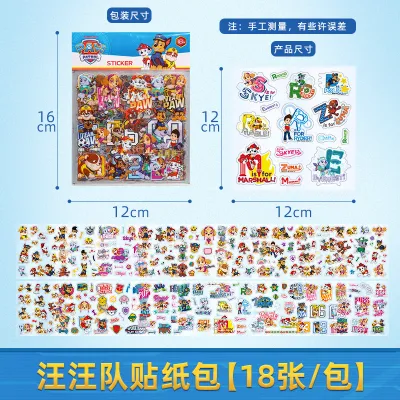
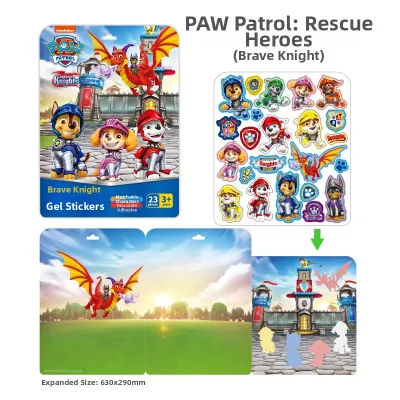
Prices are valid at publication and may change. Please refer to the product page for the latest price.
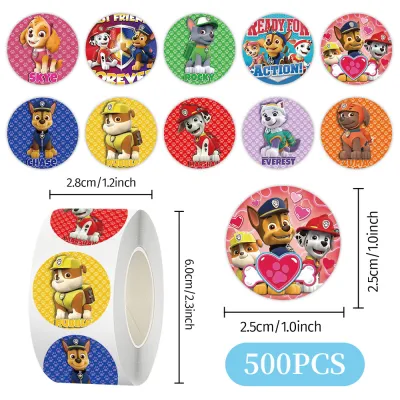
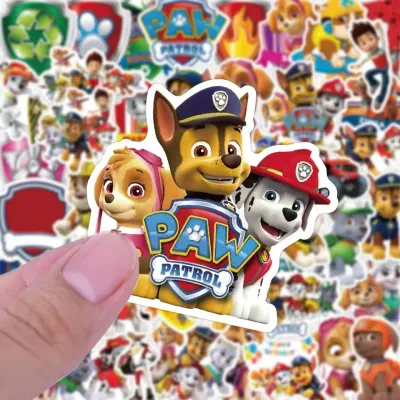
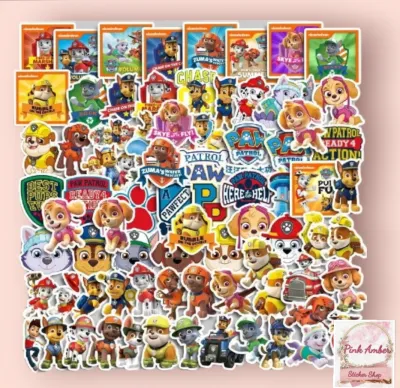
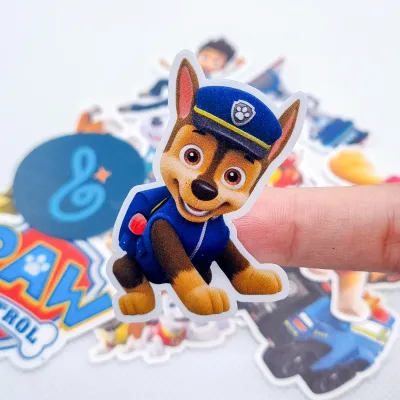
A versatile sticker set should offer a balanced hierarchy of sizes to help you build visually appealing layouts. Large focal stickers, typically featuring the main pups like Chase, Marshall, or Skye in dynamic action poses, serve as strong anchors for your page. These larger elements draw the eye and establish the theme of the layout. To complement these focal points, look for sets that include medium-sized vehicle or pup-pack stickers, as well as tiny filler icons like paw prints, bones, stars, and rescue badges. These smaller elements are invaluable for filling awkward gaps, creating decorative borders, or guiding the reader’s eye across the page.
The thickness and opacity of the sticker base must match the paper weight of your journal. If you are working in a standard notebook with thin pages (around 60 to 80 gsm), heavy vinyl or thick glossy stickers can cause the pages to sag, warp, or even tear when turned. Furthermore, highly saturated, dark-colored stickers can show through to the reverse side of thin paper, a phenomenon known as ghosting. For better results, pair heavier stickers with journals that feature robust paper (100 to 160 gsm) or cardstock. If you must use thin paper, opt for lightweight paper-based stickers or delicate washi-style sticker sheets that apply flat without adding unnecessary weight.
Matching Sticker Formats to Your Scrapbook Layouts
Understanding the difference between die-cut and kiss-cut formats will help you streamline your crafting process. Die-cut stickers are cut individually through both the sticker material and the backing paper, resulting in standalone pieces. These are highly collectible and fun to sort, but peeling them can sometimes be challenging, especially if the backing paper lacks a split-cut line down the middle. Kiss-cut sheets, on the other hand, keep all the stickers on a single large backing sheet, with only the top sticker layer cut. This format allows you to peel individual characters quickly and keep your remaining stickers organized on a single sheet, though you must peel them gently to avoid tearing delicate details like pup tails or ears.

Puffy and three-dimensional stickers add a delightful tactile element to your projects, making them particularly popular for children’s scrapbooks. These textured stickers are useful for creating interactive elements, such as decorating the front cover of a journal or placing them on pull-out flaps and pockets. However, their physical thickness presents a challenge for standard bound notebooks. If you place multiple puffy stickers throughout a bound journal, the book will eventually bulge at the spine, preventing it from closing flat and making it difficult to write on subsequent pages. To avoid this, limit puffy stickers to the outer covers or use them in loose-leaf binders where the rings can accommodate the extra bulk.
Clear and holographic stickers offer unique layering opportunities that can elevate your layout designs. Transparent vinyl or PET stickers allow you to overlay character designs directly onto photos, patterned papers, or colorful washi tape borders without blocking out the background elements. This creates a seamless, integrated look where the characters appear to be part of the background illustration. Holographic and foil-accented stickers, with their shimmering, light-catching surfaces, are well-suited for highlighting special milestones, celebratory pages, or festive themes. Use them sparingly as accent pieces to avoid overwhelming the layout and distracting from your photos and written entries.
When choosing between themed packs and broad variety sets, consider the narrative of your scrapbook. If you are documenting a specific event, such as a child’s Paw Patrol-themed birthday party, a comprehensive variety set featuring the entire rescue team ensures you have all the characters represented. Conversely, if you want to create dedicated pages focused on specific themes, character-specific packs can be highly effective. For instance, you can use Chase stickers for pages about discipline, safety, or school achievements; Marshall stickers for stories of bravery or overcoming clumsy mistakes; and Rocky stickers for outdoor adventures and recycling projects. Matching the character’s personality to your page’s theme adds a thoughtful layer of storytelling to your crafts.
How to Verify Print Quality and Authenticity
With the abundance of craft supplies available online, verifying that you receive high-quality, authentic merchandise requires a bit of vigilance. Official Paw Patrol stickers are licensed products manufactured under strict quality control standards set by Spin Master and Nickelodeon. When purchasing, look for official copyright marks, licensing logos, and manufacturer details printed on the packaging or the backing paper. Counterfeit or unlicensed sticker packs often arrive in plain, unmarked plastic sleeves without any branding, which is a major warning sign regarding their overall quality and safety.
Authentic stickers boast sharp, high-resolution prints with vibrant, accurate colors. When inspecting sticker sets in person or reviewing close-up product photos online, look closely at the character outlines and fine details. The lines should be crisp and solid, without any pixelation, blurry edges, or color bleeding. Color accuracy is equally important; the characters should look exactly as they do on screen. If Chase’s royal blue uniform appears faded, purple, or muddy, or if Skye’s pink gear looks washed out or orange, the stickers are likely low-quality reproductions printed on substandard machinery.
The precision of the cutting process is a hallmark of high-quality stationery. Well-manufactured stickers feature clean, even borders around the character artwork. If the cutting machine is poorly calibrated, you may notice off-center cuts where the white border is excessively wide on one side and completely cuts into the character’s face or limbs on the other. Check for clean edges that peel away smoothly from the backing paper without leaving frayed paper fibers or tearing the sticker itself. Precise cuts ensure that once applied to your journal, the sticker looks professional and polished.
When sourcing stickers from online marketplaces, leveraging buyer feedback is your best defense against poor-quality products. Take the time to read customer reviews, paying close attention to those that include real-life photos of the received items. These photos provide a more accurate representation of the colors, paper thickness, and adhesive quality than the seller’s digital mockups. Look for reviews that mention whether the stickers stick well to paper, if they curl at the edges over time, and if the package arrived complete. Purchasing from highly-rated sellers with positive feedback for stationery items significantly increases your chances of satisfaction.
Smart Sourcing and Storage for Your Sticker Collection
In the Philippines, finding quality Paw Patrol stickers involves exploring both physical and digital retail spaces. Major department stores, toy stores, and established stationery shops are good physical locations where you can inspect the print quality and paper weight firsthand. Prices for basic sticker sheets typically start around ₱50, while larger activity books or imported multi-pack sets can range up to ₱300 or more. Online marketplaces offer an unparalleled variety of designs, including unique imported formats, but you must carefully verify the seller’s credentials and product reviews to ensure you are buying genuine, high-quality items.
To get the best value for your money, perform a quick cost-per-element evaluation rather than simply looking at the total number of stickers advertised. Many budget-friendly packs boast “hundreds of stickers,” but a closer inspection reveals that the vast majority of these are tiny, repetitive filler elements like generic stars, dots, or tiny bones, with only a handful of actual character designs. Compare different sets by looking at the number of unique, high-quality character illustrations you will actually use in your layouts. A slightly more expensive set with 50 detailed, beautifully printed character stickers often represents better crafting value than a cheap pack of 200 tiny, generic shapes.
The tropical climate and high humidity in the Philippines pose unique challenges for storing paper-based craft supplies. Excess moisture in the air can cause sticker sheets to curl, and over time, it can degrade the adhesive, making it either lose its stickiness or turn into a gooey residue. To protect your collection, store your sticker sheets flat inside clear plastic sleeves within a binder, or use a dedicated accordion file. Keep your storage containers in a cool, dry place away from direct sunlight and humid areas. Tossing a few small silica gel packets into your sticker storage box is an easy and effective way to absorb excess moisture and keep your stickers in pristine condition.
Multi-pack sticker sets and activity books frequently contain duplicate designs, which can accumulate quickly. Instead of letting these duplicates sit unused, find creative ways to repurpose them. You can use duplicate stickers to decorate school notebooks, water bottles (if they are waterproof vinyl), or phone cases. They also make excellent decorative seals for gift wrapping and envelopes. If you belong to local journaling or scrapbooking communities, you can organize sticker swaps with other crafters, trading your duplicate Paw Patrol stickers for other designs to diversify your collection without spending extra money.
Frequently Asked Questions (FAQ)
Can I write on Paw Patrol stickers with standard journaling pens?
Whether you can write on your Paw Patrol stickers depends entirely on their surface finish. Matte paper stickers are highly receptive to standard journaling pens, including gel pens, ballpoints, and water-based fine-liners, as the paper fibers absorb the ink quickly. However, if your stickers have a glossy or vinyl finish, standard gel and water-based inks will bead up and smudge easily. For glossy surfaces, it is best to use permanent, alcohol-based markers or specialized ballpoint pens, and allow the ink to dry completely for a few seconds before touching the surface.
How do I remove stickers from a journal page without tearing the paper?
Removing a sticker without damaging the underlying journal page requires patience and the right technique. If the sticker uses a low-tack, repositionable adhesive, you can gently lift one corner with a pair of fine tweezers or a sticker peeling tool and slowly pull it back at a sharp angle. For stickers with stronger, permanent adhesives, applying gentle heat from a hairdryer on a low setting for a few seconds can help soften the adhesive, making it easier to peel away. Keep in mind that thin, low-gsm papers are highly susceptible to tearing, so extreme care must be taken regardless of the method used.
Are puffy stickers suitable for standard notebook binding?
Puffy stickers are generally not recommended for the inside pages of standard, tight-bound notebooks. Because of their physical thickness, placing multiple puffy stickers throughout a journal will cause the pages to stack unevenly, creating a bulky center that strains the book’s binding and makes writing on subsequent pages difficult. If you love the tactile feel of puffy stickers, it is best to use them on the front cover of your journal, on the pages of loose-leaf binders where the rings can accommodate the extra thickness, or on single-sheet scrapbook layouts that will be stored in protective plastic sleeves.

Community discussion
Share your experience or ask a question. Comments are reviewed before publication.