
A 0.5mm mechanical pencil is one of the most versatile writing instruments available, offering a balance between fine line precision and structural durability. However, finding the right model for your daily routine in the Philippines requires looking beyond aesthetics to evaluate how specific mechanisms interact with your writing style, paper choices, and local environmental conditions. High humidity can soften standard paper fibers, making lead choice and pencil mechanics critical to preventing smudges and frequent lead breakage. By matching the internal clutch design, grip ergonomics, and tip style to your primary tasks—whether that involves rapid lecture note-taking, detailed technical drafting, or general office work—you can ensure a comfortable, fatigue-free writing experience.
Evaluating a mechanical pencil requires an understanding of both its external ergonomics and its internal engineering. The way a pencil advances lead, grips the graphite core, and balances in your hand determines its long-term usability. By focusing on these core hardware features, you can narrow down the vast selection of 0.5mm pencils to the ones that truly support your daily writing habits.
Key Hardware Features to Evaluate Before Buying
The performance of a 0.5mm mechanical pencil depends heavily on its physical construction and the engineering of its internal components. When evaluating different models, the tip mechanism is the first critical feature to analyze. Fixed guide pipes, typically measuring 4mm in length, offer maximum stability for drawing against rulers but are highly vulnerable to bending if dropped. In contrast, retractable tip mechanisms allow the entire sleeve to slide back into the pencil body, protecting the delicate metal pipe from damage and preventing it from puncturing your pockets or bags during transit. Some advanced models feature shock-absorbing systems that use internal springs to cushion vertical pressure, which is highly beneficial for fast, heavy-handed writers.
Products mentioned in this guide
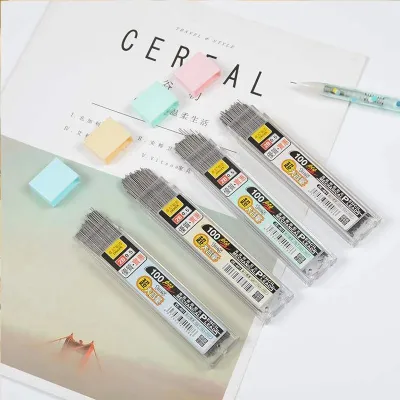
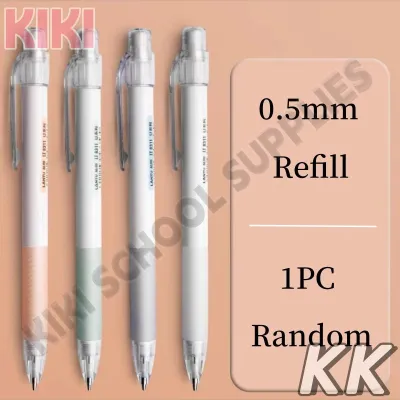
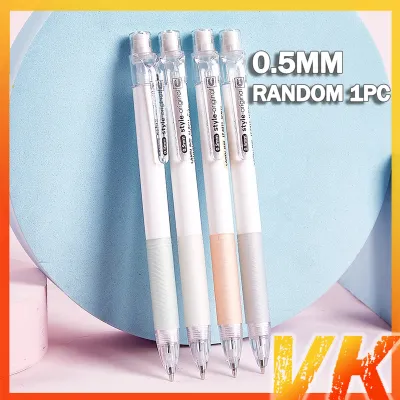
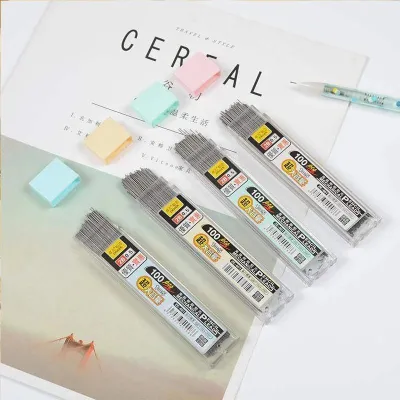
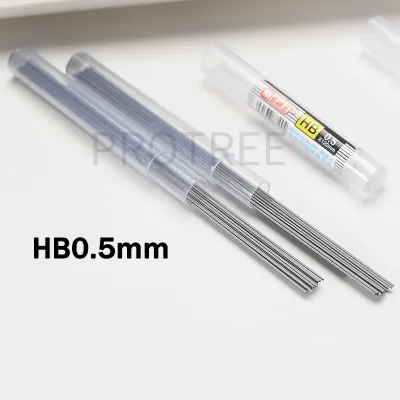
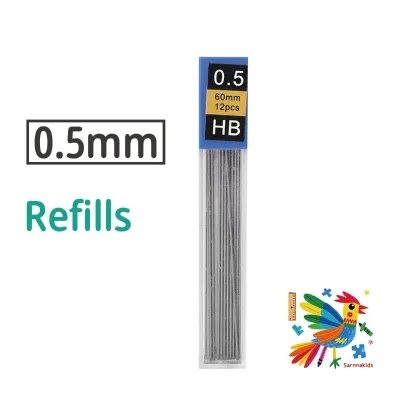
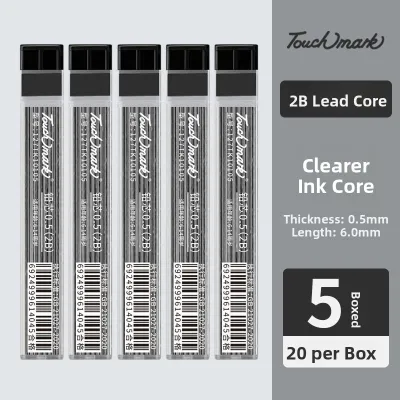
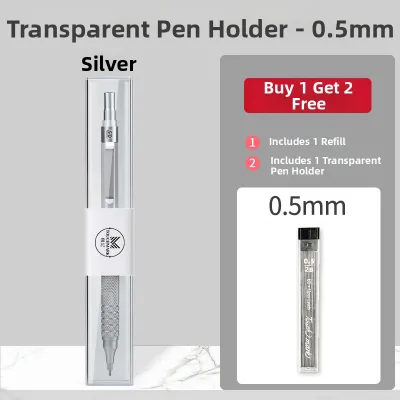
Prices are valid at publication and may change. Please refer to the product page for the latest price.
Behind the tip lies the clutch mechanism, which is the heart of any mechanical pencil. The clutch holds the lead in place and controls how much graphite is advanced with each click. High-quality pencils utilize brass clutches, which provide a secure, non-slip grip on the lead and resist wear over years of use. Cheaper models often use plastic clutches that can wear down quickly, leading to slipping lead or frequent jams. A crisp, metallic click sound usually indicates a durable brass clutch, while a dull, mushy click often points to a plastic alternative.
The grip section is your primary point of contact and directly influences control and comfort. In tropical climates where high temperatures can lead to sweaty hands, the choice of grip material is particularly important. Knurled metal grips provide an exceptionally secure, non-slip hold and are highly durable, but they can feel abrasive during long, continuous writing sessions. Soft silicone or rubberized grips offer excellent cushioning and reduce finger fatigue, though they may degrade or become sticky over time when exposed to humidity and skin oils. Textured resins or ribbed plastic grips offer a middle ground, providing decent traction without the weight of metal or the vulnerability of soft rubber.
Weight distribution and the center of gravity are equally vital to how a pencil feels in the hand. A pencil with a low center of gravity—where the weight is concentrated near the tip—naturally pulls the instrument toward the paper, reducing the amount of downward hand pressure required to write. This design is common in professional drafting pencils and is highly favored for precision work. Conversely, a uniformly balanced or lightweight plastic pencil offers greater agility for rapid, cursive writing, though it may require slightly more conscious effort to maintain consistent line darkness.
Finally, practical secondary features can greatly enhance daily usability. A built-in lead grade indicator is a small rotating window on the body that lets you label which lead hardness (such as HB, B, or 2B) is currently loaded, preventing confusion when switching between multiple pencils. Replaceable erasers housed under the push-button cap are standard, but their sizes vary; some models offer long, twist-out erasers that are highly practical, while others provide tiny, emergency-use erasers that wear down quickly. A sturdy, removable or integrated metal pocket clip ensures the pencil remains securely fastened to notebooks, clipboards, or shirt pockets.
Matching Pencil Mechanisms to Specific Writing Tasks
No single mechanical pencil design is universally perfect for every scenario because different tasks demand contrasting physical attributes. A feature that excels in one environment can become a hindrance in another. For instance, the rigid precision required for technical drawing is fundamentally different from the cushioned flexibility needed for rapid, hours-long examinations. To find the ideal tool, you must align the pencil’s mechanical strengths with the specific physical demands of your primary writing activities.

Note-Taking and Long Writing Sessions
For students and professionals who spend hours writing lectures, reports, or journal entries, minimizing hand fatigue and preventing lead breakage are the top priorities. Continuous writing involves constant hand movement and varying angles, which can quickly lead to finger cramping if the pencil is poorly balanced. To combat this, look for pencils equipped with shock-absorbing tip mechanisms. These systems allow the lead to retract slightly into the sleeve when excessive downward pressure is applied, effectively preventing the 0.5mm lead from snapping mid-sentence.
Another highly beneficial feature for continuous writing is an auto-rotation mechanism. As you write, the lead naturally wears down on one side, creating a slanted, chisel-shaped tip that produces wider, fuzzier lines and is more prone to crumbling. Auto-rotation mechanisms rotate the lead slightly every time the pencil is lifted from the paper, ensuring the tip wears down uniformly into a clean cone. This maintains a consistent 0.5mm line width and keeps your handwriting neat without requiring you to manually spin the pencil in your hand.
Ergonomics should also favor comfort over rigid precision in this category. Lightweight bodies made of high-grade polycarbonate or resin reduce the overall strain on your wrist during extended use. Pair this lightweight construction with a wide, soft silicone grip that dampens the pressure on your fingers, preventing the formation of painful calluses during long writing sessions in warm classrooms or offices.
Drafting, Sketching, and Technical Drawing
Drafting, sketching, and technical drawing demand absolute precision, line consistency, and an unobstructed view of the paper. For these tasks, the mechanical requirements shift away from cushioned comfort toward rigid stability. A fixed, long metal guide pipe—typically 4mm—is essential. This extended sleeve allows you to align the pencil precisely against plastic rulers, T-squares, and templates without the body of the pencil blocking your line of sight or causing the lead to wobble.
Stability is further enhanced by choosing a pencil with a full-metal body or a heavy metal grip section that creates a distinct low center of gravity. This weight distribution stabilizes your hand, allowing for incredibly straight lines and precise control over fine details. The added weight means the pencil does not bounce or drift, which is crucial when executing intricate hatching, stippling, or technical schematics.
For artistic sketching and drafting, you should generally avoid auto-rotation mechanisms. Artists and technical illustrators frequently rely on the natural chisel edge that forms on the lead to vary line weight, create broad shading strokes, or execute sharp details by turning the pencil manually. An auto-rotation system would constantly fight this technique by keeping the lead perfectly conical, limiting your ability to manipulate line character through hand angle.
Everyday Carry and General Office Use
An everyday carry (EDC) mechanical pencil must be durable, safe to transport, and versatile enough to handle a variety of quick tasks, from signing documents to filling out forms. The primary hazard for an EDC pencil is transit damage. If a pencil with a fixed guide pipe is dropped onto a hard floor or jostled inside a backpack, the metal tip can easily bend, rendering the entire pencil useless. Therefore, a fully retractable tip mechanism is highly recommended for daily carry, as it allows the delicate sleeve to be safely drawn inside the body when not in use.
Durability is another key factor for a pencil that is constantly moved from desks to bags. Look for robust body materials, such as thick-walled plastics, aluminum, or stainless steel, that can survive accidental drops onto concrete or tile floors. A strong, spring-loaded metal pocket clip is also essential for securing the pencil to your pocket or notebook cover, ensuring it does not slip out while you are on the move.
For general office tasks, a medium-weight pencil with a balanced center of gravity offers the most versatile feel. A standard knurled metal or textured plastic grip provides sufficient traction for quick signatures and short notes without being too abrasive for casual use. This balanced configuration ensures the pencil is always ready for action, regardless of the task at hand.
How to Verify Lead Compatibility and Writing Performance
Selecting the right pencil body is only half the battle; the lead you load into it plays an equally critical role in the overall writing experience. In the Philippines, the high relative humidity can affect how paper fibers behave, often making paper slightly more absorbent and prone to surface friction. When pairing your 0.5mm pencil with lead, you must consider the lead hardness grade. Standard HB lead offers a balanced mix of darkness and break resistance, but if you find yourself writing on thin paper, a slightly harder H lead may prevent smudging, though it will feel scratchier. Conversely, softer leads like B or 2B provide a much smoother, darker line with minimal pressure, which is excellent for reducing hand fatigue, but they wear down faster and are more prone to smudging in humid conditions.
Before committing to a specific mechanical pencil model, it is highly practical to verify the long-term availability of its proprietary consumables. While standard 0.5mm lead refills from various brands are generally cross-compatible, the small erasers housed under the cap are often highly brand-specific or even model-specific. Check local stationery suppliers or online marketplaces to ensure that replacement erasers and compatible lead refills are readily available. Using a pencil with a worn-out eraser that cannot be replaced easily defeats much of its daily convenience.
Once you acquire a new mechanical pencil, conducting a structured physical writing test is the best way to evaluate its performance and ensure there are no manufacturing defects. Begin by drawing a series of continuous, overlapping circles on your typical writing paper to check for smoothness and feedback; the lead should glide without catching or scratching the paper fibers. Next, draw long, straight lines using varying levels of hand pressure to observe how the internal clutch holds the lead. If the lead slips back into the sleeve under moderate pressure, the internal clutch jaws may be misaligned or made of low-quality plastic. Finally, write a few paragraphs at your normal writing speed to verify that the grip comfort, weight distribution, and lead advancement click feel natural and do not cause premature hand strain.
Purchasing Channels and Delivery Inspection Checklist
To ensure you receive an authentic, high-quality mechanical pencil rather than a cheap counterfeit with a faulty internal mechanism, it is crucial to buy from reputable sources. In the Philippines, purchasing from official brand flagship stores on major ecommerce platforms, authorized national stationery chains, or specialized physical art supply shops is the safest route. Counterfeit pencils often look identical on the outside but utilize inferior plastic clutches instead of brass ones, leading to frequent lead slippage, jams, and structural failures after only a few weeks of use.
When your pencil is delivered or purchased, perform a quick inspection to verify its authenticity and functionality. Check the packaging for official holographic seals, clear brand labeling, and matching model numbers. Ensure that any included lead refills or pre-loaded leads match the specified diameter of 0.5mm. Inspect the metal guide pipe at the tip; it must be perfectly straight and free of any microscopic dents or bends, as even a tiny deviation can cause the lead to shear and snap every time it is advanced.
Next, conduct a functional test of the internal mechanics. Press the push-button cap several times to verify that the click mechanism feels crisp and advances the lead by a consistent, minute increment with each click. Test the lead retraction by holding down the push-button and gently pressing the lead back into the sleeve; it should slide back smoothly without catching. Finally, remove the cap to inspect the eraser fit and ensure that the lead storage tube underneath is clear of any loose graphite dust or broken fragments that could cause future jams. If you notice a mushy click, a slipping clutch, or a bent tip, initiate a return or exchange immediately.
Frequently Asked Questions (FAQ)
Can I use 0.5mm pencils for shading or heavy pressing? (FAQ)
A 0.5mm lead is relatively thin and is primarily designed for precision lines and neat handwriting rather than heavy artistic shading or high-pressure writing. Applying heavy lateral pressure at an angle will easily snap a 0.5mm lead, especially in harder grades like HB. If you need to use a 0.5mm pencil for shading, it is best to use a very soft lead grade, such as 2B or 4B, which deposits dark graphite with minimal downward force. For extensive shading, gradient work, or heavy-handed writing, switching to a thicker lead diameter like 0.7mm or 0.9mm is highly recommended to prevent constant breakage.
How do I clear a lead jam without breaking the mechanism? (FAQ)
Lead jams usually occur when a tiny fragment of lead breaks off inside the internal clutch jaws, preventing new lead from advancing. To clear a jam safely, first remove the push-button cap and the eraser from the back of the pencil. Many professional mechanical pencils include a thin metal cleaning pin attached to the underside of the eraser. Insert this pin carefully through the tip of the guide pipe while holding down the push-button to open the clutch jaws, pushing the stuck fragment backward into the storage tube. Never force thick sewing needles or paperclips into the front tip, as this can permanently bend the guide pipe or damage the delicate brass clutch jaws.
Is a metal body always better than a plastic one? (FAQ)
A metal body is not universally superior to a plastic one, as both materials offer distinct advantages depending on your writing environment and personal preferences. Metal pencils provide exceptional durability, a premium weight, and a professional aesthetic, but they can feel heavy during long writing sessions and may become slippery if your hands sweat in warm weather. High-quality engineered plastics, polycarbonates, or resins offer excellent impact resistance while remaining incredibly lightweight and temperature-neutral. For long, continuous writing, a high-grade plastic pencil is often more comfortable and less fatiguing than a heavy metal alternative.

Community discussion
Share your experience or ask a question. Comments are reviewed before publication.