
Selecting the right acrylic marker brush set depends entirely on the surface you intend to decorate and the level of detail your project demands. Unlike rigid bullet-tip markers, a brush tip offers dynamic line variation, allowing you to transition from fine details to broad strokes with a simple change in hand pressure. However, because acrylic paint behaves differently on porous paper than it does on smooth glass or rough stone, finding the ideal set requires matching the marker’s ink delivery system and nib durability to your specific medium.
In tropical climates like the Philippines, high humidity can significantly influence how quickly acrylic ink dries and cures. This environmental factor makes it even more critical to understand the technical specifications of your markers before starting a project. By evaluating the ink flow mechanism, pigment opacity, and tip resilience, you can avoid common frustrations like bleeding paper, frayed tips, or peeling paint.
Understanding Acrylic Marker Brush Mechanics
The performance of an acrylic marker brush set relies on a delicate balance between the physical nib and the chemical formulation of the paint inside. Brush nibs are typically made from porous synthetic fibers or flexible plastics designed to mimic traditional paintbrushes. This flexibility allows you to control line width dynamically, making them highly popular for hand lettering, botanical illustrations, and detailed blending on uneven surfaces.
Products mentioned in this guide
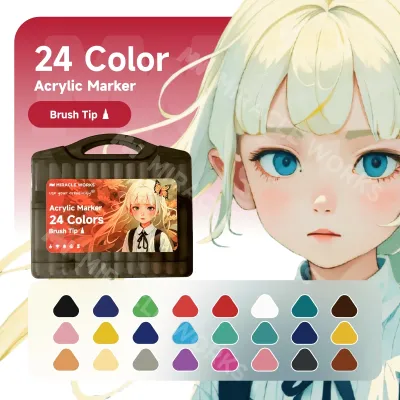
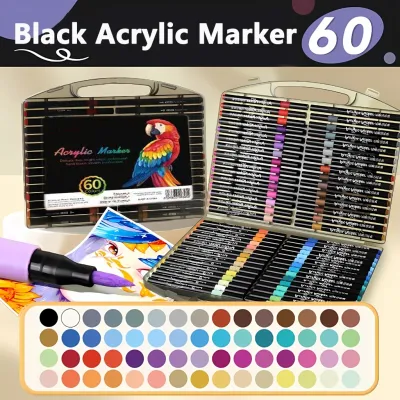
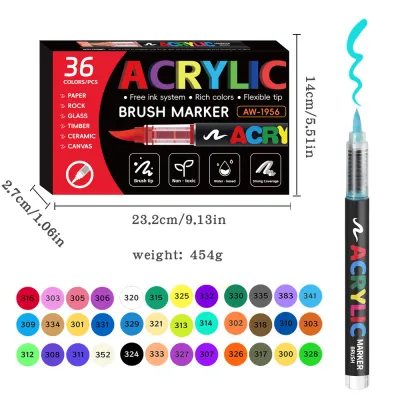
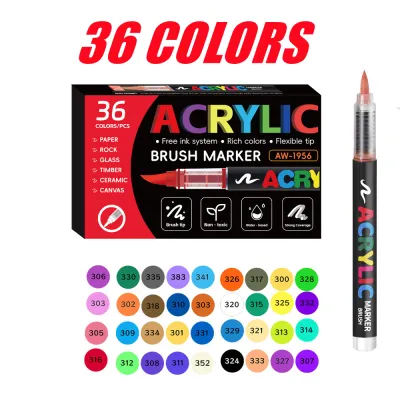
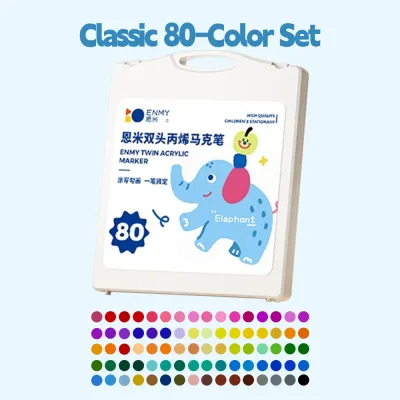
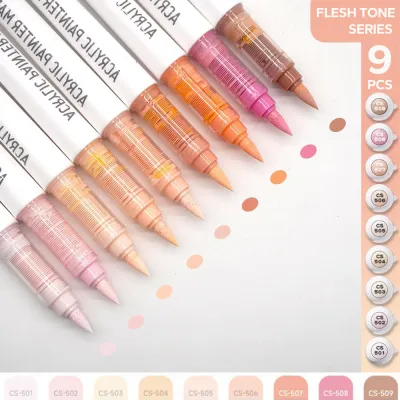
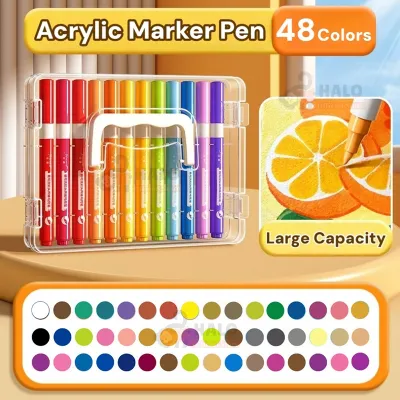
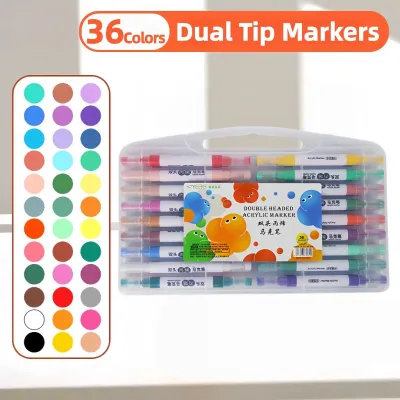
Prices are valid at publication and may change. Please refer to the product page for the latest price.
To control how paint reaches this flexible tip, manufacturers use either a valve-action system or a free-flow mechanism. Valve-action markers require you to shake the barrel to mix the pigment and then press the nib down onto a hard surface to compress an internal valve, releasing paint into the tip. Free-flow systems, on the other hand, rely on capillary action to keep the brush tip constantly saturated without manual pumping. While free-flow markers offer immediate usability, valve-action markers often provide a more controlled flow of highly viscous, opaque paint.
The formulation of the acrylic ink itself determines how well it covers a surface. High-quality acrylic markers contain finely ground pigments suspended in an acrylic polymer emulsion. A higher pigment load results in greater opacity, allowing you to paint light colors over dark backgrounds without the underlying layers showing through. Lower-pigment formulations may appear streaky or translucent, requiring multiple coats to achieve a solid, professional finish.
Matching Your Acrylic Marker Brush Set to Specific Projects
Different crafting surfaces interact with acrylic paint in unique ways, meaning a marker set that excels on one material might fail on another. The primary factor to consider is surface porosity, which dictates how quickly the paint is absorbed and how much friction the brush tip will encounter during application.

Bullet Journaling and Paper Crafts
When working in a notebook or planner, your primary concern is preventing the paint from bleeding through to the next page. Standard notebook paper is highly porous and easily saturated, which can cause wet acrylic ink to spread uncontrollably or create unsightly ghosting on the reverse side.
To protect your pages, look for brush markers with fine, responsive tips that allow for precise lettering and delicate decorative borders without depositing excessive pools of paint. It is essential to verify that your journal features heavy-weight paper, ideally 120 gsm or higher, to handle the moisture of acrylic formulations.
Drying speed is another critical factor for paper crafts. In humid environments, acrylic ink can remain tacky longer than expected, increasing the risk of accidental smudges when you close your journal. Choosing a fast-drying formulation ensures your layouts remain clean and crisp, allowing you to layer colors quickly without tearing the delicate paper fibers.
Canvas and Traditional Painting
Canvas painting demands a marker set that can mimic the rich, opaque qualities of traditional tube acrylics. Because canvas is often textured and primed with gesso, the paint must have a high pigment load to cover the woven fabric evenly and stand out against dark or pre-painted backgrounds.
Working on wet canvas also opens up opportunities for blending. Some acrylic brush markers allow you to blend colors directly on the surface using a damp paintbrush or a dedicated blending marker, provided the paint has not yet dried. This technique is excellent for creating smooth gradients, soft shadows, and painterly transitions that are difficult to achieve with rigid tips.
However, the rough texture of woven canvas can be highly abrasive to delicate brush tips. To prevent premature wear, look for markers equipped with durable, high-density synthetic fiber nibs. Checking if the manufacturer offers replacement nibs is a smart way to ensure your set lasts through multiple canvas projects without requiring you to buy entirely new markers.
Rock Painting and Outdoor Crafts
Rock painting requires a highly durable acrylic marker brush set capable of handling rough, uneven, and highly porous natural stones. The flexible brush tip is incredibly useful here, as it can bend and conform to the natural contours and crevices of a rock far better than a stiff chisel or bullet nib.
Because outdoor crafts are exposed to sunlight, rain, and temperature fluctuations, you must verify that the marker ink is formulated for weather resistance. Look for labels indicating water resistance and UV protection to ensure your designs do not fade or wash away over time.
Even with durable ink, protecting your outdoor creations usually requires a protective topcoat. Always check the marker manufacturer’s instructions to identify compatible sealants, as some solvent-based clear sprays can dissolve or smear acrylic paint. Applying a water-based acrylic sealer is generally the safest method to lock in your artwork.
Glass, Ceramics, and Non-Porous Surfaces
Painting on non-porous surfaces like glass, glazed ceramics, and plastics presents the opposite challenge of paper: instead of absorbing the paint, these smooth surfaces offer very little grip for the ink to adhere to. This lack of friction means the paint can easily slide, pool, or scratch off once dry if the formulation is incorrect.
Before purchasing, check the product packaging to confirm compatibility with glass and ceramics. Many specialized acrylic markers use a unique resin formula that bonds tightly to smooth surfaces, preventing the paint from peeling or chipping during handling.
Curing is a vital step in making your designs permanent on these materials. Depending on the manufacturer’s specifications, you may need to let the painted item air-dry for several days, or bake it in a home oven at a specific temperature to cure the paint fully. Always conduct a small adhesion test on an inconspicuous area of your object to verify that the paint bonds securely before investing hours into a complex design.
Essential Specifications to Verify Before Purchasing
When comparing different acrylic marker brush sets, looking past the colorful packaging and examining the technical specifications will save you time and money. One of the most critical indicators of quality is the lightfastness rating, which measures how well the pigment resists fading when exposed to light over time. Archival-quality markers will often display an ASTM standard rating (such as ASTM D-4236) on the box, giving you confidence that your artwork will retain its original vibrancy for years.
Safety is another paramount consideration, especially if the markers will be used by children or in enclosed spaces. Ensure the set carries a non-toxic certification, indicating it is free from harmful solvents and strong chemical odors. This is particularly important in tropical climates where working indoors with air conditioning might limit natural ventilation.
To minimize environmental waste and reduce long-term costs, check if the marker set supports refillable ink cartridges or replacement nibs. High-quality brush tips will eventually wear down before the ink reservoir is completely empty, especially when used on rough surfaces. Being able to swap out a frayed tip or top up the paint level means you do not have to discard an otherwise perfectly functional marker.
Finally, keep in mind that color consistency can vary between production batches. While reputable brands strive for exact matches, slight variations can occur. Reading user reviews or manufacturer disclaimers regarding batch consistency can help you avoid unexpected color shifts in the middle of a large, multi-set project.
Priming, Testing, and Maintaining Brush Tip Markers
Proper care and preparation are essential to maximize the lifespan of your acrylic marker brush set. When you first open a new valve-action marker, the brush tip will be completely dry and white. To prime it, start by shaking the marker vigorously with the cap securely on to thoroughly mix the settled pigments inside.
Next, remove the cap and gently press the tip down vertically onto a scrap piece of paper or cardboard. Do not press too hard, as excessive force can bend or split the delicate brush fibers. Hold the tip down for a few seconds, release, and repeat the pumping action patiently until you see the colored paint slowly saturate the fibers down to the very tip.
Before applying the marker to your final project, always perform a test stroke on a scrap piece of the same material. This trial allows you to observe the ink flow, check the opacity, and ensure the paint behaves correctly on that specific texture without ruining your actual artwork.
Proper storage is key to preventing your markers from drying out or flooding. Most manufacturers recommend storing brush-tip acrylic markers horizontally. This orientation keeps the pigment evenly distributed throughout the barrel and prevents paint from pooling heavily in the tip or settling entirely at the bottom.
If your brush tip becomes clogged with dried paint, do not throw it away. Many synthetic nibs can be gently pulled out and rinsed under warm water to dissolve the dried acrylic. Once clean, blot the nib dry with a paper towel, reinsert it into the marker, and gently prime it again to restore smooth ink flow.
Frequently Asked Questions (FAQ)
Can I use acrylic brush markers on fabric without heat setting?
Fabric compatibility and washing durability vary strictly by brand and formulation. While some acrylic markers can adhere to fabric temporarily, most require a heat-setting process—such as running a warm iron over the reverse side of the fabric—to make the design wash-resistant. Always check the specific product label for washing instructions and heat-setting thresholds, and recommend testing on a hidden fabric scrap first to ensure the paint does not bleed or wash out.
Why is my brush tip fraying, and how can I prevent it?
Fraying is typically caused by using the flexible brush tip on highly abrasive, rough surfaces like unprimed canvas, coarse rocks, or textured wood. To prevent this damage, try adjusting your painting technique by reducing downward pressure and using sweeping, side-stroke motions rather than pushing the tip directly into the surface. If a synthetic fiber nib becomes permanently split or frayed, check if your marker brand supports replaceable nibs to restore a sharp, clean line.

Community discussion
Share your experience or ask a question. Comments are reviewed before publication.