
Choosing the right Clay Joy product depends on matching the clay’s curing mechanism—whether it air-dries, bakes in an oven, or remains permanently pliable—to the physical demands of your project. Different crafting goals require distinct material properties; figurines require structural stability, jewelry demands durability and lightweight flexibility, and children’s activities prioritize safety and easy cleanup.
In warm, humid climates like the Philippines, ambient moisture and temperature significantly alter drying times and storage requirements. Understanding these environmental factors, along with the specific characteristics of each clay type, ensures your finished pieces remain durable and free from cracks. By verifying product labels and testing material compatibility, you can confidently select the ideal medium for your next creative endeavor.
Quick Guide: Matching Clay Types to Your Crafting Goals
Before selecting a specific Clay Joy variant, it is essential to understand the three primary categories of modeling clay available to crafters. These categories are defined by how they harden—or if they harden at all—which directly dictates their suitability for different types of projects. Matching the clay’s curing method to your final goal saves time and prevents structural failures.
Products mentioned in this guide
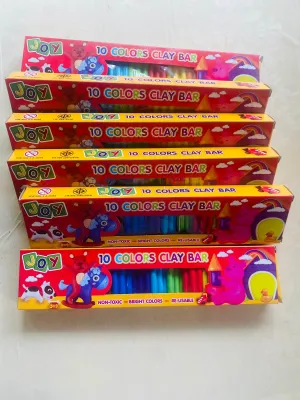
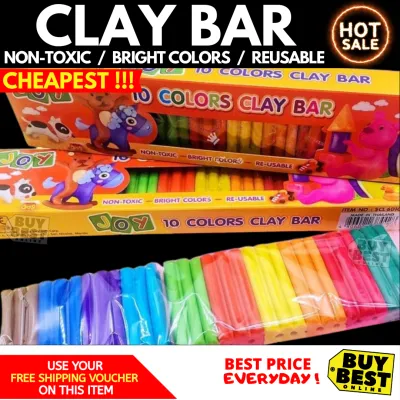
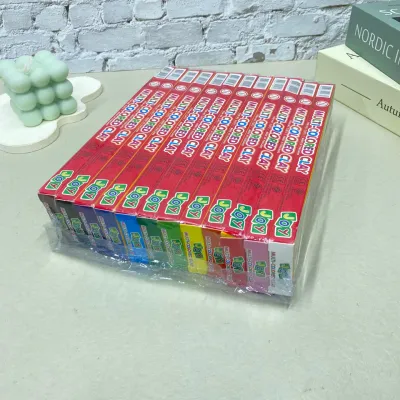
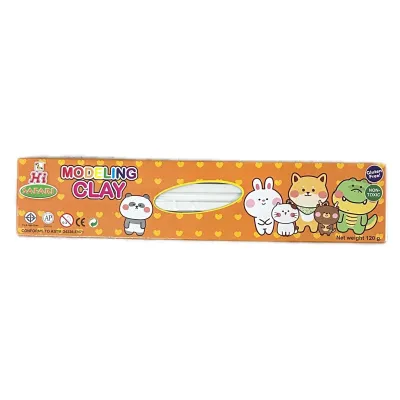
Prices are valid at publication and may change. Please refer to the product page for the latest price.
Air-dry clay is a water-based medium that cures through natural evaporation without requiring heat. It is highly suitable for sculptural pieces, relief work, pottery-style vessels, and school projects where baking is impractical. Because it dries slowly when exposed to air, it offers a generous working time, though high relative humidity can extend the total drying process from 24 hours to several days.
Polymer clay is a synthetic, plastic-based medium composed of polyvinyl chloride (PVC) binders and liquid plasticizers. It remains completely pliable at room temperature and only cures when baked in a conventional home oven at a specific, low temperature. Once cured, polymer clay is highly durable, water-resistant, and slightly flexible, making it the standard choice for detailed figurines, miniature models, and wearable jewelry.
Non-hardening modeling clay, often wax- or oil-based, is designed to never dry out or cure. It remains soft and malleable indefinitely, allowing users to reshape, blend, and reuse the material countless times. This type is best suited for temporary play, color-mixing exercises, prototyping, and educational activities where a permanent keepsake is not the goal.
Always check the specific Clay Joy product label before beginning your project. The packaging provides critical information regarding the clay’s base material, recommended curing methods, and expected final hardness. Never attempt to bake air-dry clay or leave polymer clay unbaked expecting it to dry on its own, as misapplying these curing methods will ruin the material.
Selecting Clay Joy Variants for Figurines and Detailed Sculpting
Creating detailed figurines and intricate sculptures requires a clay that holds fine details without slumping under its own weight. Polymer clay and high-density air-dry clay are the primary choices for this application. These materials allow you to carve sharp lines, press in delicate textures, and smooth out seams using water or specialized blending solvents.

For figurines taller than a few centimeters, an internal support structure known as an armature is highly recommended. Armatures made of aluminum wire, crumpled aluminum foil, or wooden dowels provide essential structural integrity. Using an armature reduces the overall volume of clay required, which prevents the piece from becoming too heavy and ensures even drying or baking throughout the core.
When working with water-based air-dry clay for sculptures, keep in mind that the material shrinks as moisture evaporates. This shrinkage rate typically ranges from 5% to 15% depending on the specific formulation. If you wrap air-dry clay tightly around a rigid, non-yielding armature, the clay may crack as it shrinks; wrapping the armature in a compressible layer like paper tape or foil helps absorb this tension.
Color stability is another critical factor to verify on your Clay Joy packaging. Some clays darken slightly or change hue after they are fully cured or baked. To avoid unexpected color shifts in your final sculpture, perform a small test cure with a pinch of clay before committing to a complex, multi-colored piece.
Choosing Clay Joy Products for Jewelry Making
Jewelry pieces such as earrings, pendants, and beads must be lightweight, impact-resistant, and comfortable against the skin. Polymer clay is highly suited for wearable accessories because it can be rolled into thin sheets, cut into precise shapes, and baked to a durable finish that resists chipping and breaking.
To ensure your jewelry lasts, perform a simple flexibility test on a cured scrap piece of your chosen Clay Joy variant. Properly baked polymer clay should bend slightly under pressure rather than snapping like chalk. Brittleness is almost always a sign of under-baking, which occurs when the oven temperature is too low or the baking duration is too short.
Integrating jewelry findings requires careful planning. Eye pins, jump rings, and earring posts can be baked directly into the clay, secured in pre-drilled holes post-cure using compatible jewelry adhesives, or embedded behind a thin layer of liquid clay before baking. Ensure the clay thickness around any embedded metal finding is sufficient to prevent the metal from tearing through the cured piece.
In tropical climates, skin oils, sweat, and high humidity can interact with surface finishes over time. While cured polymer clay is naturally water-resistant, any painted details, metallic powders, or chalk pastels applied to the surface must be sealed. Verify if your Clay Joy variant requires a protective topcoat, and always test your sealant on a scrap piece first, as some varnishes react chemically with polymer clay and remain permanently sticky.
Safe and Easy-to-Use Clay Joy Options for Kids' Projects
When selecting clay for children, safety, ease of use, and simple cleanup are the primary considerations. Parents and educators should always inspect the product packaging for recognized non-toxic certifications, such as the AP (Approved Product) seal, ASTM D-4236 compliance, or regional safety marks. These labels guarantee the material has been evaluated for harmful chemicals.
Age recommendations on the packaging serve as a helpful guide for developmental suitability. For toddlers and younger children, large blocks of non-hardening modeling clay are excellent for developing fine motor skills without the risk of small parts breaking off. For older children working on school dioramas or keepsakes, lightweight air-dry clay offers a satisfying, permanent result without the safety hazards of a hot oven.
Cleanup is a major factor in maintaining a stress-free crafting environment. Look for water-soluble air-dry clays that wash easily out of clothing and off skin with standard soap and water. To protect wooden tables and creative workspaces from potential dye transfer, use silicone crafting mats or plastic table covers during play.
Avoid using clays that require high-temperature baking or complex chemical sealants when crafting with younger children. Instead, focus on air-dry variants that cure naturally at room temperature. This eliminates the risk of accidental burns and allows children to complete their projects independently from start to finish.
How to Verify Clay Joy Product Specs and Availability
To achieve the best results with your crafting projects, always read the manufacturer’s instructions printed on the back of the Clay Joy packaging. Pay close attention to the specified baking temperatures, recommended drying times, and safety warnings. Because home ovens can have temperature fluctuations, using a separate oven thermometer is an effective way to verify that your oven is heating accurately.
When purchasing Clay Joy products, source them from authorized local craft stores or reputable online marketplaces to ensure product authenticity. Proper storage in retail environments is crucial; polymer clay exposed to high temperatures in warehouses or shop windows can partially cure inside the packaging, leaving it dry, crumbly, and difficult to condition.
Finally, never assume performance traits that are not explicitly stated on the product label. Unless a specific Clay Joy variant is certified as food-safe by the manufacturer, cured clay pieces should never come into direct contact with food or beverages. Similarly, do not assume a piece is fully waterproof or outdoor-safe without applying a verified, weather-resistant sealant recommended by the manufacturer.
Frequently Asked Questions (FAQ)
Can I mix different Clay Joy clay types together?
Mixing different types of clay, such as blending air-dry clay with polymer clay, is not recommended and usually results in structural failure. Because these materials cure through entirely different mechanisms—one via water evaporation and the other via heat-induced chemical fusion—they cannot bond properly. Baking a mixture containing air-dry clay can cause the water content to boil, leading to bubbles, cracking, or burning, while leaving polymer clay to air-dry will result in an uncured, crumbly mess. Always keep different clay bases separate, though you can combine cured pieces of different types using appropriate external adhesives.
How should I store opened Clay Joy clay to prevent it from drying out?
Proper storage depends entirely on the curing mechanism of the clay. For water-based air-dry clay, wrap the leftover portion tightly in plastic wrap, place it inside an airtight plastic container, and store it in a cool, dark place; in highly humid environments, adding a slightly damp paper towel inside the container can help maintain moisture, but avoid direct contact with the clay to prevent mold. For polymer clay, wrap the opened block in wax paper or place it in a polypropylene (PP) plastic bag, keeping it away from direct sunlight and high ambient heat. Avoid storing polymer clay in contact with polystyrene or soft PVC containers, as the plasticizers in the clay can react with and melt those plastics over time.

Community discussion
Share your experience or ask a question. Comments are reviewed before publication.