
Selecting the right clear bag for document organization is more than a matter of basic storage; it is about preserving the integrity of your important papers against wear, dust, and environmental moisture. The ideal choice depends entirely on how you access, transport, and store your files. For flat papers in daily transit, a button-closure clear envelope provides quick access and structural support. For bulky, mixed items like passports, receipts, and writing tools, a heavy-duty zipper pouch offers the most secure containment. For long-term archiving and binder integration, open-top clear sleeves or punched sheet protectors are the superior choice.
In tropical climates where high humidity is a constant factor, selecting the correct plastic material is crucial. The wrong type of plastic can trap moisture or chemically react with laser-printed ink, causing text to lift off the page and stick to the bag. Understanding the structural differences and material properties of each clear bag style ensures your documents remain clean, legible, and perfectly organized.
Quick Guide: Matching Clear Bag Styles to Document Types
To build an efficient filing system, you must match the physical design of the clear bag to your daily workflow and the specific items you need to store. Different styles offer varying levels of security, capacity, and compatibility with existing office storage like binders or filing cabinets.
Products mentioned in this guide
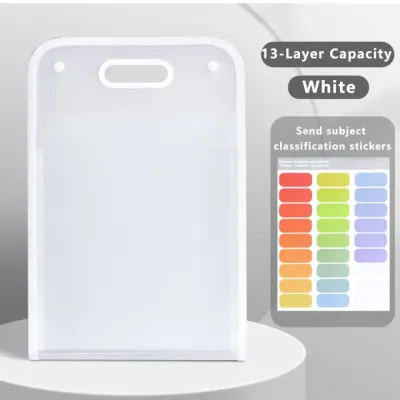
![[🇵🇭 Stock&COD] Large Capacity Office Supplies Transparent File Bag Transparent PVC Test Handbag](https://img.lazcdn.com/g/p/7e03af9ab1475023231f245f7ef7f767.jpg_400x400q80.jpg_.webp)
Prices are valid at publication and may change. Please refer to the product page for the latest price.
| Clear Bag Style | Best Document Types | Security Level | Capacity | Binder Compatibility |
|---|---|---|---|---|
| Document Envelope | Loose A4/Letter papers, certificates, flat forms | Moderate (Flap closure) | Low to Medium (Up to 50 sheets) | Low (Usually unpunched) |
| Zipper Pouch | Passports, booklets, receipts, pens, thick stacks | High (Slide zipper) | High (Expandable options available) | Moderate (Some have pre-punched holes) |
| Clear Sleeve / Protector | Frequently referenced pages, certificates, photos | Low (Open top/side) | Low (1 to 5 sheets per sleeve) | High (Standard multi-hole strip) |
Choosing the right style involves identifying your primary task. If your priority is quick retrieval during client meetings or school classes, a document envelope allows you to slide papers out in seconds. If you are traveling or commuting in unpredictable weather, a zipper pouch keeps loose items from falling into the bottom of your bag. For reference manuals, recipes, or certificates that you want to read without touching the paper, clear sleeves inside a ring binder are the most practical option.
Each style has distinct limitations. Document envelopes cannot accommodate bulky, three-dimensional items without warping or splitting at the seams. Zipper pouches, while highly secure, add significant bulk and can make filing drawers uneven if stacked together. Clear sleeves offer virtually no protection if they are carried loose outside of a binder, as papers can easily slide out of the open tops when tilted.
Clear Document Envelopes: Best for Flat Papers and Daily Transit
Clear document envelopes are designed to keep flat papers pristine while you are on the move. They act as a rigid shield inside backpacks, briefcases, or tote bags, preventing corners from bending and protecting pages from light splashes or dirt. They are particularly suited for carrying active paperwork, such as application forms, contracts, school modules, and official certificates that must remain uncreased.

The closure mechanism of a document envelope determines both its security and its ease of use.
- Button Snaps: Plastic press-stud buttons are highly reliable and durable. They provide a firm, mechanical closure that will not accidentally pop open in your bag. However, pressing the snap shut requires a firm surface, and overstuffing the envelope can put excessive tension on the button area, eventually causing the plastic around the snap to tear.
- Velcro (Hook-and-Loop): Velcro closures offer the fastest access, allowing you to rip the envelope open and seal it shut instantly. The primary drawback is that hook-and-loop fasteners can collect lint, dust, and threads over time, which gradually reduces their gripping power. They also make a distinct sound when opened, which might not be ideal in quiet library or office environments.
- Elastic Bands: Some envelopes use elastic cords that loop over the corners or a central button. This design is highly flexible, allowing the envelope to expand slightly to accommodate thicker stacks of paper. The limitation is that elastic bands can stretch out and lose their tension over months of heavy use, especially in warm climates.
While envelopes are excellent for daily transit, they are not designed for high-capacity storage or extreme weather. Because the sides are folded and welded rather than sealed with a gasket, water can still seep through the edges during a heavy downpour. Additionally, attempting to force thick booklets or stationery items into a flat envelope will stretch the plastic, distorting its shape and putting immense pressure on the seams.
Zipper Pouches: Ideal for Mixed Items and Secure Storage
When your storage needs extend beyond standard flat paper, clear zipper pouches offer the versatility and security required for mixed contents. These pouches are excellent for keeping related items together in one place. For example, you can store a passport, travel itineraries, boarding passes, a pen, and foreign currency in a single pouch, ensuring everything is visible and accessible.
Material selection is incredibly important when choosing a zipper pouch, as it directly affects durability and document safety.
- PVC (Polyvinyl Chloride): PVC pouches are highly flexible, thick, and completely transparent, making it easy to read small print through the plastic. However, PVC contains plasticizers that can migrate over time, especially when exposed to heat and humidity. This chemical migration can cause laser-printed ink or photocopies to stick to the plastic, permanently ruining the document. PVC is best reserved for non-printed items, laminated cards, or short-term storage.
- PE (Polyethylene) and PP (Polypropylene): These materials are typically stiffer and may have a slightly textured or matte finish. They are inherently acid-free and copy-safe, meaning they will not chemically react with ink or lift print off your pages. They are highly recommended for long-term storage of important documents, receipts, and printed materials.
Many high-quality zipper pouches feature a mesh reinforcement grid embedded within the plastic. This grid significantly increases tear resistance and prevents the pouch from puncturing when carrying sharp objects like pens, scissors, or keys.
Despite their excellent security, zipper pouches have physical limitations. The zipper track and fabric border add thickness to the edges of the pouch. If you attempt to store multiple filled zipper pouches inside a standard ring binder or a tight filing box, the accumulated bulk of the zippers will cause the storage system to bulge, reducing the overall number of files you can fit.
Clear Sleeves and Sheet Protectors: Perfect for Archiving and Binders
Clear sleeves and sheet protectors are the foundation of archival document preservation. Unlike envelopes and pouches, which are designed to hold loose collections of papers, sheet protectors are meant to house individual sheets or small pairs of pages back-to-back. They allow you to flip through documents like a book without exposing the paper to finger oils, dust, or moisture.
These sleeves are ideal for preserving high-value documents that you must reference frequently but rarely need to edit. Examples include birth certificates, marriage contracts, professional licenses, academic transcripts, and printed reference manuals.
To integrate these sleeves into a broader filing system, look for sheet protectors with a reinforced multi-hole binding strip along the left edge. This strip is designed to fit standard two-ring, three-ring, or four-ring binders, as well as lever arch files. The reinforcement is critical; without a thickened binding edge, the weight of the paper can cause the holes to tear when you turn the pages.
When choosing sheet protectors, you will encounter two primary finishes:
- Clear (Glossy): This finish offers maximum transparency, making colors and text appear sharp and vibrant. It is perfect for photographs, certificates, and presentations. The downside is that glossy plastic reflects overhead light, which can cause glare and make reading difficult under bright office fluorescent lamps.
- Matte (Non-Glare): Matte sleeves have a slightly textured surface that diffuses light, eliminating glare and making text much easier to read from various angles. They also resist fingerprints and smudges. However, the textured surface can slightly reduce the sharpness of fine details and vibrant colors.
The primary limitation of standard sheet protectors is their open-top design. Because the top edge remains completely open to allow easy insertion, documents can slide out if the binder is held upside down or dropped. For maximum security within a binder, some specialized sleeves feature a top flap or a side-loading design to prevent accidental slippage.
Key Features to Check Before Buying
Before purchasing clear bags for your organization system, it is important to evaluate their physical construction. Investing in high-quality specifications prevents the frustration of split seams, torn closures, and ruined documents.
Material Thickness and Clarity
Plastic thickness is typically measured in microns (µm) or mils. For daily use, look for document envelopes and zipper pouches with a thickness of at least 150 to 180 microns. Thicker plastic resists creasing, maintains its shape, and provides a more rigid barrier against external impacts. For sheet protectors, a thickness of 80 microns or more is considered heavy-duty and will withstand frequent page-turning without tearing at the holes. Ensure the product description explicitly states “acid-free” or “copy-safe” to guarantee that your documents will not stick to the plastic over time.
Size Accuracy and Margins
Always check the internal dimensions of the clear bag rather than relying solely on the labeled size (such as “A4” or “Letter”). A true A4 clear bag must have internal measurements slightly larger than the standard A4 paper size (210 x 297 mm) to allow you to slide papers in and out smoothly without crumpling the edges. If you plan to store thick stacks of paper, look for envelopes with built-in gussets (expandable sides) that allow the bag to expand up to 20 or 30 millimeters without compressing the contents.
Edge Welding and Seam Strength
The weakest point of any clear bag is its seams. Inspect the heat-sealed or ultrasonically welded edges of the bag. High-quality bags feature wide, reinforced grid welds along the borders, which distribute stress evenly. Cheaply made bags often have thin, single-line seals that split open at the corners the moment you insert a thick stack of paper. Gently pull the sides of the bag apart at the seams before use; if the plastic stretches slightly without tearing, the weld is secure.
Building Your Document Organization System
An effective document organization system uses a combination of different clear bag styles to manage papers at every stage of their lifecycle. By establishing a clear workflow, you can prevent clutter from accumulating on your desk or in your bags.
First, designate zipper pouches as your active, mobile utility kits. Use them to carry daily essentials, loose receipts, writing instruments, and identification cards that you need to access while traveling or commuting. Because they seal completely, they keep your small items secure and dry inside your bag.
Second, use clear document envelopes for active projects and transit. Keep current contracts, school assignments, or application forms in dedicated envelopes. You can use color-coded envelopes to categorize your tasks—for example, blue for medical records, green for financial documents, and clear for immediate action items. Label the outside of each envelope with a adhesive tab or write directly on a designated label area.
Finally, transition your documents to clear sleeves and sheet protectors inside ring binders for permanent archiving. Once a project is completed, or when you receive permanent official documents, slide them into acid-free sheet protectors and file them systematically in a binder. This three-tier system ensures that your active items remain portable and secure, while your historical records are preserved safely on a shelf, completely protected from dust and humidity.
Frequently Asked Questions (FAQ)
Can I use a clear zipper pouch for wet or liquid items?
Standard clear zipper pouches designed for stationery and document organization are water-resistant, but they are not completely waterproof or airtight. While the plastic body of the pouch will block water, moisture can easily seep through the zipper teeth, the fabric stitching around the zipper track, or the small gaps at the ends of the zipper closure.
If you need to carry toiletries, wet pens, or liquid items, you should check the manufacturer’s specifications to ensure the pouch is rated as hermetically sealed or fully waterproof. For valuable documents, always keep them in a separate, dry pouch away from any liquids to prevent accidental leaks from ruining your papers.
What is the standard size for A4 clear document bags?
Standard A4 paper measures exactly 210 x 297 millimeters. To accommodate this paper size comfortably, a standard A4 clear document bag typically has external dimensions of approximately 230 x 320 millimeters. This extra margin provides the necessary clearance for the welded seams on the sides and bottom, allowing you to insert and remove papers without bending their corners.
When shopping for clear bags, always verify whether the dimensions listed in the product description refer to the internal storage space or the external borders. If you are organizing legal-sized or letter-sized documents, which are wider or longer than A4, you will need to look for bags specifically labeled for those dimensions to ensure a proper fit.

Community discussion
Share your experience or ask a question. Comments are reviewed before publication.