
Finding the right documents organizer box in the Philippines requires balancing storage capacity with protection against tropical humidity. Standard folders, expanding files, and bulky ring binders have vastly different dimensions and weights, meaning a single generic box style rarely fits all. Choosing the wrong container can lead to bent document corners, torn folder tabs, or even structural failure when lifting heavy files. To keep your essential paperwork secure, organized, and easily accessible, you must evaluate the exact physical specifications of your files, the structural integrity of the box materials, and your daily retrieval habits.
Identify the Exact Dimensions of Your Files
To select a documents organizer box that prevents damage, you must first understand the physical profiles of the files you intend to store. Standard office documents in the Philippines typically use letter size (8.5 by 11 inches) or A4 size (8.27 by 11.69 inches). However, legal-size documents (8.5 by 13 inches or 8.5 by 14 inches) and expanding folders require significantly more horizontal and vertical clearance. If you attempt to store legal-size folders in a box designed strictly for letter or A4 files, the folders will tilt, bend, or prevent the lid from closing securely.
Beyond the height and width of the paper, the thickness of your binders plays a major role in determining the ideal box size. Standard ring binders with a 1-inch spine are relatively easy to align, but heavy-duty lever arch files often feature spines measuring 2 inches to 3 inches in width. These larger binders also have metal-reinforced edges and locking mechanisms that add to their overall bulk. Storing several lever arch files side-by-side requires a box with a wide, flat base that can handle both the physical volume and the concentrated weight without bowing.
Products mentioned in this guide
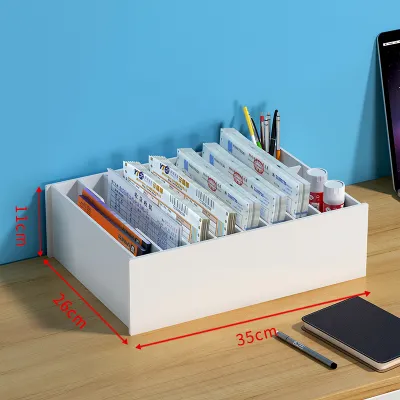
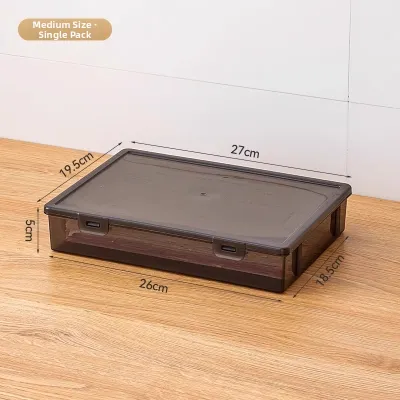
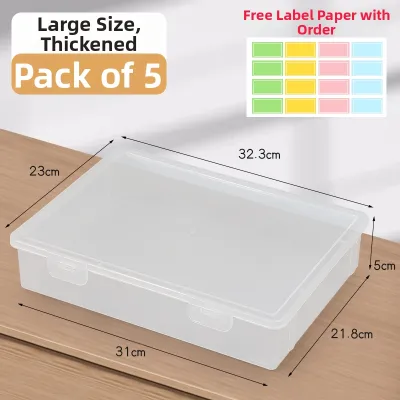
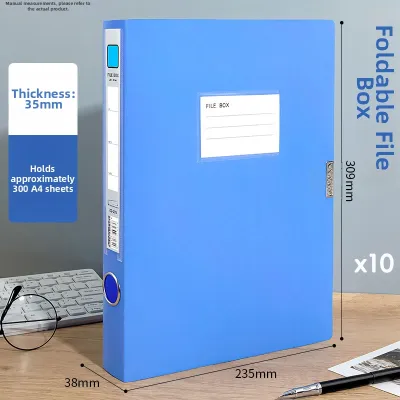
Prices are valid at publication and may change. Please refer to the product page for the latest price.
When browsing for organizer boxes, always prioritize internal dimensions over external advertised sizes. Manufacturers often list external measurements to help buyers plan shelf space, but these figures include the thickness of the walls, reinforced corners, handles, and lid overhangs. A box that appears large enough on the outside may actually have internal clearances that are up to an inch smaller in height, width, or depth. If you rely solely on external dimensions, you risk purchasing a box where your binders must be forced inside, leading to crushed spines and torn covers.
Additionally, consider the orientation of your files within the box. Some organizer boxes are designed for lateral filing, where folders hang or stand parallel to the longest side, while others use a front-to-back orientation. If you are using hanging folders, verify whether the box features built-in rails or molded ridges to support the folder hooks. Without these dedicated supports, hanging folders will slip to the bottom of the box, defeating their organizational purpose and making document retrieval difficult.
Evaluate Material and Structural Features
The material composition of your documents organizer box directly affects its durability, weight capacity, and ability to protect documents from environmental hazards. Corrugated cardboard is a popular and cost-effective choice for general office filing. However, not all cardboard is created equal; single-walled cardboard is prone to sagging under heavy loads, whereas double-walled corrugated cardboard offers superior structural rigidity. For long-term archival storage where boxes are stacked on top of one another, double-walled cardboard provides the necessary vertical strength to prevent the bottom boxes from collapsing.

In humid tropical environments, heavy-duty plastic organizer boxes offer distinct advantages over paper-based alternatives. High-density polyethylene (HDPE) or polypropylene (PP) boxes are naturally resistant to moisture, pests, and dust, making them ideal for storage areas that lack continuous air conditioning. Plastic boxes also allow you to see the contents if you choose transparent or translucent models, reducing the need to open multiple lids when searching for a specific file. However, plastic containers can trap residual moisture if documents are damp when stored, so ensuring your files are completely dry before packing is essential.
Lid designs are another critical factor in maintaining structural integrity and ease of access. Lift-off lids are highly convenient for quick access and allow you to overfill the box slightly if necessary, though they do not provide an airtight seal. Hinged lids, often found on plastic utility boxes, stay attached to the container so you never lose them, but they require clear overhead space to open fully. For active filing systems, open-top crates or bins eliminate the lid entirely, allowing you to drop files in and pull them out instantly, though this leaves the tops of your folders exposed to dust and light.
To ensure safe handling, look for boxes equipped with reinforced structural features. Double-walled bases prevent the bottom of the box from bowing when lifted, which is especially important when carrying heavy paper files. Ergonomic handles, such as plastic-reinforced cutouts or molded grip zones, distribute the weight more evenly across your hands and reduce the risk of the box slipping from your grasp. If you plan to stack your organizer boxes, models with interlocking lids or reinforced plastic corners will prevent shifting and sliding, keeping your storage stack stable and secure.
Match Box Styles to Your Storage Frequency
Aligning the style of your documents organizer box with how often you access your files prevents unnecessary physical strain and keeps your workspace tidy. For long-term, high-volume archival storage—such as tax records, historical contracts, or closed project files—standard banker-style boxes are the industry standard. These boxes are designed to be packed tightly, stacked multiple layers deep, and left undisturbed for long periods. Because they are rarely accessed, they can be stored on high shelves or in dedicated storage rooms, maximizing your active office space.
For active, everyday desk use, stackable plastic file crates or open-front organizers are far more practical. These styles allow you to view folder tabs at a glance and retrieve documents without unstacking multiple heavy boxes. Open-front organizers, which feature a cutaway front panel, let you slide folders or binders out horizontally even when another box is stacked directly on top. This setup is highly efficient for active client files, ongoing billing documents, or reference manuals that you need to consult multiple times a day.
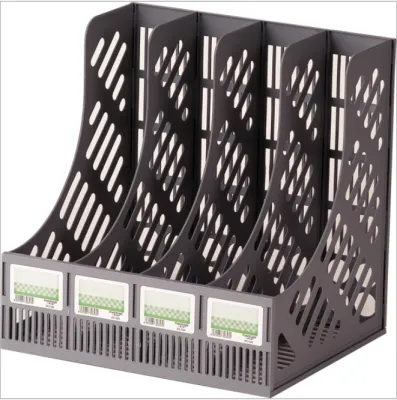
If you have limited desk space but need quick access to reference materials, magazine-style holders or modular desktop units are excellent alternatives. These vertical organizers hold a small number of folders or thin binders upright, keeping them organized without taking up a large footprint. Modular units can be placed side-by-side or stacked vertically on bookshelves, allowing you to customize your storage setup as your document volume grows. While they do not offer the high capacity of large storage boxes, their accessibility makes them indispensable for daily workflow management.
For mobile professionals who need to transport files between home, office, and client sites, portable file boxes with integrated carrying handles and secure latching lids are the preferred choice. These boxes often feature built-in hanging file rails and a compact footprint that fits easily on a car seat or floorboard. The secure latches ensure that the lid remains tightly closed even if the box is tipped or bumped during transit, protecting your confidential documents from spilling or getting damaged by sudden rain showers.
Measure and Verify Compatibility Before Purchase
Before purchasing any documents organizer box, taking precise measurements of your current filing setup is the most reliable way to avoid compatibility issues. Start by gathering your tallest binder and your widest folder, as these will define the minimum internal clearance your box must provide. Use a reliable measuring tape to record the height from the bottom edge to the top of the folder tab or binder spine, the width from the front edge to the back spine, and the overall thickness of the item when fully loaded.
When shopping on online marketplaces or browsing physical store shelves, carefully read the product specifications to distinguish between internal and external dimensions. If the listing only provides a single set of measurements, assume they are external and look for customer reviews or manufacturer Q&As that clarify the internal usable space. If you are planning to use hanging folders, pay close attention to the width between the hanging rails, as standard letter-size rails will not accommodate wider legal-size hanging folders.
To ensure smooth operation, always apply the clearance rule when selecting a box size. Add at least 0.5 inches (approximately 1.3 centimeters) of clearance to your measured file height and width, and leave at least 1 inch of empty space at the top of the box. This extra clearance prevents the tops of your folders from rubbing against the lid, which can cause fraying and tear the labels over time. It also provides enough finger room for you to reach inside, grasp the spine of a binder, and pull it out easily without scraping your knuckles or damaging adjacent files.
Finally, factor in your projected document growth when deciding on the number and size of boxes to buy. Paper files have a tendency to accumulate quickly, and a box that is perfectly filled today will likely be overflowing in a few months. Purchasing a box with slightly more capacity than you currently need, or buying modular boxes that can be easily expanded with matching units, ensures that your filing system remains organized and cohesive as your storage requirements increase over time.
Select Purchasing Channels and Inspect Deliveries
Acquiring your documents organizer boxes from reliable sources ensures you receive products that meet your structural and environmental requirements. Dedicated office supply stores and specialty stationery shops in the Philippines are excellent for hands-on inspection, allowing you to feel the thickness of the cardboard or test the flexibility of the plastic latches before buying. For bulk purchases or specialized archival boxes, online marketplaces offer a wider selection and the convenience of direct delivery, though you must rely on detailed product descriptions and user feedback to verify quality.
When your order arrives, perform a thorough inspection of the boxes before assembling or loading them with files. For cardboard boxes, check that the pre-cut fold lines are clean, the corners are free of crushing, and the hand cutouts are fully perforated without tears. For plastic boxes, inspect the base and corners for hairline cracks or stress whitening, which can occur during shipping and will severely compromise the box’s load-bearing capacity. Ensure that lids fit snugly and that any latches or hinges operate smoothly without binding or popping loose.
If you are purchasing boxes in bulk to organize an entire office or archive room, calculate the cost efficiency of your purchase relative to the box’s weight capacity. While budget-friendly cardboard boxes may seem attractive initially, they may need to be replaced more frequently if they sag or tear under heavy loads. Investing in slightly higher-grade, double-walled cardboard or durable plastic boxes often yields better long-term value by protecting your valuable documents from damage and reducing the need for frequent replacements.
Frequently Asked Questions (FAQ)
Can I store heavy lever arch files in standard cardboard boxes?
Storing heavy lever arch files in standard, single-walled cardboard boxes carries a high risk of structural failure. Lever arch files are significantly heavier than standard folders due to their thick cardboard covers, metal mechanisms, and high paper capacity. When multiple lever arch files are packed into a standard box, the concentrated weight can cause the bottom of the box to bow or blow out entirely when lifted. To safely store these heavy binders, always opt for heavy-duty, double-walled cardboard boxes with reinforced bases or robust plastic crates designed specifically for high-weight capacities.
How do I prevent mold on stored documents in humid climates?
To protect paper documents from mold and mildew in the humid climate of the Philippines, you must control both the storage material and the local environment. Avoid storing cardboard boxes directly on concrete floors, as concrete can transfer moisture upward; instead, place boxes on plastic pallets, metal shelving, or wooden risers. Place several silica gel desiccant packs inside each organizer box to absorb trapped moisture, and replace or regenerate them periodically. Additionally, ensure the storage room has adequate ventilation, and consider using plastic organizer boxes with tight-fitting lids for files stored in non-air-conditioned spaces.

Community discussion
Share your experience or ask a question. Comments are reviewed before publication.