
To choose the right expandable envelope capacity, you must balance your total document volume with your organizational strategy. Selecting an envelope that is too small leads to torn seams and bent papers, while an oversized one wastes valuable desk or bag space. By matching your daily paperwork volume to specific expansion widths and pocket counts, you can keep your school, office, or household documents organized and protected.
In tropical climates like the Philippines, high humidity can cause loose papers to absorb moisture, making them limp and slightly thicker over time. This environmental factor makes proper capacity planning even more critical, as tightly packed, damp papers are highly susceptible to sticking together or tearing. Choosing an envelope with a little extra breathing room helps maintain air circulation and protects your important records.
Assess Your Document Volume and Storage Needs
Before evaluating specific envelope specifications, gather the documents you intend to store to quantify your actual needs. Instead of guessing, stack your papers flat on a table and measure the height of the pile with a ruler. A standard ream of 80 gsm copy paper is about 5 centimeters thick and contains 500 sheets, which serves as a helpful baseline for estimation.
Products mentioned in this guide
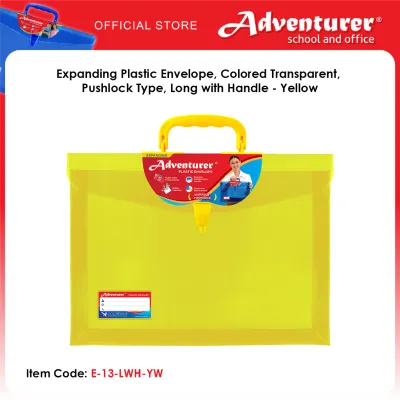
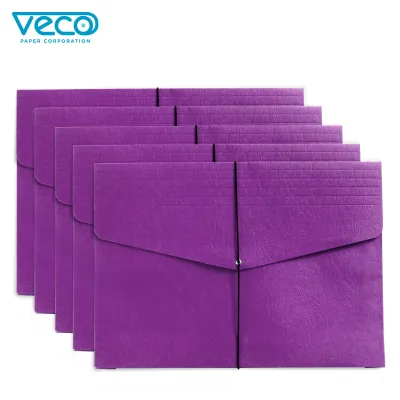
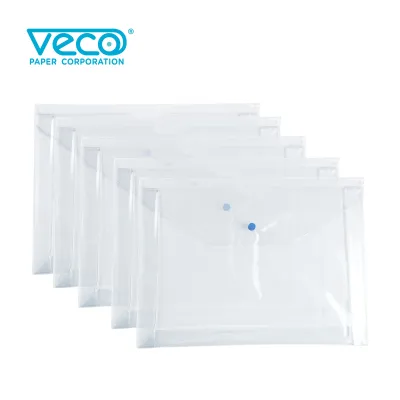
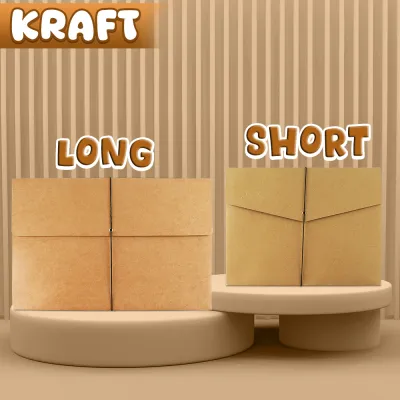
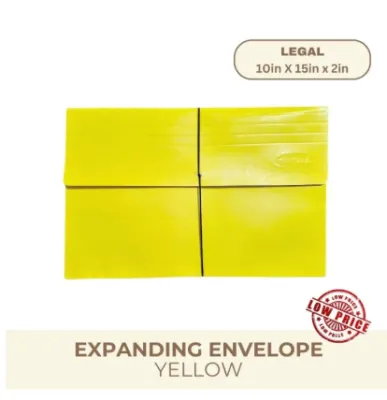
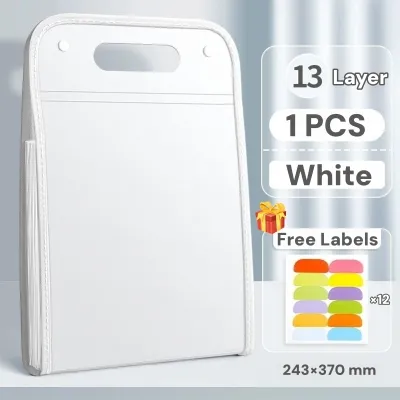
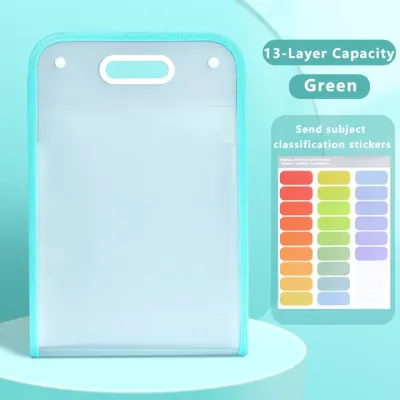
Prices are valid at publication and may change. Please refer to the product page for the latest price.
Account for paper weight and document type. Standard office papers lie relatively flat, but heavier cardstock, laminated sheets, or textured certificates take up significantly more physical space per sheet. If you are storing mixed media, such as receipts stapled to backing sheets, utility bills in their original envelopes, or brochures, the uneven thickness will require extra expansion room.
Anticipate future growth to prevent outgrowing your filing system too quickly. If you are organizing monthly utility bills, tax documents, or school worksheets, calculate how many sheets you expect to add over the next six to twelve months. Choosing an envelope with a capacity that is 20% to 30% larger than your current stack ensures you will not have to replace the organizer prematurely.
Understand Pocket Count and Expansion Width
Expandable envelopes generally fall into two categories: single-pocket jackets with a flexible bottom gusset, and multi-pocket expanding files containing internal dividers. Single-pocket options are designed for bulk storage of a single project or a unified stack of papers, allowing the entire width to expand uniformly. Multi-pocket versions, ranging from 5 to 24 or more pockets, are built for categorization, using built-in tabs to separate documents by subject, alphabet, or month.

The expansion width, often referred to as the gusset, determines the maximum thickness the envelope can reach when fully loaded. Common expansion sizes range from 2.5 centimeters to 7.5 centimeters or more. A wider gusset allows the sides of the envelope to stretch outward, keeping the bottom and top panels parallel so your papers do not get pinched or creased at the corners.
Be aware of the trade-off between pocket count and individual pocket depth. In a multi-pocket expanding file, the total expansion width is divided among all the pockets. For example, a 12-pocket envelope with a 5-centimeter total expansion only allows about 4 millimeters of thickness per pocket—equivalent to roughly 30 to 40 sheets of standard paper per section. If you try to stuff a thick 100-page report into a single pocket of a multi-pocket file, you will stretch the internal dividers, making the adjacent pockets virtually unusable.
Match Envelope Capacity to Your Specific Use Case
For daily school or office use, a moderate pocket count of 5 to 7 pockets with a standard expansion is usually ideal. This configuration provides enough separation for different school subjects or daily office tasks without becoming too bulky to carry in a backpack or briefcase. It easily accommodates daily worksheets, homework assignments, and active forms that are frequently rotated out.
Financial planning and tax record keeping require a more structured approach, making a 12-pocket or 13-pocket expanding file the standard choice. This setup allows you to dedicate one pocket to each month of the year, with an extra pocket for annual summaries or tax receipts. Since financial documents accumulate steadily over twelve months, look for a total expansion width of at least 5 to 7.5 centimeters to handle a year’s worth of bank statements, utility bills, and official receipts.
Project management and legal case files benefit from a different structure: fewer pockets but much wider expansion. If you are managing a construction project, a legal case, or a creative portfolio, you often need to store thick, multi-page reports, contracts, and blueprints together. A single-pocket or 3-pocket expandable envelope with a heavy-duty 7.5-centimeter gusset allows you to keep these bulky, bound documents intact without forcing them into narrow slots.
Verify Material Strength and Closure Security for Heavy Loads
The material of your expandable envelope directly dictates its lifespan and load capacity, especially in warm, humid climates where paper-based products can absorb moisture from the air. Heavy-duty polypropylene (plastic) envelopes offer excellent water resistance and tear strength, making them ideal for carrying documents outdoors or storing them in non-air-conditioned spaces. Traditional paperboard or red fiber expanding envelopes are classic office choices, but they should be checked for reinforced cloth or plastic gussets along the wear-prone edges to prevent splitting under heavy loads.
Closure mechanisms are critical for keeping your documents secure when the envelope is filled to its maximum capacity. Elastic cord closures offer excellent flexibility because they stretch to accommodate the expanding thickness of the file, keeping the top flap securely pulled down even when the envelope is fully packed. Snap buttons and hook-and-loop fasteners provide a clean, professional look and quick access, but they have fixed positions; if you overfill the envelope, the flap may not reach the fastener, or the tension may cause the snap to pop open unexpectedly.
Examine the construction of the seams and edges before making a purchase. The points where the expanding gusset meets the front and back panels experience the most stress when the envelope is packed. Look for double-stitched fabric trim, reinforced plastic piping, or tear-resistant tape reinforcement along these high-tension areas. If you plan to store heavy items like catalogs, bound booklets, or metal-pronged folders, reinforced edges are essential to prevent the sharp corners from cutting through the material.
Avoid Common Sizing and Capacity Mistakes
One of the most common mistakes is confusing the external dimensions of the expandable envelope with its internal usable pocket space. An envelope labeled as “A4 size” refers to the size of the paper it is designed to hold, but the actual internal pocket depth might be slightly tighter due to the seams, dividers, and closure mechanisms. Always check the manufacturer’s specifications for internal clearance, especially if you plan to store documents inside plastic sheet protectors or manila folders, which extend beyond standard paper dimensions.
Another oversight is ignoring the physical footprint of the envelope when it is fully expanded. A 24-pocket expanding file can stretch to over 30 centimeters wide when completely filled, requiring a significant amount of flat desk space or a deep shelf to sit stable. If your workspace is limited, or if you plan to store the envelope in a standard filing cabinet drawer, measure the depth of your storage space to ensure the fully expanded envelope will fit without being crushed or preventing the drawer from closing.
Finally, avoid the temptation to buy the largest, most complex multi-pocket file available if your needs are simple. Overestimating your organizational requirements often leads to carrying around unnecessary bulk and weight. If you only need to transport a single 150-page manuscript or a bundle of loose receipts, a single-pocket expandable jacket with a flexible gusset is far more compact, lightweight, and easier to handle than a rigid 13-pocket file with mostly empty compartments.
Frequently Asked Questions (FAQ)
Can I use an expandable envelope for storing thick magazines or catalogs?
Standard expandable envelopes are primarily designed for loose, flexible sheets of paper and may not accommodate thick, rigid items like magazines, catalogs, or perfect-bound books. The rigid spines of these publications do not bend to conform to the tapered shape of typical envelope pockets, which can cause the internal dividers to tear or prevent the outer flap from closing. If you need to store catalogs, check the internal pocket dimensions carefully and opt for a single-compartment expanding box file or a heavy-duty utility envelope with a flat, wide bottom rather than a multi-pocket divider system.
How do I measure my documents to ensure they fit inside the pockets?
To ensure your documents fit comfortably, measure the length, width, and thickness of your largest document stack using a standard ruler. For standard paper sizes like A4 (210 x 297 mm) or Letter (215.9 x 279.4 mm), choose an envelope specifically labeled for those formats, but verify that the internal pocket dimensions offer at least 5 to 10 millimeters of extra clearance on all sides. This small margin of clearance prevents the edges of your papers from catching on the seams or zipper tracks, allowing you to slide documents in and out smoothly without bending the corners.

Community discussion
Share your experience or ask a question. Comments are reviewed before publication.