
Selecting the correct flower bag requires measuring the bouquet’s widest and tallest points, then matching those dimensions to the bag’s internal capacity while allowing room for protective padding and presentation. A properly sized bag keeps the arrangement upright, prevents delicate petals from crushing against the sides, and ensures comfortable transport. In humid tropical climates like the Philippines, choosing the right packaging material and size is especially critical to prevent moisture from weakening the carrier during transit.
Step 1: Measure Your Bouquet Dimensions
To find the perfect fit, you must first establish the physical footprint of your arranged flowers. Start by measuring the widest point of the bloom spread rather than just the tied stems. Many people make the mistake of measuring only the handle of the bouquet, which leads to purchasing a bag that is far too narrow at the top, ultimately crushing the outer blossoms.
Next, measure the total height of the arrangement from the very base of the stems to the tallest petal, leaf, or decorative pick. If your bouquet includes tall structural elements like eucalyptus branches, dried grass, or decorative toppers, these must be included in your vertical measurement. Failing to account for these elements can result in a bag that is too short, leaving the most delicate parts of the arrangement exposed to wind, dust, and physical damage.
Products mentioned in this guide
Prices are valid at publication and may change. Please refer to the product page for the latest price.
Finally, remember to account for the wrapping materials themselves. Modern floral designs often utilize multiple layers of thick wrapping paper, non-woven fabric, or mesh to create volume and drama. Measure the bouquet only after it has been fully wrapped and tied, as these decorative layers can easily double the overall width of the arrangement.
Step 2: Understand Common Flower Bag Categories
When browsing online marketplaces or local stationery shops, you will find flower bags categorized into standard sizes like small, medium, and large. However, these labels are highly variable and are not standardized across different manufacturers. A medium bag from one supplier might match a small bag from another, so you should always verify the exact centimeter or inch measurements listed on the packaging.

It is also important to understand the structural differences between flat-bottom gusseted bags and standard flat envelopes. Flat envelope bags are only suitable for single stems or very thin, flat arrangements. For a standard three-dimensional bouquet, you will need a flat-bottom bag with an expandable gusset. The gusset refers to the extra folds of material on the sides or bottom that allow the bag to open up into a box-like shape, providing a stable platform for the bouquet to stand upright.
When reviewing product specifications, focus on the internal capacity and gusset depth rather than just the external front-facing dimensions. The usable space inside a bag is always slightly smaller than the external measurements due to seams, handle attachments, and the way the material folds. Subtracting a centimeter or two from the manufacturer’s stated dimensions will give you a much safer estimate of the actual space available for your flowers.
Step 3: Adjust for Specific Flower Types and Arrangements
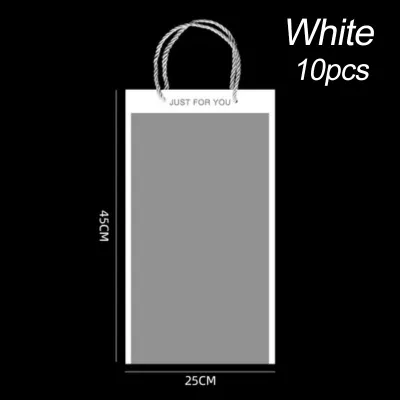
Different floral arrangements have unique structural needs that dictate the type of bag you should choose. For long-stemmed flowers, such as roses, sunflowers, or gladioluses, height is your primary concern. You need a tall, narrow bag that supports the length of the stems and keeps them from tipping over, while ensuring the top edge of the bag does not press down on or bend the upper blooms.
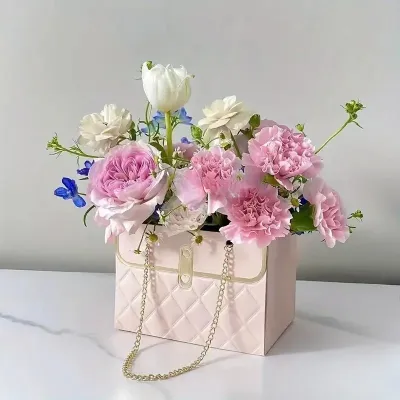
For round or dome-shaped mixed bouquets, such as those featuring hydrangeas, carnations, and dense filler greens, you must prioritize bag width and gusset depth. These arrangements require a wide-mouthed bag that allows the flowers to sit comfortably without lateral pressure. In warm, humid conditions, tightly packed petals that rub against the sides of a bag are highly susceptible to bruising, moisture buildup, and premature wilting.
If you are gifting single stems or small posies, a large bag will actually do more harm than good. In an oversized carrier, a single flower will slide around, shift, and bend during transport, which can easily snap the stem. For these delicate arrangements, select a snug, tapered sleeve-style bag that holds the stem firmly in place and keeps the flower upright.
Step 4: Evaluate Material and Structural Features
Beyond dimensions, the physical construction of the flower bag plays a vital role in protecting your arrangement. Because flowers require water to stay fresh, you must check for a waterproof inner lining or compatibility with separate water tubes. In humid environments, a standard paper bag without a moisture barrier will quickly absorb water from wet stems or condensation, causing the paper to soften, tear, and fail.
You should also verify the handle strength and base reinforcement of the bag. Bouquets can be surprisingly heavy, especially if they are arranged in wet floral foam or have a water reservoir at the base. Look for bags with thick, reinforced cardboard bases that distribute weight evenly, and ensure the handles are securely attached with rivets or heavy-duty adhesive rather than simple glue.
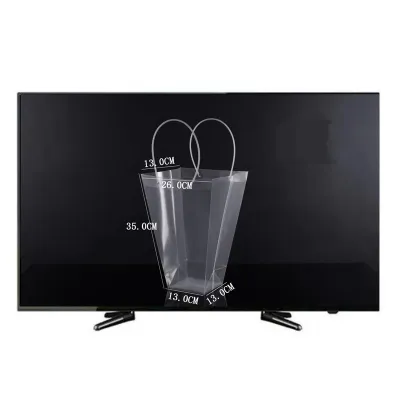
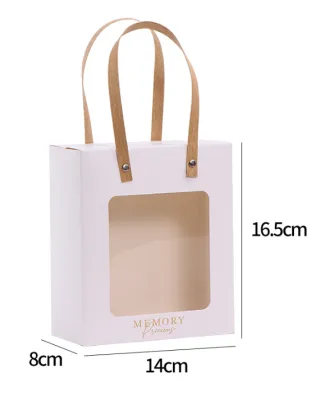
For presentation purposes, consider bags with clear viewing windows or open-top trapezoidal designs. These features allow the recipient to appreciate the beauty of the floral design immediately without needing to unbag it. This is particularly useful for formal events, graduations, or ceremonies where the flowers will be carried and photographed throughout the day.
Step 5: Verify the Fit and Final Presentation
Before finalizing your gift wrapping or setting off for transport, always perform a quick dry fit. Gently lower the wrapped bouquet into the bag without forcing it. If you feel any resistance or notice the outer wrapping paper buckling and folding inward, the bag is too small and will likely damage the arrangement over time.
Ensure there is adequate clearance at the top of the bag, ideally leaving enough space to carry the bag comfortably by the handles without your hand or the straps touching the petals. If you plan to fold, tie, or staple the top of the bag closed for transit, there must be enough empty space above the blooms to do so without compressing or bending the flowers.
If you notice the stems bending or the outer blooms pressing tightly against the sides of the bag, stop immediately and switch to a larger size. It is always better to have a slightly larger bag with a bit of extra room than to risk ruining a beautiful arrangement by forcing it into a carrier that is too small.
Frequently Asked Questions (FAQ)
Can I use a standard shopping bag instead of a dedicated flower bag?
Using a standard paper or plastic shopping bag is highly discouraged for transporting bouquets. Standard shopping bags lack the wide, flat-bottom gusset required to keep a bouquet upright, which forces the flowers to tilt and slide, often crushing the petals. Furthermore, standard bags do not feature waterproof inner linings; any water leaking from the cut stems will quickly dissolve a paper bottom, leading to a sudden and messy spill. Dedicated flower bags are specifically engineered with trapezoidal shapes, reinforced bases, and moisture barriers to ensure safe transit and a professional presentation.
How do I package an irregularly shaped or oversized bouquet?
For exceptionally wide, tall, or heavy arrangements that exceed standard bag sizes, you should avoid forcing the flowers into a tight space. Instead, use an open-top flower sleeve or wrap the bouquet in heavy-duty kraft paper, securing it with a sturdy ribbon carrier that loops under the stems. For very large arrangements, you can also use a flat-bottom floral box with built-in handles, or consult a professional florist for a custom-sized carrier. Investing a few pesos (₱) in a proper, heavy-duty carrier ensures your hard work and beautiful flowers are not ruined during transport.

Community discussion
Share your experience or ask a question. Comments are reviewed before publication.