
Choosing the right Kokuyo binder notebook requires matching the physical footprint, ring mechanism, and paper compatibility to your specific note-taking or organizational habits. Rather than looking for a single universal option, evaluate the core dimensions—size, ring profile, and refill format—to build a system that supports your daily workflow. In tropical climates like the Philippines, where high humidity can affect both paper texture and ink drying times, selecting the correct combination of binder materials and paper types is essential for maintaining clean, legible notes over time. This guide breaks down the essential comparison points to help you select the most suitable configuration for your needs.
Identify Your Primary Use Case and Size Requirements
Selecting the correct paper size and binder footprint is the first step in building an efficient note-taking system. The physical dimensions of your binder directly impact how comfortable it is to write on and how easily it fits into your daily routine. If your binder is too bulky, you may find yourself leaving it behind; if it is too small, you might struggle to fit complex diagrams, formulas, or extensive lecture notes on a single page.
Standard paper sizes offer distinct advantages depending on your environment. The A4 format is the largest common size, providing ample space for detailed mind maps, multi-column study notes, and printed handouts that you can hole-punch and insert directly. However, A4 binders require a spacious desk and a large backpack, making them less ideal for cramped lecture halls or small coffee shop tables.
Products mentioned in this guide
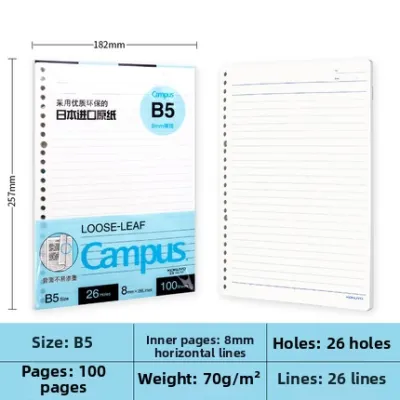
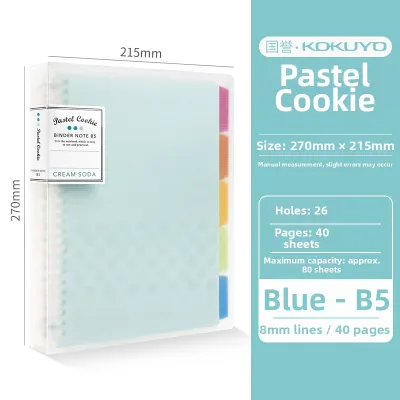
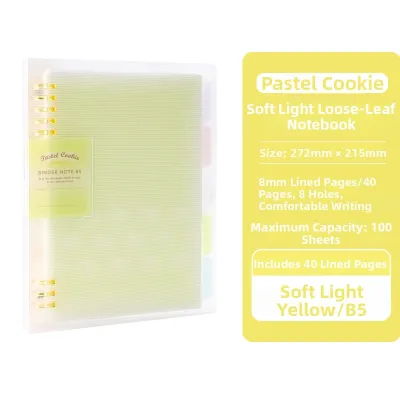
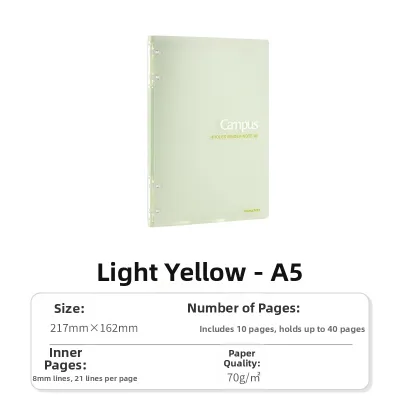
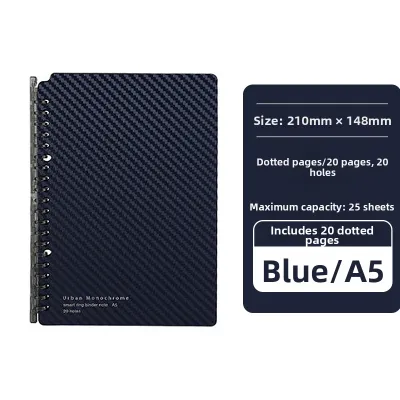
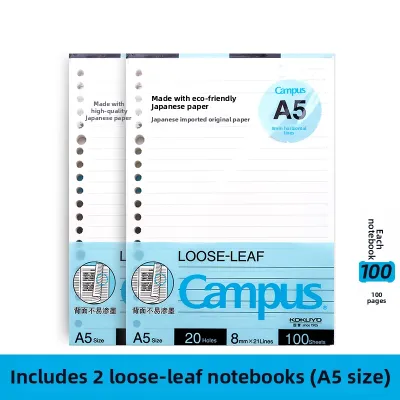
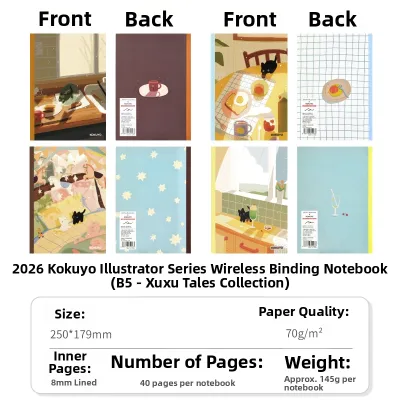
Prices are valid at publication and may change. Please refer to the product page for the latest price.
The B5 size is widely considered the sweet spot for school and office work. It is slightly smaller than standard letter paper, offering a balanced canvas that accommodates structured paragraphs while remaining highly portable. For those who prioritize mobility, the A5 size is half the size of A4, making it perfect for quick meeting minutes, daily journaling, or carrying in a compact tote bag. Additionally, slim variants like the Slim B5 reduce the outer margin of the binder shell, minimizing unnecessary bulk in your bag without sacrificing the standard B5 vertical writing height.
Before committing to a specific binder footprint, take a moment to measure your everyday bag, laptop sleeve, and typical desk space. Consider how much room you actually have when sharing a table during group study sessions or commuting on public transit. Choosing a size that matches your physical environment ensures your binder remains a practical, daily companion rather than an awkward burden.
Compare Ring Mechanisms: Standard vs. Smart Ring Designs
The ring mechanism is the structural heart of any loose-leaf binder, dictating both how much paper you can carry and how comfortable the notebook is to use. Traditional binders utilize standard ring mechanisms, typically made of rigid plastic or metal, which open wide to allow easy rearrangement of pages. These standard rings are designed for high capacity, often holding anywhere from 100 to 150 sheets of paper, making them excellent for semester-long subject archiving or comprehensive project management.

However, standard high-capacity rings come with a trade-off in portability and writing comfort. The large diameter of the rings adds significant thickness to the spine, preventing the binder from lying completely flat when open. When writing near the center margin, your hand may bump against the bulky rings, which can disrupt your writing flow. This bulk also makes it difficult to slide the binder into a tightly packed backpack without snagging on other items.
In contrast, smart ring and soft ring designs feature a low-profile, flexible spine that allows the cover to fold back a full 360 degrees, just like a spiral notebook. This design dramatically reduces the physical footprint on your desk, allowing you to study comfortably in tight spaces. The rings are designed to be thin and unobtrusive, minimizing interference with your hand while writing.
The primary trade-off for this slim profile is a significantly reduced sheet capacity, typically limited to 25 or 30 sheets at a time. To avoid damaging the mechanism, always verify the maximum sheet capacity listed on the product packaging. Overstuffing a smart ring binder can distort the plastic rings, cause pages to tear at the punch holes, or prevent the binder from closing securely.
Select the Right Paper Type and Refill Format
A binder is only as good as the paper inside it, and matching your paper to your writing instruments is crucial for a frustration-free experience. Kokuyo offers various paper finishes, most notably standard paper and ultra-smooth paper (often labeled as “Sarasara”). The smooth finish is designed to reduce friction, allowing gel pens, rollerballs, and fountain pens to glide effortlessly across the page.
However, paper smoothness and ink drying speed are closely linked, especially in humid tropical conditions. Highly coated, ultra-smooth paper preserves ink color beautifully but may slow down drying times, increasing the risk of smudging if you are a fast writer or left-handed. If you primarily use quick-drying ballpoint pens or pencils, a slightly more textured paper (often labeled as “Shikkari”) provides the tactile feedback and resistance needed for controlled, neat handwriting. Before buying refills in bulk, perform a quick smudge test with your favorite pen on a single sheet to observe how the ink behaves.
Beyond the paper finish, consider the layout format that best aligns with your note-taking style. Ruled lines are excellent for standard text and linear writing. Grid and dotted layouts provide subtle structural guides that are perfect for drawing diagrams, plotting graphs, or organizing structured bullet journals. Blank pages offer complete creative freedom but require a steady hand to keep text aligned.
Finally, always verify hole-punch compatibility when purchasing refills. Standard B5 binders require 26-hole paper, A5 binders require 20-hole paper, and A4 binders require 30-hole paper. While some third-party loose-leaf paper may physically fit, checking the exact hole spacing and margin width is essential to ensure the pages turn smoothly without catching or tearing on the rings.
Evaluate Cover Materials and Portability Features
The cover material of your binder notebook determines its long-term durability, weight, and aesthetic appeal. Rigid plastic covers, typically made of heavy-duty polypropylene, offer excellent protection for your notes. They act as a sturdy writing surface when you do not have a desk available and are highly resilient against physical wear, accidental spills, and sudden tropical downpours during your daily commute. They are also incredibly easy to wipe clean with a damp cloth.
Flexible or fabric-covered binders offer a lighter, quieter, and more tactile alternative. These covers bend slightly, allowing them to conform to the shape of a crowded bag more easily than rigid plastic. However, fabric covers can be prone to staining from ink leaks or dirt, and they may absorb ambient moisture in highly humid environments if left in unventilated spaces.
When evaluating covers, look for practical built-in features that enhance daily usability. Some binders include integrated pen holders, elastic band closures to keep the notebook securely shut in transit, or clear interior pockets for storing loose handouts, index cards, and sticky notes. These small additions can streamline your carry setup, reducing the need for a separate pencil case or folder.
Lastly, do not overlook the empty weight of the binder itself. If you plan to carry multiple binders to school or the office every day, a lightweight plastic or flexible cover will significantly reduce the strain on your shoulders compared to heavy, rigid designs. Balance your need for physical protection against the reality of carrying that weight over long distances.
Decision Framework: Which Kokuyo Binder Fits You?
To finalize your decision, synthesize your daily habits, writing preferences, and portability needs into a clear choice. If your routine revolves around a dedicated desk, extensive lecture note-taking, and long-term archiving, a standard B5 or A4 binder with a traditional high-capacity ring mechanism and a rigid plastic cover is your best option. This setup allows you to store entire semesters of work in one place and provides a durable, protective shell that keeps your pages pristine.
If you are a student or professional constantly on the move, navigating crowded commutes, and working on small, shared tables, opt for an A5 or Slim B5 binder featuring a smart ring design. The ability to fold the cover back 360 degrees saves invaluable desk space, while the lightweight, flexible cover keeps your bag light. You will need to rotate your pages more frequently due to the lower sheet capacity, but the gains in portability and writing comfort are well worth the trade-off.
Before making your purchase, always perform a quick inventory check of your existing stationery. If you already own a stock of loose-leaf paper or a specific multi-hole punch, verify that the binder’s ring count and size match your current supplies. Ensuring this compatibility beforehand saves you from the hassle of manual adjustments and guarantees a seamless integration into your existing organizational system.
Frequently Asked Questions (FAQ)
Can I use third-party loose-leaf paper in a Kokuyo binder?
Yes, you can use third-party loose-leaf paper, but you must match the exact hole count and paper size of your binder. For example, a standard B5 binder requires 26-hole paper, while an A5 binder requires 20-hole paper. It is highly recommended to test a single sheet of third-party paper for physical fit and ring clearance before purchasing refills in bulk, as slight variations in hole diameter or margin spacing can cause pages to catch when turning.
How do I prevent the binder rings from bending or breaking?
To prolong the lifespan of your binder, strictly adhere to the manufacturer’s stated maximum sheet capacity. Avoid forcing the rings open from the middle of the spine; instead, use the designated slide or push tabs if your binder is equipped with them. Never snap the rings shut when the binder is overstuffed, as this puts excessive tension on the alignment joints and can permanently warp plastic or metal mechanisms.

Community discussion
Share your experience or ask a question. Comments are reviewed before publication.