
Selecting the right permanent paint pen for car projects requires matching the ink formulation and tip design to your specific automotive surface. Because a car features diverse materials—ranging from slick clear-coated sheet metal to flexible, textured rubber tires—no single marker can handle every task. Achieving a durable, professional finish that resists the elements depends on verifying label specifications, preparing the surface meticulously, and understanding how different paint bases behave under tropical weather conditions.
Matching Paint Pen Features to Your Specific Car Task
Automotive customization and repair involve distinct physical challenges. To ensure your work does not peel, fade, or crack, you must evaluate the mechanical demands of the target surface before purchasing a marker.
Paint Pens for Scratch Touch-Ups and Minor Repairs
For fixing minor paint chips and narrow scratches on body panels, precision is paramount. Standard medium-tip markers deposit too much paint, leading to raised ridges on your car’s exterior. Instead, look for fine or ultra-fine metal-clad tips (typically 0.7mm to 1mm) to pool paint directly inside the scratch without overlapping onto the surrounding clear coat.
Products mentioned in this guide
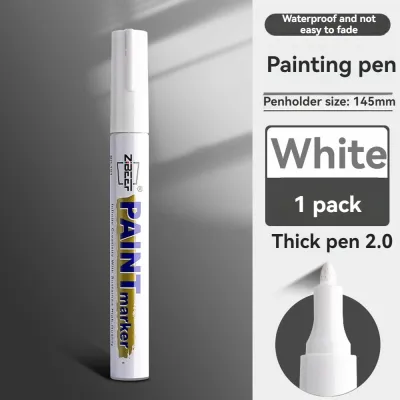
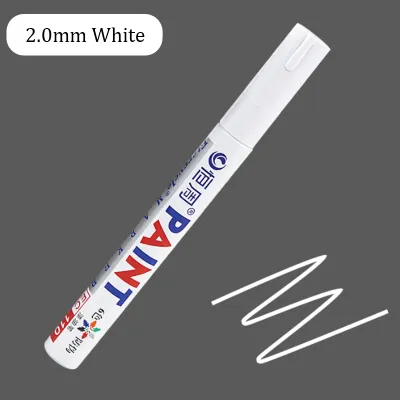
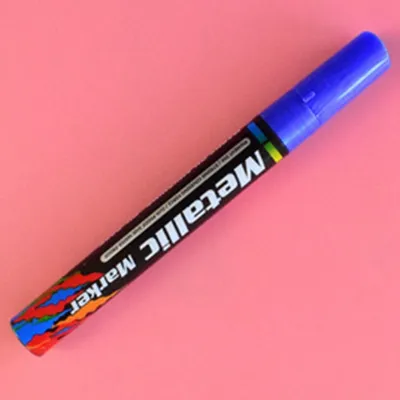
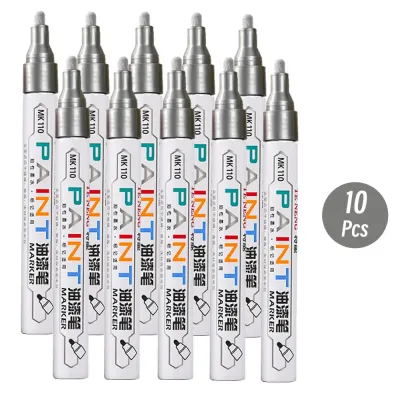
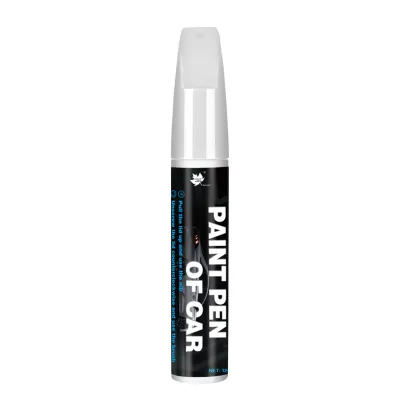
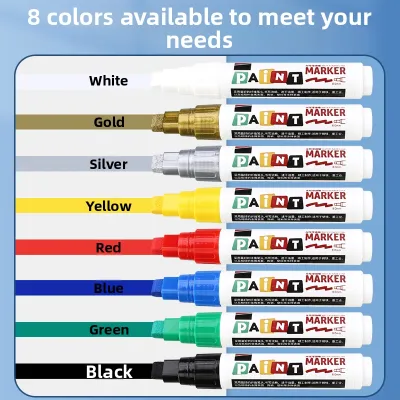
Prices are valid at publication and may change. Please refer to the product page for the latest price.
Color matching is a significant limitation with off-the-shelf markers. Standard paint pens offer generic colors that rarely match factory automotive paint codes. For exact matches, verify the manufacturer’s color code or use a dedicated clear coat pen to seal the scratch. The ink must feature high adhesion properties designed for non-porous, glossy clear coats to prevent washing away.
Paint Pens for Tire Lettering and Rubber Surfaces
Tires present a harsh environment characterized by constant flexing, high heat, road grime, and centrifugal force. To make raised lettering stand out, choose a broad or chisel tip (typically 4mm to 8mm) to fill large areas with consistent ink flow.
The ink must be highly opaque to mask the dark black rubber background in a single coat. Standard inks appear translucent on rubber. Furthermore, check the label for elastomeric or highly flexible binders. Because rubber expands and contracts with temperature changes and tire inflation, rigid paint formulations will quickly crack and flake off. Look for markers explicitly rated for rubber or flexible plastics.
Paint Pens for Custom Designs and Exterior Detailing
If you are adding custom graphics, pinstripes, or artistic illustrations to your car’s hood, side panels, or plastic trim, your project requires layering capabilities. The paint must dry to a stable, non-reactive state so that secondary colors can be applied over base layers without bleeding or lifting the underlying design.
Consider the final aesthetic by choosing between matte, gloss, or metallic finishes to complement your vehicle’s existing paintwork. More importantly, verify the UV resistance rating on the packaging. Exterior automotive surfaces endure intense sunlight, especially in tropical climates like the Philippines, where UV rays can rapidly degrade and discolor standard pigments within weeks if they lack protective stabilizers.
Key Ink and Tip Specifications to Verify on the Label
Navigating the stationery aisle or online marketplaces requires looking past marketing buzzwords and focusing on technical specifications printed on the marker barrel or packaging.

First, identify the ink base formulation. Oil-based paint markers are the traditional choice for automotive applications due to their superior water resistance, excellent adhesion to metal and glass, and durability against outdoor exposure. Acrylic-based paint markers offer vibrant colors and lower odor, but they require a protective clear coat to survive outdoor weathering. Water-based markers are generally unsuitable for exterior automotive use as they wash away easily, though they can be used for temporary window markings.
Second, examine the tip mechanism. For automotive work, valve-action (or pump-action) barrels are highly recommended. These markers feature an internal ball bearing and a spring-loaded tip that seals the ink reservoir. Pressing down on the tip opens the valve, saturating the fiber nib with fresh paint. This mechanism prevents the ink from drying out in the barrel and ensures a controlled, heavy flow of paint, which is essential for vertical surfaces like car doors or tires.
Third, check the surface compatibility labels. Do not assume a “permanent” label means it adheres to everything. Look for explicit listings of metal, rubber, glass, or hard plastics (like ABS or polypropylene). Finally, distinguish between touch-dry and full cure times. While a paint pen may feel dry to the touch within 10 to 30 minutes, it often requires 24 to 72 hours to fully cure and achieve its maximum chemical and weather resistance. Applying water or mechanical stress before this curing window closes will ruin the finish.
Surface Preparation and Application Workflow
Even the highest-quality permanent paint pen for car projects will fail if applied to a dirty or contaminated surface. Proper preparation ensures the paint bonds chemically and mechanically to the substrate.
Begin by thoroughly cleaning and degreasing the target area. Road grime, wax, silicone polish, and tire dressings are highly hydrophobic and will cause paint to bead up or peel. Wash the area with soapy water, rinse it completely, and then wipe it down with isopropyl alcohol or a dedicated wax and grease remover. Ensure the surface is entirely dry and free of lint before proceeding.
Determine if a primer is necessary. For raw, exposed metal or bare, low-surface-energy plastics, applying a thin layer of compatible primer prevents rust and improves paint adhesion. For tires, scrubbing the rubber with a stiff brush and a degreaser is critical to strip away the brown anti-ozonant wax that naturally migrates to the tire’s surface.
When applying the paint, shake the marker vigorously with the cap on for at least 30 seconds to distribute the pigments evenly. Prime the tip on a scrap piece of cardboard by pressing down gently until the ink saturates the nib; never prime the tip directly on your car’s paintwork. Apply the paint in multiple thin coats rather than one thick, heavy layer. Thin coats dry faster, cure more evenly, and are far less prone to running, sagging, or trapping air bubbles.
Pay close attention to environmental conditions. In tropical regions like the Philippines, high relative humidity (often exceeding 80%) and extreme midday heat can disrupt the drying process. Avoid working in direct sunlight, which can cause the paint to dry too quickly on the surface while remaining wet underneath, leading to wrinkling. Work in a shaded, well-ventilated area when the ambient temperature is moderate.
Tool Maintenance, Error Correction, and Safety
Maintaining your paint pens ensures they remain usable for future touch-ups and do not leak or dry out prematurely.
Store your paint markers horizontally when not in use. Storing them tip-down can cause ink to pool and clog the valve mechanism, while storing them tip-up can cause the pigment to settle at the bottom, making it difficult to re-mix. Keep them in a cool, dry place away from direct sunlight and extreme heat, which can build pressure inside the barrel and cause leaks when the cap is removed.
Mistakes happen, but they are easy to correct if you act quickly. If the paint is still wet, you can wipe it away cleanly using a microfiber cloth dampened with isopropyl alcohol or a mild mineral spirit. If the paint has fully cured, removing it requires more care to avoid damaging the underlying clear coat. You can gently scrape away excess paint using a plastic razor blade or use a fine clay bar with detailing lubricant. For stubborn spots on metal panels, a light polishing compound applied with a microfiber pad will safely buff the excess paint away.
Safety is paramount when working with solvent-based or oil-based markers. These formulations emit volatile organic compounds (VOCs) that can cause headaches or dizziness. Always work in a well-ventilated space, preferably outdoors or in an open garage. If you have sensitive skin, wear nitrile gloves to prevent the paint and cleaning solvents from causing irritation.
Frequently Asked Questions (FAQ)
Can I use a standard permanent marker instead of a paint pen?
No, standard permanent markers are not suitable for exterior automotive applications. Standard markers use dye-based inks dissolved in alcohol, which are highly translucent and lack the physical body to fill scratches or coat dark surfaces. More importantly, dye-based inks have very poor UV resistance and will fade from black to a dull purple or grey within a few weeks of sun exposure. They also lack the water and chemical resistance needed to survive rain, road salt, and car washes.
Will paint pen designs survive automated car washes?
Whether your paint pen design survives an automated car wash depends on the ink formulation, curing time, and protective coatings. Oil-based paint pens that have been allowed to cure fully for several days can withstand gentle hand washes. However, the spinning nylon brushes and harsh chemical detergents used in automated car washes can abrade and strip the paint over time. To maximize durability, verify the label’s chemical resistance, allow the paint to cure completely, and consider sealing the design with an automotive-grade clear coat spray.

Community discussion
Share your experience or ask a question. Comments are reviewed before publication.