
Finding the right plastic envelope pouch in the Philippines requires matching your paper dimensions to the internal usable space of the pouch. Because local document standards include a mix of international and regional paper sizes, choosing an incorrect pouch size can lead to bent corners, torn plastic seams, or documents that simply will not fit. To make the correct choice, you must account for document thickness, closure mechanisms, and the specific paper standards used in your school or office.
Whether you are organizing school modules, filing legal briefs, or keeping corporate contracts safe from tropical humidity, understanding how these dimensions interact is key. A pouch that is too small forces you to fold or cram your papers, while one that is too large allows documents to slide around, increasing the risk of crumpled edges. By measuring your documents and verifying the actual internal capacity of the envelope, you can ensure your files remain pristine and professional.
Standard Dimensions for A4, Legal, and Long Bond Paper
To choose the correct plastic envelope pouch, you must first understand the precise measurements of the paper sizes commonly used in offices and schools. In the Philippines, three primary paper standards dominate daily operations: A4, US Letter (often locally called “short bond paper”), and Long Bond Paper. Each of these has distinct dimensions that require specific pouch sizes to avoid damage.
Products mentioned in this guide
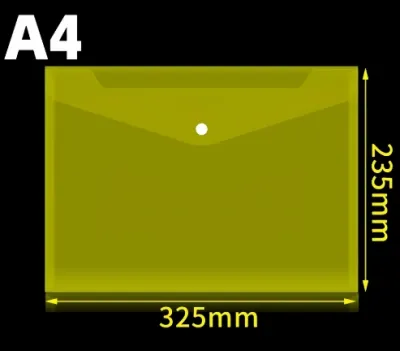
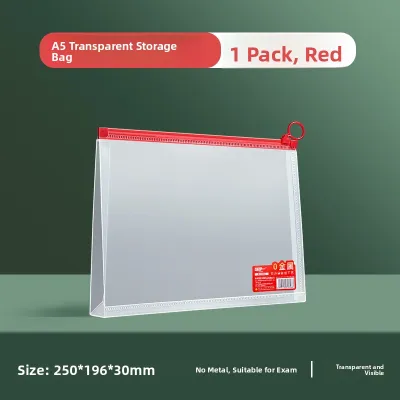
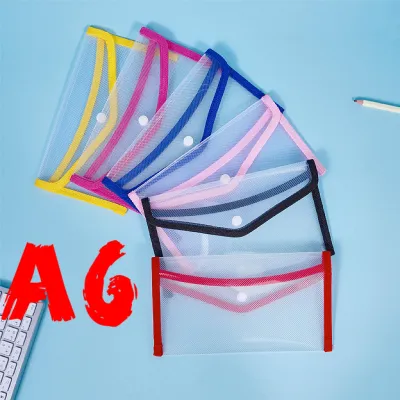
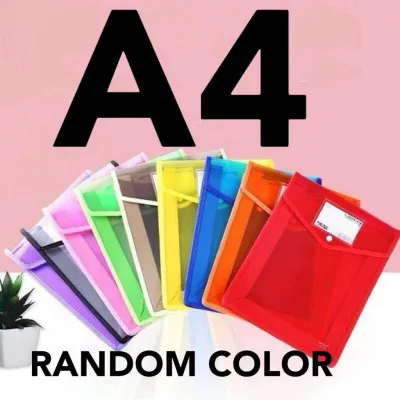
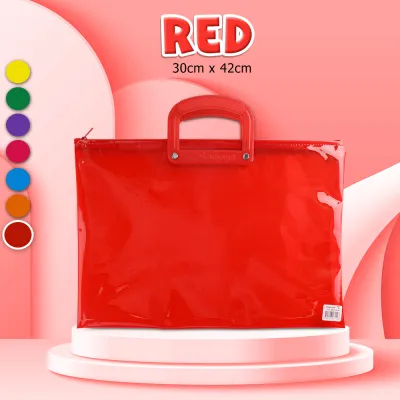
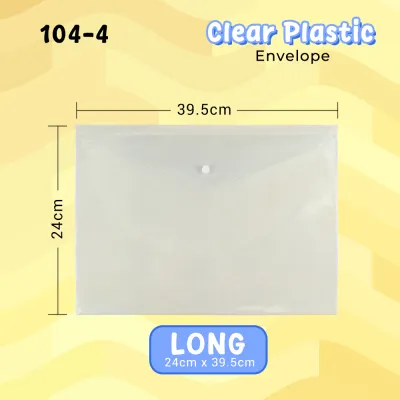
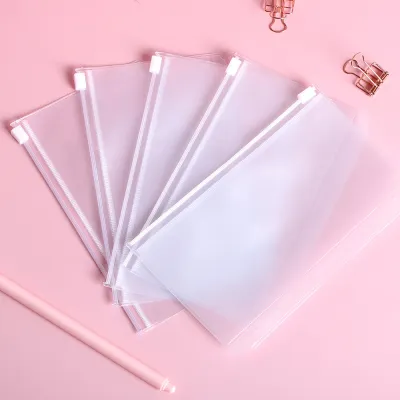
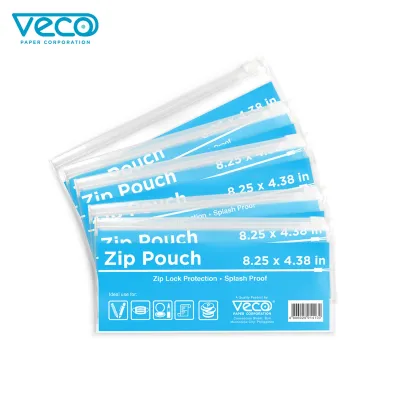
Prices are valid at publication and may change. Please refer to the product page for the latest price.
A4 paper measures exactly 210 by 297 millimeters, or 8.27 by 11.69 inches. This is the international standard widely adopted for corporate correspondence, official forms, and academic research papers. Because of its consistent proportions, finding an A4-specific plastic pouch is relatively straightforward, as most manufacturers label these clearly. An A4 pouch is designed to fit these sheets snugly without leaving excessive empty space.
The most common source of confusion in the local market lies in the difference between US Legal paper and the standard Philippine “Long Bond Paper.” Standard US Legal paper measures 8.5 by 14 inches (216 by 356 millimeters). However, the traditional Long Bond Paper widely used in local schools, government offices, and businesses actually measures 8.5 by 13 inches (216 by 330 millimeters), which is closely aligned with the international F4 or Folio size.
Because of this discrepancy, relying solely on a generic “Legal” label on a plastic envelope pouch can be misleading. Many imported pouches labeled “Legal” are designed for the longer US Legal standard of 14 inches. If you store 13-inch Long Bond Paper in a 14-inch pouch, you will have an extra inch of empty space, which can cause the paper to slide around and bend. Conversely, if you purchase a pouch designed strictly for F4 or Folio size, a true US Legal document will stick out or prevent the pouch from closing. Always check the exact inch or millimeter measurements printed on the packaging rather than relying on the name of the size.
Matching Internal Pouch Capacity to Your Documents
Once you know your paper dimensions, evaluate the actual carrying capacity of the plastic envelope pouch. A common mistake is assuming that the external dimensions of the pouch represent the usable storage space. In reality, the manufacturing process reduces the internal space available for your documents.

The external measurements of a plastic pouch include the sealed borders, welded seams, and the space required for the closure mechanism. For example, a pouch advertised as 9 by 13 inches might only have an internal usable width of 8.5 inches and a usable length of 12 inches. The heat-sealed edges on the left and right sides typically consume a quarter-inch to a half-inch of space on each side. Furthermore, closure mechanisms—such as button snaps, plastic zippers, sliding bars, or string ties—are positioned below the top edge, reducing the effective vertical clearance.
The volume of documents you plan to store also dictates the style of pouch you need. Standard flat plastic pouches are ideal for holding a few loose sheets of paper, such as certificates, single-page contracts, or a small set of forms. Forcing a thick stack of papers, a stapled report, or a bound booklet into a flat pouch will stretch the plastic, strain the seams, and crumple the edges of your documents.
For larger document volumes, expandable or gusseted plastic envelope pouches are the appropriate choice. These pouches feature folded plastic sides and bottoms that expand to accommodate thickness, often up to an inch or more. When selecting an expanding pouch, ensure that the expansion measurement is sufficient for your files. A thick stack of Long Bond Paper will not only require the standard 8.5 by 13-inch flat dimensions but will also pull the sides of the pouch inward as it expands, meaning you may need a slightly wider pouch to compensate for the depth.
Evaluating Fit and Usability Before Bulk Buying
Purchasing plastic envelope pouches in bulk for an office, school department, or business project requires careful verification to avoid wasting resources. Before placing a large order, perform a physical fit test using the actual documents you intend to store.
Start by gathering the thickest document stack that will go into the pouches. Measure the height, width, and total thickness of this stack using a standard ruler. This gives you the absolute minimum internal dimensions required. Keep in mind that paper behaves differently under humid tropical conditions; high humidity can cause paper to absorb moisture, making it slightly thicker and less rigid, which can make sliding it into a tight plastic pouch more difficult.
Acquire a single sample of the plastic envelope pouch you are considering and test it with your document stack. Slide the papers inside and observe how they sit. Check if the corners of the paper are being pressed tightly against the seams, which can cause the paper to buckle or crease over time. Attempt to close the pouch completely. If the button snap requires significant force to close, or if the zipper tension feels high, the pouch is too small for that volume of paper, and the seams are likely to split with repeated use.
Additionally, consider how the loaded pouch will be stored and transported. Test whether the filled envelope fits comfortably inside your existing filing cabinets, desk drawers, or the daily backpacks used by your staff or students. A pouch that is too tall or wide might protect the documents internally but could end up bent or crushed when forced into a tight drawer or bag, defeating the purpose of using a protective cover.
Common Sizing and Storage Mistakes to Avoid
Achieving organized and damage-free document storage requires avoiding several common pitfalls associated with plastic envelope pouches. Being aware of these mistakes can save you from ruined documents and broken organizational systems.
First, never assume that all “Legal” size pouches are identical. Because manufacturers cater to different regional markets, some “Legal” pouches are sized for US Legal (14 inches long), while others are sized for Folio/F4 (13 inches long). Storing 13-inch Philippine Long Bond Paper in a true US Legal pouch is functional but inefficient, whereas trying to fit a 14-inch legal document into a 13-inch pouch is impossible without folding the paper. Always read the fine print on the product label to verify the exact length in inches or millimeters.
Second, avoid overstuffing flat, non-gusseted pouches. Forcing too many pages into a flat envelope puts immense pressure on the heat-welded seams. Over time, these seams will split, starting at the bottom corners. Overstuffing also curves the entire pouch, which bends the edges of the documents inside and makes the envelope difficult to stack or store flat. If your document stack is thicker than a standard pencil, transition to an expanding gusseted pouch.
Finally, do not ignore the thickness and quality of the plastic material itself, which is often measured in microns or mil. Very thin, lightweight plastic pouches are highly flexible but offer minimal structural support. When these thin pouches are only partially filled, they tend to sag, fold, and crease inside bags or drawers, which in turn creases the paper inside. Opting for a medium to heavy-duty plastic thickness ensures the pouch remains rigid enough to keep your documents flat and protected, even when carrying only a few sheets of paper.
Frequently Asked Questions (FAQ)
Can I use an A4 plastic envelope pouch for Letter size paper?
Using an A4 plastic envelope pouch for US Letter size paper (locally known as short bond paper) is generally not recommended if you want a perfect fit. US Letter paper measures 8.5 by 11 inches, while A4 paper is narrower and longer at 8.27 by 11.69 inches. Because Letter paper is slightly wider, sliding a stack of Letter-sized documents into a tight, flat A4 pouch can cause the edges to catch on the seams, leading to crumpling. However, if the A4 pouch has generous margins or is an expanding style, it may accommodate Letter paper, though you will have nearly an inch of empty, unused space at the top of the pouch.
How do I store punched or bound documents in a flat plastic pouch?
Storing punched, stapled, or bound documents in a flat plastic envelope pouch requires extra care to prevent damage to both the documents and the pouch. Stapled corners, spiral bindings, and plastic comb spines create uneven thickness and sharp edges that can easily snag on the smooth inner lining of a plastic pouch. When inserting these items, the sharp metal or plastic edges can scratch or puncture the envelope, and the concentrated thickness at the binding edge can strain the seams. To store these safely, always insert the bound or stapled edge first to keep the loose paper corners from catching. For spiral-bound notebooks or thick stapled reports, it is highly recommended to avoid flat pouches entirely and use expandable gusseted pouches with reinforced edges, which provide the necessary depth and durability to handle the uneven shape.

Community discussion
Share your experience or ask a question. Comments are reviewed before publication.