
Selecting the perfect play doh ice cream set for your child is more than just picking the brightest box on the toy store shelf. The ideal choice rests on matching the toy’s mechanical complexity to your child’s physical development, fine motor skills, and interest in imaginative play. A set that is too advanced can lead to frustration and abandoned toys, while one that is too simple might fail to capture an older child’s attention for more than a few minutes.
In the Philippines, where indoor playtime is highly valued during hot summer afternoons and heavy monsoon rains, finding an engaging activity that keeps children off screens is a top priority. Modeling clay sets offer an excellent sensory outlet, but their performance is closely tied to local environmental factors. The high humidity in tropical regions can slow down the drying speed of exposed clay, yet it also means that forgotten, unsealed cans can crust over quickly under air conditioning. Understanding how to select, use, and maintain these sets ensures your investment provides long-lasting entertainment.
How to Match Play-Doh Ice Cream Sets to Your Child's Age and Skills
Toddlers (Ages 2-3)
At this stage, play is primarily sensory and exploratory. Toddlers are still developing their fine motor skills and tend to use their entire hands to squeeze, smash, and flatten objects. For these young creators, a play doh ice cream set should prioritize simplicity and safety. Look for sets that feature large, chunky hand tools, such as basic plastic cones, wide-mouthed cups, and simple stampers. These tools allow toddlers to experience the satisfying tactile feedback of shaping clay without needing precise finger control.
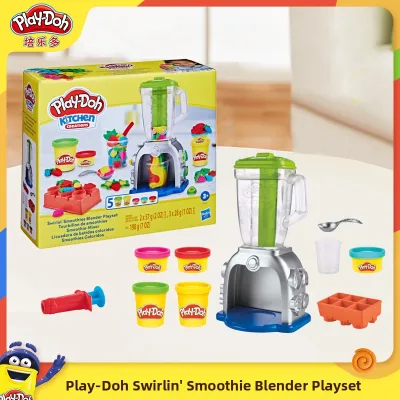
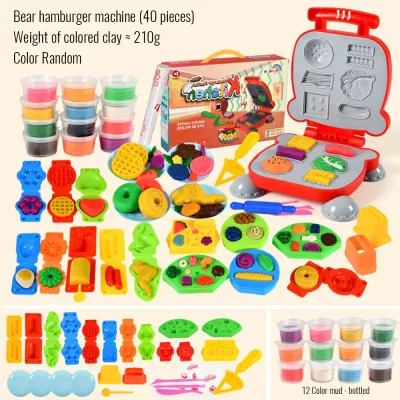
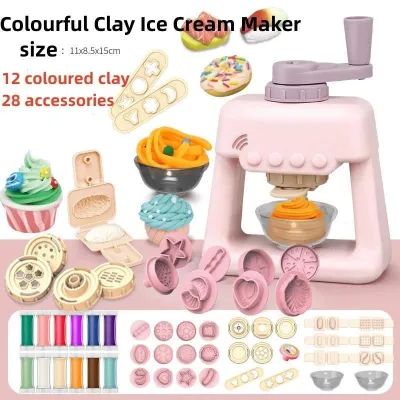
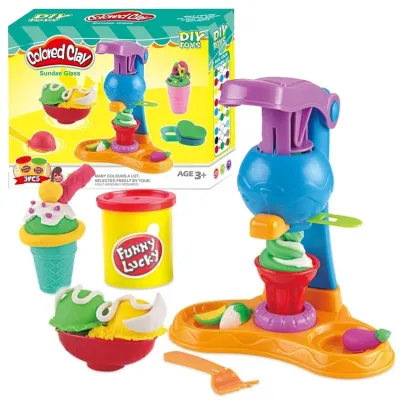
Products mentioned in this guide
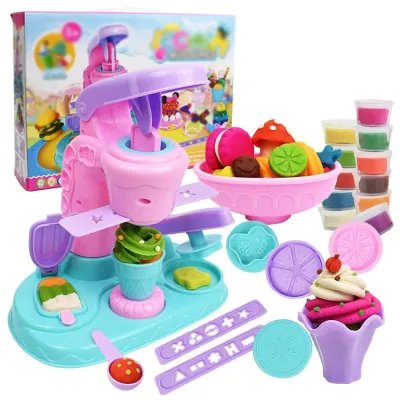
![[READY STOCK] 3D Color Clay Toy Noodle Maker Machine Toys Dough Set Ice Cream Double Twister Playdoh Play Doh Plasticine Toys](https://img.lazcdn.com/g/p/1962968714cf952001a8d26273c7432d.jpg_400x400q80.jpg_.webp)
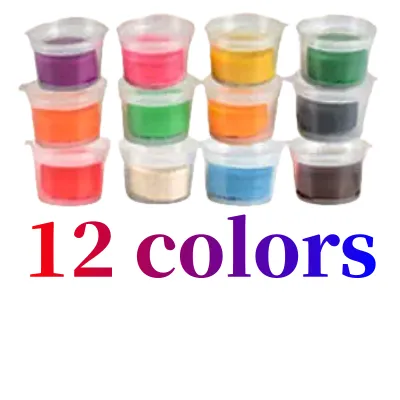
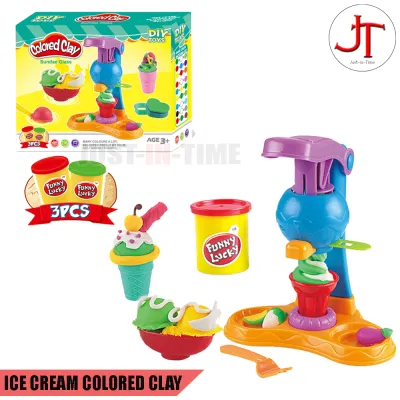
Prices are valid at publication and may change. Please refer to the product page for the latest price.
Safety is the most critical consideration for this age group. Toddlers frequently explore their world by putting objects in their mouths, making small, detailed accessories a significant choking hazard. Avoid sets that include tiny plastic cherries, miniature spoons, or intricate decorative molds. Additionally, complex mechanical extruders can be highly frustrating for a two-year-old who lacks the hand strength to press down a stiff lever. Choosing a set with large, basic components ensures a positive, independent play experience that builds confidence.
Preschoolers (Ages 4-5)
As children enter the preschool years, their hand-eye coordination and fine motor control improve significantly. They transition from simple sensory exploration to structured, imaginative play. Preschoolers are capable of executing multi-step processes, such as rolling a ball of clay, placing it inside a plastic cone, and pressing a stamper to create a textured scoop. This age group thrives on sets that offer a moderate level of physical interaction, such as hand-held squeeze extruders and stackable molds.
This developmental stage is also characterized by the rapid growth of social and narrative skills. Preschoolers love to mimic real-world scenarios, making the theme of an ice cream parlor highly engaging. They will happily spend hours crafting elaborate multi-colored treats, serving them to family members, and inventing stories about their imaginary shop. Using these tools helps refine their bilateral coordination—using both hands together to stabilize a mold while pressing down with the other—which is a crucial precursor to writing and drawing.
Older Kids (Ages 6+)
By the age of six, children possess the finger strength and dexterity required to operate intricate mechanical systems. They are no longer satisfied with basic shapes and crave high levels of detail and realism in their creations. For older kids, look for advanced play doh ice cream sets that feature elaborate soft-serve towers, crank-operated sprinkle makers, and functional cash registers. These complex mechanisms require precise, coordinated movements that challenge and satisfy their refined motor skills.
Advanced sets also sustain interest over longer periods by encouraging detailed decorating and social play. Older children enjoy the challenge of layering different colors, creating delicate swirls, and adding intricate toppings like molded chocolate chips or drizzled syrup. They are also more likely to engage in cooperative play with peers or siblings, setting up elaborate business scenarios, pricing their creations, and managing transactions. These features transform a simple craft activity into a rich, multi-layered cognitive exercise.
Types of Play-Doh Ice Cream Sets: What to Expect from Each Style
Compact and Basic Scoop Sets
For families seeking an entry-level introduction to modeling clay, compact scoop sets are an excellent starting point. These sets typically consist of essential tools like plastic cones, a classic ice cream scoop, a couple of small dishes, and a few standard cans of colored compound. Because they rely entirely on manual tools rather than large mechanical bases, they are highly portable and easy to pack.

These basic sets are ideal for specific scenarios, such as traveling, visiting relatives, or playing in limited spaces like small apartments or condominium units. They fit easily onto a standard high-chair tray or a small coffee table, keeping the play area contained. The lack of bulky plastic structures also makes them incredibly easy to store in a drawer or small toy bin when playtime is over.
However, the simplicity of these sets is also their primary limitation. Older children who have already mastered basic scooping and stacking may find the lack of variety and mechanical action less engaging over time. Without levers to pull or gears to crank, independent play sessions with basic sets tend to be shorter. They are best utilized as starter kits to gauge your child’s interest before investing in larger, more complex setups.
Ice Cream Carts and Stands
If you are looking to encourage deep, cooperative role-play, mid-sized ice cream carts and stands are an outstanding choice. These sets feature larger plastic structures that mimic real-world vending carts, complete with display shelves, canopy tops, molded-in details, and sometimes even rolling wheels. They often come with a wide array of accessories, including pretend coins, credit cards, multiple serving dishes, and dozens of built-in half-molds for creating custom toppings.
The primary benefit of a cart-style set is its ability to facilitate social interaction. When multiple children play together, the cart naturally divides roles: one child becomes the shopkeeper taking orders, while the other acts as the hungry customer. This dynamic teaches essential social skills such as turn-taking, negotiation, verbal communication, and basic math as they “pay” for their treats. The physical layout of the cart provides a clear stage for these cooperative scenarios.
Before purchasing a cart or stand, parents must carefully consider their available floor space and storage options. These sets are significantly larger than tabletop models and do not easily fold away. In a typical home, a large plastic cart will require a dedicated corner in a playroom or bedroom. If your living space is limited, assembling and disassembling a large plastic structure for every play session can quickly become a chore, making a smaller tabletop set a more practical alternative.
Soft-Serve Machines and Dispensers
Soft-serve machines represent the pinnacle of mechanical interaction in the modeling clay world. These tabletop towers feature a central chamber where clay is loaded, connected to a lever, crank, or plunger mechanism. When a child presses down on the handle, the compound is forced through a shaped nozzle, extruding a continuous, ribbed swirl that perfectly mimics real soft-serve ice cream pouring into a cup or cone.
The tactile feedback of these machines is incredibly satisfying, offering strong sensory benefits. Children who enjoy cause-and-effect toys will find endless amusement in watching a solid lump of clay transform into a beautiful, spiraled dessert through their own physical effort. The mechanical action also helps build upper-body and arm strength, as pushing the lever requires a coordinated downward press.
Despite their high play value, soft-serve machines come with clear trade-offs. They generally carry a higher price point, often sitting at the top of the toy category’s cost spectrum. They also have a larger tabletop footprint and require careful maintenance. If modeling compound is left inside the extrusion chamber, it will dry out and harden, jamming the internal gears and levers. Parents must be prepared to assist with cleaning the internal parts to prevent permanent damage to the mechanisms.
Key Features to Compare Before Making a Purchase
Clay Volume and Color Variety
When comparing different sets, look closely at the number of cans included and their individual weight. Many sets include a mix of standard 2-ounce cans and smaller 1-ounce “fun size” cans. To create multi-layered ice cream treats, a child needs a generous volume of clay in several contrasting colors. If a large, complex machine set only includes three small cans, the child will quickly run out of material during their first play session.
Furthermore, check if the set includes specialty compounds. Some premium sets feature unique textures, such as confetti-speckled clay, metallic gold compounds, or liquid “drizzle” glazes that harden into a rubbery shell over the creations. While these specialty clays add immense visual appeal, they are consumed quickly. If you choose a set with limited clay volume, it is highly recommended to purchase a separate multi-color refill pack at the same time to avoid immediate playtime interruptions.
Tool Complexity and Durability
The longevity of an ice cream set depends heavily on the build quality of its plastic components. Examine the thickness of the plastic, especially on high-stress parts like hinges, levers, and plunger shafts. Cheaper, thin-walled plastic extruders are prone to flexing and can eventually crack or snap when subjected to the force of a child trying to squeeze slightly stiff clay.
Look for designs that use thick, reinforced plastic and secure, snap-fit joints. Avoid sets with overly delicate, spindly tools that can easily be stepped on and broken in a busy playroom. If a set features a mechanical lever, check if the pivot points are sturdy and if the handle is wide enough for a child to press down comfortably with both hands without putting uneven stress on the mechanism.
Storage and Cleanup
From a parent’s perspective, how easily a toy can be cleaned and stored is just as important as how much fun it is for the child. Some ice cream sets are designed with parent-friendly features in mind, such as built-in storage drawers under the base, pegs to hold plastic cones, and dedicated slots for scoops and stampers. These features keep all the loose pieces organized and prevent them from getting lost in the bottom of a generic toy box.
Other sets may feature modular designs where the main towers can be detached from the base for flatter, more compact storage. If a set lacks built-in storage, you will need to provide a separate plastic bin to keep the numerous small molds and tools together. Prioritizing sets with smart, integrated storage solutions will save you time and frustration during daily cleanups.
Comparison of Main Set Styles
| Set Style | Best Age Group | Space Required | Mechanical Parts | Cleanup Effort |
|---|---|---|---|---|
| Basic Scoop Sets | Ages 2–3 | Minimal (Tabletop tray) | None (Manual tools) | Low (Few parts to clean) |
| Ice Cream Carts | Ages 3–6 | High (Dedicated floor space) | Low (Simple wheels/molds) | Medium (Many small accessories) |
| Soft-Serve Machines | Ages 4+ | Moderate (Tabletop base) | High (Levers and gears) | High (Requires chamber cleaning) |
Practical Tips for Playtime and Clay Maintenance
Preventing Drying
Modeling clay relies on a delicate balance of moisture to remain soft and pliable. In the tropical climate of the Philippines, high humidity can keep exposed clay soft slightly longer outdoors, but indoor air conditioning can dry it out rapidly. To prevent your clay from turning into hard, unusable lumps, always enforce a strict “seal the can” rule during playtime. Ensure the plastic lids are pressed down firmly until they click shut, preventing air from circulating inside.
If you notice the compound starting to feel slightly stiff, dry, or crumbly, you can easily restore its texture. Do not throw it away; instead, place the clay in your palm, add a few drops of clean, room-temperature water, and knead it thoroughly. If it is exceptionally dry, wrap it in a damp paper towel, place it back inside its airtight plastic can, and let it sit overnight. By morning, the moisture will have redistributed, making the clay soft and ready for play once again.
To verify the condition of your clay before starting a play session, perform a quick pinch test: roll a small piece into a ball and squeeze it between your fingers. If it cracks deeply, it requires immediate rehydration; if it leaves a wet, sticky residue on your skin, let it air dry on a clean surface for a few minutes before placing it in a mechanical extruder.
Cleaning Molds and Extruders
Intricate ice cream molds and extruder nozzles are notorious for trapping small bits of clay. If left to dry, these residues can clog the machine or mix into new colors during the next play session, ruining the clean look of the “ice cream.” To clean these parts safely, never use sharp metal objects like kitchen knives, needles, or metal paperclips. These tools can easily scratch the plastic, creating tiny grooves where bacteria can grow and making future clay even harder to remove.
Instead, allow the trapped clay to dry completely. Once dry, it will shrink slightly and can often be popped out by tapping the plastic tool against a table or using a piece of fresh, sticky clay to lift it out. For stubborn, deep-set clogs inside soft-serve nozzles, disassemble the removable plastic parts and soak them in warm, soapy water for 15 to 20 minutes. The dried clay will soften into a paste, allowing you to easily wipe it away with a soft-bristled toothbrush or a cotton swab.
Managing Messes
While modeling clay is designed to be low-mess, active play sessions can result in small crumbs falling onto the floor, where they can easily be stepped on and ground into carpets or tile grout. To keep cleanup manageable, establish a designated play zone. Laying down a large, washable silicone baking mat, a plastic tray, or an old vinyl tablecloth on the play table creates a clear physical boundary for the mess and makes sweeping up crumbs effortless.
If clay does manage to find its way onto a fabric sofa, rug, or carpet, avoid the temptation to scrub it with wet wipes or liquid carpet cleaners immediately. Rubbing wet clay will only smear the pigment deeper into the fabric fibers, causing permanent stains. Instead, let the clay dry completely until it becomes hard and brittle. Once dry, use a stiff-bristled brush to break the clay into loose crumbs, then vacuum the area thoroughly to remove all traces of the residue.
Frequently Asked Questions (FAQ)
Is Play-Doh safe if my toddler accidentally tastes it?
Yes, genuine Play-Doh modeling compound is formulated to be non-toxic and safe for children. However, it is designed strictly for play and is not food. The compound contains a high concentration of salt, which usually deters children from eating it after a single taste, but ingesting large quantities can cause an upset stomach or dehydration due to the sodium content.
Parents must also be aware that the traditional formula contains wheat derivatives. If your child has a known wheat allergy or celiac disease, playing with or accidentally ingesting the compound can trigger an allergic reaction. Always check the product packaging for specific allergen warnings, and consult your pediatrician immediately if your child consumes a significant amount or exhibits signs of an allergic response.
What should I do if the Play-Doh gets stuck in the soft-serve machine?
If the lever of your soft-serve machine becomes difficult to press, stop pushing immediately to avoid bending or snapping the plastic handle. This resistance usually indicates that dried clay has built up inside the extrusion chamber or around the nozzle. To clear the jam, carefully disassemble any removable parts of the machine according to the manufacturer’s instructions.
Soak the clogged plastic components in a bowl of warm water for about 15 minutes to soften the hardened compound. Once the clay has softened, use a blunt plastic tool, a cotton swab, or an old toothbrush to gently clear the chamber and nozzle opening. Ensure all parts are completely dry before reassembling the machine, as residual water can make the next batch of clay overly sticky and prone to clogging again.
Can I use homemade or off-brand clay in Play-Doh ice cream machines?
While it may be tempting to use budget-friendly off-brand clays or homemade salt dough in your ice cream set, doing so can damage the mechanical parts of soft-serve machines and extruders. Homemade doughs often have a different density, higher moisture content, or a grittier texture than commercial modeling compounds. These differences can cause the dough to stick aggressively to the plastic walls or require excessive force to extrude.
Using non-compatible doughs can strain the plastic gears, strip the lever mechanisms, or leave a sticky residue that is incredibly difficult to clean out. To ensure the longevity and smooth operation of your mechanical sets, it is best to stick to the official manufacturer-specified refills. Save the homemade doughs and off-brand clays for simple hand-molding, rolling, and cookie-cutter play where mechanical parts are not involved.

Community discussion
Share your experience or ask a question. Comments are reviewed before publication.