
Selecting the ideal Play-Doh set for your child requires balancing their current developmental stage with the physical characteristics of the modeling compound and its accessories. While these classic creative toys offer excellent sensory and motor-skill development, a set that is too complex can lead to frustration, while one that is too simple may fail to engage an older child. By matching the dough’s texture, the mechanical complexity of the tools, and the play themes to your child’s age, you can ensure a safe, engaging, and educational playtime experience.
In tropical environments like the Philippines, environmental factors such as high humidity and ambient temperature also play a significant role in how modeling compounds behave. Understanding how these elements affect the dough, alongside evaluating the physical coordination required for various accessories, will help you make an informed purchase that fits your home and your child’s creative needs.
Understanding Play-Doh Formulas and Textures by Age
Not all modeling compounds are created equal, and the physical resistance of the dough is the first factor to consider when choosing a set. Standard Play-Doh is formulated to provide a moderate amount of resistance, which is excellent for strengthening the small muscles in a child’s hands. However, younger toddlers who are just beginning to explore sensory play may find standard dough slightly too firm to knead comfortably. For these younger age groups, lighter or softer formulas are often recommended because they require minimal grip strength to squeeze, roll, and shape.
Products mentioned in this guide
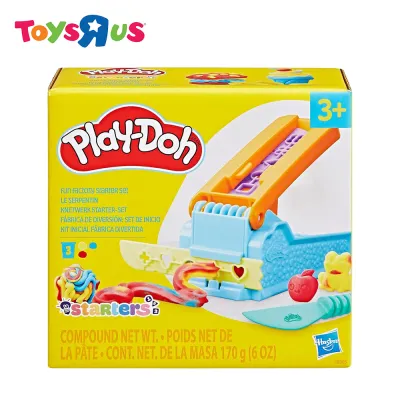
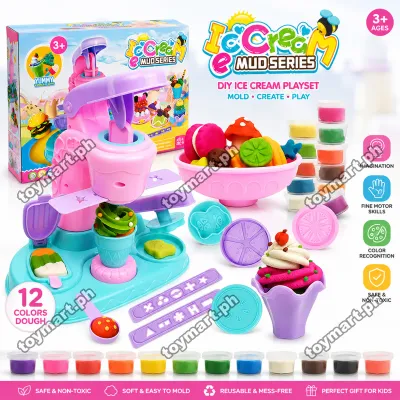
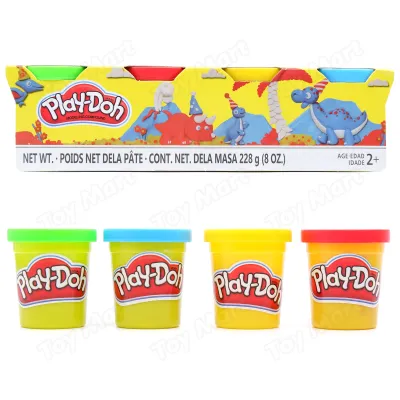
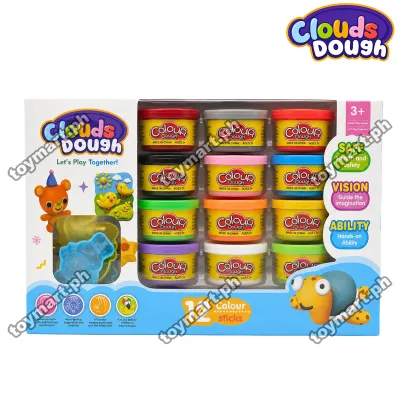
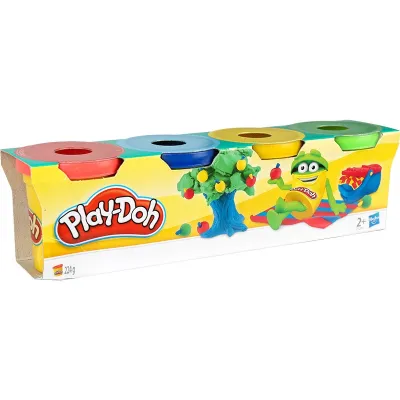
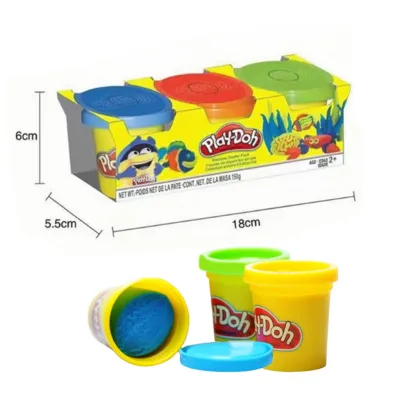
Prices are valid at publication and may change. Please refer to the product page for the latest price.
When evaluating a set, always check the product packaging for manufacturer age recommendations and specific texture descriptions. Sets designed for toddlers typically feature larger tubs of softer compound, while sets aimed at older children may include specialty formulas like metallic, glitter, or high-density compounds designed to hold fine details. These specialty variations often have different physical properties, requiring more hand strength to manipulate and shape effectively.
Parents can easily observe whether a formula matches their child’s current motor skills during play. If a child struggles to press their fingers into the dough, or if they lose interest quickly because they cannot flatten a ball of compound, the formula is likely too stiff for their current hand strength. Conversely, if the dough is too sticky, adheres excessively to their fingers, or leaves a messy residue that is difficult to peel off, it may be too soft for their skill level or may have absorbed excess moisture from high local humidity. In warm, humid climates, keeping the play area well-ventilated can help maintain the intended texture of the compound during use.
Matching Accessories and Tools to Motor Skill Levels
The tools included in a Play-Doh set are just as important as the dough itself, as they directly challenge a child’s fine motor development and hand-eye coordination. For toddlers aged two to three, the focus should be on foundational grip development. Look for sets that feature basic, chunky tools such as thick rollers, large stampers, and simple plastic cutters. These accessories are designed for a palmar grasp—where the child uses their whole hand to hold the tool—and help build bilateral coordination as they learn to hold the dough with one hand and roll or stamp with the other.

As children progress to preschool age (four to five years), their dexterity improves, allowing them to transition to more complex tools. This stage is ideal for introducing basic extruders, simple plunger-style presses, and two-part molds. These tools require a combination of finger isolation and moderate physical force. Operating a plunger, for example, teaches children how to coordinate their hands to push and pull simultaneously, which is a key milestone in fine motor control.
For school-aged children (six years and older), sets with highly detailed molds, intricate cutting tools, and multi-part mechanical assemblies are highly engaging. These accessories require a refined pincer grasp and precise hand-eye coordination to align small parts and extract detailed shapes without distorting them. When choosing these advanced sets, it is crucial to evaluate the physical force required to operate any mechanical levers or gears. If a tool requires more downward force than a child can comfortably apply with their hands, they may lean their entire body weight onto the plastic parts, creating a tipping hazard or risking damage to the toy.
Evaluating Set Complexity and Play Themes
The cognitive and imaginative stage of your child should dictate the complexity and theme of the Play-Doh set you choose. For younger children, open-ended basic sets are highly beneficial. These sets typically consist of several multi-colored tubs of dough and a few simple, non-themed tools. Without the structure of a specific theme, toddlers are free to focus entirely on sensory exploration, color mixing, and basic cause-and-effect play. This open-ended approach fosters early creativity and prevents the cognitive fatigue that can occur when a young child is forced to follow specific instructions.
In contrast, older preschoolers and school-aged children thrive on themed sets that encourage structured role-play and storytelling. Popular themes centered around cooking, baking, dentistry, or construction allow children to mimic real-world activities and engage in multi-step play patterns. For example, a toy kitchen set requires a child to roll out the dough, cut it into food shapes, place it on a plate, and “serve” it to a family member. This sequential play supports cognitive development, planning skills, and social interaction.
However, it is important to balance the number of accessories in a set to avoid overwhelming the child. A set with dozens of tiny molds, cutters, and decorative pieces can quickly lead to a cluttered play space, making it difficult for a younger child to focus on a single task. For toddlers, a small set with three to five accessories is usually sufficient. For older children, larger themed collections with numerous pieces provide the variety they need to sustain complex, imaginative play scenarios over longer periods.
Safety Checks and Supervision Guidelines for Younger Kids
Safety must always be the primary consideration when introducing modeling compounds and plastic accessories into your home. Before purchasing any set, carefully verify the manufacturer’s age warnings and choking hazard labels on the packaging. Sets labeled for children aged three and older often contain small parts that pose a significant risk to younger toddlers who are still prone to mouthing objects. Even if the dough itself is non-toxic, the plastic accessories, cutters, and small decorative pieces can easily become choking hazards.
When supervising younger children during play, keep a close eye on how they interact with the dough and tools. Toddlers may attempt to taste the salty compound, and while standard Play-Doh is non-toxic, ingestion should always be discouraged. Additionally, inspect themed sets for small, detachable parts—such as plastic eyes, tiny food toppings, or miniature utensils—that can easily be swallowed or lost. If you have children of multiple ages sharing a play space, ensure that the older child’s detailed sets are kept out of reach of the younger toddler.
Establishing a consistent storage and cleanup routine is also essential for safety and product longevity. In warm, tropical climates, leaving modeling compound exposed to the air can cause it to dry out and harden into sharp, crusty fragments. These dried bits can become tripping hazards on hard floors or accidental ingestion risks for crawling infants and pets. Teach your child to gather all the dough and seal it tightly inside its original tubs immediately after play, and store the containers in a cool, dry place away from direct sunlight to prevent the compound from degrading.
Building Your Age-Appropriate Play-Doh Shortlist
To find the perfect set for your household, you can use a simple step-by-step filtering matrix that aligns your child’s age, skill level, and your available play space. Begin by identifying your child’s developmental bracket: toddlers (ages 2–3) need soft dough and chunky tools; preschoolers (ages 3–5) benefit from simple themed sets and basic extruders; and older children (ages 6+) can handle complex mechanical sets with detailed molds. Next, consider where the play will take place. If you have a dedicated playroom or a large table, a larger themed set is manageable. If play is limited to a small highchair tray or a portable mat, a compact starter set is a much more practical choice.
Once you have defined these parameters, you can cross-reference your selected set types with local retail availability and pricing. In the Philippines, basic starter sets and multi-packs of color tubs are widely available at local toy stores and trusted online marketplaces, typically ranging from ₱200 to ₱500. These are excellent, low-risk options for introducing your child to the medium. Mid-sized themed sets generally range from ₱600 to ₱1,200, while large, complex playsets featuring mechanical components or popular character licenses can cost ₱1,500 to ₱2,500 or more.
If you are unsure of your child’s interest level or motor readiness, always start with a basic multi-pack of colors and a few simple, separate tools. This allows you to observe how they handle the dough and whether they enjoy the sensory experience without making a significant financial investment. Once they demonstrate the ability to roll, squeeze, and clean up the dough independently, you can confidently upgrade to a larger, themed collection that matches their growing imagination and fine motor skills.
Frequently Asked Questions (FAQ)
Can I mix different Play-Doh formulas in one set?
While different Play-Doh formulas are chemically compatible and safe to combine, mixing them will permanently alter their physical properties. Combining a standard dough with a softer compound, such as a lightweight or high-gloss formula, typically results in an inconsistent texture that may feel sticky or uneven. Additionally, different formulas often have varying drying times, which can make the mixed compound difficult to preserve or restore. To maintain the unique performance characteristics of specialty doughs, it is best to keep them separate and consult the manufacturer’s guidelines on the packaging before blending them.
How do I restore Play-Doh that has dried out during play?
To restore slightly dried modeling compound, first perform a visual inspection. If the dough is completely hard, crumbly, and covered in deep cracks, it has lost its structural integrity and should be discarded. However, if it is only slightly stiff or has a dry outer crust, you can rehydrate it by adding clean water one drop at a time and kneading it thoroughly to distribute the moisture. Alternatively, wrap the dry dough in a damp paper towel, place it back inside its original plastic tub, seal the lid tightly, and let it sit overnight. If the dough develops a sticky, slimy texture or shows signs of mold—which can happen quickly in warm, humid climates—discard it immediately for safety.

Community discussion
Share your experience or ask a question. Comments are reviewed before publication.