
Selecting the perfect playdough clay for your child requires balancing their physical development, cognitive goals, and safety requirements. The ideal choice is not a static, one-size-fits-all product; rather, it is a developmental progression that evolves alongside your child’s hand strength, grip style, and imaginative capabilities. While a toddler requires ultra-soft, taste-safe doughs that yield to the gentlest squeeze, an older school-aged child needs firmer, structurally sound mediums capable of holding intricate details. By aligning the material’s physical properties with your child’s developmental milestones, you can foster a frustration-free creative environment that actively supports fine motor coordination.
Quick Diagnostic: Matching Playdough to Your Child's Needs
To choose the right playdough clay, you must first evaluate how your child interacts with physical objects and where they stand on the motor-skills spectrum. Younger toddlers engage in sensory-heavy, open-ended play where squeezing, flattening, and oral exploration dominate. For this age group, ultra-soft, non-toxic, and ideally food-grade doughs are essential to ensure safety while accommodating limited hand strength. As children transition into the preschool years, their hand muscles strengthen, enabling them to roll coils, stamp shapes, and use basic plastic tools. This stage demands standard reusable doughs that offer a balance of pliability and structural support. School-aged children, possessing refined pincer grasps and goal-oriented focus, are ready to graduate to firmer clays—such as air-dry or polymer options—that allow for detailed sculpting and permanent keepsakes. Diagnosing your child’s current developmental stage ensures you purchase a material that is neither too frustratingly hard to mold nor too soft to hold its shape.
Assess Your Child's Fine Motor Skills and Play Style
Observing how your child naturally manipulates everyday objects is the most reliable way to gauge their readiness for different types of playdough clay. Pay close attention to their grasp style during play. Toddlers typically use a full palmar grasp, wrapping their entire fist around an object to squeeze or push down. If your child still relies heavily on this whole-hand movement, they will struggle with firmer modeling clays, leading to quick fatigue and frustration. Look for the emergence of the pincer grasp—using the index finger and thumb to pinch and manipulate small items—which signals that their hand muscles are ready for more precise, firm mediums.
Products mentioned in this guide
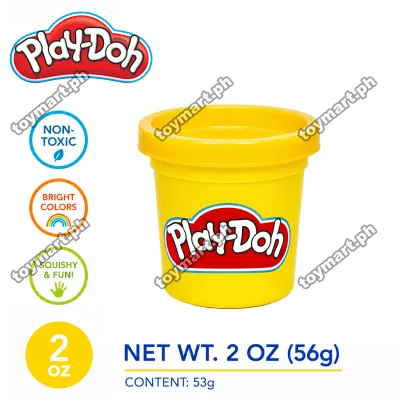
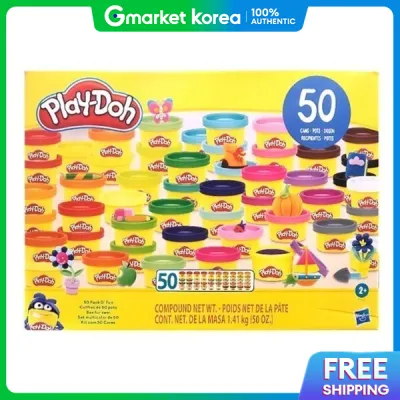
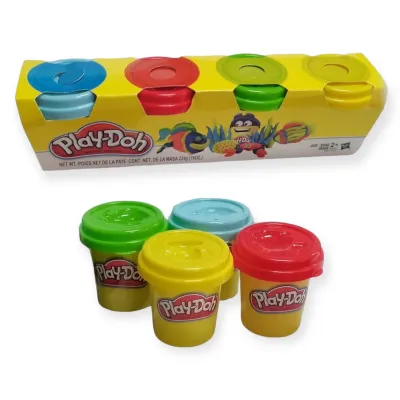
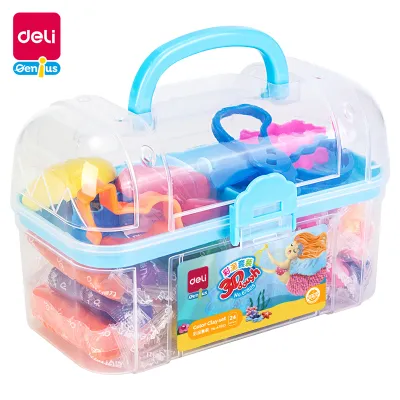

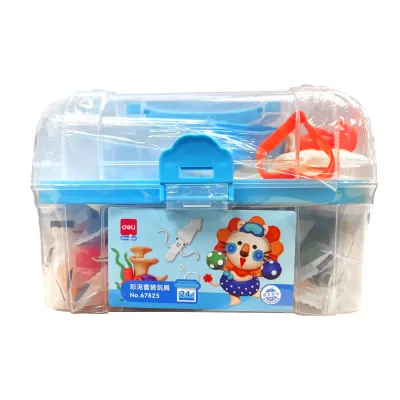

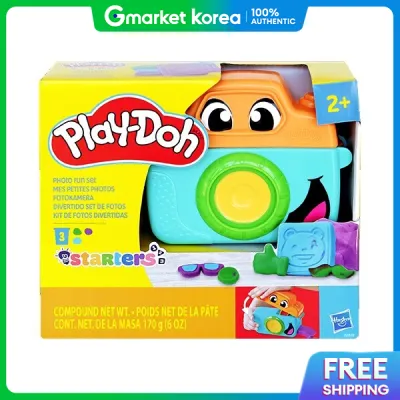
Prices are valid at publication and may change. Please refer to the product page for the latest price.

Additionally, observe whether your child’s play style is primarily sensory or constructive. Sensory play is characterized by crushing, ripping, poking, and occasionally tasting the dough. This is a vital developmental phase where the child learns about texture, weight, and cause-and-effect. Constructive play, on the other hand, involves a conscious intent to build or represent objects. You will notice your child attempting to roll uniform spheres, flatten “pancakes” to cut out shapes, or stack elements to build three-dimensional structures.
You can identify when a child is ready to graduate from basic toddler doughs to advanced modeling materials through several observable behaviors. If they can comfortably use blunt plastic scissors to cut dough, roll out thin “snakes” without breaking them, or express a desire to save their creations permanently rather than squishing them back into a tub, they are ready for firmer, structural clays. Introducing advanced materials too early can stall their enthusiasm, while keeping them on ultra-soft doughs for too long may limit their fine motor progression.
Match Clay Texture and Type to Age Groups
Toddlers (Ages 1–3): Ultra-Soft and Sensory-Focused
For children between one and three years old, the tactile experience of playdough clay is entirely about sensory discovery. At this stage, hand strength is still developing, meaning the dough must be exceptionally soft and highly pliable. Toddlers should be able to flatten, poke, and squeeze the material easily without experiencing hand fatigue. The ideal doughs are water-based and formulated with simple, food-grade ingredients, as toddlers frequently explore objects with their mouths. Because accidental ingestion is a common occurrence during this developmental window, strictly non-toxic, taste-safe formulations are non-negotiable.
When selecting dough for toddlers, avoid any products that dry into sharp, brittle fragments or contain small decorative additives like glitter, beads, or plastic charms. These additions pose severe choking hazards and can irritate sensitive toddler skin. Instead, focus on large, solid blocks of vibrant, single-color doughs that encourage broad, physical manipulation. The primary goal here is to build hand strength and bilateral coordination—using both hands together—through simple, unrestricted squeezing and pulling.
Preschoolers (Ages 3–5): Standard Pliability and Tool Use
Preschoolers are in a phase of rapid imaginative expansion and emerging hand-eye coordination. Children in this age bracket require standard modeling doughs that offer a moderate level of resistance. The material must be firm enough to hold basic three-dimensional shapes, such as spheres, cubes, and thick coils, without immediately collapsing under its own weight, yet soft enough for small hands to manipulate without strain. This balance of physical properties allows preschoolers to transition from simple sensory squeezing to purposeful, creative construction.
This is also the ideal stage to introduce age-appropriate modeling accessories. Look for kits that include sturdy, blunt plastic rolling pins, stampers, textured rollers, and simple cookie-cutter molds. Using these tools helps refine the child’s bilateral integration and teaches them how to apply controlled, even pressure. While non-toxic certification remains absolutely mandatory, the formulation at this stage can transition away from strictly edible ingredients to more durable, reusable synthetic compounds that resist drying out during extended play sessions.
School-Age (Ages 6+): Firmer Clay and Detailed Sculpting
By the age of six, most children have developed the fine motor control, finger isolation, and patience necessary to work with professional-grade modeling mediums. School-aged children benefit from firmer modeling clays, air-dry clays, and polymer clays that allow for intricate detailing, layering, and permanent preservation. These materials offer significant physical resistance, which helps strengthen the intrinsic muscles of the hand—a crucial factor for handwriting endurance and precise tool use.
These advanced clays support complex artistic techniques that are impossible with soft toddler doughs. Children can practice scoring and slipping to join separate clay pieces, blending distinct colors to create realistic gradients, and wrapping clay around wire or aluminum foil armatures to build tall, self-supporting figures. This shift from open-ended sensory play to structured, goal-oriented art projects fosters deep concentration and spatial reasoning. When introducing polymer clays that require oven-baking to cure, always check the manufacturer’s specific heating instructions to prevent overheating, and ensure an adult handles the baking process entirely to maintain safety.
Check Safety Labels, Ingredients, and Allergens
Ensuring the safety of playdough clay requires looking past generic marketing buzzwords like “natural” or “organic,” which are not legally regulated standards for toy safety. Instead, parents must verify safety by examining the packaging for recognized third-party non-toxic certifications. Look for labels such as the Art and Creative Materials Institute’s “AP Non-Toxic” seal or compliance with international toy safety standards like EN71 or ASTM D-4236. These certifications guarantee that the product has been toxicologically evaluated and contains no harmful levels of materials that could pose health risks during normal use or accidental ingestion.
Allergen awareness is another critical factor when selecting modeling materials. A significant portion of traditional, commercially available playdough is manufactured using wheat flour as its primary base. For children diagnosed with celiac disease, severe gluten sensitivities, or wheat allergies, handling these doughs can lead to skin irritation or accidental ingestion through hand-to-mouth contact. If your child has these health considerations, actively search for certified gluten-free alternatives, which are typically formulated using rice flour, soy, or synthetic starches. Always read the ingredient list carefully, as some brands may process gluten-free varieties on shared equipment.
Furthermore, pay close attention to added fragrances, artificial dyes, and preservatives. Many commercial doughs are heavily scented to appeal to children, but these synthetic perfumes can trigger flare-ups in children prone to eczema, contact dermatitis, or respiratory sensitivities. If your child has highly sensitive skin, prioritize fragrance-free, dye-free, or hypoallergenic formulations. Before introducing a new clay to your child’s routine, perform a simple patch test: have them hold a small piece of the clay in their palm for a few minutes, then observe the area over the next 24 hours for any signs of redness, itching, or swelling.
Align Clay Choice with Intended Use and Storage
To maximize the lifespan of your modeling materials, you must align your purchase with how the material will be used and stored. Clays generally fall into two categories: reusable mediums and single-use curing mediums. Reusable doughs and wax-based modeling clays are designed for repeated, open-ended free play. They should remain soft, pliable, and easy to remold over hundreds of play sessions. Conversely, single-use crafting clays, such as air-dry clay or oven-bake polymer clay, are formulated to cure into a permanent, rigid state. If your child wants to create long-lasting keepsakes, choose a curing clay; if they prefer the daily cycle of building and squishing, stick to reusable doughs.
Proper storage is vital in humid, tropical climates like the Philippines. High ambient humidity can cause water-based doughs to absorb excess moisture from the air, making them sticky, slimy, and prone to rapid bacterial and mold growth. Conversely, air-conditioned environments can dry out water-based doughs prematurely. To combat this, always store reusable playdough in airtight plastic containers immediately after play. Squeeze out as much air as possible before sealing, or wrap the dough tightly in plastic cling wrap before placing it in its container. For wax-based or oil-based modeling clays, store them in a cool, dry cupboard away from direct sunlight, which can melt the wax and cause the oils to separate.
Even with meticulous care, modeling materials will eventually degrade. Inspect the clay regularly for observable signs of degradation. If you notice any unusual dark spots, fuzzy patches, or a sour, musty odor, this indicates mold or bacterial growth, and the clay must be discarded immediately. Other signs of expiration include irreversible crumbling, a greasy film on the surface caused by oil separation, or a stiff, hard texture that fails to soften even after targeted rehydration. Regularly cycling out old clay keeps your child’s play area sanitary.
Frequently Asked Questions (FAQ)
Can I make safe playdough at home for my toddler?
Yes, making homemade playdough is an excellent, cost-effective way to control the exact ingredients your toddler handles. By using kitchen staples like wheat flour (or rice flour for a gluten-free version), cream of tartar, salt, water, and vegetable oil, you can create a highly pliable, taste-safe dough. However, keep in mind that homemade dough lacks the industrial preservatives found in commercial options. It has a significantly shorter shelf life—typically lasting only a few weeks to a couple of months—and is more susceptible to mold growth, especially in humid environments. Always store homemade dough in the refrigerator when not in use and inspect it before each play session.
How do I revive playdough that has dried out in a humid climate?
If a water-based playdough has become slightly stiff or crumbly, you can often restore its pliability by adding moisture back into the compound. Wrap the dry dough in a damp paper towel, place it back inside its airtight container, and let it sit overnight to absorb the moisture evenly. Alternatively, you can place the dough in a bowl and knead in a few drops of water or a tiny drop of baby oil or glycerin until it regains its smooth texture. However, if the dough has dried into a rock-hard solid, has begun to grow mold, or has developed a greasy, separated film, it is too far gone and should be discarded to protect your child’s health.

Community discussion
Share your experience or ask a question. Comments are reviewed before publication.