
When planning bullet journal spreads or scrapbook pages, vinyl wave stickers offer a versatile way to add movement, frame sections, and enhance visual themes. However, selecting the right stickers requires more than just picking an appealing design. The longevity of your journal, the legibility of your layouts, and the overall aesthetic depend heavily on material quality, adhesive strength, dimensional accuracy, and paper compatibility. This guide breaks down the essential evaluation criteria to help you build a reliable shortlist of vinyl wave stickers tailored to your specific crafting and journaling needs.
Using wave stickers is an excellent way to introduce organic movement into the rigid structure of a journal. Whether you want to frame a memorable photograph, divide your weekly layout into clean sections, or track your daily habits, these curved elements break up the monotony of straight lines. However, because stationery items behave differently depending on how they are manufactured and stored, taking a systematic approach to your selection ensures your creative projects remain pristine over time.
Evaluating Vinyl Materials and Adhesive Strength
Standard vinyl stickers are typically thin and highly flexible, making them ideal for low-profile journal pages that need to lie flat. In contrast, waterproof or tear-resistant vinyl variants offer enhanced durability, which is highly beneficial for scrapbook covers or pages that undergo frequent handling. While thicker vinyl provides a tactile, premium feel, it can also add unnecessary bulk to your notebook, so choosing the right thickness is a balancing act between durability and page volume.
Products mentioned in this guide
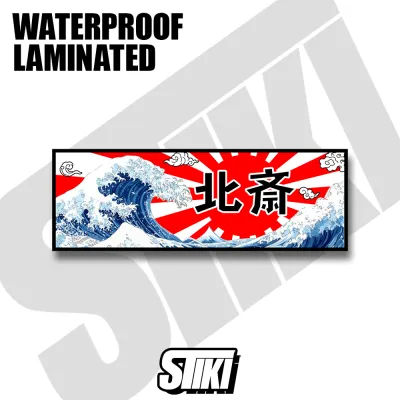
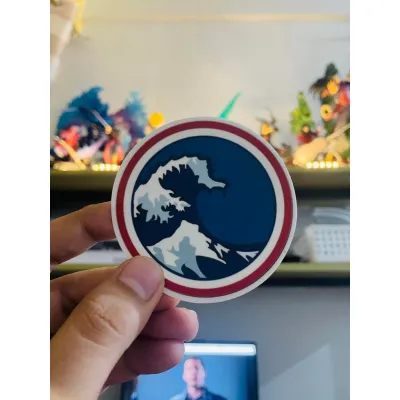
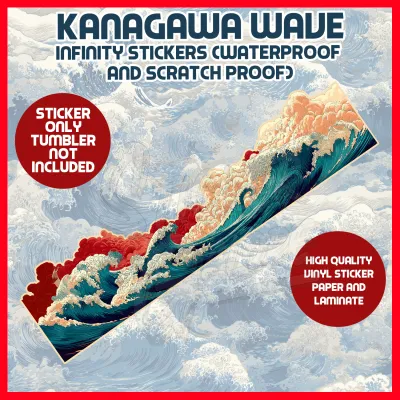
Prices are valid at publication and may change. Please refer to the product page for the latest price.
The choice between permanent and repositionable adhesives depends entirely on your journaling style and project goals. Permanent adhesives are excellent for archival scrapbooking, ensuring that your carefully curated layouts remain intact for decades without lifting at the corners. Repositionable adhesives, often found on low-tack vinyl, are far more forgiving for daily bullet journaling, allowing you to peel and adjust the wave border if you misalign it during application.
Reviewing manufacturer specifications for material thickness and flexibility is crucial to prevent your notebook from bulging. When multiple pages are decorated with thick stickers, the notebook can experience a phenomenon where the book refuses to close flat. Opting for ultra-thin, flexible vinyl sheets helps maintain the structural integrity of your journal, allowing the pages to turn smoothly and the book to close compactly.
Environmental factors also play a significant role in adhesive performance, especially in tropical climates like the Philippines. High humidity can soften certain adhesives, causing them to become sticky or slide, while also causing the organic fibers of your journal paper to expand. Selecting high-quality, moisture-resistant vinyl ensures that the adhesive bond remains stable and the edges of your wave stickers do not lift or curl when exposed to warm, humid air.
Matching Wave Sizes and Formats to Your Layouts
Vinyl wave stickers are generally available in two formats: continuous rolls, similar to decorative tape, and individual die-cut sheets. Continuous rolls are highly efficient for running long, uninterrupted borders across a double-page spread or framing large scrapbook layouts. Individual die-cut wave elements offer pre-measured, distinct curves that are easier to place as accent pieces around headers, mood trackers, or small daily boxes.

To ensure your wave stickers look intentional and neat, compare their dimensions with your journal’s grid size. Most bullet journals utilize a standard 5mm dot grid, so choosing a wave with an amplitude or wavelength that aligns with 5mm increments makes layout planning much simpler. A wave that matches your grid allows you to align the crests and troughs perfectly with your writing lines, maintaining a clean and organized visual structure.
The width of the wave sticker determines its visual weight and function within your layout. Thin wave stickers, ranging from 2mm to 5mm, act as delicate dividers, subtle underlines for titles, or minimalist accents that do not crowd the page. Wider wave stickers, measuring 15mm or more, serve as bold structural elements, background textures, or decorative frames that anchor the entire page design and draw immediate attention.
When planning your page composition, consider how the direction of the wave guides the reader’s eye across the spread. Horizontal waves naturally lead the eye from left to right, making them perfect for separating morning and evening logs. Vertical or diagonal waves can be used to frame photographs or highlight specific text blocks, creating a dynamic flow that makes your journal spreads both functional and visually engaging.
Choosing Colors and Finishes for Your Journal Theme
The finish of your vinyl wave stickers significantly influences the overall mood of your journal spreads. Matte finishes offer a soft, non-reflective look that blends seamlessly with the texture of your paper, creating a cohesive and understated aesthetic. Glossy finishes, on the other hand, make colors pop and stand out, while holographic or foil-stamped waves catch the light beautifully, adding a touch of elegance to milestone pages or cover designs.
Design variations allow you to tailor your stickers to specific monthly or weekly themes. Minimalist line-art waves work beautifully for clean, productivity-focused layouts, while detailed watercolor ocean waves are perfect for summer travel spreads. You can also find abstract geometric ripples or traditional patterns that support your visual narrative, ensuring that the stickers complement rather than clash with your handwriting and drawings.
Opacity is another critical factor to consider, especially if you plan to layer your stickers over other elements. Semi-translucent or transparent vinyl wave stickers allow underlying grid lines, stamps, or handwritten text to remain visible, making them excellent for layering. Opaque vinyl stickers are ideal for blocking out mistakes, covering up unwanted lines, or creating high-contrast borders that completely mask the paper underneath.
When selecting color palettes, aim for harmony with your existing stationery collection. If your journal spreads rely on warm, earthy tones, look for wave stickers in terracotta, mustard, or olive green. For cool, calming layouts, classic blues, teals, and seafoam greens are highly effective. Keeping a consistent color story across your spreads prevents visual clutter and makes your journal feel like a curated work of art.
Verifying Paper Compatibility and Surface Adhesion
The weight and texture of your journal paper directly affect how well vinyl stickers adhere. Standard notebook paper, which typically ranges from 80gsm to 100gsm, is thin and delicate, making it susceptible to warping or tearing if a sticker is too heavy or has an overly aggressive adhesive. Thicker papers, such as 120gsm to 160gsm cardstock, handle vinyl stickers easily but may require firmer pressure to ensure a secure bond if the paper has a textured surface.
To avoid ruining a carefully planned layout, always perform a small-scale adhesion test before committing to a full page. Apply a small scrap of the vinyl sticker to an inconspicuous area, such as the very back page of your notebook, and leave it for twenty-four hours. Gently peel it off at a flat angle to observe if it lifts the paper fibers, leaves a sticky residue, or tears the page, which will help you determine the sticker’s compatibility with your paper.
Chemical compatibility between the vinyl adhesive and your writing instruments is also essential. Some adhesives can react with slow-drying gel pens, fountain pen inks, or fresh watercolor washes, causing the ink to smudge or feather. To prevent this, ensure that all inks and paints are completely dry and cured before applying stickers over them, and avoid placing heavy adhesive directly over delicate, water-soluble inks.
Because vinyl is synthetic and paper is organic, they react differently to environmental changes like humidity. In tropical climates, paper absorbs moisture from the air and expands slightly, while the vinyl sticker remains rigid and stable. This difference in expansion can cause the paper to warp or buckle around large, solid stickers. Using thinner wave borders or smaller, spaced-out die-cut elements helps distribute this tension and keeps your pages flat.
Building Your Shortlist: Pre-Purchase Verification
When shopping for vinyl wave stickers online, product photos can sometimes be misleading regarding scale. A sticker that appears large and prominent in a stylized mockup might actually be quite small in reality. Always cross-reference the product listing images with the explicitly stated dimensions in the description, and use a physical ruler to visualize how the waves will fit within your specific journal’s dimensions.
Calculating the cost-effectiveness of your purchase requires looking closely at the quantity provided. Check whether the listing is for a single sheet, a multi-pack, or a continuous roll, and calculate the total length or number of individual stickers you receive. This helps you manage your stationery budget in Philippine Pesos (₱) and ensures you have enough matching stickers to complete a consistent theme throughout your entire journal or scrapbook.
The cutting method used for the sticker sheet affects how easy it is to use during your crafting sessions. Kiss-cut sheets have the wave shapes pre-cut into the vinyl layer while leaving the backing paper intact, allowing for quick and easy peeling. Die-cut stickers are cut completely through both the vinyl and the backing, which is great for organizing individual pieces but can sometimes be more challenging to peel if the backing paper lacks a split-back design.
Finally, review the seller’s specifications regarding print quality and backing material. High-quality vinyl stickers should feature crisp, high-resolution printing with no color bleeding or pixelation along the curved edges of the waves. Sturdy, moisture-resistant backing paper is also essential, as cheap paper backings can tear easily or stick permanently to the vinyl when stored in warm, humid conditions, ruining the stickers before you can use them.
Frequently Asked Questions (FAQ)
Can vinyl wave stickers be applied over wet ink or watercolor washes?
Applying vinyl wave stickers over wet ink or watercolor washes is not recommended. Water-based media must dry completely before you apply any adhesive, as trapped moisture under the vinyl cannot evaporate. This trapped moisture will degrade the adhesive, cause the sticker edges to curl, and potentially lead to paper warping or discoloration over time. For heavily textured watercolor washes, ensure the page is completely dry and flat, then press the sticker down firmly from the center outward to ensure maximum contact.
How do I store leftover vinyl sticker sheets to prevent curling?
To prevent leftover vinyl sticker sheets from curling or warping, store them flat in a cool, dry place away from direct sunlight. High humidity and temperature fluctuations can cause the backing paper and the vinyl layer to expand and contract at different rates, leading to curling edges and weakened adhesive. Keep your sticker sheets inside rigid plastic sleeves, a dedicated sticker book, or a flat binder. Placing a heavy book on top of the storage folder can also help keep the sheets perfectly flat and ready for your next journaling session.

Community discussion
Share your experience or ask a question. Comments are reviewed before publication.