
Finding the right white permanent marker requires understanding how different ink formulations interact with your specific writing surfaces. Whether you are labeling storage bins, organizing workshop tools, or working on a creative craft project, the ideal choice depends on matching the pen’s tip size, ink delivery mechanism, and durability features to your task. In humid tropical environments, where moisture and heat can affect how ink dries and adheres, selecting a high-quality instrument like a Pentel white permanent pen ensures your markings remain crisp, visible, and long-lasting.
To make an informed purchase, you must look beyond generic product titles and evaluate the physical specifications of each marker model. This guide outlines the essential factors to consider, including surface compatibility, tip styles, ink properties, and ergonomics, helping you choose the exact tool that fits your workflow.
Identify Your Marking Surface and Environment
The material you intend to mark is the most critical factor in choosing a white permanent pen. Surfaces generally fall into two categories: porous and non-porous, each requiring different ink behaviors for optimal adhesion. Porous materials, such as cardboard boxes, untreated wood, paper, and canvas, absorb ink quickly. For these surfaces, you need a marker with a steady ink flow that will not bleed excessively into the fibers or lose its opacity as it sinks into the material.
Products mentioned in this guide
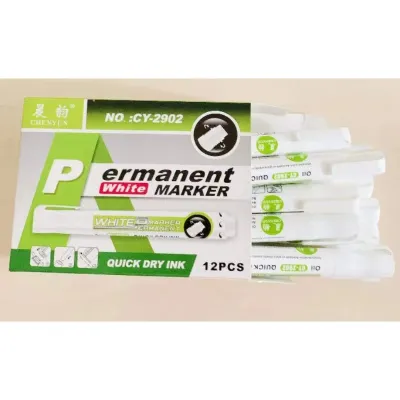
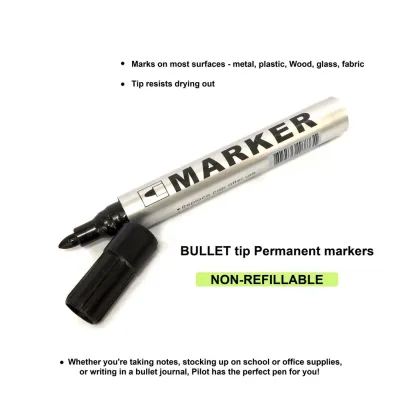
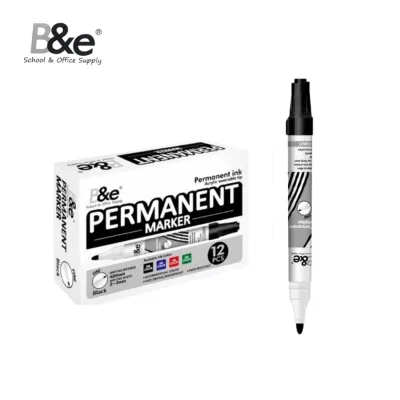
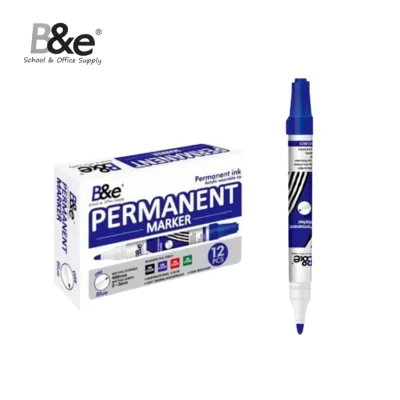
Prices are valid at publication and may change. Please refer to the product page for the latest price.
Non-porous surfaces, including glass jars, metal pipes, glazed ceramics, and plastic containers, do not absorb ink at all. On these materials, the ink must dry entirely on the surface to form a durable, cohesive film. When marking non-porous items, it is vital to check the product packaging or the manufacturer’s official documentation for specific surface compatibility claims. Some markers are formulated specifically for smooth, slick surfaces, while others may smudge or peel off easily if the material is not prepped or if the ink lacks the necessary binding agents.
Environmental conditions also play a significant role in how well your markings hold up over time. In regions with high ambient humidity and warm temperatures, such as the Philippines, moisture in the air can slow down drying times significantly. If you are marking items stored in damp environments, outdoor spaces, or cold storage, you must verify that the pen’s label explicitly states water-resistant or weatherproof properties. Physical friction is another hazard; markings on high-touch items like tools or light switches will wear away quickly unless the ink is formulated to resist smudging and abrasion.
Match the Pen Tip to Your Precision Needs
The shape and size of a pen’s tip directly influence both the legibility of your writing and the speed at which you can complete your marking tasks. When working with white ink on dark or textured backgrounds, line width is crucial for visibility. A line that is too thin may get lost in the texture of a rough wooden plank, while a line that is too thick can make small labels on plastic vials completely unreadable.

To ensure you get the exact line profile required for your project, avoid relying solely on marketing terms like “fine,” “medium,” or “bold,” as these classifications vary widely between different brands and product lines. Instead, look for the precise millimeter measurements provided in the manufacturer’s technical specifications. Knowing the exact tip dimension allows you to plan your layouts accurately and select a tool that matches your precision requirements.
Bullet and Round Tips for General Labeling
Bullet and round tips are the standard choice for everyday writing and labeling tasks. These tips maintain a consistent line width regardless of the angle at which you hold the pen, making them highly predictable and easy to control. If you are writing legible text on storage boxes, labeling plastic bins, or marking black folders, a bullet tip provides the uniform stroke necessary for clear, readable characters.
However, round tips do have limitations when it comes to specialized tasks. Because they produce a single, fixed line width, they are not ideal for filling in large solid areas quickly, as this can result in visible streaks and uneven coverage. Additionally, if your project requires calligraphic variation or highly detailed, microscopic lines, a standard bullet tip may prove too restrictive.
Chisel and Fine Tips for Detail and Coverage
Chisel tips feature an angled edge that allows you to produce both broad strokes and thin lines with a single marker. By adjusting the angle of the pen relative to the writing surface, you can use the flat edge to block out large areas of color or use the sharp point for quick, medium-width lettering. This versatility makes chisel tips excellent for industrial marking, creating large signs, or working on broad craft surfaces where speed and coverage are paramount.
Fine and ultra-fine tips, on the other hand, are engineered specifically for intricate detailing and working in confined spaces. If you need to mark small electronic components, write detailed notes on dark laboratory slides, or add delicate highlights to an art piece, a fine tip offers the necessary control. These tips deliver a highly concentrated, thin stream of ink, allowing you to maintain legibility even when writing in spaces only a few millimeters wide.
Evaluate Ink Properties and Drying Times
White permanent ink differs significantly from standard black or colored inks because it relies on heavy white pigments, such as titanium dioxide, to achieve its opaque finish. Because these pigments are dense, they tend to settle at the bottom of the pen barrel when not in use. To address this, many high-quality white markers utilize a valve-action mechanism. When buying, check the product label for instructions to “shake well” or “pump the tip.” These instructions indicate a valve-action design, which uses an internal ball bearing to mix the pigment and a spring-loaded tip to control the flow of ink.
Drying time is another critical specification to evaluate, especially when working in humid conditions. On non-porous surfaces, slow-drying ink is highly susceptible to smudging, running, or transferring to your hands. While manufacturer packaging may claim “quick-drying” capabilities, these tests are often conducted under controlled, low-humidity laboratory conditions. In practical daily use, expect drying times to be slightly longer on non-porous plastics and metals, and perform a small test stroke in an inconspicuous area to verify that the ink has fully cured before handling the object.
Furthermore, you should carefully verify any claims of water resistance, fade resistance, or smear-proofing directly from the official product packaging. Do not assume that all permanent markers are impervious to water or sunlight. If your marked items will be exposed to direct sunlight on a balcony, or subjected to frequent washing in a kitchen, look for UV-resistant or industrial-grade formulations on the label to ensure the white pigment does not yellow, fade, or wash away over time.
Compare Ergonomics and Ink Capacity
The physical design of the marker barrel affects both user comfort during prolonged tasks and the overall lifespan of the pen. If you plan to use the marker for extended labeling sessions, look for an ergonomic barrel shape. Round barrels are comfortable for standard grips, but they can easily roll off inclined workbenches or desks. To prevent this, some markers feature flat-sided caps, integrated pocket clips, or faceted barrels that keep the pen securely in place when set down.
Ink capacity is another practical consideration, particularly for high-volume industrial or crafting projects. Opaque white paint markers generally consume ink faster than standard dye-based markers because of the thickness of the pigment layer. While some markers feature a visible ink window to help you monitor the remaining level, most rely on opaque metal or plastic barrels. In these cases, check the product specifications for the stated ink volume in milliliters.
For frequent users, budgeting for your tools involves comparing the cost-effectiveness of different packaging options. While a single marker represents a modest investment, purchasing multi-packs or boxes of a dozen can lower the cost per unit significantly. Additionally, check if the specific model line offers refillable options or replaceable tips, which can reduce waste and provide long-term savings for busy workshops or studios.
How to Verify Specifications When Buying Online
When purchasing stationery and marking tools from e-commerce platforms, it is easy to encounter inaccurate listings, outdated product photos, or counterfeit items. To protect your investment, always cross-reference the exact manufacturer model number listed on the online store with the official catalog or authorized distributor websites. A single letter difference in a model code can represent a completely different tip style, ink formulation, or pack size.
Carefully inspect the product photos provided by the seller. Look for high-resolution images of the physical product packaging rather than generic digital renders. The packaging should clearly display the brand name, the exact color shade (ensuring it is a true, opaque white rather than a translucent silver or off-white), the tip type, and any relevant safety or environmental certifications. If the packaging text is in a foreign language, use translation tools or consult official distributor guides to verify that the specifications match your requirements.
If an online listing lacks detailed specifications, uses vague terms like “multi-purpose white pen,” or displays inconsistent packaging designs across different photos, proceed with caution. In such cases, contact the seller directly to ask for clarification on the model number and tip size. If the seller cannot provide clear, verifiable details, it is best to source the item from an authorized stationery dealer or an official brand store on the platform to ensure you receive a genuine, high-performing product.
Frequently Asked Questions (FAQ)
Why does the white ink sometimes come out clear or streaky?
White permanent ink relies on heavy pigments that naturally settle over time. If the pen is not shaken thoroughly before use, the liquid carrier medium will flow out without enough pigment, resulting in a clear, watery, or streaky line. To resolve this, shake the pen vigorously with the cap securely on to allow the internal mixing ball to blend the ink. Then, gently press the tip down on a scrap piece of paper to prime the valve and draw the mixed pigment to the nib. If the ink remains streaky after proper priming, or if the tip has become frayed and dry, the internal mechanism may have failed, or the ink supply may be depleted, indicating it is time to replace the pen.
Can I use a white permanent marker on dark fabric?
While standard white permanent markers can leave a visible mark on dark fabrics, they are not designed to withstand the mechanical agitation and chemical exposure of laundry cycles. Standard permanent ink may bleed into the fabric fibers, fade quickly after washing, or stiffen the material. For marking textiles, you should look for specialized fabric markers or laundry pens that explicitly state washability and fabric compatibility on their labels. Always check the product instructions, as some fabric-specific inks require heat-setting with an iron to become fully permanent and wash-resistant.

Community discussion
Share your experience or ask a question. Comments are reviewed before publication.