
Finding the correct lead size for your mechanical refill pencil is essential to prevent frustrating jams and ensure a smooth writing experience. Unlike traditional wooden pencils that you sharpen down, a mechanical pencil relies on a precise internal metal or plastic clutch mechanism designed to grip one specific lead diameter. Inserting a lead that is even a fraction of a millimeter too small or too large will cause the pencil to slip, clog, or fail entirely. In the tropical climate of the Philippines, where high humidity can soften paper and affect writing friction, matching the exact lead size and hardness to your tool is the first step toward clean, smudge-free notes.
Where to Find the Lead Size on Your Pencil and Packaging
Most manufacturers print or engrave the required lead diameter directly onto the body of the mechanical pencil. When inspecting your writing tool, look closely at the barrel, particularly near the pocket clip, the grip section, or on the push-button cap at the top. The size is typically indicated by a small decimal number, such as 0.3, 0.5, or 0.7, sometimes accompanied by “mm” for millimeters.
It is important to distinguish these diameter measurements from lead hardness grades. If you see markings like HB, B, or 2B, these refer to the darkness and softness of the graphite mixture, not the physical thickness of the lead. A pencil marked “0.5 HB” requires 0.5mm refills, while the “HB” tells you the default hardness grade supplied with the tool.
Products mentioned in this guide
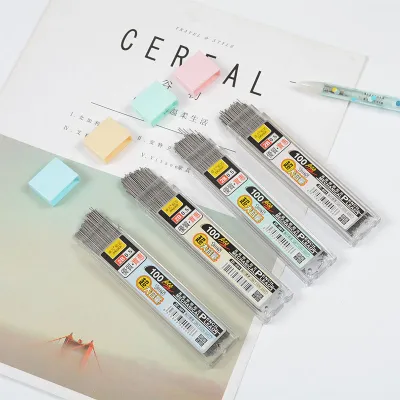
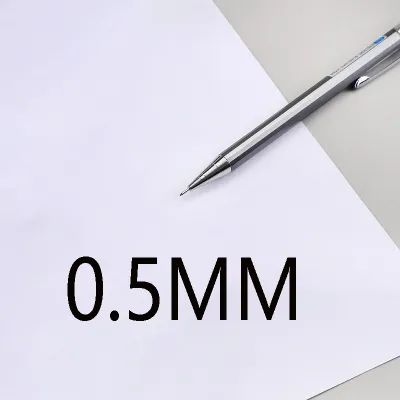
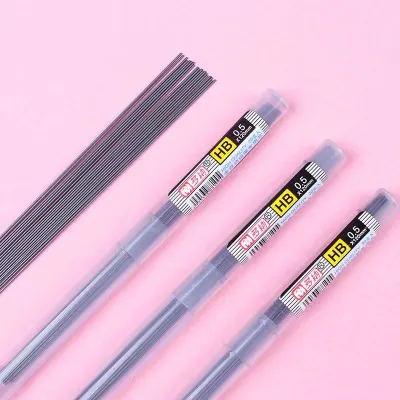
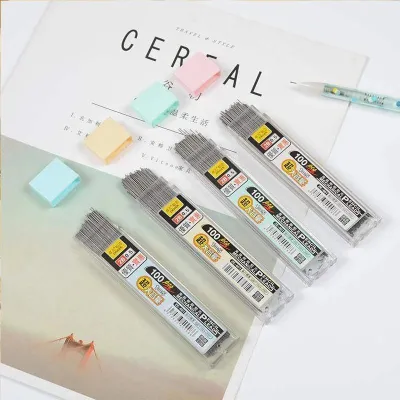
Prices are valid at publication and may change. Please refer to the product page for the latest price.
If the markings on the pencil body have worn off due to frequent handling, check the original packaging or the blister card if you still have it. Manufacturers of refill pencil products prominently display the compatible lead size on the front of the retail card. Keeping a quick photo of your pencil’s packaging on your phone can save you from purchasing the wrong refills during your next trip to the office supply store.
How to Identify the Size from Existing Refills
If the pencil itself lacks clear markings, you can often determine the correct size by examining any leftover lead refills you have on hand. Check the plastic storage tube or container that holds your spare leads. The label on the front or back of the case will clearly state the millimeter specification, such as 0.3mm, 0.5mm, or 0.7mm.

When the original refill packaging is missing, you can perform a visual and tactile comparison. Lay a piece of the unknown lead flat on a white sheet of paper next to a known lead size if you have one. A 0.3mm lead is exceptionally thin—almost like a strand of hair—and snaps under the slightest pressure. A 0.5mm lead is the standard thickness most people are familiar with, while a 0.7mm lead is visibly thicker and feels much sturdier between your fingertips.
To prevent future confusion, avoid mixing different lead diameters in the same storage container or pencil chamber. Storing a 0.5mm lead inside a tube labeled for 0.7mm leads can easily lead to accidental loading errors. This mistake can jam the internal feeding tube of your refill pencil, requiring tedious clearing or causing permanent damage to the clutch.
What 0.3mm, 0.5mm, and 0.7mm Mean for Your Writing Experience
Choosing the right lead size is not just about compatibility; it also defines how the pencil feels on paper. A 0.3mm lead produces incredibly fine, crisp lines, making it excellent for detailed technical drafting, intricate illustrations, or writing in tight margins. However, because it is so thin, it breaks easily under moderate writing pressure, requiring a light hand and a gentle touch.
The 0.5mm lead is the standard choice for everyday school and office work. It offers a balanced writing experience, providing enough precision for neat handwriting while maintaining decent structural strength. It is widely available in almost every local stationery shop, making it a highly convenient option for students and professionals alike.
For those who tend to write with a heavy hand, 0.7mm lead is highly recommended. The thicker diameter resists breaking even under significant downward pressure, making it ideal for fast note-taking, bold sketching, and general writing. It glides smoothly across the page, though it does require more frequent rotation to maintain a sharp point compared to thinner leads.
Keep in mind that lead hardness also plays a major role in your writing experience. In humid environments, softer leads like 2B or 4B wear down faster and smudge easily on damp paper, whereas harder leads like H or HB hold their point longer and resist smearing. Always pair the correct millimeter size with a hardness level that suits your local writing conditions.
Troubleshooting Unmarked or Unclear Pencil Specifications
When both the pencil and its packaging offer no clues, you can troubleshoot by searching for the specific brand and model online. Most reputable stationery manufacturers maintain detailed product catalogs on their official websites. By matching the visual design, clip shape, and color of your pencil to online product listings, you can quickly verify the official manufacturer specifications.
If you cannot identify the model online, try testing the pencil with a single piece of borrowed lead before buying a full pack of refills. Ask a classmate or colleague for a single strand of 0.5mm or 0.7mm lead. Gently feed it through the tip or drop it into the chamber to see if the clutch grips it securely without slipping or jamming. This simple trial prevents you from spending a few ₱ on a pack of refills that you cannot use.
If the pencil repeatedly jams, slips, or fails to hold any standard lead size, the internal clutch mechanism may be damaged or worn out. Mechanical pencils use delicate brass or plastic clutches that can warp over time. When troubleshooting fails to yield a working fit, it is usually best to replace the pencil entirely to ensure reliable performance.
Frequently Asked Questions (FAQ)
Can I use 0.5mm lead in a 0.7mm mechanical pencil?
No, you should not use 0.5mm lead in a 0.7mm mechanical pencil. The internal clutch mechanism of a 0.7mm pencil is designed to grip a thicker diameter; when you insert a 0.5mm lead, the clutch cannot close tightly enough around it. This causes the lead to slide freely back into the barrel when you write, or simply fall out of the tip entirely. Always match the refill diameter exactly to the pencil’s specifications.
Are there lead sizes other than 0.3mm, 0.5mm, and 0.7mm?
Yes, there are several other lead sizes available for specialized writing and drawing tasks. You can find ultra-fine 0.2mm leads for extreme detail, as well as thicker 0.9mm, 1.3mm, and 2.0mm leads. These thicker sizes are commonly used in heavy-duty drafting pencils, construction markers, or sketching tools. Just like the standard sizes, these specialized leads require a dedicated mechanical pencil designed specifically for their exact dimensions.

Community discussion
Share your experience or ask a question. Comments are reviewed before publication.