
Matching the weight and texture of specialty paper to your chosen origami model is the single most important factor in determining the success of your project. A model’s complexity, the number of overlapping layers, and the required structural strength dictate whether you need an ultra-thin, fibrous sheet or a thick, rigid cardstock. By understanding how grams per square meter (gsm) and surface finishes interact with creases, you can avoid the frustration of torn corners, bulky joints, and collapsing models.
In tropical climates like the Philippines, high relative humidity can soften paper fibers, making the choice of material and sizing even more critical. Selecting the correct specialty paper ensures that your folds remain crisp, your model retains its three-dimensional volume, and the final piece resists warping over time.
Understanding Paper Weight and Thickness for Origami
Paper weight is universally measured in grams per square meter, commonly abbreviated as gsm. This metric indicates the density and thickness of the sheet, which directly influences how the paper behaves when folded repeatedly. When browsing specialty paper at local art supply shops or online marketplaces, checking the gsm on the packaging is your first step in evaluating suitability.
Products mentioned in this guide
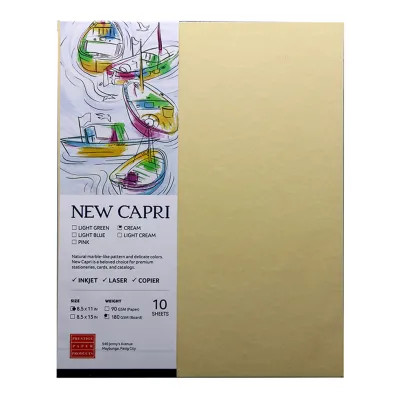
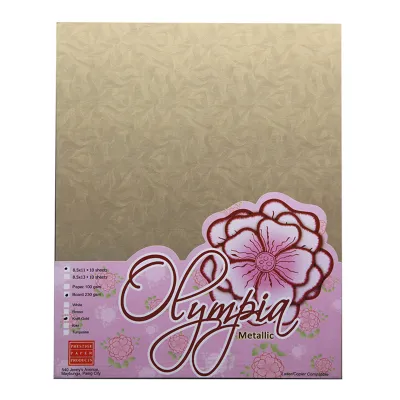
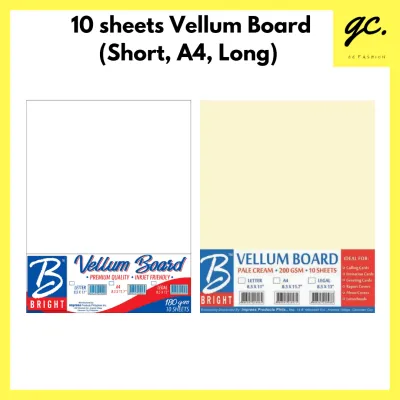
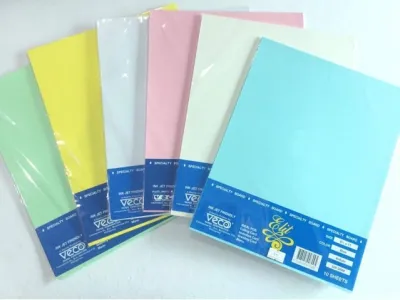
Prices are valid at publication and may change. Please refer to the product page for the latest price.
Lightweight papers, typically ranging from 20 gsm to 50 gsm, are essential for complex origami designs. These thin sheets, such as tissue paper, glassine, or light mulberry paper, allow you to fold dozens of layers on top of each other without creating excessive bulk. Without these thin profiles, the joints of complex models like insects or multi-pointed stars would become too thick to crease, eventually splitting or bursting at the seams.
Medium-weight papers, spanning from 60 gsm to 90 gsm, represent the standard range for traditional origami. This category includes standard origami paper (kami), kraft paper, and light book pages. These papers offer a balanced compromise, providing enough stiffness to stand upright while remaining thin enough to accommodate moderate layering, such as reverse folds and simple sink folds.
Heavier papers, exceeding 100 gsm up to 160 gsm or more, are reserved for simple geometric models, modular origami, and wet-folding. Heavy watercolor papers, elephant hide, and thick cardstock provide excellent structural integrity, allowing large-scale models to support their own weight. However, their thickness makes them highly resistant to multi-layered folds, meaning they will quickly crowd and distort if used for intricate designs.
To physically assess a specialty paper before committing to a complex project, you should perform a manual tactile evaluation. Gently hold a corner of the sheet between your thumb and forefinger to gauge its stiffness and springback. A high-quality origami paper should feel crisp rather than limp, and when bent slightly, it should show a clean resistance rather than flopping over immediately.
Tensile strength is another critical factor to observe during your physical assessment. Gently pull on the edges of a sample scrap to feel how much tension the fibers can withstand before tearing. Papers with long, interlocking natural fibers, such as handmade mulberry or abaca papers, offer exceptional tensile strength even at very low weights, making them highly desirable for advanced folding.
Matching Surface Texture and Sizing to Folding Techniques
The surface texture of specialty paper defines both the tactile experience of folding and the final aesthetic of the model. Smooth, satin, or semi-glossy finishes allow for maximum precision because the folding tool or fingernail can glide effortlessly across the surface. These slick surfaces are ideal for geometric designs, tessellations, and sharp, mechanical creases where mathematical accuracy is paramount.

In contrast, textured and fibrous papers, such as unryu, lokta, or handmade cotton papers, introduce organic visual depth and varied light reflection. The visible fibers create a natural, rustic appearance that enhances organic subjects like animals, flowers, and foliage. However, these textured surfaces can make precise creasing more challenging, as the fold line may slightly wander along the path of least resistance among the thickest fibers.
Sizing refers to the chemical additives, such as starch, gelatin, or methylcellulose, applied to paper during or after manufacturing to regulate its absorbency and stiffness. For origami artists, sizing is the secret to transforming soft, limp sheets into crisp, cooperative folding mediums. Unsized papers, often called water-leaf papers, absorb moisture instantly and will turn to mush if subjected to wet-folding techniques.
Wet-folding requires a paper with strong internal sizing that can withstand dampening without dissolving or tearing. When the paper is lightly moistened with a damp cloth or spray, the sizing temporarily softens, allowing you to sculpt gentle curves and soft volumes. As the paper dries, the sizing re-hardens, locking the fibers into their new three-dimensional positions and giving the finished model a durable, shell-like rigidity.
In humid environments, unsized or poorly sized papers can absorb ambient moisture from the air, causing them to lose their crispness mid-fold. This softening effect can make sharp creases feel spongy and cause the paper to stretch unpredictably. Choosing a specialty paper with robust sizing, or applying a custom coat of methylcellulose beforehand, helps shield the fibers from atmospheric humidity and maintains structural tension.
The physical grip of the paper surface also affects your control during complex folding sequences. Highly polished or coated papers can be slippery, making it difficult to hold multi-layered pre-creases in place without them sliding out of alignment. A slight tooth or matte texture provides just enough friction to keep layers registered, reducing hand fatigue and improving overall folding accuracy.
Selecting Paper by Origami Model Complexity
Matching paper characteristics to the complexity of your model prevents structural failure and ensures a satisfying folding process. For simple and traditional models, such as the classic crane, jumping frog, or basic boxes, standard-weight papers around 60 to 80 gsm are highly forgiving. These models feature few overlapping layers, meaning the paper does not need to be exceptionally thin, and a moderate stiffness helps the finished model stand proudly on a shelf.
Intermediate models, which introduce moderate details like reverse folds, crimps, and simple closed sinks, require a careful balance of weight and strength. A paper that is too thick will tear at the stress points of a sink fold, while a paper that is too thin may lack the body to hold the model’s shape. For these designs, look for specialty papers in the 40 to 60 gsm range, such as high-quality kraft, double-sided duo papers, or treated washi.
Highly complex models, including realistic insects with multiple legs, intricate tessellations, and super-complex animals, demand ultra-thin, high-tensile-strength specialty papers. These designs often accumulate dozens of layers of paper in concentrated areas, such as the head or thorax of an insect. Using anything thicker than 40 gsm will result in a bulky, unmanageable mass that cannot be closed or shaped.
For these advanced projects, professional folders often turn to specialized composite papers like tissue foil, which combines the thinness of tissue paper with the dead-fold memory of aluminum foil. Alternatively, treating ultra-thin handmade papers with a methylcellulose solution creates a paper that is incredibly thin, remarkably strong, and capable of holding extremely sharp creases without tearing.
The physical dimensions of your starting sheet must scale in proportion to both the paper’s weight and the model’s complexity. A complex model folded from a standard 15-centimeter square will quickly become impossible to fold as the layers build up. As a general rule, as complexity increases, the starting sheet size should expand to 30 centimeters, 50 centimeters, or even larger, allowing the thickness of the paper to be distributed over a larger surface area.
Conversely, if you are folding a simple model, using a massive sheet of thin paper can result in a floppy, unstable structure that sags under its own weight. Matching the scale of the sheet to the gsm ensures that the physical forces within the folded paper remain balanced, allowing the model to support its own weight without external armatures.
Testing and Adjusting Your Specialty Paper Choices
Before investing hours of meticulous folding into a premium sheet of specialty paper, which can cost anywhere from ₱50 to over ₱200 per sheet at specialty shops, conducting a systematic test fold is highly recommended. Cut a small, 10-centimeter square from a scrap piece of your chosen paper to evaluate its physical limits. This simple step can save valuable materials and prevent frustration later in the project.
Begin your test fold by executing a sharp, repeated crease in both directions—mountain and valley—along the same line. Observe how the paper reacts to this stress: does the surface color crack and reveal white fibers underneath, or does it remain clean and saturated? Check if the crease retains its memory when opened, or if the paper springs back to a flat state, indicating a lack of crease retention.
Next, test the paper’s tolerance for bulk accumulation by performing a multi-layer fold, such as a squash fold or a sink fold, where several layers converge at a single point. Press down firmly on the intersection and inspect the paper for signs of tearing or splitting. If the fibers begin to fray or separate under moderate pressure, the paper is too fragile or too thick for models with high layer density.
If you plan to use wet-folding or post-folding shaping techniques, apply a small amount of moisture to your test scrap using a damp sponge. Observe how quickly the paper absorbs the water and whether it expands unevenly, which can cause warping. The paper should become pliable and leathery without losing its structural integrity; if it turns soft, tears instantly upon touch, or pills when rubbed, it lacks the necessary sizing.
Establish clear stop conditions during your testing phase to decide when to abandon a paper choice. If the paper splits along a simple fold line, frays excessively at the corners, or fails to hold a crease after being pressed, do not proceed with your main model. These behaviors indicate that the paper’s fiber structure or weight is incompatible with the physical demands of the design.
When a paper fails your test, look for logical adjustments rather than giving up on the model. If the paper was too thick and bulky, try a lighter gsm variant or switch to a composite paper like tissue foil. If the paper was too soft and limp, consider treating it with a light coat of methylcellulose sizing to add stiffness and crease memory, transforming an uncooperative sheet into a perfect folding medium.
Frequently Asked Questions (FAQ)
Can I use standard office paper for complex origami designs?
Standard office copy paper, which typically weighs around 70 to 80 gsm, is generally unsuitable for complex origami designs. While it works well for simple traditional models and initial practice folds, its wood-pulp fiber structure lacks the tensile strength required for advanced techniques. When subjected to multiple overlapping folds, office paper quickly becomes too bulky, resists sharp creasing, and is highly prone to tearing at busy intersection points. For complex models, investing in thin, long-fibered specialty papers is essential to achieve clean, successful results.
How should I store specialty origami paper to preserve its qualities?
To preserve the weight, texture, and sizing of your specialty origami paper, store it flat in a cool, dry, and dark environment. High humidity, common in tropical regions, can soften paper sizing and cause sheets to warp or stick together, while direct sunlight will fade vibrant pigments and make the fibers brittle. Keep your paper inside acid-free storage boxes, plastic folders, or sealed portfolios to protect the edges from physical bending and dust. Placing a small silica gel packet inside your storage container can help regulate moisture levels and keep your paper crisp and ready for folding.

Community discussion
Share your experience or ask a question. Comments are reviewed before publication.