
Identifying an original Casio calculator requires a careful combination of physical inspection, functional testing, and digital verification. Because these devices are essential tools for students, engineers, and professionals across the Philippines, counterfeit models frequently circulate in both physical markets and online marketplaces.
To ensure your device is genuine, you must examine the packaging for high-quality printing, test the internal software using diagnostic key combinations, and verify the serial number or QR code through official manufacturer channels. Taking these steps before or immediately after purchase protects you from inaccurate calculations and premature hardware failure.
Why Counterfeit Calculators Are a Concern
Using a counterfeit calculator introduces significant risks that can compromise both your academic performance and professional work. In complex mathematical, scientific, or engineering tasks, a fake calculator may utilize poorly programmed microchips that return incorrect answers for advanced functions, such as trigonometric calculations or statistical regressions.
Products mentioned in this guide
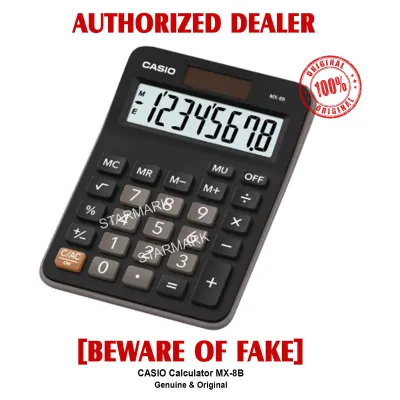
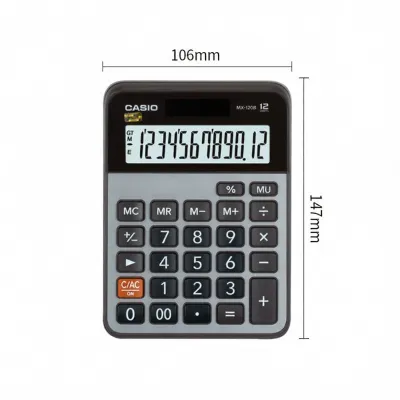
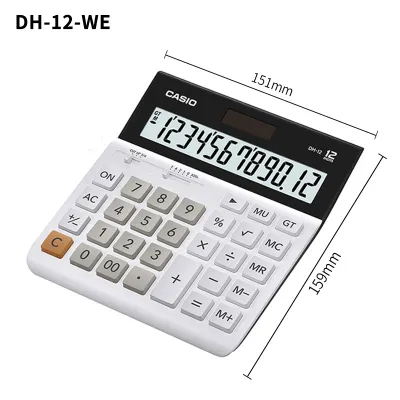
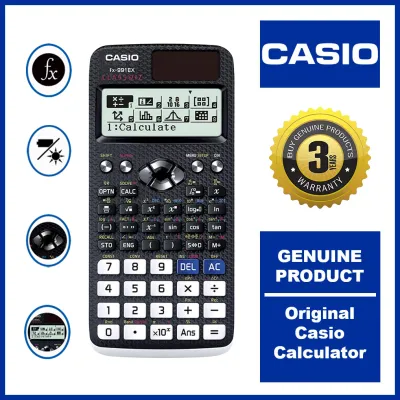
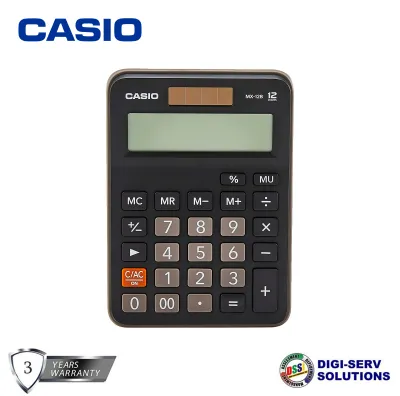
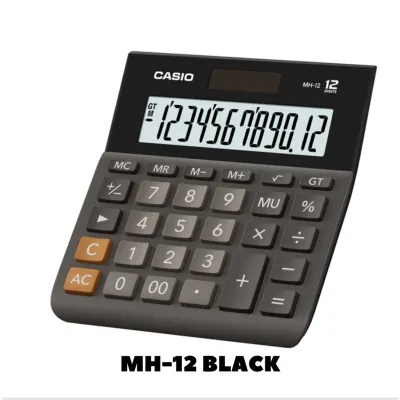
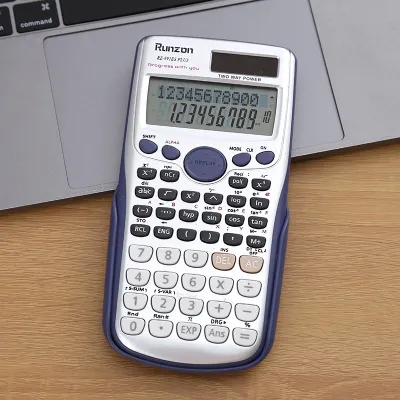
Prices are valid at publication and may change. Please refer to the product page for the latest price.
Unlike genuine units that undergo rigorous quality control, counterfeit devices are prone to subtle rounding errors. These errors can lead to incorrect results during critical exams or professional projects.
Furthermore, the physical build quality of counterfeit calculators is notoriously unreliable. Under the humid, tropical conditions common in the Philippines, cheap plastic casings can warp, and low-grade rubber keypads often lose their responsiveness or register double-presses.
The liquid crystal display (LCD) on a fake unit may fade rapidly, develop dead pixels, or become unreadable under direct sunlight. Because these imitation products do not come with an official manufacturer warranty, you will have no recourse if the device fails during an important board exam or semester final.
Physical and Packaging Checks for Authenticity
A primary line of defense against counterfeit calculators is a thorough visual and tactile inspection of the packaging and the device itself. Genuine Casio packaging features crisp, high-resolution printing with accurate color reproduction and flawless spelling.

Counterfeit boxes often exhibit blurry text, misaligned graphics, or subtle spelling errors in the feature descriptions and user manuals. Always read the text on the box carefully, looking for awkward phrasing or incorrect terminology that indicates a rushed, unauthorized production run.
Security labels and holographic stickers are critical indicators of authenticity, though their design can vary depending on the specific model, production batch, and region. Original calculators distributed in the Philippines often feature a distinct, multi-layered hologram sticker on the box or the back of the calculator.
When you tilt the device under a light source, a genuine hologram should display smooth color transitions and clear, visible branding patterns. If the sticker is a flat, non-reflective metallic print, or if it peels off easily without leaving a security pattern behind, the product is highly likely to be a counterfeit.
The physical weight and tactile feedback of the calculator also reveal its true origin. Genuine models are constructed from dense, high-quality matte plastics that resist flexing and do not emit strong chemical odors.
An original unit feels balanced and substantial, whereas counterfeit calculators often feel unusually light, hollow, and fragile due to thinner plastics and cheaper internal components.
Additionally, the keys on an authentic keypad provide a consistent, springy tactile response with clear travel. Fake keys may feel mushy, stick when pressed at an angle, or have unevenly printed legends that scratch off easily after a few weeks of use.
Functional and Display Verification
Beyond physical appearance, the internal programming and display quality of the calculator offer definitive proof of authenticity. Start by evaluating the LCD screen under various lighting conditions.
A genuine Casio display maintains high contrast and readability even at sharp viewing angles, with uniform backlighting and no dark spots. Counterfeit screens often suffer from poor contrast, requiring you to look directly at the screen to read the digits, and they frequently display uneven shadowing.
You can also perform standardized diagnostic tests built into the calculator’s firmware to verify its internal logic. For many scientific models, pressing specific key combinations—such as holding down the ‘Shift’, ‘7’, and ‘On’ keys simultaneously—triggers a diagnostic mode.
This mode cycles through screen test patterns, ROM versions, and button checks; counterfeit devices using generic processors will either fail to enter this sequence or display entirely different test screens. Always consult the official user manual for the exact diagnostic steps corresponding to your specific model.
Finally, test the input responsiveness by typing a rapid sequence of numbers and operators. Genuine calculators process inputs instantly without lag, ensuring that every keystroke is registered even during rapid calculations.
If you notice a delay between pressing a key and the number appearing on the screen, or if the calculator misses inputs when you type quickly, the device is likely running on an inferior, non-original processor.
Official Verification Tools and Resources
To combat the spread of counterfeit goods, official verification portals and digital tools have been established to help consumers confirm their purchase. Many modern scientific and graphic calculators feature a unique QR code that can be generated directly on the screen by pressing a specific sequence of keys.
Scanning this on-screen QR code with a smartphone should direct you to an official, secure manufacturer domain that displays a confirmation message verifying the device’s authenticity and model number.
When scanning QR codes printed on the packaging, always inspect the destination URL in your browser to ensure it matches the official manufacturer website exactly, without extra characters or unusual domain extensions. Counterfeiters sometimes print fake QR codes that lead to lookalike websites designed to mimic the official brand portal.
If your specific model does not support on-screen QR code generation, you can locate the serial number printed on the back of the device or inside the battery compartment. This serial number can be cross-referenced through official customer support channels or online registration portals.
If you are unable to verify the serial number online, contacting an authorized local distributor in the Philippines can help confirm whether the batch number matches legitimate import records.
Choosing Reliable Purchasing Channels
The most effective way to avoid counterfeit calculators is to buy exclusively from reputable, authorized sellers. In the Philippines, this means prioritizing official brand stores, established office supply chains, and well-known department stores.
Purchasing from these brick-and-mortar retailers or their verified online storefronts ensures that you receive genuine stock backed by official local warranties.
When shopping on online marketplaces, exercise extreme caution and watch for common red flags. Be highly suspicious of listings offering prices that are significantly lower than the standard retail price of around ₱1,000 to ₱2,500 for common scientific models.
If a deal seems too good to be true, it almost certainly is. Avoid sellers that rely solely on generic stock photos, refuse to provide actual photos of the product packaging, or have vague product descriptions.
Before finalizing your purchase online, thoroughly examine the seller’s profile. Look for high positive ratings, read recent customer reviews specifically searching for mentions of authenticity, and check if the seller is designated as an official mall partner or preferred merchant.
Additionally, verify that the seller offers a clear, hassle-free return policy, which gives you a safety net to inspect and return the calculator if it fails your initial authenticity checks.
What to Do If You Suspect a Fake
If you perform these checks and suspect that your newly purchased calculator is a counterfeit, you must take immediate action to protect your money and warn others. Start by documenting the evidence thoroughly.
Take clear, high-resolution photos and videos of the packaging errors, the physical defects of the device, any failed diagnostic tests, and the serial number. This documentation will serve as crucial proof during the dispute process.
Next, initiate a formal return and refund request through the e-commerce platform’s buyer protection program or directly with the retailer. Do not confirm receipt of the item or complete the transaction on online marketplaces until you have verified its authenticity.
Confirming the order prematurely releases the funds to the seller, making refunds difficult; instead, state clearly in your dispute that the item is counterfeit and upload your documented evidence.
Finally, report the fraudulent listing and the seller’s account to the platform’s customer support team to help prevent other buyers from being misled. You can also report the incident to local consumer protection agencies, such as the Department of Trade and Industry (DTI) in the Philippines, to support broader efforts against the distribution of counterfeit educational and professional equipment.
Frequently Asked Questions (FAQ)
Can I use an unverified calculator for board exams?
No, using an unverified or counterfeit calculator for professional board exams in the Philippines, such as those administered by the Professional Regulation Commission (PRC), carries severe risks. Exam proctors strictly inspect calculators against lists of approved models, and any device suspected of being non-original or modified can be confiscated immediately, potentially disqualifying you from the exam. Furthermore, the risk of calculation errors or sudden battery failure on a counterfeit device during a high-stakes exam is a risk not worth taking.
Do all original models have a holographic security sticker?
Not all original models feature the exact same holographic security sticker, as security measures vary by production year, specific model series, and target market. Some older batches or basic desktop models may rely on serial numbers and engraved casing marks rather than holograms. However, for modern scientific calculators widely used in schools, a high-quality holographic sticker or an on-screen QR verification code is standard, so you should always check for these features as primary indicators of authenticity.

Community discussion
Share your experience or ask a question. Comments are reviewed before publication.