
Choosing the right document holder is the first step toward an organized, stress-free filing system. If you frequently transport important papers through unpredictable weather, or if you need a durable container that keeps multiple document types secure in one place, an adventurer envelope might be exactly what you need. This specialized filing tool offers structural advantages that standard paper folders simply cannot match.
However, these envelopes are not a universal replacement for every office storage need. Deciding whether to use them depends on your daily routine, the volume of papers you handle, and where you plan to store your files. By evaluating the physical design of these holders against your specific environment, you can build a filing system that is both highly functional and cost-effective.
What Defines an Adventurer Envelope?
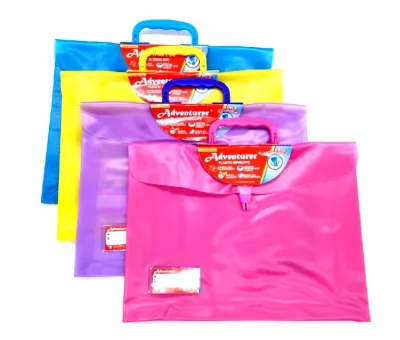
An adventurer envelope is a heavy-duty document holder designed to offer more security and durability than a standard paper envelope. Unlike basic office folders that rely on simple folds or light adhesives, these envelopes feature robust construction elements intended for active use. When browsing school and office supplies, you can easily identify them by their distinct physical and structural characteristics.
Products mentioned in this guide
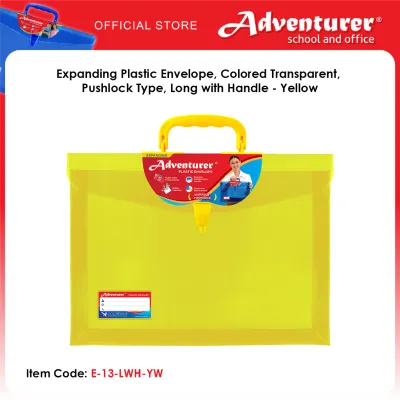
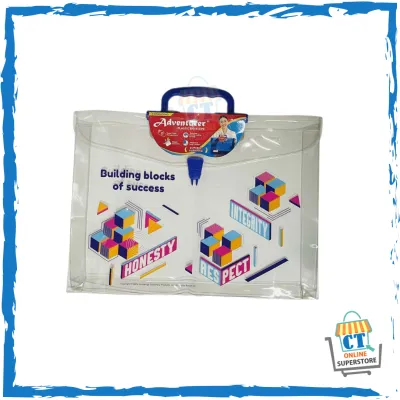
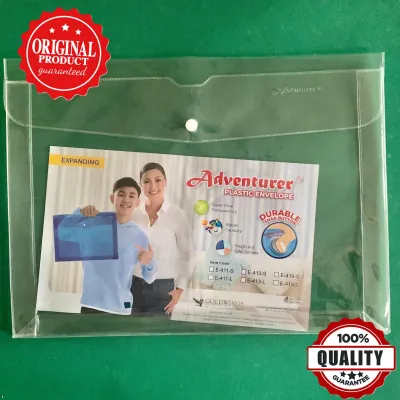
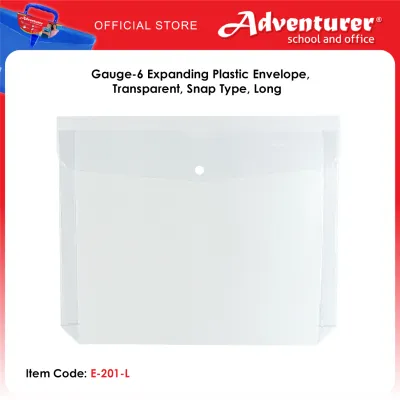
Prices are valid at publication and may change. Please refer to the product page for the latest price.
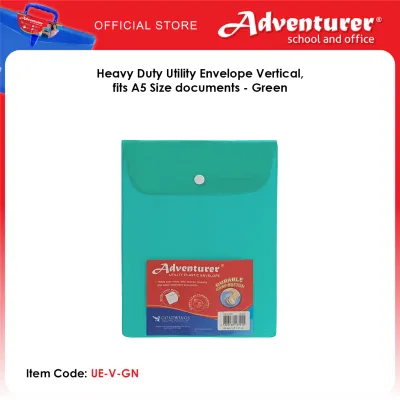
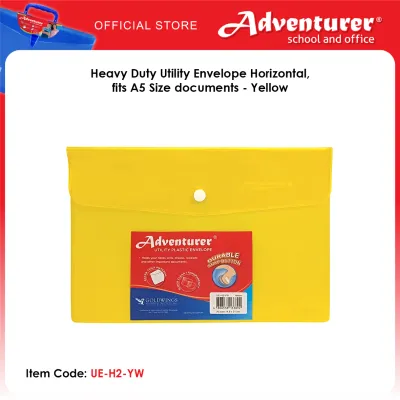
The most prominent feature of this envelope type is its secure closure mechanism. Instead of a standard gummed flap, these holders typically utilize physical fasteners such as button-and-string ties, snap buttons, elastic bands, or plastic buckles. These closures ensure that the envelope remains firmly shut even when filled to capacity or placed inside a moving bag, preventing documents from sliding out during transit.
Material composition is another key differentiator. While standard envelopes are made of thin paper, adventurer envelopes are commonly constructed from heavy-duty materials. You will frequently find them made from thick, rigid kraft board or synthetic polymers like polypropylene. Polypropylene options are particularly valued for their flexibility, tear resistance, and ability to shield contents from external elements. Some designs also feature reinforced fabric borders or stitched edges to prevent fraying over time.
Inside, these envelopes are built to accommodate varying volumes of paperwork. While some models feature a flat, single-pouch design for a few essential sheets, many are designed as expanding envelopes. These expanding versions utilize accordion-style side gussets that allow the holder to widen as you add more documents. Some even include internal dividers or multi-pocket layouts, transforming a single envelope into a portable, categorized filing system.
Diagnosing Your Filing Needs: When an Adventurer Envelope Makes Sense
Determining whether to transition to adventurer envelopes requires a close look at your daily document handling habits. If your work or studies require high mobility, these specialized holders offer clear advantages. Commuters who must carry contracts, certificates, or design drafts across town will benefit from the secure closures and rigid structures. In tropical climates like the Philippines, where sudden downpours and high humidity are common, carrying papers in a water-resistant plastic envelope prevents moisture damage and keeps pages from warping.

Physical protection is another critical factor to evaluate. Standard manila folders are excellent for keeping papers clean on a desk, but they offer very little defense against bending, creasing, or tearing when placed inside a backpack or messenger bag. If you regularly handle irreplaceable original documents, such as land titles, birth certificates, or official transcripts, the rigid backing of a heavy-duty envelope provides an essential physical barrier against daily wear and tear.
You should also consider the complexity of the files you are organizing. If you are managing a single project that involves mixed media—such as standard printed sheets, small receipts, business cards, and thick cardstock—a multi-pocket expanding envelope keeps everything consolidated. Instead of scattering these items across different folders, the segmented compartments allow you to group related materials of different sizes together, ensuring that small slips of paper do not get lost at the bottom of the holder.
When to Stick to Standard Folders or Regular Envelopes
Despite their durability, adventurer envelopes are not always the most practical choice for every filing scenario. For high-volume, static archiving, relying on these specialized holders can quickly become inefficient and unnecessarily expensive. If your primary goal is to store tax records, old invoices, or historical documents that you rarely need to access, standard lever arch files, box files, or basic manila folders are far more suitable. These traditional options are designed to sit flat on shelves or hang neatly in filing cabinets, maximizing your storage space.
Routine internal routing is another area where specialized envelopes are often unnecessary. If you are simply passing a brief memo or a set of daily reports to a colleague at the next desk, a simple clear L-folder or a standard paper envelope is perfectly adequate. These lightweight options are easy to slip open, require no complex fastening, and do not add unnecessary bulk to an in-box.
Furthermore, you must consider the physical limitations of your existing storage furniture. The very features that make adventurer envelopes excellent for travel—such as thick plastic buckles, protruding button-and-string fasteners, and wide expanding gussets—can make them difficult to store in standard office setups. When stuffed to capacity, these envelopes may not fit into standard hanging file drawers or shallow desk organizers, potentially causing jams or forcing you to store them awkwardly on top of your desk.
Verification Checklist Before You Buy or Use
Before purchasing or deploying adventurer envelopes in your filing system, taking a few moments to verify their physical specifications will save you time and prevent compatibility issues. First, perform a careful dimension match. Document sizes in the Philippines often vary between standard Letter (8.5 x 11 inches), A4 (8.27 x 11.69 inches), and Legal or Long size (8.5 x 13 or 14 inches). Check the product label to ensure the envelope’s internal usable space—not just its external dimensions—can comfortably accommodate your specific paper size without bending the edges.
Next, assess your capacity requirements. If you plan to store thick stacks of paper, look for models with expanding gussets and verify the manufacturer’s specified sheet capacity. Overstuffing a flat envelope or exceeding the expansion limit of a gusseted model puts immense strain on the seams and closure mechanisms, which can lead to premature tearing or broken fasteners.
Finally, inspect the quality and style of the closure mechanism. If you plan to open and close the envelope multiple times a day, a snap button or an elastic band may offer quicker access than a traditional button-and-string tie. Ensure that the fastener is securely attached to the body of the envelope and does not have sharp plastic edges that could snag on your clothing or scratch other items in your bag.
Frequently Asked Questions (FAQ)
Will an Adventurer Envelope Fit in a Standard Filing Cabinet?
Whether an adventurer envelope fits in a standard filing cabinet depends heavily on its external dimensions and the type of closure it uses. Standard filing cabinet drawers are designed to hold flat folders or hanging files with minimal vertical clearance. If your envelope features a bulky plastic buckle, a thick button-and-string fastener, or a wide expanding gusset, it may stand too tall or wide for the drawer tracks. To prevent jamming, measure the internal height and width of your cabinet drawers and compare them to the envelope’s fully loaded dimensions before attempting to store them inside.
How Should You Clean and Maintain Specialized Document Holders?
Maintaining your document holders depends entirely on the materials from which they are made. For synthetic plastic or polypropylene envelopes, you can easily clean the exterior by wiping it with a dry or slightly damp microfiber cloth to remove dust and fingerprints; avoid harsh chemical solvents that could degrade the plastic. For heavy-duty paper or board envelopes, keep them entirely away from moisture, as water will weaken the fibers and cause warping. Always inspect the manufacturer’s care instructions on the packaging before applying any cleaning agents, and ensure the envelope is completely dry inside before inserting your documents.

Community discussion
Share your experience or ask a question. Comments are reviewed before publication.