
Jovi air dry clay is a popular water-based modeling material that cures naturally through evaporation, making it a highly accessible choice for sculptors, students, and hobbyists. Unlike polymer clays that require high-temperature oven baking, or oil-based modeling clays that never harden, this material offers a straightforward path to creating permanent three-dimensional art. However, choosing the right clay for your project requires looking past marketing promises and understanding how its specific material traits behave under real-world conditions.
In tropical environments like the Philippines, where ambient humidity fluctuates dramatically between the dry and rainy seasons, working with water-based clay presents unique challenges and advantages. High humidity slows down the evaporation process, giving you more time to sculpt fine details but requiring extra patience during the curing phase. By learning how to evaluate this clay’s composition, workability, and post-drying requirements, you can ensure your finished pieces remain durable and crack-free.
Decoding the Material Composition on the Label
To understand how any air dry clay will behave on your worktable, start by examining the product label and packaging. Jovi air dry clay is formulated as a water-based matrix, which means water acts as the primary vehicle keeping the clay pliable. Mixed into this wet base are natural mineral fillers—often highly refined clays or talc-like minerals—along with organic binders and preservatives. The binders hold the mineral particles together as the water evaporates, while the preservatives are essential for preventing mold growth while the product sits on store shelves.
Products mentioned in this guide
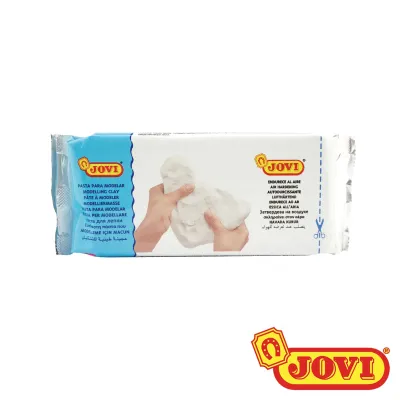
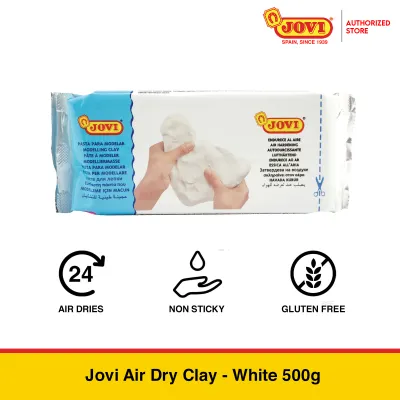
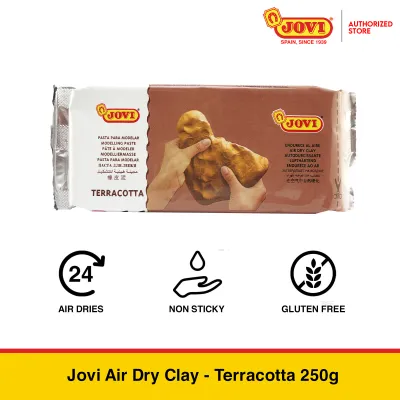
![Jovi Air Dry Clay White 500g [2285]](https://img.lazcdn.com/g/p/8b82dde3d75fbe85d2fefe503294dab3.jpg_400x400q80.jpg_.webp)
![Jovi Air Dry Clay - Gray 500g [85G]](https://img.lazcdn.com/g/p/f1d13b78524c85c3224861bfc34eee8c.jpg_400x400q80.jpg_.webp)
![Jovi Air Dry Clay - Gray 250g [83G]](https://img.lazcdn.com/g/p/b40af837426440e07d39d06bfad41a31.jpg_400x400q80.jpg_.webp)
![Jovi Air Dry Clay - Terracotta 500g [2288]](https://img.lazcdn.com/g/p/6f78d7f90e29a41f601093bad47d3597.jpg_400x400q80.jpg_.webp)
Prices are valid at publication and may change. Please refer to the product page for the latest price.
Distinguishing this material from other modeling mediums is crucial for planning your workflow. Polymer clays rely on a PVC plastic base that only cures when subjected to specific heat levels, usually in a dedicated oven. Oil-based clays, often used for temporary prototyping or animation, contain wax and oils that prevent them from ever drying out. Because Jovi relies entirely on evaporation, its volume will decrease slightly as it cures, a physical reality you must account for when designing your pieces.
When reading the packaging, also look for indications of the clay’s fiber content. Some air dry clays use cellulose or paper fibers to add wet strength and reduce weight, which can result in a slightly fuzzy texture when sanded. Clays with a higher mineral-to-fiber ratio, like Jovi, tend to feel smoother and more substantial in the hand, mimicking the tactile experience of traditional pottery clay.
Assessing Texture, Workability, and Drying Traits
Evaluating how the clay handles begins the moment you open the airtight packaging. Fresh Jovi clay should feel cool, smooth, and highly pliable, with a balanced moisture level that does not leave a sticky residue on your hands. If the clay feels slightly stiff due to temperature changes during transit or storage, you can adjust its consistency by kneading in a very small amount of water. It is best to apply water using a spray mister or damp fingers; pouring water directly onto the clay can quickly turn it into a sticky, unworkable paste that compromises its structural integrity.

To test the clay’s workability, roll a small portion into a thin coil and wrap it around your finger. A high-quality clay with good plasticity will bend smoothly with minimal surface cracking. If you observe deep cracks forming immediately, the clay may be slightly dry or have a lower binder content, requiring you to work faster or keep a damp cloth over your piece as you sculpt.
The curing phase is where the clay’s physical properties are put to the test. As water leaves the clay, shrinkage occurs. If your project has sections of varying thickness—such as a thick torso attached to thin limbs—the thinner parts will dry and shrink faster than the core. This uneven shrinkage creates internal stress, which is the primary cause of cracking. To prevent this, monitor your piece closely as it dries, and consider using a lightweight internal support, or armature, made of crumpled aluminum foil or wire to keep the clay layer uniform in thickness.
Once the clay is fully cured, which typically takes 24 to 48 hours depending on the thickness of the piece and local humidity levels, you can assess its final hardness. The surface should feel solid, dry, and completely cool to the touch. Cured Jovi clay offers good sandability, allowing you to smooth out finger marks or seams using fine-grit sandpaper. When sanding, always wear a dust mask and work in a well-ventilated space to avoid inhaling fine mineral dust.
Matching Jovi to Your Specific Crafting Projects
Deciding whether Jovi air dry clay is the right fit for your creative goals depends on the scale and detail of your project. Because of its fine mineral texture, this clay holds details well, making it excellent for medium-sized figurines, relief plaques, and decorative bowls. However, for extremely delicate, thin items like intricate jewelry or miniature dollhouse accessories, the natural shrinkage of water-based clay can lead to warping or fragility. In those cases, polymer clay remains a strong alternative, while Jovi excels in bulk modeling and structural crafts.
For educators and hobbyists, the clay’s ease of cleanup is a major advantage. Since it is water-soluble, any residue on tools, tables, or hands washes away easily with soap and water, eliminating the need for specialized solvents. It also adheres well to porous armatures like cardboard, wood, and paper mache, allowing you to build large, lightweight structures without using excessive amounts of clay.
To help guide your choice, consider this project-matching framework based on observable clay traits:
- Decorative Bowls and Trays: Excellent fit. The clay can be rolled flat with a rolling pin and draped over molds. Ensure even thickness to prevent warping as it dries.
- Armature-Based Figurines: Good fit. The clay clings well to wire and foil cores, but you must apply it in thin, even layers to avoid cracking over the rigid armature.
- Imprinted Tiles and Stamps: Excellent fit. The smooth, fine-grained surface captures clean impressions from stamps, leaves, or textured fabrics.
- Functional Kitchenware: Not suitable. Water-based air dry clays are porous and cannot be made food-safe or completely waterproof, even with commercial sealants.
Storage, Sealing, and Post-Drying Care
Preserving your unused clay is essential for preventing waste. Any leftover material must be sealed immediately in an airtight environment. Wrap the clay tightly in plastic wrap, ensuring there are no air pockets, and place it inside a heavy-duty zip-top bag or a plastic container with a silicone seal. In hot, humid climates, storing your clay in a cool, dark cupboard is ideal. While some crafters recommend adding a damp paper towel to the container to maintain moisture, be cautious: excess moisture in a sealed, warm environment can encourage the growth of mold and bacteria.
Regularly inspect your stored clay. If you open the container and detect a sour odor, see dark discoloration, or notice fuzzy spots, mold has compromised the material. Moldy clay should be discarded immediately, as using it can introduce allergens into your workspace and weaken the structural integrity of your sculptures.
Because cured air dry clay remains sensitive to moisture, protecting your finished, dry pieces is a critical final step. If left unsealed, a finished sculpture can absorb ambient humidity from the air, causing it to soften, warp, or develop mold over time. Once your piece is completely dry and painted with acrylics, apply a protective sealant.
Verify the compatibility of your sealant by testing it on a small scrap piece first. Clear acrylic varnishes, polyurethane coats, or specialized clay sealants work well to create a moisture-resistant barrier. Apply the sealant in thin, even coats, allowing each layer to dry completely. Keep in mind that while these sealants protect against humidity and light splashes, they do not make the clay waterproof enough to hold standing water or be left outdoors in the rain.
Frequently Asked Questions (FAQ)
Is Jovi air dry clay safe for children's use?
When purchasing clay for younger crafters, always check the physical packaging for age recommendations and safety certifications. Look for recognized non-toxic labels, such as the AP (Approved Product) seal or European EN71 compliance marks, which indicate the material has been evaluated for safety. While non-toxic clays are formulated to be safe during normal handling, adult supervision is highly recommended to prevent children from putting the clay in their mouths or swallowing it. Ensure everyone washes their hands thoroughly with soap and water after the crafting session is complete.
Can I speed up the drying process with heat?
It is highly recommended to let your clay pieces dry naturally at room temperature. Attempting to speed up the process using an oven, microwave, hairdryer, or by placing the piece in direct, hot sunlight is a common cause of project failure. Forced heat evaporates the water from the surface of the clay much faster than the moisture can escape from the core. This rapid, uneven drying causes the outer shell to shrink and harden while the inside remains wet, resulting in severe warping, deep surface cracks, and structural weakness. For the best results, place your sculpture in a well-ventilated room away from direct heat sources, and rotate it occasionally to allow even air circulation around all sides.

Community discussion
Share your experience or ask a question. Comments are reviewed before publication.