
Choosing between Joy poster paint and other brands in the Philippines depends on your specific project requirements, such as the target surface, desired opacity, and budget. Because poster paint performance can vary across different batches and product lines, relying on generalized brand rankings is rarely effective. Instead, the most reliable way to find the right paint is to evaluate manufacturer specifications, calculate the cost per volume, and conduct simple physical tests on your chosen paper or cardboard. By understanding how tropical humidity affects drying times and how different binders behave, you can confidently select the paint that best suits your creative or educational needs.
Key Specifications to Check on Poster Paint Labels
When browsing the stationery aisle or shopping online, the product label is your first and most valuable source of information. Poster paints, which are also known as tempera paints, are water-based mediums that rely on specific binders to hold their pigments together. Common binders include gum arabic, starch, or dextrin, each of which influences how smoothly the paint flows from the brush and how easily it can be reactivated with water. High-quality poster paints typically feature a higher pigment-to-binder ratio, which results in excellent opacity and a rich, matte finish when dry. If a label does not specify the pigment load, you can often gauge the quality by looking for terms like “premium grade” or “artist quality,” though these should always be verified through practical testing.
Beyond the binder and pigment, safety and durability certifications are critical details to look for on any paint bottle. If the paint is intended for classroom use or young children, look for explicit non-toxic certifications, such as the AP (Approved Product) seal or local regulatory clearance marks. These certifications ensure the formulation is free from harmful materials and is safe for prolonged skin contact. Additionally, check the label for lightfastness ratings, which indicate how well the colors will resist fading when exposed to sunlight. In the Philippines, where bright tropical sunlight can quickly degrade artwork displayed near windows, choosing a paint with a higher lightfastness rating is essential for long-lasting projects.
Products mentioned in this guide
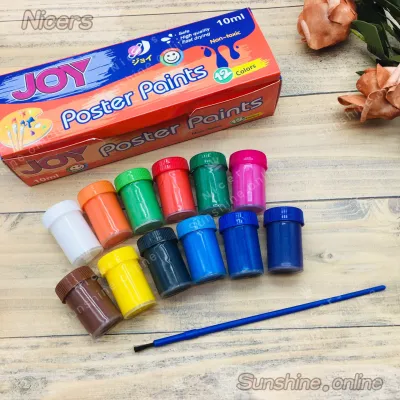
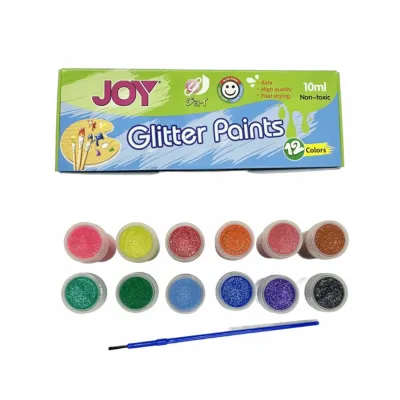
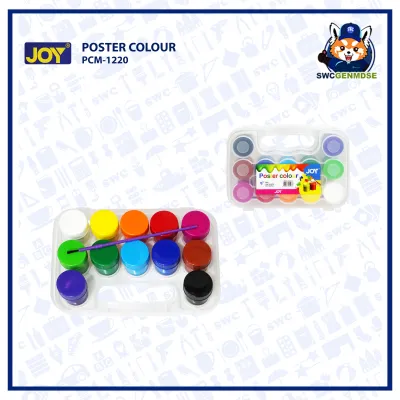
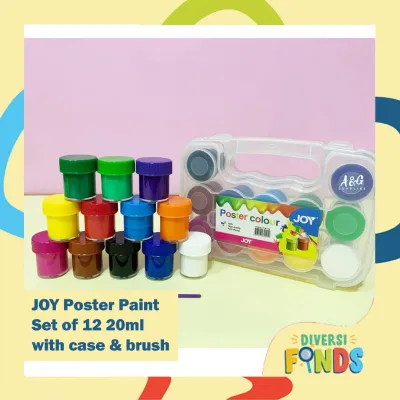
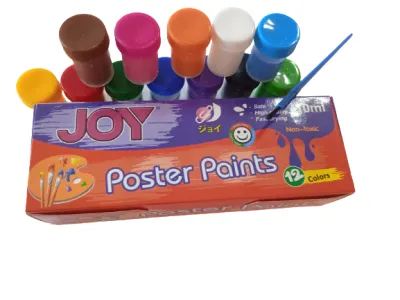
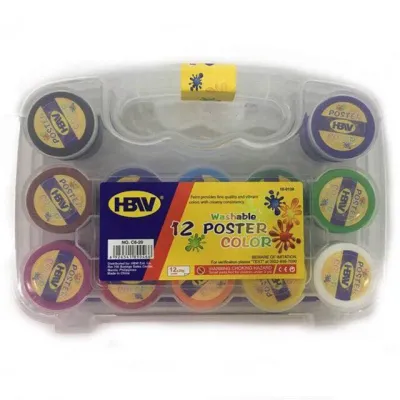
Prices are valid at publication and may change. Please refer to the product page for the latest price.
Finally, do not overlook the physical packaging and seal quality when evaluating poster paints. A secure, airtight seal is vital for preventing the paint from drying out, separating, or spoiling before you even open it. Inspect the bottles for tight-fitting caps and, if possible, verify if they feature an inner foil seal. In warm, humid climates, poorly sealed water-based paints are highly susceptible to mold growth and bacterial contamination over time. Choosing brands that invest in robust, airtight packaging ensures that your paint remains fresh, smooth, and ready to use, even after months of storage in a school desk or art cabinet.
Assessing Joy Poster Paint for Your Specific Projects
Joy poster paint is a highly accessible and familiar option in Philippine schools and offices, making it a common starting point for many creative projects. To assess whether this brand is suitable for your specific needs, begin by observing its physical characteristics through available color charts or in-store samples. When fresh, a reliable poster paint should exhibit a smooth, creamy consistency without excessive watery separation at the top of the container. If you notice significant separation, it may indicate that the paint has been sitting on the shelf for an extended period, though a quick stir can often restore its original texture.

It is also important to verify the intended use case specified by the manufacturer on the packaging. Joy poster paint is generally formulated for school crafts, paper mache, cardboard posters, and general classroom activities. These formulations are optimized for porous surfaces like paper and wood, where the paint can grip the fibers effectively. If your project involves non-porous materials such as plastics, glass, or metal, you must check the label to see if the paint is rated for those surfaces. Using a standard school-grade poster paint on non-porous materials often leads to peeling, flaking, or poor coverage once the paint dries.
Additionally, evaluate the available color range and volume options to ensure they align with the scale of your work. Joy is widely available in convenient multi-color sets containing primary and secondary shades, which are excellent for color-mixing lessons and small individual assignments. However, if you are working on a large-scale project, such as a school theater backdrop or a barangay festival poster, you will need to check if the brand offers larger individual squeeze bottles. Purchasing larger volumes of individual colors is far more practical and economical than buying multiple small sets just to get enough of a single shade like white or black.
Framework for Comparing Joy with Alternative Brands
To make an objective comparison between Joy and alternative poster paint brands, you need a structured framework that looks beyond brand names. Start by calculating the price per milliliter (₱/ml) to determine the true financial value of each option. To do this, divide the retail price in Philippine Pesos (₱) by the total volume of paint in the package. For example, if a set of six 20ml jars (120ml total) costs ₱120, the price is ₱1.00 per ml. Comparing this rate across different brands, bottle sizes, and bulk sets allows you to identify which product offers the most cost-effective solution for your budget.
Next, compare the availability of specific shades and specialty finishes across different brands. While standard primary colors are easy to find, your project might require unique finishes like metallic gold, fluorescent pink, or glitter-infused paints. Some alternative brands specialize in these decorative finishes, which can save you the time and effort of trying to mix custom shades yourself. Check the inventory of local art supply stores and online marketplaces to see which brands consistently stock these specialty options and whether they are sold individually or only in expensive multi-color sets.
Finally, evaluate how different brands handle drying times and surface compatibility under local environmental conditions. The high humidity levels in the Philippines can significantly prolong the drying time of water-based paints, which may lead to paper warping or accidental smudging. Read the product descriptions and user instructions for each brand to see if they mention fast-drying formulas or specific surface recommendations. Brands that are formulated to dry quickly and resist bleeding are highly advantageous for students working on tight classroom schedules, whereas slower-drying paints may be preferred by artists who enjoy blending colors directly on the paper.
Practical Testing and Final Decision Guide
Before committing your entire budget or starting a major project, conducting a simple, hands-on swatch test is the best way to guarantee success. Take a scrap piece of your actual project material—whether it is watercolor paper, illustration board, or recycled cardboard—and apply a single, even stroke of paint. Observe how smoothly the paint flows, how well it covers the surface, and whether the paper fibers begin to warp as the paint wetness sinks in. Once the swatch is completely dry, inspect it closely for any signs of cracking, flaking, or chalky residue, and gently bend the paper to test the paint’s flexibility and adhesion.
With your test results in hand, you can apply a clear decision framework to finalize your purchase. Choose Joy poster paint if your project consists of standard school crafts, paper mache, or temporary posters, and you require an affordable, widely available paint that performs reliably on paper surfaces. On the other hand, you should opt for alternative brands if your project demands professional-grade lightfastness, highly specialized color palettes, or specific binder properties designed for advanced fine art techniques. This conditional approach ensures you only pay for the performance characteristics that your specific project actually requires.
Lastly, know when to stop and pivot to a different type of paint altogether. If your swatch tests reveal that the poster paint repeatedly cracks, peels, or washes away too easily for your intended application, it is a sign that poster paint may not be the correct medium. For projects that require permanent water resistance, outdoor durability, or adhesion to non-porous surfaces like plastic or glass, poster paint is generally unsuitable. In these cases, stop using poster paint and consult the manufacturer’s guidelines, or transition to a more durable medium such as acrylic paint, which dries to a flexible, water-resistant plastic film.
Frequently Asked Questions (FAQ)
Is poster paint waterproof once it dries?
Traditional poster paints are water-soluble and are not waterproof once dry. Because they use binders like dextrin or gum arabic, the paint film can easily reactivate, smudge, or run when exposed to moisture, high humidity, or sweat. To protect a finished poster paint project from the elements, you must apply a compatible, non-water-based clear sealant or varnish, or keep the artwork framed under glass. Always check the manufacturer’s label for any specific water-resistance claims before application.
Can I mix poster paint with acrylic mediums?
Mixing poster paint with acrylic mediums is generally not recommended without verifying compatibility on the product labels first. Poster paint and acrylic paint use entirely different binder systems—water-soluble binders versus acrylic polymer emulsions. Combining them can lead to unpredictable chemical reactions, resulting in uneven drying times, clumping, reduced adhesion, or cracking as the paint dries. If you want to experiment, always perform a small-batch test on a scrap surface first to observe how the mixture behaves before applying it to your final artwork.

Community discussion
Share your experience or ask a question. Comments are reviewed before publication.