
The choice between the Karce KC-S991 and the Casio fx-991 series comes down to balancing your academic budget against strict exam compliance and long-term reliability. While Casio is the established standard in classrooms and board exams across the Philippines, Karce has emerged as a highly affordable alternative that replicates many of the same mathematical layouts. Deciding which one to buy requires looking closely at your specific school syllabus, upcoming licensure exams, and how much you are willing to invest in a tool that could define your academic success.
Screen Quality and Menu Navigation
When evaluating a scientific calculator, the display is your primary interface. You want to ensure that complex mathematical expressions are easy to read at a glance. A key feature to look for is a Natural Textbook Display capability. This technology allows fractions, exponents, logarithms, derivatives, and matrices to render on the screen exactly as they are written in standard textbooks. Without this, you are forced to read equations in a single, linear line of text, which significantly increases the risk of input errors during high-pressure exams.
Next, compare the screen resolution and dot-matrix clarity. A higher-resolution screen displays smoother curves and sharper text, making it easier to distinguish between similar-looking characters like “8” and “B”, or “x” and “y”. When shopping, check the product packaging or the user manual to verify the display’s grid resolution and the number of visible lines. A multi-line display is highly beneficial because it allows you to view your previous calculation steps alongside your current input, saving you from having to re-enter long formulas.
Products mentioned in this guide

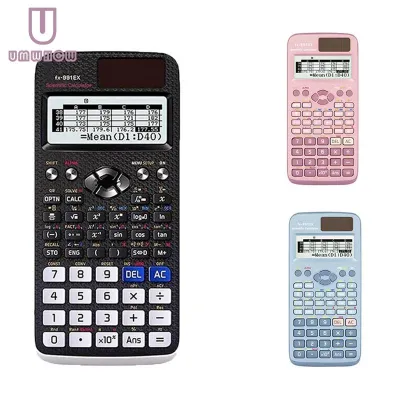
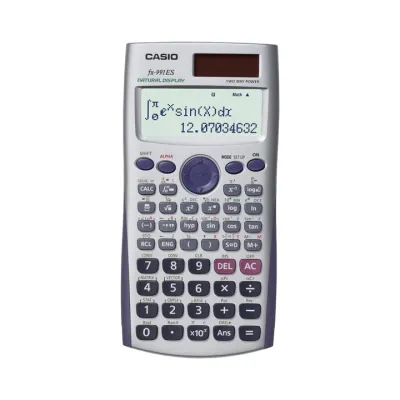
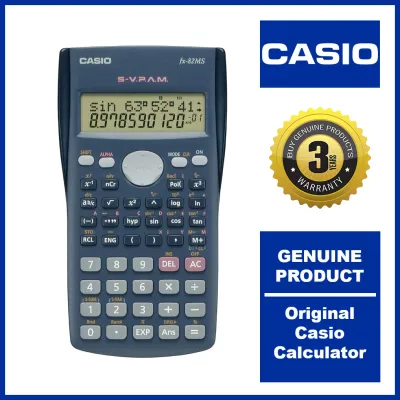
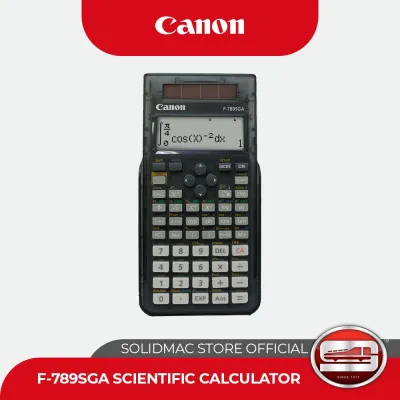
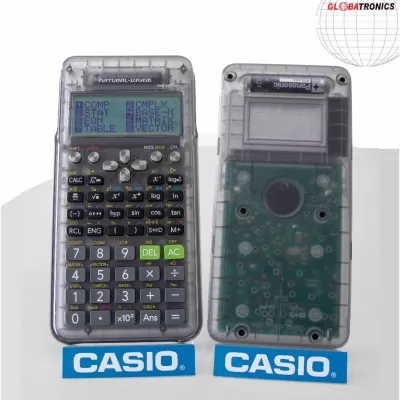
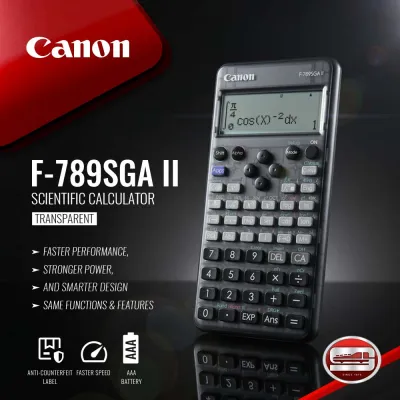
Prices are valid at publication and may change. Please refer to the product page for the latest price.
Core Math Functions and Processing Capabilities
The utility of a scientific calculator depends heavily on its internal processing capabilities and the breadth of its mathematical functions. For advanced high school algebra, college calculus, or engineering coursework, you must verify that the calculator supports essential operations. These include definite integrals, derivatives, matrix calculations, vector analysis, and complex number operations.

While budget-friendly alternatives like the Karce KC-S991 aim to replicate the functional layout of the Casio fx-991 series, the underlying processing speed and calculation logic can differ. You can perform a simple test to verify processing speed: input a complex calculation, such as a large matrix inversion or a multi-step statistical regression, and observe how quickly the result appears. A slight delay might seem minor, but during a timed exam, rapid processing is crucial.
Additionally, count the exact number of built-in functions listed on the product packaging. The Casio fx-991 series is known for offering hundreds of advanced functions, including scientific constants and unit conversions. Budget alternatives may omit some of these niche features to keep manufacturing costs low. Carefully cross-reference your course syllabus with the calculator’s manual to ensure you will not be left missing a critical function mid-semester.
Build Quality, Keys, and Power Sources
A calculator is a long-term investment that needs to withstand daily transport in a crowded backpack and hours of intense typing. In the tropical climate of the Philippines, where high humidity and temperature fluctuations are common, build quality is especially important. Start by testing the key travel and tactile feedback. The keys should depress smoothly and register inputs reliably without requiring excessive force. Look for durable, plastic keys with deeply printed or double-injection molded labels; cheap printed labels can quickly wear off under sweaty fingers, leaving you guessing which key is which.
Power reliability is another critical factor. Many advanced scientific calculators utilize a dual-power configuration, combining a solar panel with a backup button battery. This setup ensures the device remains operational even in dimly lit classrooms or exam halls. You can verify the solar panel’s responsiveness by covering it with your hand in a moderately lit room; if the screen dims significantly or shuts off, the device may be relying solely on its internal battery.
Finally, inspect the protective slide-on hard case. A well-fitting, rigid case protects the screen and keyboard from physical impact and prevents the calculator from accidentally turning on and draining the battery while inside your bag.
Exam Compliance and Classroom Acceptance
Before purchasing any scientific calculator, you must ensure it is legally permitted in your academic or professional testing environment. In the Philippines, educational institutions and regulatory bodies maintain strict guidelines regarding the specific models allowed in classrooms and national exams.
For professional licensure exams, the Professional Regulation Commission (PRC) publishes an official list of allowed calculator models. The Casio fx-991 series has historically been a staple on these approved lists due to its non-programmable nature. However, alternative brands like Karce may not be explicitly named on standard pre-approved lists. If a brand or model is not explicitly listed, you may face manual inspection or even confiscation by exam proctors.
Similarly, the Department of Education (DepEd) and the Commission on Higher Education (CHED), along with international testing bodies like the SAT or IB, have clear rules against programmable or graphing calculators. Always download the most recent official memorandum from your exam board or consult your course instructor to verify if the Karce KC-S991 or your chosen Casio fx-991 variant is fully compliant with their current guidelines.
Price, Warranty, and Availability in the Philippines
The most obvious differentiator between these two options is the price. The Karce KC-S991 is positioned as a highly budget-friendly alternative, making it an attractive option for students who want advanced scientific features without a heavy financial commitment. The Casio fx-991 series, as an established industry standard, commands a premium price in Philippine pesos (₱).
However, this price premium often translates to better warranty support and long-term security. Genuine Casio calculators purchased through authorized local distributors typically come with official multi-year warranties, allowing you to get a replacement or repair if the unit malfunctions. In contrast, budget brands like Karce often come with limited store-level guarantees or no warranty at all, meaning you bear the cost of replacement if the device fails.
Availability is another factor to consider. Casio calculators are widely available in physical stationery stores, university bookstores, and official brand stores on major online marketplaces. Karce models are more commonly found through third-party sellers on ecommerce platforms. When purchasing online, be highly vigilant against counterfeit units. Check seller ratings, read customer reviews, and inspect the packaging details carefully to ensure you are buying an authentic product.
Final Verdict: How to Make Your Decision
To make your final decision, weigh your immediate academic requirements against your budget and long-term goals.
Choose the Karce KC-S991 if:
- You are on a strict budget and need an affordable scientific calculator for general high school or college coursework.
- Your school or university department explicitly permits alternative brands, and you do not plan to take strict professional board exams in the near future.
- You want a secondary backup calculator to keep in your study space.
Choose the Casio fx-991 if:
- You are preparing for major professional licensure exams (such as engineering, architecture, or board exams regulated by the PRC) where exam compliance is non-negotiable.
- You require guaranteed long-term durability, a robust local distributor warranty, and universal recognition by exam proctors.
- You want to ensure access to the full suite of advanced mathematical functions and faster processing speeds.
Verify first if:
- Your specific school, college department, or testing board has issued an updated calculator memorandum. Always check the official allowed list before making any purchase to avoid last-minute surprises on exam day.
Frequently Asked Questions (FAQ)
Can I use the Karce KC-S991 for professional board exams?
Professional regulatory bodies, such as the PRC in the Philippines, maintain highly specific lists of allowed calculator models for board exams. While Casio models are standard fixtures on these lists, alternative brands like Karce are often not explicitly approved. Before purchasing, download the latest official exam memorandum from the regulatory commission’s website and search for the exact model number to ensure it is permitted.
Does the Karce KC-S991 run the exact same firmware as Casio?
No. Although the Karce KC-S991 may closely mimic the physical layout, button placement, and menu structure of the Casio fx-991 series, the internal firmware and processing logic are entirely different. This means you may observe minor differences in calculation speed, menu navigation flow, or how the calculator handles complex statistical rounding and error states. Always refer to the specific user manual of your device to understand its exact operational logic.

Community discussion
Share your experience or ask a question. Comments are reviewed before publication.